Understanding Nakagami District as a luxury destination
The Ryukyuan Kingdom, which governed this archipelago until 1879, left behind a built environment and a set of cultural practices that distinguish Okinawa from any other prefecture in Japan. Nakagami District contains several of these legacies in concentrated form, most notably the Nakagusuku Castle ruins and the Katsuren Castle ruins, both part of the Gusuku Sites UNESCO listing. A luxury hotel suite positioned within reach of these sites offers something that no coastal resort can replicate: proximity to a genuinely distinct historical layer.
Key areas within Nakagami District for a high-end stay
Yomitan
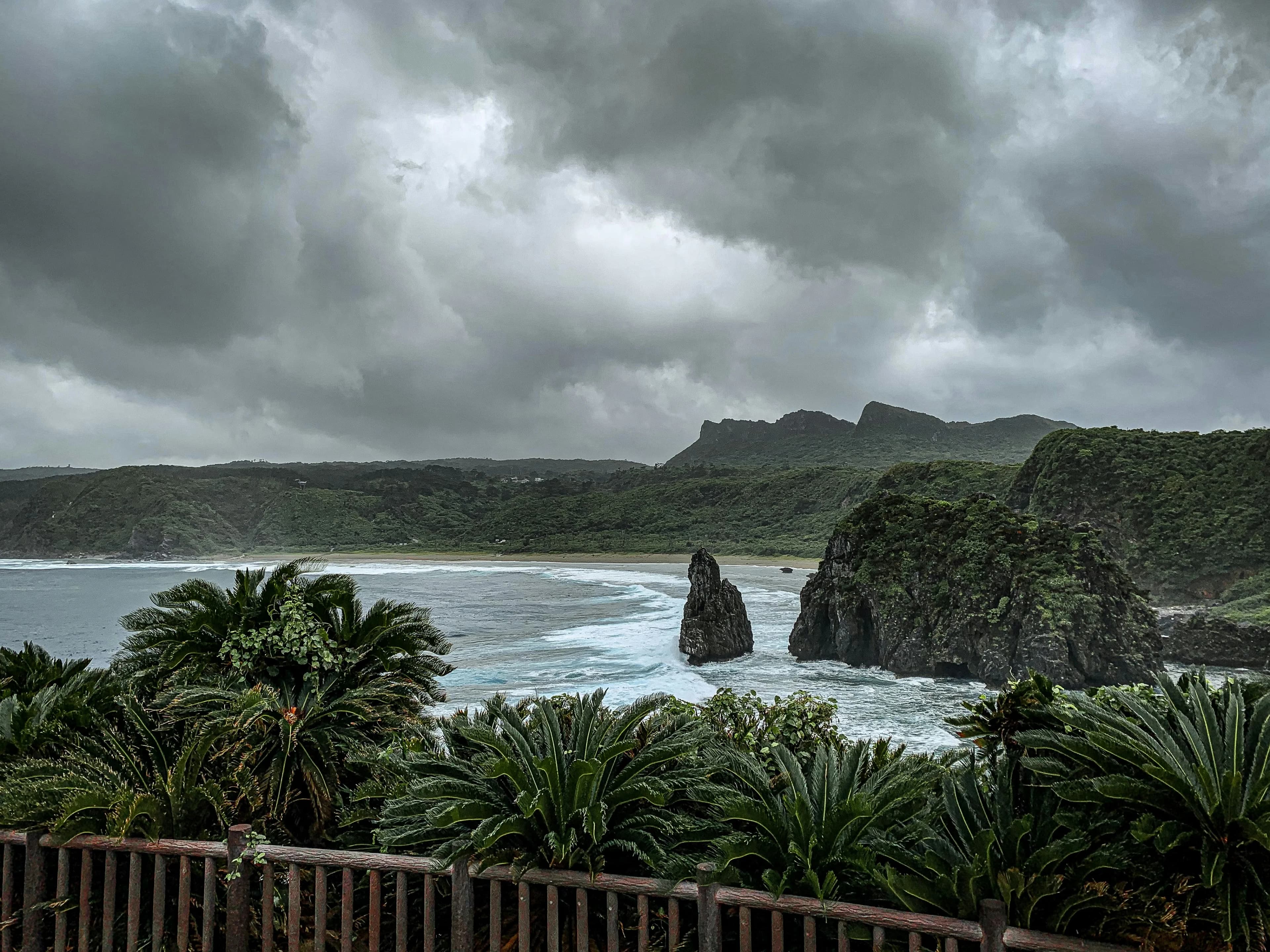
Yomitan, on the western coast, has developed into one of Okinawa's more considered resort zones. Its coastline includes Zanpa Cape, a dramatic limestone promontory, and the beaches here tend toward the quieter end of the spectrum. The village maintains an active tradition of Yachimun pottery, and several resort properties in this area have been designed with attention to local craft and landscape. Guests who prioritise privacy and a lower-density environment tend to gravitate here.
Chatan and the central coastal strip
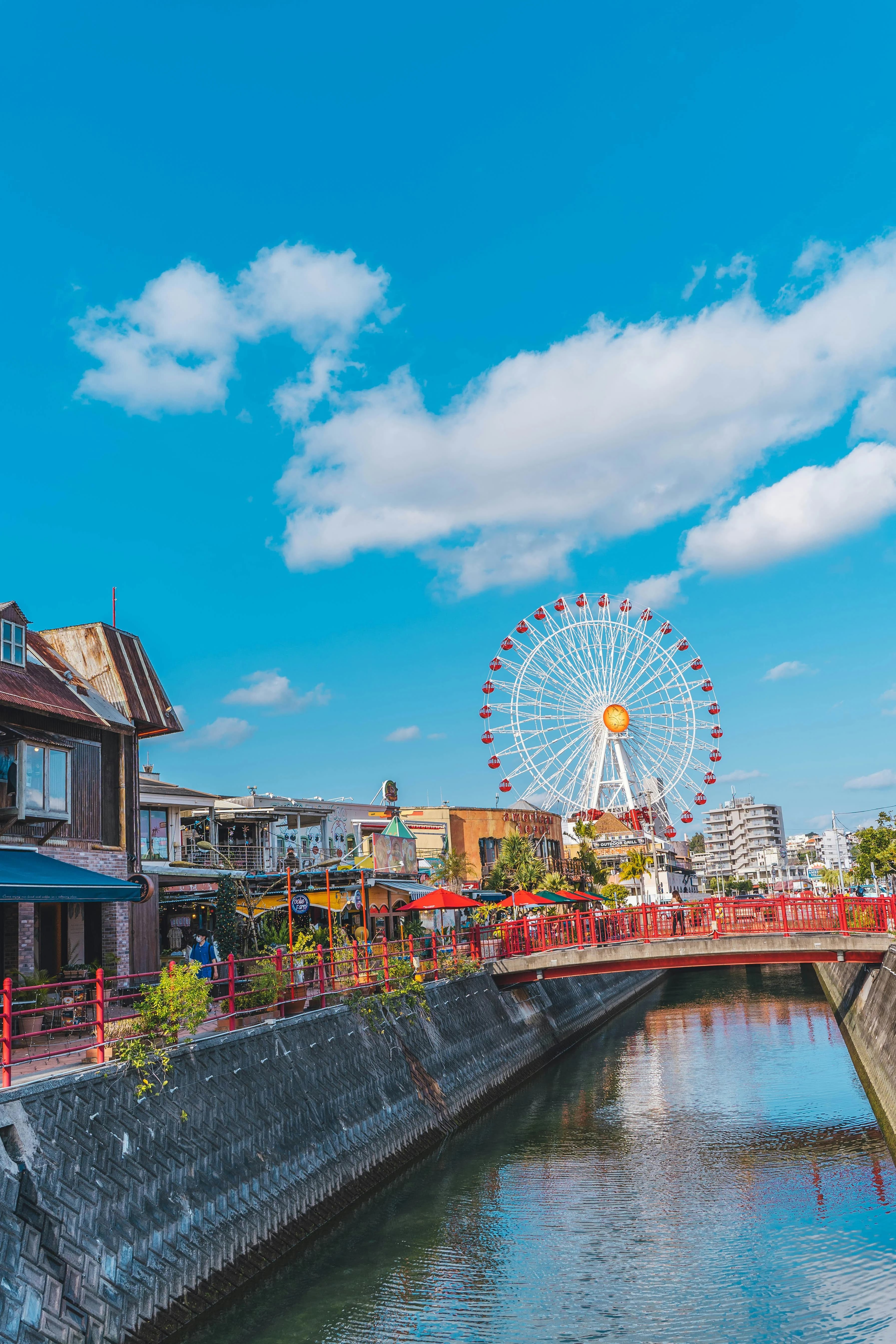
Chatan, located further south, presents a contrasting register. The American Village area reflects the district's post-war history with the United States military presence, creating an unusual cultural hybrid of diners, vintage shops, and waterfront development. For travellers interested in Okinawa's 20th-century history and its ongoing geopolitical significance, this zone offers a texture that purely resort-facing properties do not. Sunset views from Chatan's waterfront are reliable, the orientation being due west across the East China Sea.
Uruma and the eastern coastline
Uruma, facing the Pacific Ocean on the eastern side of the island, offers a calmer, less trafficked alternative. The Katsuren Peninsula extends into Kino Bay, and the surrounding water is used for traditional fishing and sea salt production. Properties in this zone tend to attract travellers seeking a more local, less resort-formatted experience of Okinawa.
When to visit Nakagami District
Okinawa operates on a climate cycle distinct from mainland Japan. The rainy season, known locally as tsuyu, runs from approximately early May to late June. Summer proper begins in July and extends through September, with temperatures regularly reaching 32 to 34 degrees Celsius and high humidity. This period aligns with peak domestic Japanese tourism, and suite availability at well-regarded properties tightens considerably.
The period from October through December represents a more temperate window. Temperatures drop to the low twenties, the sea remains warm enough for swimming well into November, and the cultural calendar includes the Okinawa International Film Festival and various traditional Ryukyuan dance and music events. January and February are the coolest months, rarely dropping below 15 degrees, making the district accessible year-round in a way that most Japanese destinations are not.
The Eisa festival season in late July and early August, centred on the Okinawan Bon period, is one of the most culturally significant moments in the district's calendar. Traditional drumming and dance processions take place across multiple municipalities. For travellers with an interest in living cultural practice rather than museum-formatted heritage, timing a stay around Eisa provides genuine access to a distinct tradition.
Local luxury standards: what to expect from top-tier properties in Nakagami
Japan's luxury accommodation landscape is governed in part by the Ryokan tradition, with its emphasis on tatami rooms, kaiseki dining, and onsen bathing. Nakagami District modifies this template significantly. The Ryukyuan tradition favours different architectural forms, different cuisine structures, and a relationship to outdoor space that reflects the subtropical climate rather than the temperate mainland aesthetic.
The finest properties in and around the district tend to combine international resort standards with local material culture: Ryukyuan textiles such as Bingata and Yomitan-yachimun ceramics used as deliberate design choices rather than decorative afterthoughts. Cuisine at the highest level draws on Champuru culture, the Okinawan cooking philosophy of combining ingredients from different traditions, producing results that are nutritionally and aesthetically distinct from both mainland Japanese and pan-Asian resort menus.
Service culture in Okinawa carries the local concept of Ichariba chode, a Ryukyuan phrase translating loosely as "once we meet, we are family." In practice, this produces a hospitality register that is warmer and less formally stratified than what travellers accustomed to Tokyo or Kyoto properties might expect. It is a genuine cultural difference, not a marketing formula.
How to choose the right luxury suite in Nakagami District
The primary consideration is orientation: east-facing properties on the Uruma coast offer Pacific sunrise views and access to calmer, less populated beaches. West-facing properties in Yomitan and Chatan deliver the reliable Okinawan sunset across open water, which is a materially different visual and experiential proposition. This is not a trivial distinction for guests spending significant time on a private terrace.
A second consideration is the relationship between a property and the district's historical sites. Several castle ruins and sacred grove sites require early morning visits before tourist volumes build. Suites within close proximity to these sites, combined with a property willing to coordinate access logistics, represent a meaningfully different stay from one located on a resort corridor with no such connection.
Architecture is a third axis of evaluation. Nakagami District contains both purpose-built contemporary resort properties and smaller-scale conversions of traditional Okinawan structures, with their characteristic red-tile roofs and shisa guardian figures. The latter category offers spatial and sensory qualities that no purpose-built resort can replicate, though they typically operate at smaller scale with fewer amenity layers.
Why a curated selection by La Suite makes a material difference here
Nakagami District presents a genuine curation challenge. The accommodation landscape includes international resort chains, domestic Japanese operators with varying levels of engagement with local culture, boutique properties with strong local credentials but limited international visibility, and a long tail of mid-market options that do not meet the standards relevant to this audience. Navigating this without a reliable editorial framework costs time and produces inconsistent results.
Japan as a whole offers one of the most demanding luxury suite markets in the world, and Okinawa's specific cultural and geographical identity adds a further layer of complexity. La Suite applies a consistent evaluation framework across the full spectrum of properties in this district, prioritising spatial quality, cultural integrity, service architecture, and the specific experiential value of a suite as distinct from a standard room category. The result is a selection that removes the noise and presents only the properties that justify the investment of a high-end stay in this part of Asia.