Comfortable Accommodations 20 PIECES in Kyoto offers family rooms with air-conditioning, private bathrooms, and modern amenities. Each room includes a kitchen, dining area, and free WiFi. Convenient F

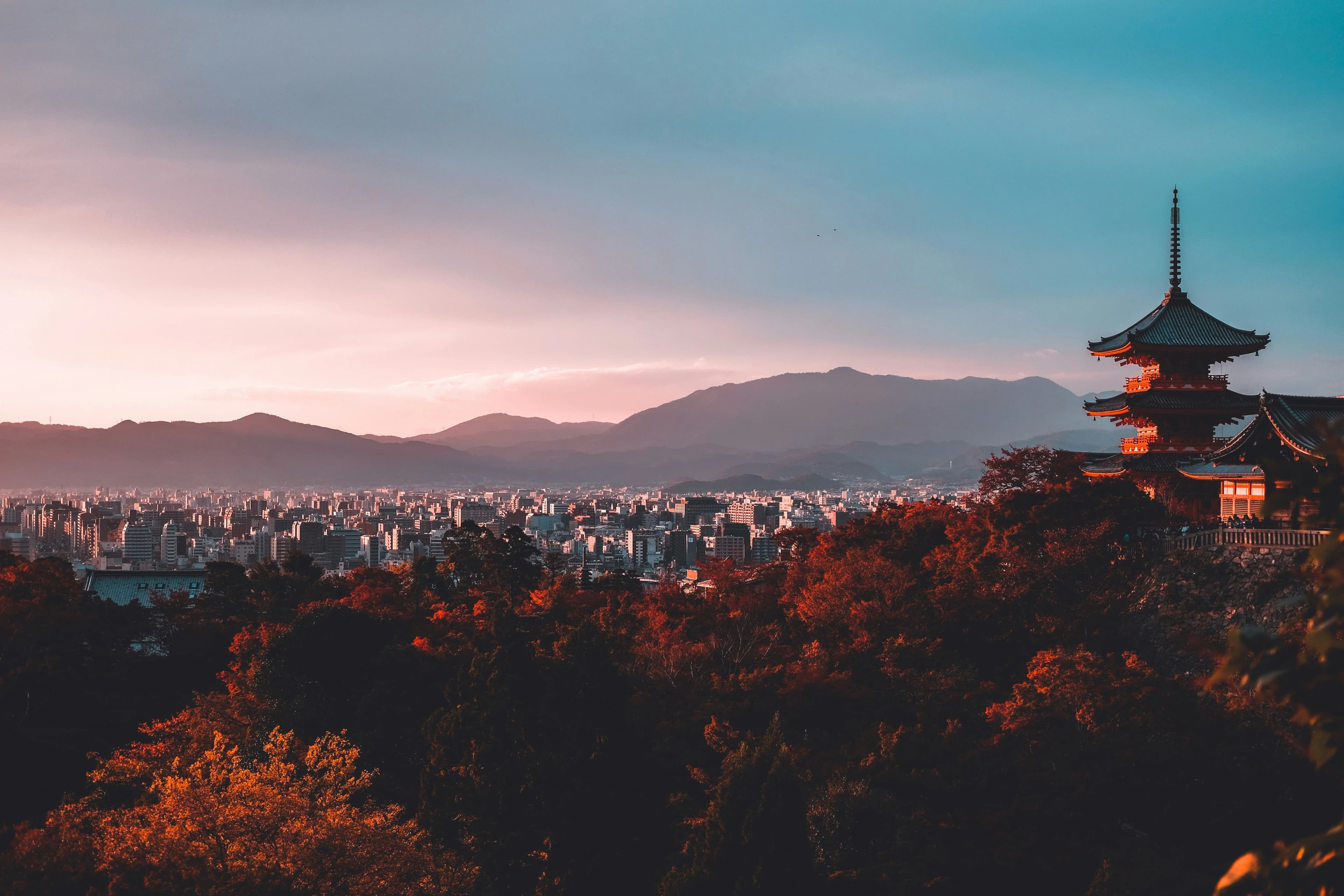
Kyoto does not perform luxury in the way that Tokyo or Dubai do. The city's prestige is structural and historical. It was the seat of the Japanese imperial court from 794 until 1869, and that concentrated period of patronage produced an aesthetic culture with few equivalents worldwide. Architecture here is calibrated, material choices are deliberate, and spatial experience is treated as a discipline. For travelers exploring Japan with a preference for cultural depth over cosmopolitan spectacle, Kyoto functions as the essential reference point.
64 hotels available

Comfortable Accommodations 20 PIECES in Kyoto offers family rooms with air-conditioning, private bathrooms, and modern amenities. Each room includes a kitchen, dining area, and free WiFi. Convenient F

Elegant Accommodations Ace Hotel Kyoto in Kyoto offers a 5-star experience with a fitness center, free bicycles, a garden, terrace, restaurant, bar, and free WiFi. Private check-in and check-out s

Comfortable Accommodations AKEKURE Kyoto Shirakawa in Kyoto offers four-star comfort with air-conditioning, private bathrooms, and city or river views. Each room includes a bathrobe, tea and coffee ma

Open from February 2015, Aoi Hotel Kyoto is located a 5-minute walk from Kawaramachi Station and a 13-minute walk from Yasaka Shrine. It offers simply furnished rooms and free WiFi access. Guests can

Elegant Accommodations Banyan Tree Higashiyama Kyoto in Kyoto offers a 5-star experience with family rooms and interconnected rooms. Each room features air-conditioning, a private bathroom, and mo

Elegant Accommodations Capella Kyoto in Kyoto offers a 5-star hotel experience with family rooms and modern amenities. Guests enjoy free WiFi, a hot spring bath, spa facilities, and a wellness cen

Cross Hotel Kyoto is set in Kawaramachi Sanjo and provides rooms with warm wooden decor featuring Kyoto-style architecture and free WiFi. Hankyu Kawaramachi Station is a 6-minute walk away, while Sanj

DoubleTree by Hilton Kyoto Station is located just a 5-minute walk from JR Kyoto Station. The hotel is an 18-minute walk from Tofuku-ji Temple and 1.4 mi from Kiyomizu-dera Temple. This 4-star hotel o

Elegant Accommodations Dusit Thani Kyoto in Kyoto offers a 5-star experience with spa facilities, a sauna, fitness center, indoor swimming pool, and a serene garden. Guests enjoy free WiFi, privat

Elegant Accommodations Fauchon Hotel Kyoto in Kyoto offers a 5-star experience with spa facilities, a fitness center, restaurant, bar, and free WiFi. Guests enjoy mountain and river views from their r

Elegant Accommodations Genji Kyoto, a Member of Design Hotels in Kyoto offers a 4-star experience with a sun terrace, garden, and free WiFi. Guests enjoy private check-in and check-out, a lounge, and

Comfortable Accommodations GINNOYADO Main Location in Kyoto offers 4-star comfort with air-conditioning, private bathrooms, and free WiFi. Each room includes a bath, bidet, hairdryer, tatami floor, wo

GOOD NATURE HOTEL KYOTO has a fitness center, garden, a restaurant and bar in Kyoto. With free WiFi, this 5-star hotel offers room service and a 24-hour front desk. The property is 1.1 miles from the

Located in Kyoto, a 9-minute walk from Samurai Kembu Kyoto, Hilton Kyoto provides accommodations with a fitness center, private parking, a restaurant and a bar. The property is around 1.2 miles from H

Awarded two pavilions by the Michelin Guide 2020, Hotel Alza Kyoto is located near the Kamo River and within Gion District, a 2-minute walk from Sanjo Station. Some rooms feature the views of Kamo Riv

Ideally located within Kyoto Station, Hotel Granvia Kyoto features an indoor swimming pool, a fitness center and 9 dining options. The hotel offers spacious rooms with chic décor and modern facilities

In a prime location in the center of Kyoto, Hotel Imagine Kyoto provides air-conditioned rooms, a shared lounge, free WiFi and a terrace. This 4-star hotel offers a shared kitchen and a concierge serv

Hotel Okura's elegant rooms boast spectacular views of Kyoto against the backdrop of the Higashiyama Mountains. In the heart of the city, the hotel treats its guests to a shopping avenue, free Wi-Fi a

Elegant Accommodations Hotel Okura Kyoto Okazaki Bettei in Kyoto offers a 5-star experience with a fitness center, garden, restaurant, bar, and free WiFi. Guests enjoy air-conditioned rooms with p

Comfortable Accommodations Hotel Resol Trinity Kyoto in Kyoto offers air-conditioned rooms with private bathrooms, free WiFi, and modern amenities. Each room includes a dining table, work desk, and so
The luxury suite in Kyoto is therefore not primarily about square footage or penthouse elevation. It is about the quality of integration: how a room relates to its garden, how materials age, how silence is managed. Properties that understand this rarely need to advertise it loudly. The curation process at La Suite applies exactly this lens when selecting suites across Asia.
The eastern hills district, Higashiyama, carries the city's most intact historical streetscape. Preserved machiya townhouses, stone-paved lanes, and proximity to Kiyomizudera temple make this the area of choice for travelers who prioritize atmosphere above all else. Properties here tend toward intimate scale, with ryokan architecture and private garden access. The visual and sensory density of this neighborhood rewards guests who move slowly and observe closely.
Downtown Kyoto, centered on the Kawaramachi and Gion districts, places guests within walking distance of Nishiki Market, the Kamo River, and the preserved geisha quarters of Gion. This area suits travelers who require both cultural immersion and operational convenience. Contemporary luxury hotels coexist here with traditional okiya and machiya, producing an urban grain that is entirely specific to Kyoto.
The Sanjo corridor bridges the traditional and the contemporary. It sits between the commercial energy of downtown and the quieter residential character of the eastern city. For guests who prefer a slightly removed perspective on Kyoto's central districts, this area offers proximity without immersion.
The district surrounding Kyoto Station functions as the city's infrastructural anchor. The station building itself, designed by Hiroshi Hara and completed in 1997, is a significant piece of contemporary Japanese architecture. Properties in this zone serve travelers arriving from Tokyo via shinkansen who require immediate access to transport connections. The luxury offering here is generally more international in character than in Higashiyama or Gion.
Kyoto's cultural calendar is precise and consequential for suite availability. Two periods concentrate demand to a degree that requires advance planning of several months: cherry blossom season (mid-March to mid-April) and the autumn foliage season (mid-November to early December). During these windows, the city's temple gardens perform their most photogenic transitions, and occupancy across quality properties reaches its annual peak.
For travelers who prefer density of experience over photographic conditions, the summer months (July and August) offer a different register. Gion Matsuri, one of Japan's oldest and most significant festivals, takes place throughout July. The heat is considerable, and humidity is high, but the cultural programming is unmatched. Properties with garden suites and access to private outdoor space become particularly relevant in this context.
The winter months (December to February) represent Kyoto at its most austere. Visitor numbers drop, suite rates adjust accordingly, and the city's architectural qualities become most legible without the compression of tourist crowds. Snow on temple rooftops and the low-angle winter light produce conditions that many serious travelers consider the city's finest.
The ryokan is Japan's most distinctive hospitality format and Kyoto's most culturally specific accommodation type. A traditional ryokan is organized around tatami-floored rooms, futon bedding laid by dedicated staff (nakai), kaiseki cuisine served in the room or in a private dining space, and access to onsen (thermal baths). At the highest tier, ryokan in Kyoto operate by invitation or referral, with guest lists that function like membership registers.
The vocabulary that applies to French hotels (Palace designation, Relais and Chateaux classification) translates only partially here. The relevant Japanese concept is omotenashi, a form of hospitality predicated on anticipating need without being asked. In a high-grade ryokan, this manifests as staffing ratios, material quality (lacquerware, handwoven textiles, ceramic tableware commissioned from specific artisans), and spatial sequencing that moves a guest through arrival, bathing, dining, and sleep as a considered progression rather than a collection of independent services.
Contemporary luxury hotels in Kyoto have absorbed elements of this language. The best properties apply ryokan principles to international hotel formats: private garden views, bathing rituals, room service structured around seasonal kaiseki courses, and architectural detailing that references traditional joinery and material palettes.
The first decision is architectural: traditional or contemporary. A traditional ryokan suite will involve tatami floors, floor-level sleeping arrangements, and a spatial logic derived from Japanese domestic architecture. This is an immersive choice that rewards travelers comfortable with a degree of unfamiliarity. Contemporary luxury hotel suites in Kyoto typically offer Western-format bedding and bathroom facilities within buildings that incorporate Japanese aesthetic principles through material and proportion rather than typology.
The second consideration is garden access. In Kyoto, a suite with a private garden or direct garden view commands a significant premium and justifies it. The tradition of garden design in this city (the dry landscape gardens of Ryoanji and Daitokuji are among the most analyzed spatial compositions in the world) means that the best hotel gardens are curated environments in their own right, not amenity add-ons.
The third factor is scale. The most respected ryokan in Kyoto accommodate between five and thirty guests. This is not a limitation but a guarantee. Staffing ratios, attention, and the quality of silence are all functions of guest density. Travelers accustomed to large international hotel properties should recalibrate expectations accordingly: the experience is more analogous to staying in a private residence with exceptional staff than to checking into a conventional hotel.
The Kyoto luxury suite market presents a specific research challenge. The most respected properties are not aggressively marketed. Several of the finest ryokan maintain minimal digital presence and accept reservations through established channels or intermediaries. Others present identically across booking platforms despite operating at entirely different quality levels. The category of

A ryokan suite is organized around tatami floors, futon bedding, in-room kaiseki dining, and the omotenashi hospitality philosophy, which prioritizes anticipating guest needs without prompting. A luxury hotel suite in Kyoto typically offers Western-format bedding and international amenities within architecture that references Japanese aesthetic principles. The choice depends on how directly a traveler wishes to engage with Japanese spatial and cultural conventions.
Cherry blossom season (mid-March to mid-April) and autumn foliage season (mid-November to early December) require bookings several months in advance due to concentrated demand. Winter (December to February) offers lower occupancy and more suite availability, alongside a quieter, more architecturally legible version of the city. July's Gion Matsuri festival is culturally significant but coincides with high summer heat and humidity.
Higashiyama is the preferred district for travelers prioritizing atmosphere and historical immersion, with preserved streetscapes and proximity to major temple complexes. Downtown Kyoto suits those who want cultural access combined with convenience. The Kyoto Station area offers strong transport connections for travelers arriving by shinkansen from Tokyo or Osaka.
For peak seasons (spring and autumn), six to twelve months in advance is the practical minimum for securing suites at the most respected properties. During cherry blossom season in particular, the finest ryokan and luxury hotel suites are reserved well before the season opens. Off-peak periods such as January and February allow for shorter lead times, though the best suites still move quickly.
At the highest tier, a ryokan suite in Kyoto includes a private tatami reception room, a dedicated nakai (personal attendant) who manages room service and futon preparation, a private or semi-private onsen bath, and kaiseki meals served course by course in the room. The spatial sequence from arrival to sleeping is treated as a considered progression, and staffing ratios are significantly higher than in conventional hotels.
Several ryokan and luxury hotels in Kyoto accommodate families, though the format of a traditional ryokan, particularly the floor-level sleeping arrangements and lacquered surfaces, is better suited to older children who can engage respectfully with the environment. Contemporary luxury hotel suites in downtown Kyoto or the Kyoto Station area offer more conventional family configurations. Confirming age policies directly with properties is advisable.
Entry-level luxury hotel suites in Kyoto begin at approximately 500 to 800 USD per night. Mid-tier ryokan suites with private bath and in-room kaiseki dining typically range from 1,000 to 2,500 USD per night for two guests, with rates inclusive of dinner and breakfast in most cases. The most exclusive and small-scale ryokan, accommodating fewer than ten guests, can reach 3,000 to 5,000 USD per night or above.
Private tea ceremony sessions with established practitioners, early-morning visits to major temple gardens before public opening hours, kaiseki dinners at Michelin-recognized restaurants in the Higashiyama or Pontocho districts, and nishijin textile atelier tours are among the experiences that align most naturally with the aesthetic orientation of a high-end Kyoto stay. Access to these often depends on the concierge relationships of the property.
Yes, and a private garden view or direct garden access is one of the defining markers of quality in Kyoto's top-tier suite market. Several ryokan and luxury hotels have invested significantly in their garden design, treating outdoor space as an integral part of the guest experience rather than an amenity. Requesting a garden-facing or garden-access suite at the time of booking is strongly recommended, as these rooms are typically limited in number.
La Suite applies an editorial selection process focused on architectural quality, spatial coherence, and the integrity of the hospitality experience rather than star ratings or review volume. In Kyoto specifically, where some of the finest properties maintain minimal digital presence and where quality varies significantly within the same price tier, this curatorial approach allows travelers to identify suites that genuinely reflect the city's luxury standards rather than simply its most visible offerings.