Comfortable Accommodations AKEKURE Kyoto Shirakawa in Kyoto offers four-star comfort with air-conditioning, private bathrooms, and city or river views. Each room includes a bathrobe, tea and coffee ma

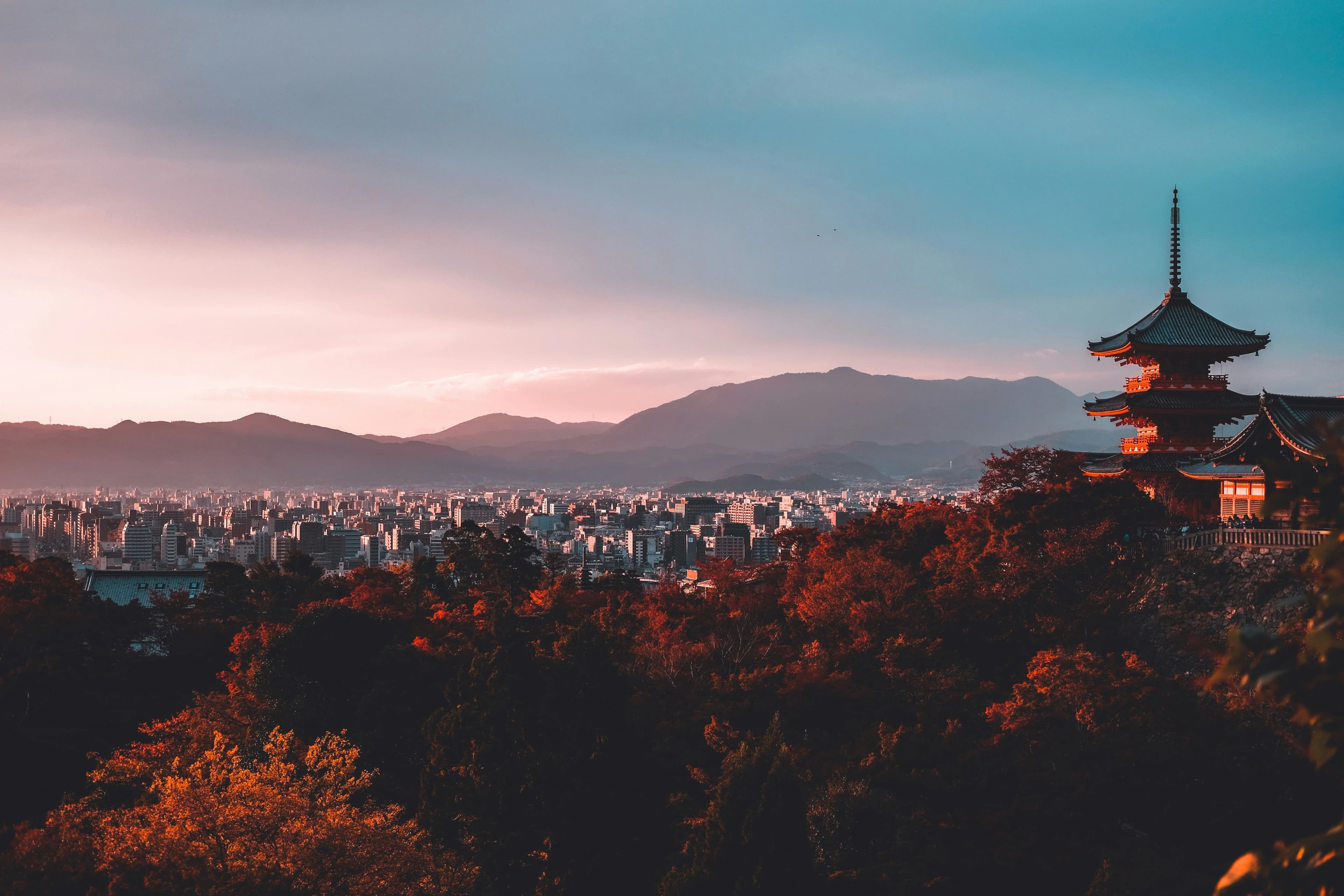
To understand Sanjo is to understand how Kyoto organizes itself. The city's streets follow a grid inherited from the Tang Dynasty capital of Chang'an, and Sanjo-dori, the avenue that gives the district its name, runs east to west as one of the oldest and most historically significant axes in the city. Unlike the heavily trafficked thoroughfares further south, Sanjo retains a texture that rewards slower movement. Independent craft shops, century-old sake merchants, and quietly serious restaurants sit beside contemporary design studios. The neighborhood does not announce itself. It is discovered incrementally, which is precisely the quality that appeals to a certain kind of traveler.
25 hotels available

Comfortable Accommodations AKEKURE Kyoto Shirakawa in Kyoto offers four-star comfort with air-conditioning, private bathrooms, and city or river views. Each room includes a bathrobe, tea and coffee ma

Open from February 2015, Aoi Hotel Kyoto is located a 5-minute walk from Kawaramachi Station and a 13-minute walk from Yasaka Shrine. It offers simply furnished rooms and free WiFi access. Guests can

Cross Hotel Kyoto is set in Kawaramachi Sanjo and provides rooms with warm wooden decor featuring Kyoto-style architecture and free WiFi. Hankyu Kawaramachi Station is a 6-minute walk away, while Sanj

GOOD NATURE HOTEL KYOTO has a fitness center, garden, a restaurant and bar in Kyoto. With free WiFi, this 5-star hotel offers room service and a 24-hour front desk. The property is 1.1 miles from the

Located in Kyoto, a 9-minute walk from Samurai Kembu Kyoto, Hilton Kyoto provides accommodations with a fitness center, private parking, a restaurant and a bar. The property is around 1.2 miles from H

Awarded two pavilions by the Michelin Guide 2020, Hotel Alza Kyoto is located near the Kamo River and within Gion District, a 2-minute walk from Sanjo Station. Some rooms feature the views of Kamo Riv

Hotel Okura's elegant rooms boast spectacular views of Kyoto against the backdrop of the Higashiyama Mountains. In the heart of the city, the hotel treats its guests to a shopping avenue, free Wi-Fi a

Comfortable Accommodations Hotel Resol Trinity Kyoto in Kyoto offers air-conditioned rooms with private bathrooms, free WiFi, and modern amenities. Each room includes a dining table, work desk, and so

Comfortable Accommodations Hotel Yuraku Kyo-yasaka in Kyoto offers family rooms with air-conditioning, private bathrooms, and modern amenities. Each room includes a bathrobe, free toiletries, and

Elegant Accommodations Imperial Hotel, Kyoto offers a 5-star experience in Kyoto, Japan. Guests enjoy spa facilities, a sauna, fitness center, indoor swimming pool, and free WiFi. Dining and L

Prime Location Mitsui Garden Hotel Kyoto Sanjo PREMIER in Kyoto offers a central position with easy access to key attractions. Itami Airport is 29 mi away, providing convenient travel options. ##

Conveniently located in the Nakagyo Ward district of Kyoto, nol kyoto sanjo is located a 16-minute walk from Gion Shijo Station, 0.9 miles from Kyoto Shigaku Kaikan Conference Hall and a 14-minute wal

Opened in April 2017, Solaria Nishitetsu Hotel Kyoto Premier is set in Kyoto, a 2-minute walk from Sanjo Station on the Keihan Line. There is a public bath and 24-hour front desk at the property. Each

Open from November 2018, located near Gion district and featuring a Japanese garden, SOWAKA offers rooms in Kyoto. The renovated main building features traditional Kyoto-style decoration for guests to

Comfortable Accommodations STITCH HOTEL Kyoto in Kyoto offers family rooms with air-conditioning, private bathrooms, and city or river views. Each room includes a kitchen, washing machine, and free to

Prime Location The Chapter Kyoto, a Tribute Portfolio Hotel in Kyoto offers a convenient location with nearby shops and public transport options. It is located 30 mi from Itami Airport. Comfortable Ac

The Gate Hotel Kyoto Takasegawa by Hulic features a restaurant, fitness center, a bar and shared lounge in Kyoto. The property is located 0.8 mi from Samurai Kembu Kyoto, 1 mi from Kyoto International

Elegant Accommodations THE HOTEL HIGASHIYAMA KYOTO TOKYU, A Pan Pacific Hotel in Kyoto offers a 5-star experience with spa facilities, a fitness center, a garden, terrace, restaurant, and free WiF

Opened in February 2014, this luxury 5-star hotel features high-standard services and guestrooms that are among the most spacious in Kyoto. Guests may enjoy complimentary use of the indoor swimming po

Elegant Accommodations The Royal Park Hotel Iconic Kyoto in Kyoto offers a 5-star experience with modern rooms featuring air-conditioning, private bathrooms, and balconies. Each room includes a te

Downtown Kyoto is not a district that announces itself. It operates on a grid system inherited from the Tang Dynasty capital of Chang'an, and its luxury offer is proportionally restrained. The area bounded by Shijo Avenue to the south, Oike Avenue to the north, the Kamo River to the east, and Nishiki to the west constitutes what most visitors identify as the commercial and cultural centre of the city. For suite travellers, it functions as the most practical and culturally saturated base in all of Kyoto.

Higashiyama, the Eastern Mountain district of Kyoto, occupies a narrow corridor between the Higashiyama mountain range and the city's historic centre. Its preservation is not accidental. The district was designated under Japan's traditional buildings district conservation laws, which regulate exterior alterations with considerable strictness. The result is a neighbourhood where the built environment has remained coherent across generations: machiya townhouses with latticed wooden facades, stone-set lanes such as Ninenzaka and Sannenzaka, and a sequence of temples and shrines including Kiyomizudera, Kodaiji, and Chion-in that anchor the district's southern and northern reaches.

The area surrounding Kyoto Station occupies the southern flank of the city. It is not the most photogenic quarter by conventional standards, but it is one of the most strategically positioned. Hiroshi Hara's 1997 station building, a civic structure of genuine architectural ambition, anchors a precinct that connects seamlessly to the rest of Kyoto by subway, bus, and rail. For travelers arriving from Tokyo on the Shinkansen or transiting through Kansai International Airport, the district eliminates unnecessary transfer time and keeps the full city within a fifteen-minute radius.
Within Japan's broader luxury hospitality framework, Kyoto holds a distinct position. The city is home to some of Japan's most demanding hospitality standards, informed by the omotenashi tradition of anticipatory, self-effacing service. Sanjo benefits from this culture without being at its most commercialized center. A luxury hotel suite here is not a commodity. It is a considered spatial and sensory proposition.
Sanjo occupies a particularly functional position for the culturally oriented traveler. The district sits within walking distance of the Gion quarter to the south, the Nishiki Market food corridor to the west, and the Okazaki cultural precinct to the northeast, which houses several of Kyoto's major museums and the Heian Shrine. The Kamo River runs along the eastern boundary of the area, providing a rare open corridor of sky and water in an otherwise tightly built urban fabric.
For those arriving from Asia's other major capitals, Sanjo offers a recalibration. The pace is different. The visual density is lower. The sensory register shifts toward texture, material, and quiet. A suite positioned in or near this district should function as an extension of that register: rooms that prioritize proportion, natural materials, and the relationship between interior and exterior light.
Sanjo-Keihan Station connects the district to the broader Kyoto rail network and to Osaka to the southwest, making it a practical as well as aesthetic choice. Travelers who intend to move frequently between Kyoto's major sites, or who plan day trips to Nara or Arashiyama, will find the district's connectivity an asset. The absence of heavy tourist infrastructure in Sanjo itself means that re-entry at the end of a day is genuinely restorative.
Kyoto's two peak seasons are well documented: cherry blossom season in late March and early April, and the autumn foliage period from mid-November into early December. Both are periods of exceptional visual intensity in the city, and demand for luxury hotel suites rises sharply during these windows. Securing accommodation months in advance is not cautious behavior; it is simply necessary.
Outside these peaks, Kyoto offers conditions that many experienced travelers prefer. The summer months (June through August) are humid and warm, but they coincide with the Gion Matsuri festival in July, one of Japan's oldest and most precisely choreographed urban festivals. The processions and associated events fill the streets around Sanjo with a specific kind of ceremonial energy. Winter, from December through February, brings quieter streets, colder air, and occasional snowfall that transforms the city's temple rooflines and garden stone into something more austere and visually spare.
Spring and autumn remain the most sought-after periods for a first visit, but returning travelers often schedule their trips around the quieter shoulder seasons, when the city's daily rhythms are more accessible and suite availability is less constrained.
Japan does not use the French Palace designation or the European five-star classification with the same cultural weight it carries elsewhere. Instead, the country's luxury accommodation landscape is organized around two parallel traditions: the international luxury hotel format, typically represented by major global brands operating at the highest service tier, and the ryokan, the traditional Japanese inn that structures the guest experience around tatami rooms, kaiseki dining, and communal or private onsen bathing.
In Kyoto specifically, a third category has emerged: the conversion of historic machiya townhouses into intimate, design-led properties. These typically offer a small number of rooms or suites, an extremely high staff-to-guest ratio, and an architectural experience that is impossible to replicate in a purpose-built hotel. The best of these properties in and around Sanjo represent some of the most considered luxury suite experiences available in Japan.
Travelers selecting a luxury suite in this context should understand that the expression of luxury here is spatial and material rather than decorative. Scale is managed with precision. Natural materials, including cedar, washi paper, and unfinished stone, dominate. The relationship between the suite and its immediate exterior, whether a private courtyard, a garden view, or a carefully framed window onto a lane, is a primary design consideration.
The key questions for travelers selecting a suite in this district relate to architectural preference, desired degree of urban immersion, and the balance between privacy and access. A machiya conversion will offer a more intimate and historically textured experience but may have fewer amenities than a larger hotel. A contemporary luxury hotel with a flagship suite will provide consistent service infrastructure but a different relationship to the neighborhood's character.
Floor level matters differently in Kyoto than in other cities. The city's building height restrictions, which protect views of the surrounding mountains, mean that even high-floor suites rarely rise above five or six storeys. What matters more is orientation: suites that face toward the Higashiyama mountains to the east offer a visual register that is distinctly Kyoto in character. Those that open onto quiet interior courtyards offer a different but equally valid form of seclusion.
Service language capability is a practical consideration for non-Japanese speakers. The leading luxury hotels in and around Sanjo typically maintain English-language service throughout, but smaller properties may have more limited capacity. This should be confirmed at the point of selection rather than assumed.
Kyoto's accommodation landscape is not transparent. The distinction between a well-marketed mid-range hotel and a genuinely exceptional luxury suite experience is not always legible from standard booking platforms, where photography and price point can obscure more than they reveal. In a neighborhood like Sanjo, where the finest properties are often discreet by design, the value of a curated selection is functional as much as editorial.
La Suite applies a consistent set of criteria across spatial quality, service architecture, and experiential integrity to identify the suites that genuinely merit attention in this context. The result is a selection that reflects how the most discerning travelers actually choose to stay in Kyoto, not how the market typically presents the city's options. Browse the curated selection by La Suite to find the luxury hotel suite in Sanjo that corresponds to your specific requirements.

Sanjo occupies a central position in Kyoto's urban grid, offering walkable access to Gion, Nishiki Market, and the Okazaki cultural district. Its preserved street character and lower tourist density make it a particularly considered choice for travelers who want proximity to the city's cultural core with a quieter residential quality.
The Sanjo area offers two primary formats: rooms or suites within larger international luxury hotels that provide full-service amenities, and intimate conversions of historic machiya townhouses offering a smaller number of rooms with a high degree of architectural specificity. Both formats operate at the upper tier of Kyoto's hospitality market.
Cherry blossom season (late March to early April) and autumn foliage season (mid-November to early December) are the highest-demand periods, requiring bookings several months in advance. The Gion Matsuri festival in July and the quieter winter months offer strong alternatives with better suite availability.
A ryokan structures the guest experience around tatami flooring, futon bedding, kaiseki dinner service, and onsen bathing, often included in a set room rate. A conventional luxury hotel suite follows a more familiar international format. Both are valid expressions of high-end hospitality in Kyoto, but they offer fundamentally different sensory and spatial experiences.
Sanjo's connectivity via the Keihan rail line and its central position within the city make it a functional base for business travel. Luxury hotel suites in the area typically offer the workspace, service infrastructure, and privacy that business travelers require, alongside the cultural environment that distinguishes Kyoto from Japan's more overtly commercial centers.
The most considered suites in Kyoto prioritize natural materials such as cedar, washi paper, and stone, controlled proportions, and a deliberate relationship between interior space and exterior view, whether a private courtyard, a garden, or a sightline toward the Higashiyama mountains. These elements distinguish genuinely exceptional suites from well-finished but architecturally generic rooms.
Kyoto enforces strict building height limits to preserve views of the surrounding mountains and protect the city's historic skyline. This means that even premium suite floors rarely exceed five or six storeys. Suite orientation and the quality of immediate views are therefore more significant selection criteria than floor height.
The leading luxury hotels in and around Sanjo maintain full English-language service capacity. Smaller boutique properties and machiya conversions may have more limited language coverage, which should be confirmed before booking rather than assumed. La Suite's curated selection identifies properties that meet consistent service standards for international travelers.
For cherry blossom and autumn foliage periods, booking six to twelve months in advance is standard practice among experienced travelers. Suite inventory at the finest properties in Kyoto is limited, and the most architecturally specific rooms, particularly in smaller machiya-style properties, are often reserved well ahead of these windows.
Sanjo offers a balance between cultural access and residential quiet that distinguishes it from the more heavily trafficked areas around Kyoto Station or the central Gion quarter. The neighborhood's preserved architectural fabric, artisan character, and proximity to the Kamo River give it a specific sensory quality that informs the experience of staying there, independent of the suite itself.