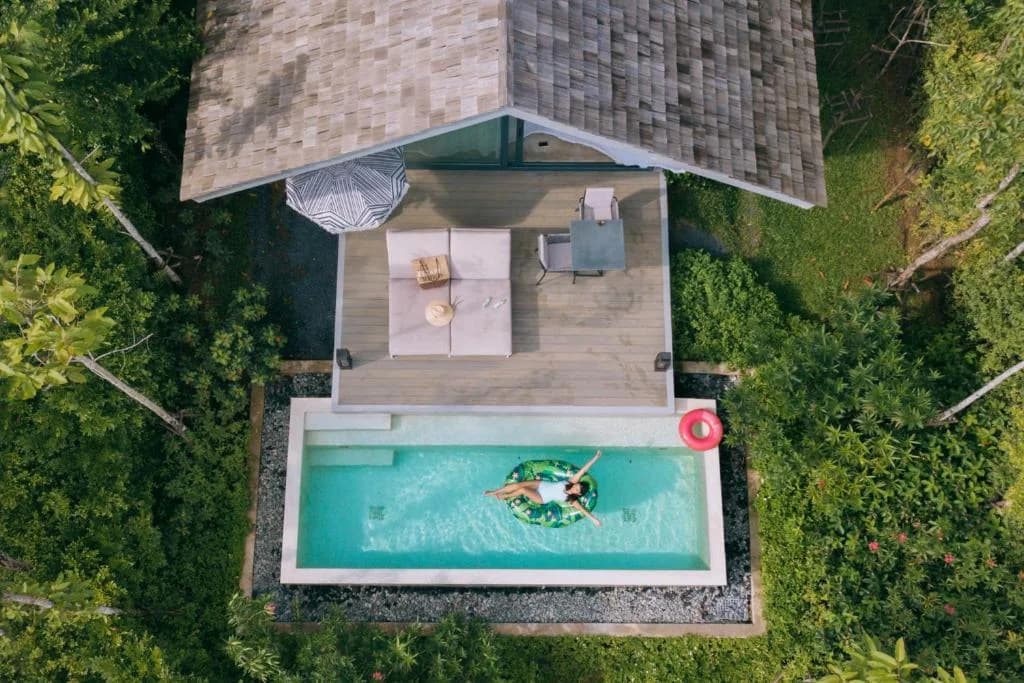
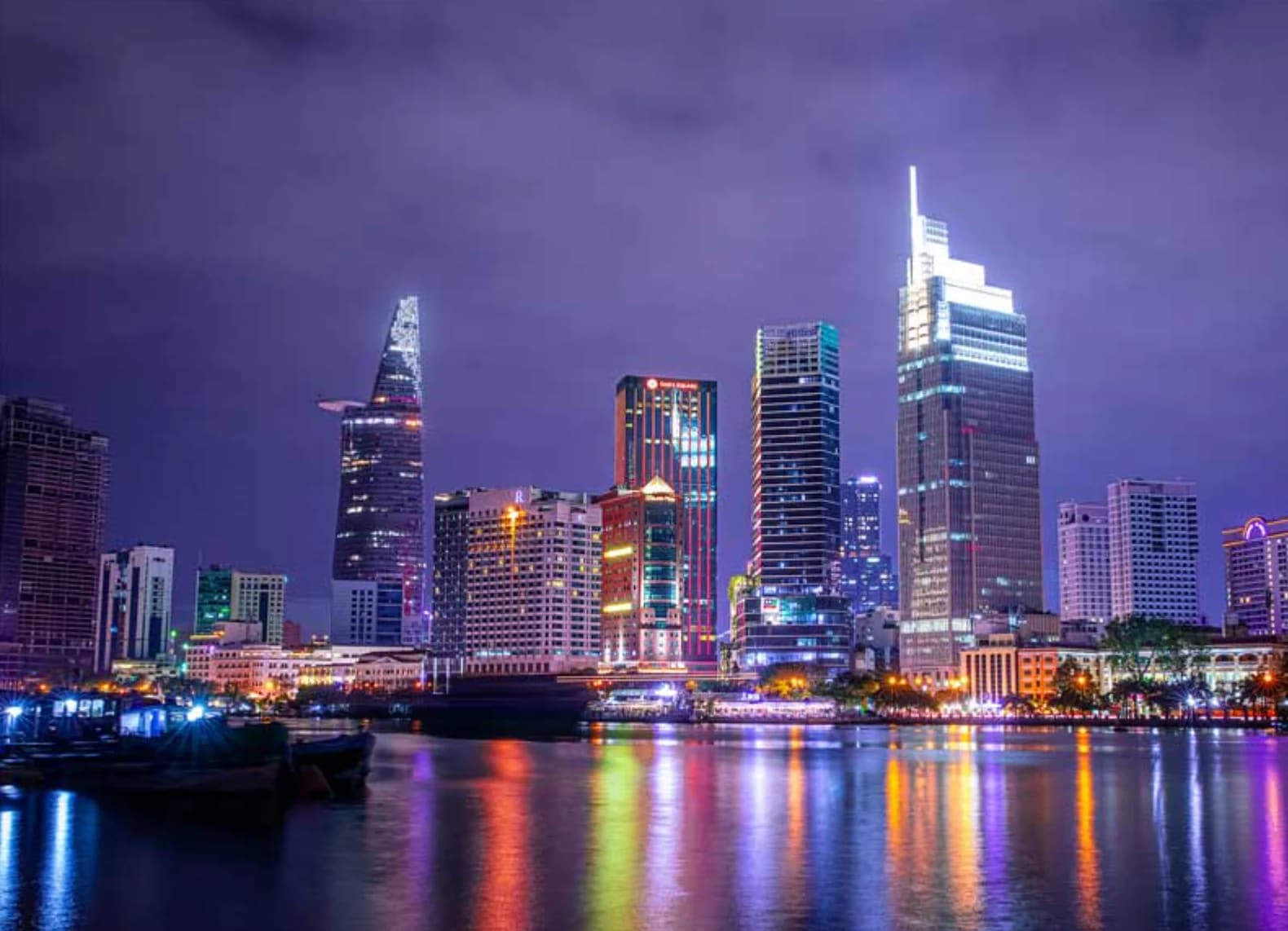
An Lam Retreats Saigon River, Ho Chi Minh City
CHECK-IN / CHECK-OUT • Check-in: 2:00 PM • Check-out: 12:00 noon • Early check-in and late check-out are subject to availability and additional charges. Kindly contact us in advance for arrangements.

Ho Chi Minh City is organized into a system of districts, each carrying a distinct atmospheric register. For travelers seeking a luxury hotel suite, the geography of where you stay matters considerably.
18 hotels available

CHECK-IN / CHECK-OUT • Check-in: 2:00 PM • Check-out: 12:00 noon • Early check-in and late check-out are subject to availability and additional charges. Kindly contact us in advance for arrangements.

Since its opening on Christmas Eve 1959, Caravelle Saigon has gained renown for being at the heart of everything important in this great city. Located in the very heart of the city center, the hotel

Comfortable Accommodations Chạm's Hotel & Homestay in Ho Chi Minh City offers family rooms with air-conditioning, private bathrooms, and modern amenities. Each room includes a mini-bar, refrigerat

Located 984 feet from Tao Dan Park in District 1, Fusion Suites Saigon offers contemporary accommodations in the vibrant Ho Chi Minh City. The hotel operates a 24-hour front desk , a fitness center, a

Located in Ho Chi Minh City and with Saigon Opera House reachable within a 10-minute walk, Hotel Indigo Saigon the City by IHG provides concierge services, non-smoking rooms, an outdoor swimming pool,

Located in downtown Ho Chi Minh City is JW Marriott Hotel & Suites Saigon, which offers luxurious accommodations with leisure facilities including a 24-hour fitness center. JW Marriott Hotel & Suites

Located in Ho Chi Minh City and with Saigon Opera House reachable within a 2-minute walk, KiN Hotel Onsen has concierge services, non-smoking rooms, a terrace, free WiFi throughout the property and a

Là Home - Stay Cozy, Stay Home enjoys a location in Ho Chi Minh City, 2 miles from Takashimaya Vietnam and 2 miles from Museum of Ho Chi Minh City. The property is around 1.8 miles from Fine Arts Muse

La Siesta Premium Saigon has an outdoor swimming pool, fitness center, a garden and terrace in Ho Chi Minh City. A 3-minute walk from Ben Thanh Street Food Market and 0.4 miles from Museum of Ho Chi M

Located in Ho Chi Minh City, a 8-minute walk from Tan Dinh Market, La Vela Saigon Hotel has accommodations with an outdoor swimming pool, free private parking, a fitness center and a shared lounge. Th

This French colonial-style hotel enjoys a prime location in central Ho Chi Minh City, overlooking the Opera House on Lam Son Square. Only 328 feet from Dong Khoi Shopping Street, it offers a 20-yard o

Located in Ho Chi Minh City and with War Remnants Museum reachable within a 11-minute walk, President Maison Signature By M Village provides concierge services, allergy-free rooms, an outdoor swimming

Attractively located in Ho Chi Minh City, Rêve Ho Chi Minh City, Vignette Collection by IHG has air-conditioned rooms, an outdoor swimming pool and a terrace. Each room at the 5-star hotel has city vi

Located in Ho Chi Minh City, a 4-minute walk from Saigon Opera House, Sheraton Saigon Grand Opera Hotel provides accommodations with free bikes, free private parking, an outdoor swimming pool and a fi

Featuring 4-star accommodations, Signature by M Village Hai Bà Trưng, a brand of Modern Village Lifestyle is located in Ho Chi Minh City, a 2-minute walk from Saigon Opera House and 500 yards from Ho

professional

Sofitel Saigon Plaza offers luxurious accommodations, a fitness center and swimming pool at the heart of Ho Chi Minh City. Near several shopping and entertainment options it is also close to major at

Boasting a fitness center, bar and views of city, Vinpearl Landmark 81, Autograph Collection is set in Ho Chi Minh City. Featuring a 24-hour front desk, this property also has a restaurant and an outd
District 1 remains the reference address for high-end stays. It contains the greatest concentration of landmark buildings from the French colonial era, including the Reunification Palace and the Notre-Dame Cathedral. The luxury hotels positioned here place guests within walking distance of the city's institutional fabric. Streets like Dong Khoi, the former Rue Catinat, retain a boulevard quality that rewards slow movement. A suite in this district functions as both a retreat and a staging point for the city's most historically dense itineraries.
The area east of the Saigon River, particularly the Thao Dien neighbourhood within what is now Thu Duc City, has become the preferred address for expatriate professionals and international creatives. The atmosphere is quieter, greener, and more residential. Several boutique luxury properties have established themselves here, offering a counterpoint to the density of District 1. Travelers who prefer their stays to feel more like private residences than hotel operations tend to orient toward this part of the city.
District 3 offers a slightly slower tempo without sacrificing proximity to the center. The architecture here mixes French villas with mid-century Vietnamese urban forms. For travelers interested in the city's cultural and artistic scene, this district provides access to galleries, independent restaurants, and neighbourhood life that feels less curated for visitors.
Ho Chi Minh City sits in the southern tropical zone of Vietnam and follows a two-season pattern rather than four. The dry season runs from December through April, with January and February representing the most temperate and manageable conditions. This period coincides with Tet, the Vietnamese Lunar New Year, which typically falls in late January or February. Tet brings significant cultural spectacle but also operational disruption: many local restaurants and businesses close for the duration of the festival, and suite availability at premium properties should be secured well in advance.
The wet season, from May through November, brings afternoon downpours that are typically brief but heavy. October is statistically the wettest month. The city does not shut down during the wet season, and rates at luxury hotels are generally more favorable. Travelers who are comfortable with tropical humidity and can work around daily rain often find this period preferable for its reduced tourist volume and stronger negotiating position on extended stays.
International business travel peaks between September and November and again in March, which affects suite availability at the city's top hotel properties during these windows.
Vietnam does not operate a formal national luxury classification equivalent to the French Palace designation, but the country's five-star hotel category is regulated by the Vietnam National Administration of Tourism. The top hotels in Ho Chi Minh City hold five-star certification and in several cases carry international brand affiliations that impose their own service and facility standards.
What distinguishes the most considered luxury hotel suites in the city is the integration of local material culture with international operational standards. The best properties source Vietnamese craftsmanship deliberately: lacquerwork, silk textiles, hand-carved timber detailing, and locally produced ceramics appear in the interior architecture rather than as ornamental afterthought. This is worth examining closely when selecting a suite. Properties that engage genuinely with Vietnamese craft traditions offer a materially richer experience than those that simply apply international luxury templates to a local address.
Butler service is common at the suite level in the city's leading hotels. Personalised airport transfers, in-suite dining that draws on both Vietnamese culinary technique and international preparation, and access to private dining rooms are standard offerings at this tier. Roof terraces and pool access exclusive to suite guests are increasingly prevalent in newer hotel openings.
Several practical considerations apply specifically to selecting a luxury hotel suite in Ho Chi Minh City.
The city offers both restored colonial-era properties and purpose-built contemporary towers. Colonial properties often occupy lower floor plans with higher ceilings, thicker walls, and a spatial quality that newer buildings rarely replicate. Contemporary towers offer panoramic views over the Saigon River and the expanding skyline, which is a legitimate and visually compelling argument, particularly for upper-floor suite guests. The choice between these typologies depends largely on what the traveler is optimizing for: immersive historical atmosphere or clean modern spatial geometry.
Ho Chi Minh City generates considerable ambient noise, particularly around the main boulevards of District 1. Suite selection should account for orientation. Suites facing interior courtyards or positioned on upper floors away from street-facing facades offer a meaningfully different acoustic environment. This detail is worth verifying directly with properties before confirming a reservation.
The city's traffic infrastructure is under active development, with the Metro Line 1 now operational between Ben Thanh and Suoi Tien. Despite this, road traffic remains dense. A centrally located luxury suite in District 1 reduces the friction of daily movement considerably, particularly for travelers managing a mix of business appointments and cultural itineraries.
The luxury hotel market in Ho Chi Minh City has expanded rapidly over the past decade. International operators, regional groups, and independent Vietnamese hotel companies have all entered the upper tier of the market. This creates genuine choice but also considerable noise. Not every property that presents itself at the luxury price point delivers at the suite level. Lobby aesthetics, marketing language, and category labeling are not reliable proxies for what a suite actually delivers in terms of space, service consistency, and material quality.
La Suite applies an editorial filter to this market. The curated selection by La Suite identifies the properties where the suite experience is coherent from arrival to departure, where the architecture and service exist in alignment, and where the investment of a high-end stay returns proportionate value. For a city as layered and rapidly evolving as Ho Chi Minh City, this kind of structured curation reduces decision friction and materially improves the outcome of the stay.

First-time visitors to Ho Chi Minh City are generally best served by a luxury suite in District 1, which places them within reach of the city's main historical and cultural sites. Properties positioned along or near Dong Khoi Street offer a combination of central access and elevated service standards. La Suite curates options in this district that balance location, suite quality, and architectural character.
The two cities offer fundamentally different experiences. Ho Chi Minh City is faster, more commercially driven, and carries a French colonial architectural legacy layered over rapid contemporary development. Hanoi is older, more politically symbolic, and has a distinct northern Vietnamese cultural register. Travelers prioritizing energy, culinary diversity, and modern hotel infrastructure tend to favor Ho Chi Minh City for a luxury suite stay.
Suite rates at leading five-star properties in Ho Chi Minh City typically range from approximately 500 USD to over 2,000 USD per night depending on the property, suite category, and season. The dry season months from December through February command premium pricing, while the wet season from May through October often presents more favorable rate structures for extended stays.
The dry season, from December through April, is the most comfortable period climatically and the most sought after for luxury stays. Bookings during the Tet festival period in January or February require particularly early planning, as premium suites at top properties are secured well in advance. The shoulder months of November and May offer a practical balance between weather conditions and suite availability.
Yes, butler service is a standard feature of the suite tier at the city's leading five-star hotels. This typically includes personalised check-in, in-suite dining coordination, private transfer arrangements, and dedicated concierge support throughout the stay. The quality and proactivity of butler service varies between properties, which is one of the key variables La Suite evaluates in its curation process.
The city's luxury hotel landscape spans two principal architectural typologies. The first is the restored French colonial property, characterized by high ceilings, thick masonry walls, internal courtyards, and period detailing. The second is the contemporary tower, offering floor-to-ceiling glazing, panoramic river or skyline views, and a clean modernist spatial language. Both typologies are represented at the luxury suite level, and the choice between them is largely a matter of aesthetic preference.
Ho Chi Minh City has developed its luxury hotel infrastructure at a faster pace than many of its regional peers over the past decade, attracting international operators alongside strong regional and domestic brands. Compared to Bangkok or Singapore, the market is younger and still maturing, which means that suite experiences can vary more widely in consistency. This variability makes editorial curation particularly valuable for travelers allocating significant investment to their accommodation.
Yes, the city is a significant regional business hub and its leading luxury hotels are well configured for extended professional stays. Suite layouts at the top properties typically include dedicated work areas, high-speed connectivity, meeting room access, and in-suite dining capable of supporting working meals. The central location of District 1 properties reduces transit time to the major commercial and financial addresses in the city.
The most considered luxury hotel suites in the city integrate Vietnamese craft traditions into their interior architecture in substantive ways. Look for lacquerwork panels, silk textiles produced by Vietnamese artisans, hand-carved timber furniture, and ceramic pieces sourced from traditional producing regions such as Bat Trang in the north or Bien Hoa in the south. Properties that engage with this material culture authentically offer a meaningfully richer experience than those applying generic international luxury finishes.
Phu Quoc Island, which has emerged as Vietnam's most developed luxury resort destination, is accessible from Ho Chi Minh City by a flight of approximately one hour. The coastal city of Da Nang, which serves as a base for both beach resort stays and access to Hoi An, is approximately one hour and fifteen minutes by air. Many travelers combine a suite stay in Ho Chi Minh City with a coastal resort component, using the city as both an entry point and a cultural counterbalance to a beach-oriented itinerary.