Azur Lodge offers private villas in a secluded part of Sunshine Bay. It features panoramic views of Lake Wakatipu, free Wi-Fi and a private shuttle service. It is a 5-minute drive to central Queenstow

New Zealand's accommodation landscape divides naturally along geographic lines, and understanding those divisions is the first step toward a considered booking decision. The country comprises two main islands, each with a distinct character that informs the type of luxury hotel experience available.
94 hotels available

Azur Lodge offers private villas in a secluded part of Sunshine Bay. It features panoramic views of Lake Wakatipu, free Wi-Fi and a private shuttle service. It is a 5-minute drive to central Queenstow

Centrally located in Wellington, Boulcott Suites is a unique luxury apartment hotel featuring a selection of stylish accommodations from studios to four-bedroom townhouses. Guests enjoy free WiFi. Eac

Carnmore Chateau Marlborough offers luxury self-contained suites with free Wi-Fi. Guests can cool off in the outdoor swimming pool or relax by the pool with a drink from the bar. All rooms have a 42-

Situated atop a cliff above Kariotahi Beach, Castaways Resort boasts views of the Tasman Sea. It is 10 minutes’ drive from Waiuku and 70 kms drive from Auckland city centre. The elegant studios and c

The 4-star Copthorne Hotel and Resort Bay Of Islands offers an amazing location next to the historic Waitangi Treaty Grounds, a 20-minute drive from Keri Keri Airport. Guest enjoy free WiFi throughout

Located in Queenstown, 4.4 miles from Skyline Gondola and Luge, Coronet Ridge Resort provides accommodations with a garden, free private parking, a terrace and a restaurant. This 5-star hotel offers r

Delorenzo Studio Apartments offers a heated outdoor pool, on-site parking and free Wi-Fi access. Studios come with a kitchenette, laundry facilities and a private bathroom. Some apartments feature a s

Ideally located in Invercargill, Distinction Invercargill Hotel has air-conditioned rooms with free WiFi, private parking and room service. Among the various facilities of this property are a fitness

Located in Wellington's CBD, Doubletree By Hilton Wellington offers guests a city escape, just 1476 feet from the waterfront. Dine at Spring restaurant for breakfast, lunch or dinner, featuring Asian

Located in Dunedin, a 12-minute walk from Taieri Gorge Railway, Ebb-Dunedin provides accommodations with a fitness center, private parking, a garden and a terrace. This 5-star hotel offers room servic

EcoScapes has a garden, terrace, a restaurant and bar in Glenorchy. The hotel features a hot tub, room service and free WiFi. All rooms at the hotel come with a seating area and a TV. The private bat

Just 5 minutes' walk from the waters of Lake Wakatipu, Eichardt's Private Hotel offers accommodations with a fireplace, free Wi-Fi and satellite TV. Guests enjoy a restaurant and a bar. Some accommoda

Escape To Picton Boutique Hotel has free bikes, garden, a shared lounge and terrace in Picton. Among the facilities of this property are a restaurant, free shuttle service and room service, along with

Fable Auckland offers boutique, luxury accommodations in the heart of Auckland city. Located in the city's vibrant precinct, guests can enjoy nearby entertainment, retail and Auckland's scenic waterfr

Fable Dunedin Hotel is a historic Victoria-era building which has been renovated with a modern taste while keeping its historic charm. As such, please be aware the building has stairs to access some r

Located in the picturesque Canterbury high country, Fable Terrace Downs Resort features all day dining, an 18 hole golf course and a range of outdoor activities. The villas have open-plan living space

Located in Lake Tekapo, 28 miles from Mt. Dobson, Galaxy Boutique Hotel has accommodations with a shared lounge and free private parking. This 5-star hotel offers room service and a tour desk. Guests

Located at the heart of the Central Otago wine region and just a 20-minute drive from Queenstown Airport, Gibbston Valley Lodge and Spa offers luxury accommodations, 5-star personal service, an on-sit

Grand Millennium Auckland, superbly located in the city center with some of the city’s finest dining, shopping and entertainment venues at your doorstep. Grand Millennium Auckland strives to provide

Located in Rotorua, 10 miles from Rotorua International Stadium, Hana Lodge has accommodations with an outdoor swimming pool, free private parking, a fitness center and a garden. Offering a restaurant
The North Island concentrates the country's population, its primary international gateway, and its most varied micro-climates. Auckland anchors the north: a harbour city built across a volcanic field, where the better luxury hotels occupy elevated positions with sightlines across the Waitemata or Manukau harbours. The suite offer here is predominantly architectural, with contemporary properties that prioritise views, material quality, and direct access to the city's restaurant and cultural infrastructure.
Moving south and inland, Rotorua presents an entirely different proposition. The geothermal activity that defines this area, sulphur pools, active craters, and Maori cultural sites of genuine historical significance, creates a context unlike anywhere else in the Southern Hemisphere. Luxury accommodation here is often designed around access to these phenomena, with thermal bathing integrated into the property experience. Further north in the Bay of Islands region, Kerikeri offers a quieter, estate-style luxury rooted in subtropical horticulture and colonial history.
Wellington, the capital, occupies the southern tip of the North Island. Compact, architecturally self-conscious, and home to Te Papa Museon o Aotearoa and a dense concentration of independent restaurants, it suits the culturally motivated traveller who measures a trip by its institutional and culinary density rather than its landscape drama.
The South Island is where New Zealand's reputation for landscape intensity is fully justified. The Southern Alps run its length, creating a rain shadow that produces two entirely distinct ecosystems on either coast. Queenstown, on the shores of Lake Wakatipu, is the country's most internationally recognised luxury destination: a resort town calibrated for high-spend visitors, with a suite offer that ranges from lakefront contemporary properties to remote lodges accessible only by helicopter or private boat.
The Mackenzie Basin and Lake Tekapo sit within one of the world's few designated International Dark Sky Reserves, making astronomical observation a genuine component of the luxury experience here. Christchurch, rebuilt with deliberate architectural intention following the 2011 earthquake, now offers a city hotel experience defined by that reconstruction narrative: considered interiors, independent operators, and a civic identity still being written. Franz Josef and Glenorchy represent the extreme end of the immersion spectrum, where luxury is defined by access to glacier fields and remote fjordland rather than urban amenity. At the southern extreme, Dunedin offers a Victorian Gothic architectural heritage, a university city with a quiet creative economy, and accommodation increasingly attuned to the international traveller's expectations.
New Zealand's seasons are inverted relative to the Northern Hemisphere. December through February is high summer: warm temperatures across both islands, peak demand for accommodation, and the best conditions for coastal and alpine activity. This is also when international visitor numbers peak, so advance reservation for the finest suites, particularly in Queenstown and the Marlborough Sounds near Picton, is essential.
March through May, the southern autumn, is considered by many experienced travellers the optimal window. Temperatures remain moderate, the light acquires a particular quality across the Canterbury Plains and Central Otago vineyards, and the hospitality industry operates at a pace that produces a notably more attentive experience. The grape harvest in Marlborough and Hawke's Bay during March and April draws a specific category of visitor interested in provenance and winemaking at a level rarely available outside private invitation.
June through August brings winter conditions to the South Island, with snowfall in the Southern Alps and operational ski fields above Queenstown and Wanaka. A number of lodges calibrate their offer specifically around the ski season, with heated suites, fireside dining, and direct mountain access. The North Island remains mild throughout, and Hanmer Springs in particular draws visitors seeking its thermal pools during the cooler months.
New Zealand does not operate a state-administered hotel classification system equivalent to France's Palace designation or Italy's five-star gran turismo category. Quality signalling operates through international group affiliations (Relais and Chateaux, Small Luxury Hotels of the World, Leading Hotels of the World), through the Qualmark rating system administered by Tourism New Zealand, and increasingly through independent editorial curation.
The category that best defines the upper tier of New Zealand's hospitality offer is the lodge. New Zealand lodges, distinct from boutique hotels or resort properties, typically occupy private land holdings of significant scale, limit guest numbers to ensure exclusivity, and bundle accommodation with guided activity programmes, private dining, and staff-to-guest ratios that approach those of private residence staffing. Properties in this category often require direct enquiry rather than standard online booking, and availability is managed over multi-year horizons by repeat clients. The suite within such a lodge functions as a private pavilion rather than a hotel room: separate living volumes, outdoor bathing, and unobstructed landscape orientation are standard expectations at this level.
The primary decision axis in New Zealand is landscape orientation versus urban proximity. These are not mutually exclusive, but they produce fundamentally different experiences, and conflating them produces itineraries that satisfy neither preference fully.
For travellers whose priority is landscape immersion, the key practical consideration is transfer logistics. The country's most remote lodge properties require light aircraft or helicopter access, and weather windows in the South Island can close with limited notice. Building schedule flexibility into the itinerary, ideally an extra night on either side of a remote property stay, is a practical necessity rather than a luxury.
Architectural character divides between colonial heritage (stone and timber buildings of the late nineteenth and early twentieth centuries, concentrated in Dunedin, Christchurch, and the Hawke's Bay wine region), purpose-built contemporary lodges designed specifically around landscape views, and a smaller category of converted agricultural or pastoral properties. Each produces a different sensory environment, and the selection should align with the traveller's tolerance for minimalism versus material warmth.
Suite size in New Zealand lodge properties is frequently measured in outbuilding footprint rather than room square footage. A suite may occupy a standalone structure with its own deck, plunge pool, and fireplace, with the main lodge building functioning as a shared dining and social space. This model suits couples and individuals; families travelling with children should verify the structural arrangement of any property before confirming, as the physical separation between accommodation units can be significant.
The Australia and Pacific region represents one of the most spatially and experientially diverse areas in La Suite's global index. Within New Zealand specifically, the 57 properties in our curated selection have been assessed against spatial quality, landscape relationship, service architecture, and consistency of guest experience over time. We do not list on volume. Properties appear in our selection because they meet a standard, not because they have requested inclusion.
New Zealand rewards the traveller who arrives with a considered framework rather than an improvised itinerary. The distances between the country's defining landscapes are real: the journey from Warkworth in the north to Invercargill at the southern tip of the South Island spans approximately 1,900 kilometres. Selecting the right suite properties for each stage of that journey, whether anchored around Nelson and the Marlborough Sounds, the thermal landscapes of the central North Island, or the glacial approaches near Featherston and the Wairarapa, requires the kind of contextual knowledge that a curated platform, not an aggregator, exists to provide. The La Suite selection for New Zealand is the result of that editorial process, applied rigorously and updated continuously.

March through May, the southern autumn, offers the most balanced conditions: moderate temperatures, lower visitor volumes than summer, and peak quality of service at the country's top lodge and hotel properties. December through February is peak summer and produces the highest demand for suites in Queenstown and the Marlborough Sounds, requiring advance reservation of several months for the finest properties.
New Zealand lodges typically occupy private landholdings of substantial scale, limit total guest numbers to preserve exclusivity, and provide suite accommodation in standalone structures rather than within a multi-floor hotel building. The lodge suite often includes a private deck, outdoor bathing, direct landscape orientation, and access to guided activity programmes that are calibrated to the specific property's terrain.
For peak summer months (December to February) and for the most sought-after South Island lodge properties, a reservation window of six to twelve months is standard practice. Remote lodge properties with very limited suite inventories are often managed by repeat clients over multi-year cycles, and direct enquiry to the property or to a curated platform is advisable rather than relying solely on standard booking channels.
Yes, though the structural arrangement of lodge properties requires careful verification before booking. Many of the country's top-tier lodges are designed around couples and adult travellers, with suite buildings physically separated across a large property footprint. Family-suitable properties exist, particularly in Auckland, Christchurch, and Queenstown, where resort-format hotels provide interconnecting rooms and dedicated facilities for children alongside suite-level accommodation.
A New Zealand lodge is defined by its combination of private landholding, limited guest numbers, inclusive activity programming, and high staff-to-guest ratios. A boutique luxury hotel in a city such as Auckland or Wellington prioritises architectural quality, culinary access, and proximity to cultural infrastructure, without the landscape immersion component that defines the lodge experience. Both categories appear in La Suite's New Zealand selection, serving different traveller priorities.
Queenstown and the surrounding Otago region offer the highest concentration of internationally recognised luxury properties, with lake and mountain orientations. The Marlborough Sounds provide a maritime lodge experience of notable seclusion. The geothermal zone centred on Rotorua offers a suite experience unlike anywhere else in the Southern Hemisphere. Auckland provides urban sophistication with harbour views, and the Mackenzie Basin around Lake Tekapo offers one of the world's few International Dark Sky Reserve settings for night-sky observation from a private suite.
New Zealand does not have a mandatory state-administered hotel classification system equivalent to France's Palace designation. Quality is signalled through international affiliations such as Relais and Chateaux, Small Luxury Hotels of the World, and Leading Hotels of the World, as well as through the voluntary Qualmark rating system administered by Tourism New Zealand. Independent editorial curation, such as the La Suite selection process, applies consistent criteria across the full property portfolio in a way that voluntary rating systems cannot.
Three architectural categories dominate New Zealand's top-tier suite offer: purpose-built contemporary lodges designed specifically to frame landscape views, colonial heritage buildings dating from the late nineteenth and early twentieth centuries (concentrated in Dunedin and Christchurch), and converted pastoral or agricultural properties repositioned as boutique accommodation. The dominant contemporary lodge typology uses timber, steel, and glass to create suites with unobstructed sightlines and integrated outdoor living spaces calibrated to the surrounding terrain.
New Zealand's geography rewards longer stays. The country spans approximately 1,600 kilometres from north to south, and the most distinctive luxury properties are distributed across both islands at considerable distances from one another. A minimum of ten to fourteen days allows a meaningful engagement with both islands without compressing the pace to a point that eliminates the contemplative quality that defines the best suite experiences here. Shorter stays of five to seven days work well for a focused single-region itinerary, such as Queenstown and Central Otago, or Auckland and the Bay of Islands.
La Suite's New Zealand selection of 57 properties is assessed against consistent criteria: spatial quality of the suite itself, the architectural and landscape relationship of the property, staff-to-guest ratios, consistency of experience over time, and the distinctiveness of the offer relative to the local context. Properties are not listed on the basis of commercial arrangement or volume of availability. The selection is updated continuously to reflect changes in property standards and new openings that meet the editorial threshold.

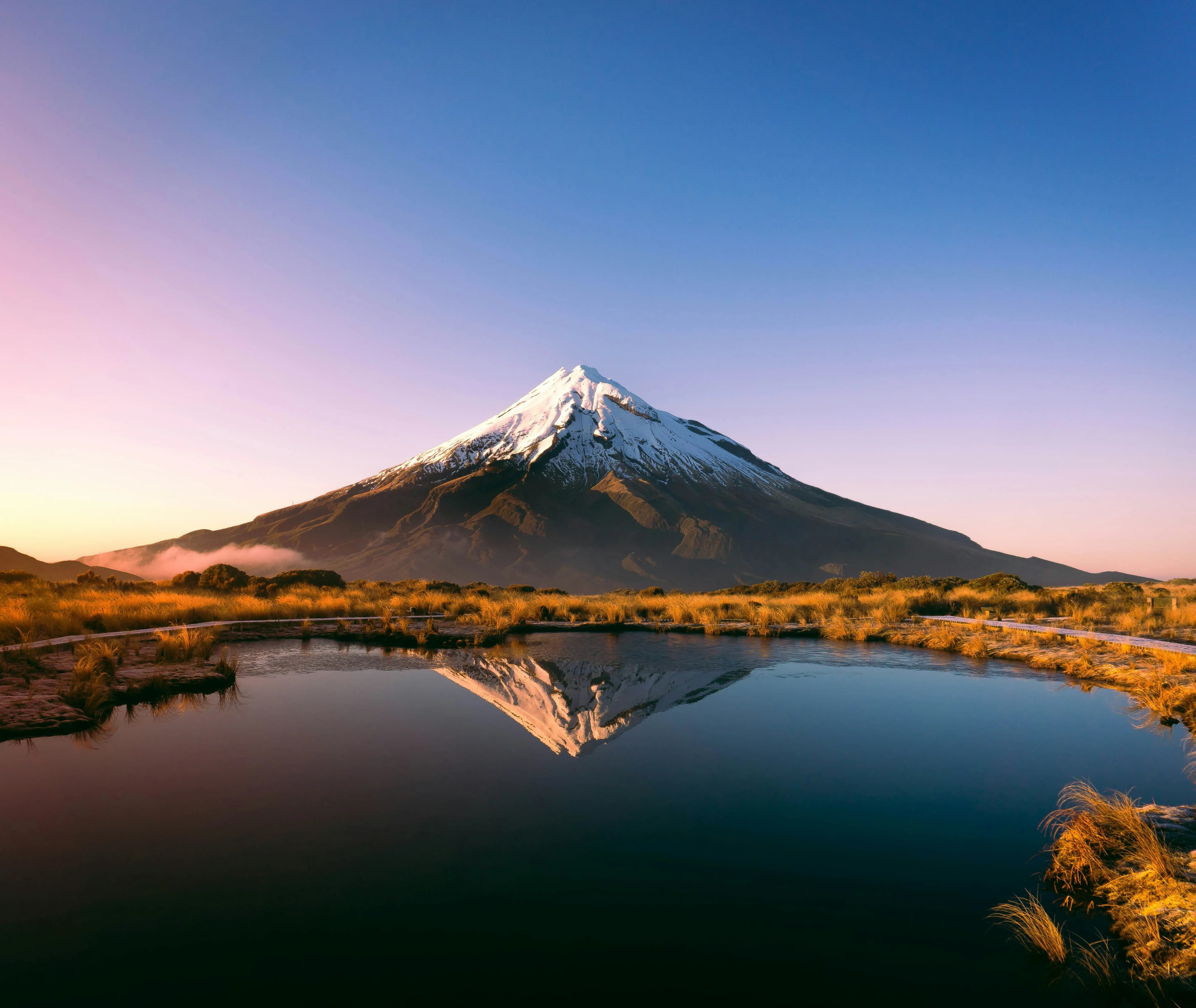
In New Zealand, hotel architecture reinvents itself through a radical vision: the suite becomes an instrument for observing the great southern landscape. From raw wood to mineral facades, discover how four exemplary establishments create a dialogue between interior space and the volcanoes, lakes and mountains of the South Island.
BY Jules Peulet