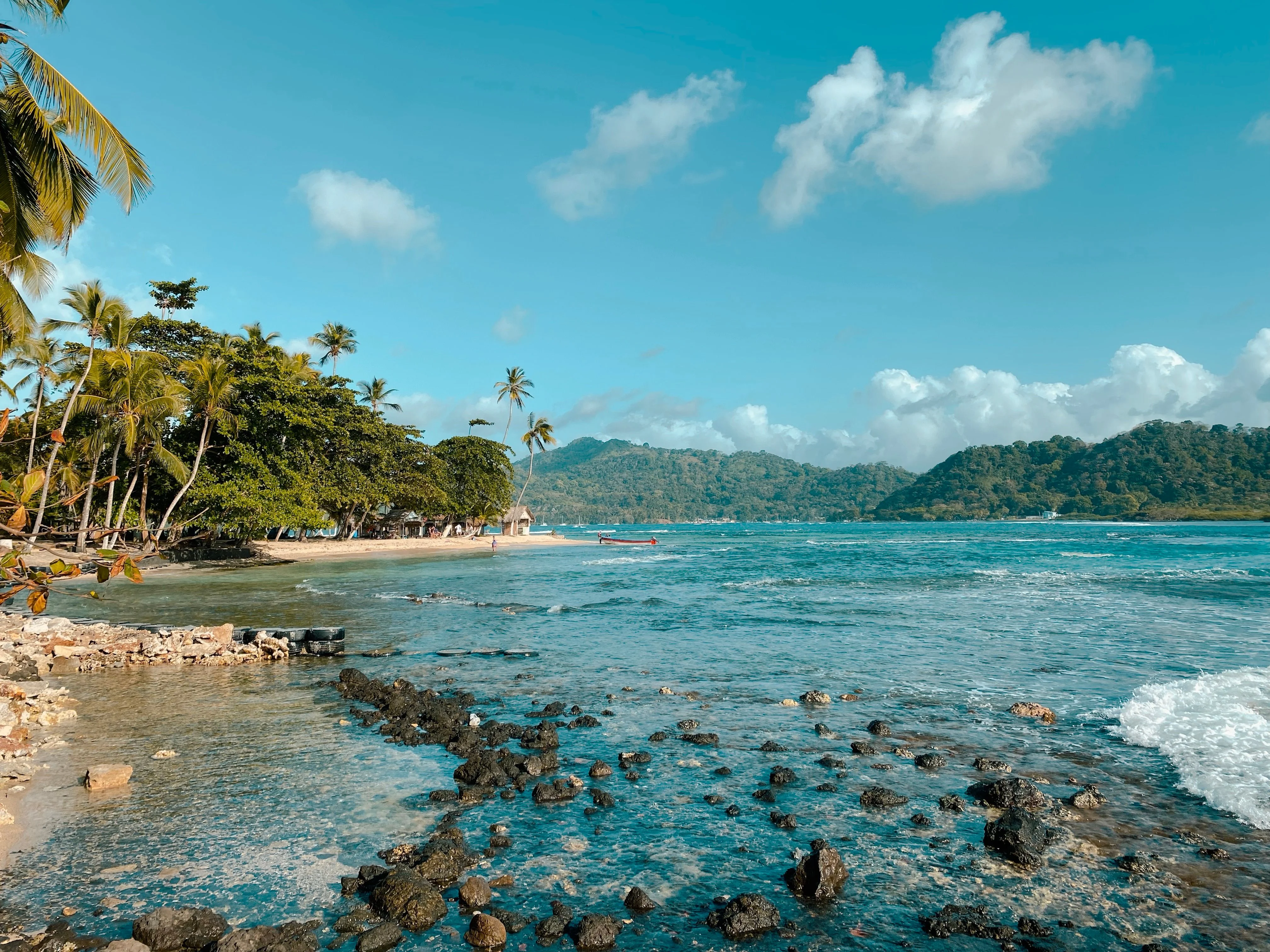
Where to stay in Dominica: areas and their distinct character
The west coast: Roseau and the leeward corridor
The leeward west coast, anchored by the capital Roseau, offers calmer seas and easier access to the island's administrative and cultural infrastructure. Properties along this corridor tend to benefit from sunset exposure over the Caribbean Sea and proximity to Dominica's few deepwater port facilities. The terrain is drier and more accessible than the interior, making it a pragmatic base for travelers combining business or diplomatic travel with leisure time.
The north: Portsmouth and the windward approach
Portsmouth, Dominica's second town, sits at the edge of Prince Rupert Bay, one of the finest natural harbors in the Eastern Caribbean. The surrounding area has attracted eco-luxury development precisely because of its relative remoteness. The Indian River, a protected waterway navigable by rowboat, begins near here. Properties in this zone offer a particular sense of arrival: access by sea is possible, and the surrounding landscape is operatically green.
The interior: volcanic highlands and geothermal terrain
Dominica's interior is among the most topographically dramatic in the Caribbean. The Boiling Lake, accessible only by a strenuous multi-hour hike, sits within a UNESCO-designated biosphere reserve. Properties positioned near the interior, or with access to geothermal bathing at Wotten Waven, offer an experience unavailable anywhere else in the region. Suite selection here is less about ocean views and more about submersion in a landscape that feels genuinely prehistoric.
The east coast: Atlantic exposure and wild terrain
The windward east coast is the island's most rugged face. Atlantic swells shape the coastline into dramatic cliffs and secluded coves. Development here is sparse by design. For travelers seeking isolation at a scale that the more developed Caribbean islands cannot provide, the east coast and its surroundings represent Dominica at its most elemental.
When to visit Dominica for a luxury suite stay
Dominica sits within the Atlantic hurricane belt, and seasonal timing matters for suite availability and comfort. The dry season runs broadly from January through May, offering the most predictable weather and the clearest conditions for diving in the marine reserve off Soufriere Bay. February and March are particularly sought after for their low humidity and reliable visibility underwater.
The island hosts the World Creole Music Festival each October, a significant cultural event drawing visitors from across the diaspora. Suite inventory during this period tightens considerably, and advance planning is essential. Dominica's Carnival, held in the days before Lent, is a locally rooted celebration with a character quite different from the more commercialized carnivals of neighboring islands.
The wetter months from July through November bring lush conditions and fewer visitors. For travelers whose priority is solitude and landscape immersion rather than beach weather, this off-peak window can offer a more private and atmospheric experience, with properties often more accommodating on extended-stay arrangements.
Understanding luxury standards in Dominica
Dominica does not operate within the conventional Caribbean luxury framework of sprawling beach resorts and high-volume service models. The island has made a deliberate national commitment to eco-tourism and low-impact development, which shapes how luxury is expressed here.
Top-tier properties in Dominica tend to be small in scale, with room counts measured in dozens rather than hundreds. The premium is placed on site sensitivity: architecture that responds to topography, materials sourced locally where possible, and operational models that minimize environmental footprint. The internationally recognized standard of the Rainforest Alliance certification is relevant here, as several leading properties hold or pursue such credentials as a genuine operational commitment rather than a marketing footnote.
Suite experiences in Dominica frequently incorporate private plunge pools fed by geothermal or rainwater systems, open-air design that allows the soundscape of the forest to function as an ambient feature, and access to curated naturalist or wellness programming. The expectation is not formality in service but precision in curation. Staff-to-guest ratios at smaller properties can be notably high, enabling a level of attentiveness uncommon in larger resort models.
Dominica does not hold a formal national hotel grading system equivalent to the French Palace designation or the UK's AA rosette framework. Quality assessment therefore depends on editorial and curatorial sources rather than official classification, which reinforces the value of a platform with genuine selection criteria.
How to choose the right suite in Dominica
Several practical considerations shape the suite selection process on this island.
Orientation and access
Dominica's road infrastructure is mountainous and, in certain areas, challenging. The transfer time from Douglas-Charles Airport in the north to properties in the south or interior can exceed an hour on roads that require attentive driving. Helicopter transfers are available and used by some properties. When selecting a suite, the location relative to your intended activities, whether diving, hiking, or wellness programming, should be a primary filter rather than an afterthought.
Open-air versus enclosed design
Many of Dominica's finest suites incorporate open or semi-open architectural elements: louvered walls, screened outdoor sleeping areas, or infinity-edge bathing platforms that extend into the forest canopy. This is a considered design choice that integrates the environment into the living experience. Travelers with preferences around climate control or insect exposure should verify the specific configuration of any suite before confirming.
Connectivity and communication
Cellular coverage and broadband reliability vary significantly by property location. For travelers integrating professional obligations into a Dominica stay, this is a functional consideration that merits direct inquiry with individual properties.
Activity integration
The most architecturally and experientially coherent properties in Dominica treat suite access and activity programming as a unified offering. Diving, whale-watching (sperm whales are resident in Dominican waters year-round), guided hiking, and geothermal wellness are not incidental amenities but central to the property's value proposition. Suite selection should reflect alignment with this model.
Why La Suite curates Dominica for the discerning traveler
Dominica presents a curation challenge that generic travel platforms handle poorly. The island's properties are small, often independent, and vary considerably in the quality of their physical product and service consistency. Marketing language is frequently aspirational in ways that outpace the actual guest experience.
La Suite approaches Dominica with the same editorial discipline applied to established luxury markets. Properties are assessed on architectural integrity, suite spatial standards, service quality, and the coherence of their overall guest experience. The absence of a formal national classification system makes this independent curation more valuable, not less.
For the traveler who has exhausted the standard Caribbean offering and is seeking a destination that rewards engagement rather than passive consumption, Dominica warrants serious consideration. The curated selection by La Suite identifies the properties that deliver on the island's exceptional promise without overstating what remains, by design, a raw and deliberately uncommercialized destination.