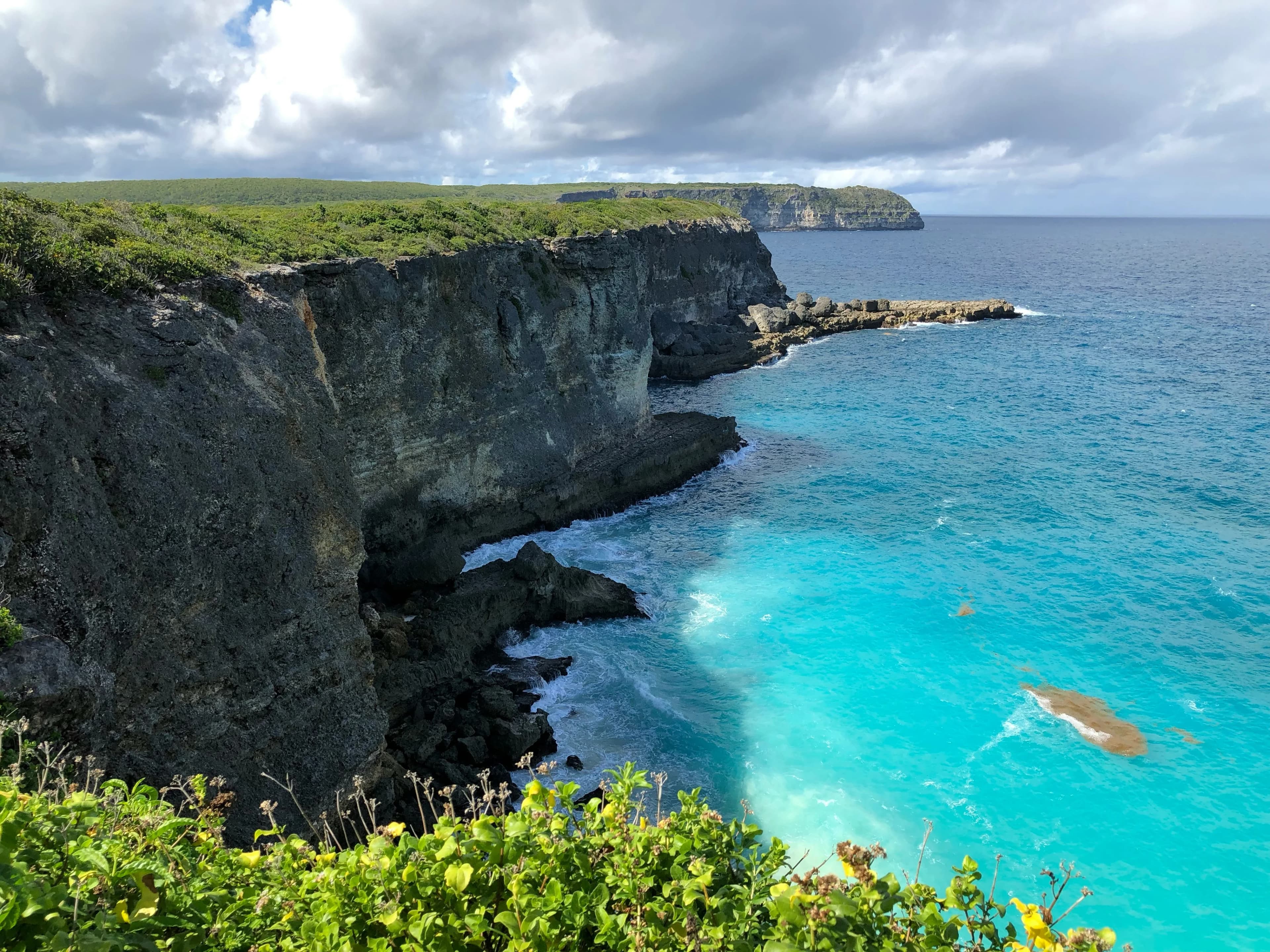
The geography of luxury in Guadeloupe
Grande-Terre: the arc of established hotels
Grande-Terre, the eastern wing of the butterfly, is where the majority of the archipelago's hotel infrastructure is concentrated. The coastline running from Gosier through Sainte-Anne to Saint-François has historically attracted the most polished properties, with direct beach access, marina proximity, and a density of fine dining and retail. The landscape here is comparatively low and open, defined by cane fields, coral reef lagoons, and a consistent trade wind that moderates the climate even during the warmer months. For travelers seeking suite accommodation within reach of structured amenity, Grande-Terre remains the most practical choice.
Basse-Terre: the volcanic interior and its intimacy
Basse-Terre is the western, mountainous wing, dominated by the La Soufrière volcano and the Guadeloupe National Park, one of the largest protected forest areas in the French Caribbean. The accommodation offer here is smaller in scale and more boutique in orientation. Properties here tend to emphasize immersion in natural surroundings over beach proximity. Suite stays on Basse-Terre reward travelers who prioritize seclusion, altitude, and the sensory experience of tropical forest. The pace is slower, the trade more intimate, and the architecture often reflects the island's Creole vernacular more directly.
Les Saintes and Marie-Galante: the outlying islands
The smaller dependencies of Les Saintes and Marie-Galante offer a different register entirely. Les Saintes, an archipelago of nine small islands, is regarded by many as among the most architecturally preserved colonial settlements in the French Antilles. Marie-Galante, larger and predominantly agricultural, retains a culture of rum production and slow tourism that has kept hotel development modest. Luxury accommodation on these islands tends to run toward refined guesthouses and small boutique properties rather than resort-scale suites, but for travelers who value discretion over facility, they represent a compelling alternative.
When to visit Guadeloupe for a suite stay
The island operates on a climate defined by two primary seasons. The dry season, locally called carême, runs from January through June and represents the most consistently comfortable period for travel. Temperatures sit between 24 and 30 degrees Celsius, humidity is manageable, and the northeast trade winds keep coastal areas pleasant. This is the period of highest demand for premium suites, particularly around the school holiday windows in February and April.
The wet season, or hivernage, runs from July through November and brings higher humidity, more frequent rainfall, and the statistical possibility of tropical cyclone activity, most concentrated between August and October. Properties typically maintain operations through this period, and rates reflect lower demand. Travelers who accept variable weather in exchange for greater availability and reduced pricing often find that October and November, once the peak cyclone risk has passed, offer a particularly attractive combination of quiet and value.
The Carnival season in February is the archipelago's most significant cultural event, bringing intense local celebration to the streets of Pointe-à-Pitre and Basse-Terre town. For travelers interested in Guadeloupe's cultural fabric rather than pure resort experience, timing a suite stay to coincide with this period adds a dimension that purely resort-focused travel cannot replicate.
Understanding local luxury standards in Guadeloupe
Guadeloupe operates within the French administrative and tourism classification system. Hotels are rated using the standard French star system, administered by Atout France, the national tourism development agency. A five-star rating in Guadeloupe must meet the same technical criteria applied to hotels in Paris or Lyon, covering surface area, service ratios, amenity provision, and accessibility standards. This creates a meaningful floor of quality assurance that distinguishes the market from many comparable Caribbean destinations operating without equivalent regulatory oversight.
Within the luxury tier, a distinction is worth noting between resort-format properties and what the local market calls hôtels de charme: smaller, independently owned properties where design and personal service tend to be more deliberately considered. The best suite experiences in Guadeloupe often emerge from this second category, where the architecture engages with Creole tradition, materials are locally sourced, and the relationship between indoor and outdoor space is handled with more attention to the specific climate.
Guadeloupe does not have properties formally classified under the French Palace designation, which is reserved for a small number of exceptional establishments on the French mainland. The luxury positioning here is therefore calibrated differently: the expectation is French service standards and culinary seriousness within a distinctly Caribbean spatial and sensory context.
How to choose the right luxury suite in Guadeloupe
The primary variable in choosing a suite in Guadeloupe is the relationship between landscape type and what you intend to do with your time. This is not a trivial distinction. The two wings of the main island operate as fundamentally different environments.
A suite on the south coast of Grande-Terre, with direct lagoon access and coral reef within swimming distance, suits a different traveler than one positioned on the flanks of Basse-Terre with rainforest canopy and river access. The former is oriented toward marine activity, beach attendance, and the social infrastructure of a resort coastline. The latter rewards walking, botanical interest, and a more contemplative pace.
Architecture is a meaningful filter. Some properties have invested in genuinely considered Creole-inflected design, using traditional bougainvillea-shaded verandas, louvered shutters, and local hardwoods. Others apply a more generic tropical resort vocabulary. For design-literate travelers, this distinction is worth investigating before committing to a booking.
Pool configuration matters more in the Caribbean than in many other destinations. A suite with a private plunge pool changes the texture of a stay considerably, enabling a degree of privacy that shared pool access cannot provide. In Guadeloupe's climate, this is not a luxury abstraction but a practical daily advantage.
Finally, consider the culinary orientation of the property. Guadeloupe's Creole cuisine, built on the interaction of African, French, South Asian, and indigenous Amerindian techniques, is one of the Caribbean's most coherent and complex food traditions. Properties that engage seriously with this tradition, through their restaurant programming and sourcing, deliver a materially richer experience than those operating generic international menus.
Why a curated selection by La Suite matters here
Guadeloupe's hotel market is relatively contained but not easily legible from a distance. The archipelago's five territories, combined with the meaningful variation between Grande-Terre and Basse-Terre, and the additional complexity of the offshore islands, create a landscape where generic booking platforms tend to flatten distinctions that are actually significant. A property listed as beachfront may sit on a busy public beach or a semi-private cove. A suite described as having sea views may look toward open water or toward a marina car park.
La Suite's curation addresses this by prioritizing properties where the suite product, which is to say the spatial quality, the design intention, the service architecture, and the landscape relationship, has been verified rather than assumed. In a destination where the gap between the photographed and the actual can be considerable, this distinction is not a marketing formality. It is the entire basis of a well-made decision.