Where to stay in Martinique for a luxury suite experience
The north: rainforest, altitude, and volcanic presence
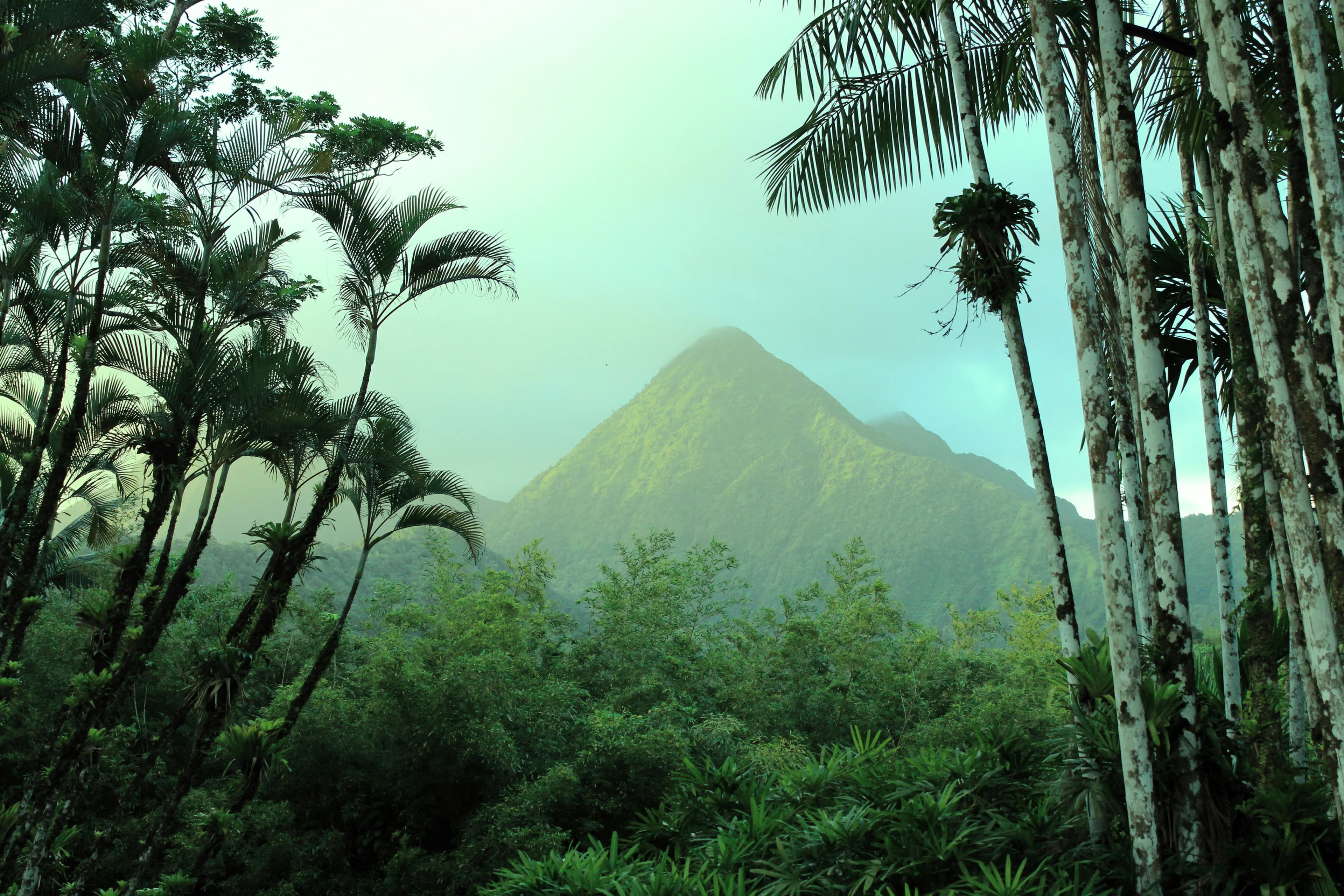
The northern end of Martinique is governed by Mont Pelée, the stratovolcano that destroyed the former capital Saint-Pierre in 1902. The landscape here is dense, green, and largely untouched by resort infrastructure. Properties in this zone tend to be intimate and architecturally considered, suited to travelers who want proximity to the island's natural logic rather than its social calendar. The Atlantic coast near Le Prêcheur and Grand'Rivière offers a rawer version of Martinique that most visitors never reach.
The centre: the capital and its surrounds
Fort-de-France, the island's capital, is a working French city rather than a resort town. Its covered market, the Bibliothèque Schoelcher with its polychrome iron facade, and the Savane park give it civic texture. For suite travelers, the capital is most useful as a point of cultural orientation rather than a destination in itself. Properties near Fort-de-France tend to serve business travel as much as leisure.
The south: beaches, marinas, and the Atlantic peninsula
The southwestern coastline, from Trois-Îlets to Sainte-Anne, concentrates most of the island's resort infrastructure. The beaches here are consistent in quality: fine sand, clear water, and reliable conditions for water sports. Les Salines, at the island's southern tip, is consistently rated among the finest beaches in the French Antilles. The southeastern Atlantic coast, particularly the Presqu'île de Caravelle, offers a different register entirely: wilder water, preserved mangrove, and fewer visitors.
When to visit Martinique for a luxury stay
Martinique sits within the tropical climate band, with two primary seasons: the dry season (carême) running roughly from December to May, and the wet season (hivernage) from June to November. The dry season delivers the conditions most travelers associate with the Caribbean: low humidity, consistent sunshine, and calmer seas. This is also when suite availability tightens and rates reflect the demand.
The high season and its cultural calendar
January through April represents peak season. The Martinique Carnival, one of the most structurally elaborate in the French Caribbean, takes place in February or March depending on the liturgical calendar. It runs across multiple days with distinct codes for each: Black and White Sunday, Ash Wednesday (Vaval), and the ceremonial burning of the Carnival King. For travelers interested in Creole culture at its most concentrated, this period is significant.
The shoulder season: June and November
The months immediately flanking the wet season offer a practical balance. Humidity rises but the landscape responds: the north becomes even more saturated in green, waterfalls run fuller, and the island operates at a quieter frequency. Some properties offer more favorable conditions during this window, and the reduction in tourist density is perceptible throughout the island.
Hurricane season considerations
The formal hurricane season runs from June through November, with peak risk in August and September. Martinique has historically been affected less severely than some neighboring islands, but the risk is real and should inform travel insurance decisions. Most experienced travelers to the French Antilles adjust their timing accordingly or plan for flexibility.
Understanding luxury standards in Martinique
The French designation system applies in Martinique as it does in metropolitan France. The Palace distinction, awarded by Atout France to properties that exceed the five-star standard in heritage, service, and cultural contribution, exists as a reference point though no Martinique property currently holds this specific classification. The island's top-tier hotels operate within the French five-star framework, with service standards shaped by both French hospitality norms and Creole warmth.
What to expect from a high-end suite in Martinique
The finest suites in Martinique tend to prioritize outdoor living: private plunge pools, direct sea access, terraces calibrated for the prevailing wind. Interior architecture in the best properties draws on colonial plantation house typology, with louvered shutters, high ceilings, and natural materials chosen for the humidity. The Creole aesthetic, when applied with precision rather than pastiche, produces interiors of genuine character. Expect cuisine that draws on the island's French culinary tradition alongside local produce: christophines, plantain, langouste, and the rum agricole for which Martinique holds an AOC designation, the only rum in the world to carry one.
How to choose the right suite in Martinique
The primary consideration is geographic. A suite on the Caribbean coast will deliver calmer water and consistent beach conditions; one on the Atlantic coast will offer more kinetic energy, stronger winds, and a more solitary atmosphere. Both are legitimate choices, but they serve different traveler profiles.
Architecture and property type
Martinique offers two broad architectural typologies at the top end of the market. The first is the plantation house conversion: properties built around former habitation structures, with the historical weight and spatial generosity that implies. The second is the purpose-built contemporary resort, where design is calibrated specifically for the guest experience rather than adapted from an existing structure. Neither is categorically superior. The question is whether the traveler prioritizes historical layering or architectural intention.
Privacy and access
Suite travelers in Martinique should verify the precise beach access situation for any property under consideration. Some of the most visually impressive properties sit above the water on hillsides, with access to the sea requiring a descent by vehicle or on foot. Others have direct beach frontage. For travelers whose primary activity is water-based, this distinction is material.
Why a curated selection by La Suite makes sense for Martinique
Martinique's hotel market is not large, but it is uneven. The gap between a well-positioned five-star property and a poorly maintained resort operating at the same star rating is significant, and not always legible from standard booking platforms. La Suite's curation process evaluates properties on criteria that reflect the actual experience of suite travel: spatial quality, service consistency, architectural merit, and the degree to which a property genuinely reflects its location rather than existing in spite of it.
For a destination like Martinique, where the island's specific character is the primary asset, this last criterion matters most. A curated selection by La Suite isolates the properties where the suite experience and the island experience are genuinely connected, where opening a window or stepping onto a terrace produces a specific and irreplaceable sense of place.