Best areas to stay in the Turks and Caicos Islands
Providenciales
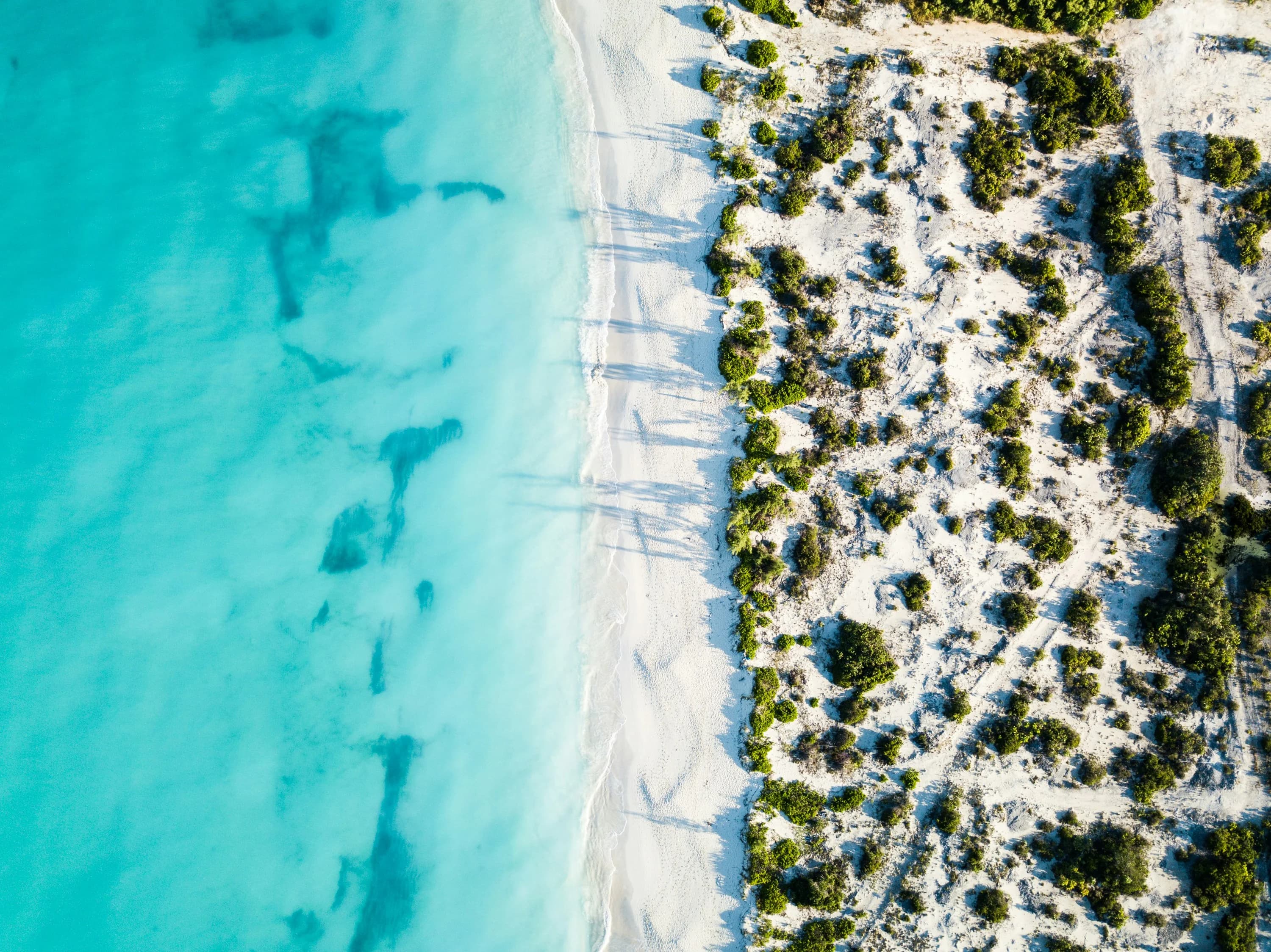
Providenciales, known locally as Provo, concentrates the highest density of luxury hotel infrastructure in the archipelago. The Grace Bay corridor, running along the island's northern coast, is the reference address for high-end suite travel. The beach itself is consistently ranked among the finest in the Atlantic basin, and the protected waters of Grace Bay attract snorkelers, divers, and those who simply require a horizon with no visual interruption. The Chalk Sound National Park on the western end offers a contrasting landscape of shallow turquoise lagoons punctuated by rocky outcrops.
North Caicos and Middle Caicos
These sister islands represent the undeveloped counterweight to Providenciales. Connected by a causeway, they offer flamingo colonies, wetlands, and an almost complete absence of commercial infrastructure. For travelers seeking extreme privacy and access to Caicos Conch Farm or the Crossing Place Trail, these islands demand a different mode of engagement, typically through private villa arrangements rather than hotel suites.
Grand Turk
The administrative capital sits on the eastern edge of the archipelago and provides a more historically grounded experience. Cockburn Town preserves Bermudian-influenced colonial architecture dating to the salt-raking era of the 18th and 19th centuries. The wall dive on the western coast drops from 7 metres to over 2,000 metres, making Grand Turk a reference destination for serious divers. Luxury accommodation here is more intimate in scale.
When to visit the Turks and Caicos Islands
The archipelago operates on a year-round tropical climate, but the calibration of timing matters for a suite-level stay.
The peak season runs from December through April, when rainfall is minimal, temperatures average between 24 and 29 degrees Celsius, and northeast trade winds keep conditions comfortable. This window aligns with the highest suite rates and lowest availability, particularly around Christmas, New Year, and Presidents Day. Advance planning of four to six months is standard practice for preferred suite categories during this period.
The shoulder months of May and June offer a meaningful balance: the weather remains reliable, the Atlantic hurricane season has not yet reached statistical probability, and pricing reflects a slight reduction in demand. Humpback whale migration passes through the Turks Island Passage from January through March, offering one of the archipelago's most distinctive natural encounters accessible directly from the water.
July through November carries hurricane risk, with the statistical peak in September and October. Some travelers accept this risk in exchange for substantially reduced rates and near-empty beaches. The most weather-aware approach is to book suites with flexible cancellation terms during this window.
Local luxury standards in the Turks and Caicos Islands
The Turks and Caicos operates within the British Overseas Territory framework, which means hotel classification follows no single formal prestige label equivalent to the French Palace designation. Quality is instead communicated through brand affiliation, suite category naming, and the physical metrics of space and service ratio.
The benchmark for a high-end suite in the archipelago includes direct ocean frontage, private pool or plunge pool access, butler service, and a minimum of 90 square metres of interior space. The finest properties on Grace Bay integrate these elements into open-plan layouts that dissolve the boundary between interior and exterior through full-height sliding glass, teak terracing, and the consistent presence of the reef colour palette.
All-inclusive formats exist across the spectrum, but the suite-tier traveler more typically encounters European Plan or modified American Plan arrangements that allow for independent dining across a curated set of on-property and nearby restaurants. The local culinary identity draws on Caribbean, North American, and Latin American influences, with conch, spiny lobster, and mahi-mahi as consistent anchor ingredients.
Spa infrastructure at the top-tier properties tends toward open-air treatment pavilions, incorporating sea breezes and natural light as deliberate design elements rather than afterthoughts.
How to choose the best suite in the Turks and Caicos Islands
The primary decision axis in the archipelago is orientation. A beachfront suite on Grace Bay will always carry a different experiential logic from an over-water villa structure or an inland suite with pool access but no direct beach frontage. Both options are legitimate depending on the traveler's priorities, but the distinction is architectural and sensory, not simply a matter of rate.
Consider the floor plan as carefully as the view. In a climate where natural ventilation and outdoor living dominate, the proportion of terrace space to interior space is a meaningful indicator of suite quality. A generous terrace with direct sand access or an infinity edge pool changes how the day is structured.
Service model matters in a destination where the island's limited scale means that off-property restaurant access may require coordination. Suites with integrated butler service, private transfer arrangements, and curated excursion programming provide a level of logistical coherence that independent booking cannot replicate at the same friction level.
For families or groups, the multi-bedroom suite configuration is often more spatially and economically coherent than booking adjacent rooms. The archipelago's top properties have invested in suite categories that address this format explicitly, with shared living areas, private kitchens, and separate staff entry points.
Why La Suite curates the Turks and Caicos selection
The Turks and Caicos market presents a specific editorial challenge: the volume of properties marketing themselves at the luxury tier is high relative to the number that actually deliver on suite-level expectations. Price point alone is an unreliable filter in a destination where demand consistently outpaces genuine quality differentiation.
La Suite applies a selection methodology grounded in physical inspection criteria, spatial standards, service architecture, and the coherence between a property's positioning and its actual delivery. In a geography where the beach is always the primary asset, the question La Suite asks is what the suite adds beyond the view. The answer, when it is honest, involves precision of design, quality of material, and the intelligence of service.
The curated selection by La Suite for the Turks and Caicos Islands is intentionally concise. It reflects only properties where the suite category functions as a complete and considered offer, not as a marketing designation applied to a larger-than-average room with an ocean view. For travelers who have already decided to visit the archipelago, this curation removes the noise and directs attention to the addresses where space, privacy, and experience align.