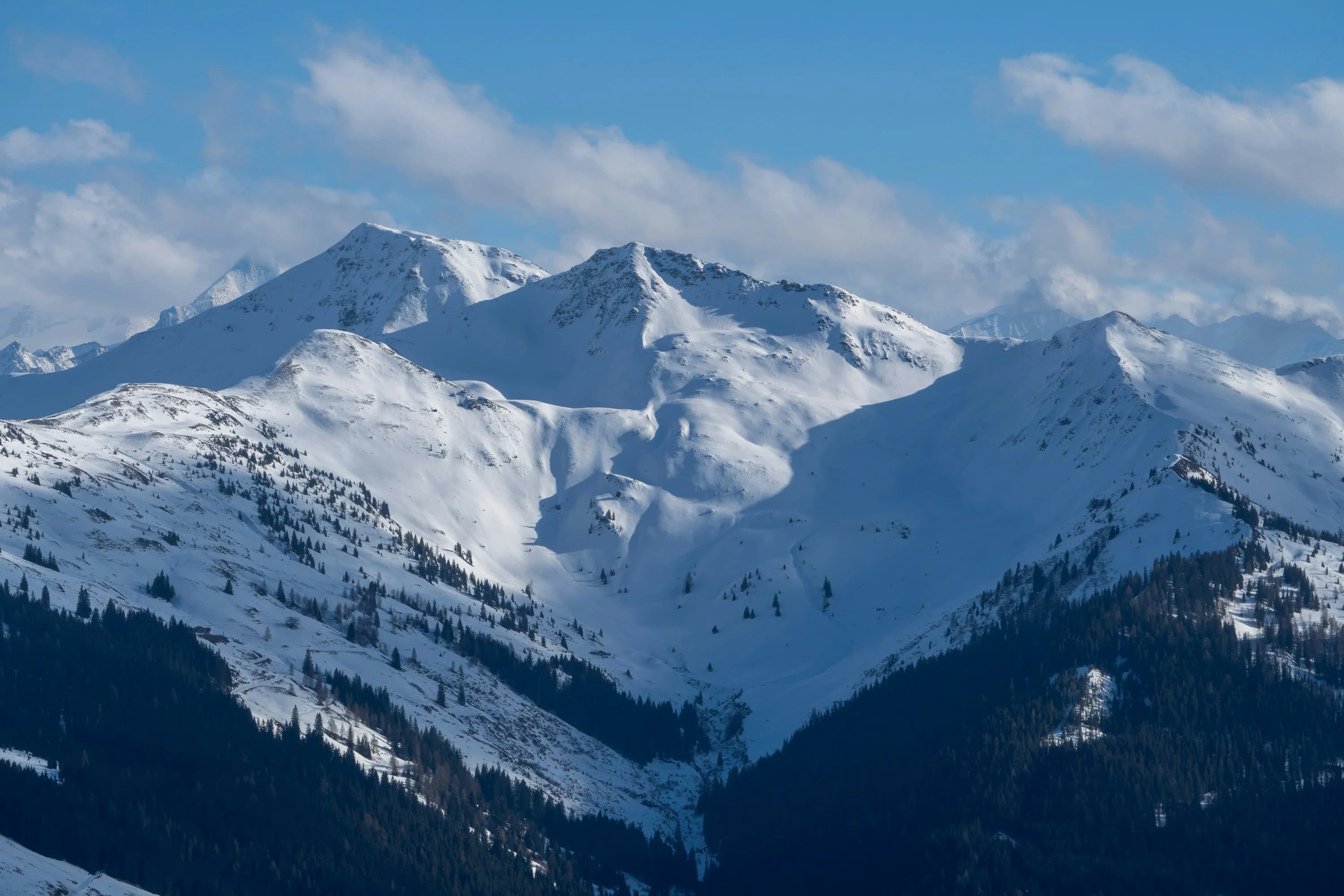
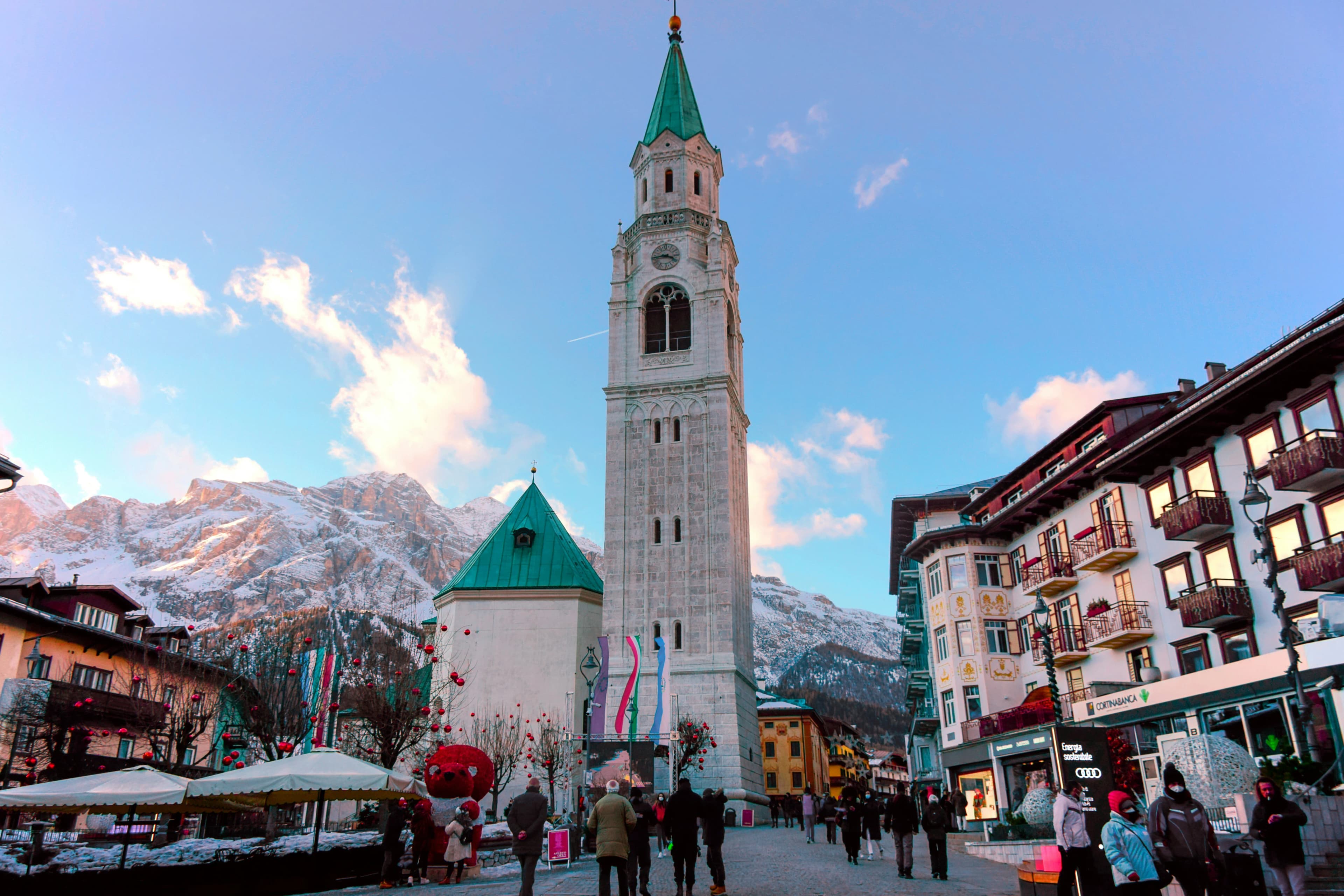
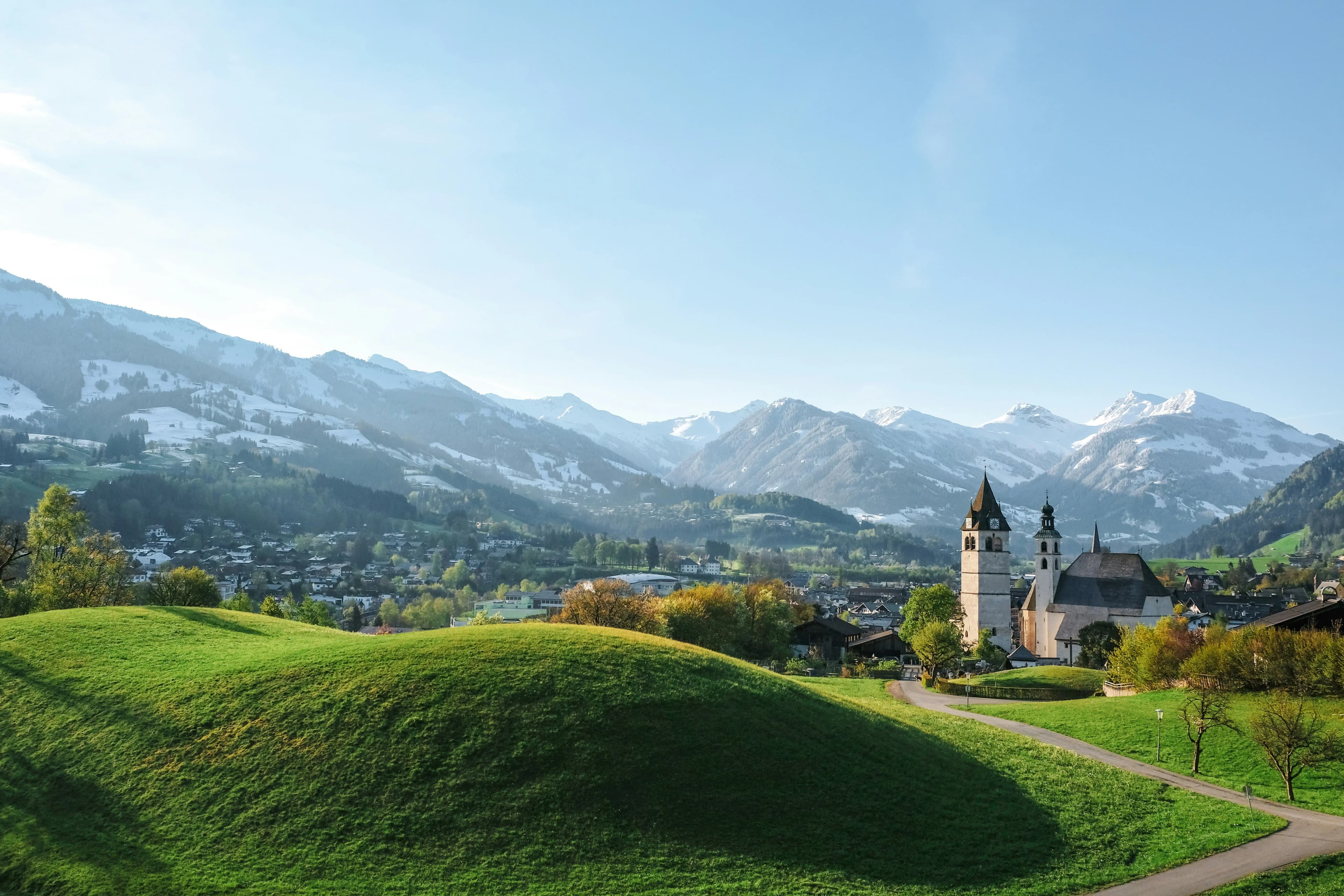
The distinct character of Saalbach-Hinterglemm as a luxury destination
Saalbach carries the social weight of the valley. Its compact pedestrian centre concentrates the après-ski culture, the better restaurants, and the majority of higher-category properties. The village is largely car-free in winter, which gives it a composed, walkable quality that rewards guests who prefer proximity to lifts and a degree of evening activity. Properties here tend towards Austrian alpine vernacular: wood-panelled facades, broad eaves, locally sourced stone. The best suites in this part of the valley occupy upper floors or chalet annexes, with direct views across the ski runs on the Schattberg and Kohlmaiskopf sectors.
Hinterglemm operates at a lower register. It is quieter, less touristic, and increasingly preferred by guests who prioritise space and discretion over social access. A number of the valley's most considered properties sit here, including those that have invested seriously in spa infrastructure and suite-level bedroom programming. The road between the two villages is flat and short, making the division largely a matter of preference rather than inconvenience.
When to visit Saalbach-Hinterglemm for a suite stay
The valley operates two distinct seasons, and both warrant serious consideration depending on what a traveler is optimising for.
Winter runs from late November through early April. Peak demand concentrates around the Christmas and New Year period and again across the Austrian and German school holiday windows in February. Suite inventory at this level is genuinely limited in the Glemmtal, and the best rooms at the better properties are reserved months in advance for the high-winter weeks. January, by contrast, offers the same snow conditions with considerably less pressure on availability and often more competitive rates at equivalent properties.
Summer has grown into a genuine season in its own right. The valley's lift network operates for mountain biking and hiking from late June through September, and several properties now programme their suite product specifically for warm-weather guests. The alpine landscape in July and August carries a particular quality of light and temperature that rewards those willing to look beyond the ski calendar. Wellness-focused stays, in particular, work extremely well in summer, when the absence of winter crowds gives spa facilities a different texture entirely.
The shoulder periods, October and November before the snow arrives and April after the ski season closes, are not recommended for first-time visitors. Many properties operate reduced services or close entirely during these windows.
Understanding luxury standards in Austrian alpine hotels
Austria does not use the French Palace designation. Its hotel classification system runs to five stars, with a formal five-star superior category that represents the upper tier of the national framework. In the Saalbach-Hinterglemm valley, the properties that perform at this level typically share a set of consistent characteristics: direct ski-in, ski-out access or a short boot walk to the lifts; spa facilities of genuine scale, usually built below grade to preserve the building's alpine silhouette; and suite categories that move well beyond the standard junior suite format.
Austrian alpine suite design has evolved considerably over the past decade. The vernacular materials remain, but the spatial programming has become more international in its references. Expect generous bathroom footprints, often with freestanding baths positioned to capture mountain sightlines, heated floors throughout, and bedroom volumes that separate sleeping and living functions clearly. Private balconies or terraces with outdoor seating are standard at the top tier. Some properties offer suite categories with private saunas or steam rooms, which represents a meaningful differentiator in the Austrian alpine context where thermal culture is genuinely embedded in daily life.
For a broader perspective on what Austria's finest hotel properties offer across all categories, the luxury suite selection in Austria curated by La Suite covers the full national picture, from the capital to the high alpine valleys. Austria sits within a wider European luxury hotel landscape that La Suite maps with the same editorial rigour.
How to choose the right suite in Saalbach-Hinterglemm
The decision framework for a suite stay in this valley comes down to four practical considerations.
First, ski access. In a resort where the ski-in, ski-out proposition is a genuine selling point, the gap between properties with true slope access and those marketing proximity can be significant. Assess the actual boot walk in metres, not adjectives.
Second, the suite's orientation. The valley runs east to west. South-facing rooms receive full winter sun and deliver the characteristic golden-hour light across the snow that defines the visual experience of an alpine stay. North-facing rooms are cooler and darker. This is a material distinction at altitude.
Third, spa scale. A property's spa investment is often the clearest signal of its overall positioning. A spa measured in hundreds of square metres with multiple pool formats and treatment room depth suggests a property that has thought seriously about the guest experience beyond the ski day. A modest wellness area added to a traditional guesthouse suggests something different.
Fourth, the balance between Saalbach and Hinterglemm. If evening activity and social proximity matter, Saalbach's centre is the logical base. If the priority is quiet, space, and a more contemplative rhythm, Hinterglemm's western end delivers that consistently.
Why curated selection matters in this valley
Saalbach-Hinterglemm is not a large resort by international comparison. The village footprint is compact, the number of properties operating at genuine suite level is limited, and the differences between those properties are specific enough to require editorial judgment rather than aggregated review scores.
La Suite approaches this valley as it approaches every destination in its selection: with direct knowledge of the properties, an understanding of what each suite category actually delivers, and a clear sense of which product matches which traveler profile. A family requiring connecting suite configurations has different needs from a couple optimising for spa access and slope proximity. A guest arriving for the summer mountain biking season requires a different set of property characteristics than one arriving for January powder skiing.
The curated selection by La Suite removes the noise from that decision. Rather than navigating an undifferentiated inventory of hundreds of rooms across dozens of properties, the traveler reaches a considered shortlist of suites that have been assessed against consistent criteria. In a valley where the genuinely exceptional properties are few, that filtering has direct practical value.
Practical information for suite travelers
Saalbach-Hinterglemm is reached most efficiently from Salzburg Airport, approximately 80 kilometres to the north. Transfer time by private car or chauffeured transfer runs to around 75 to 90 minutes depending on road conditions. Munich Airport serves as an alternative gateway, with a transfer of approximately two and a half hours. Rail access is limited: the nearest mainline station is Zell am See, requiring an onward road transfer of around 25 minutes into the valley.
Most top-tier properties in the valley offer ski concierge services, including boot fitting, equipment storage, and ski guide coordination. For guests who prefer to pre-arrange equipment, several specialist ski shops in Saalbach offer advance booking and delivery to the hotel. The Skicircus lift network connects directly to neighbouring Leogang, effectively doubling the terrain available from a single base.