Why Split commands serious attention from suite travelers
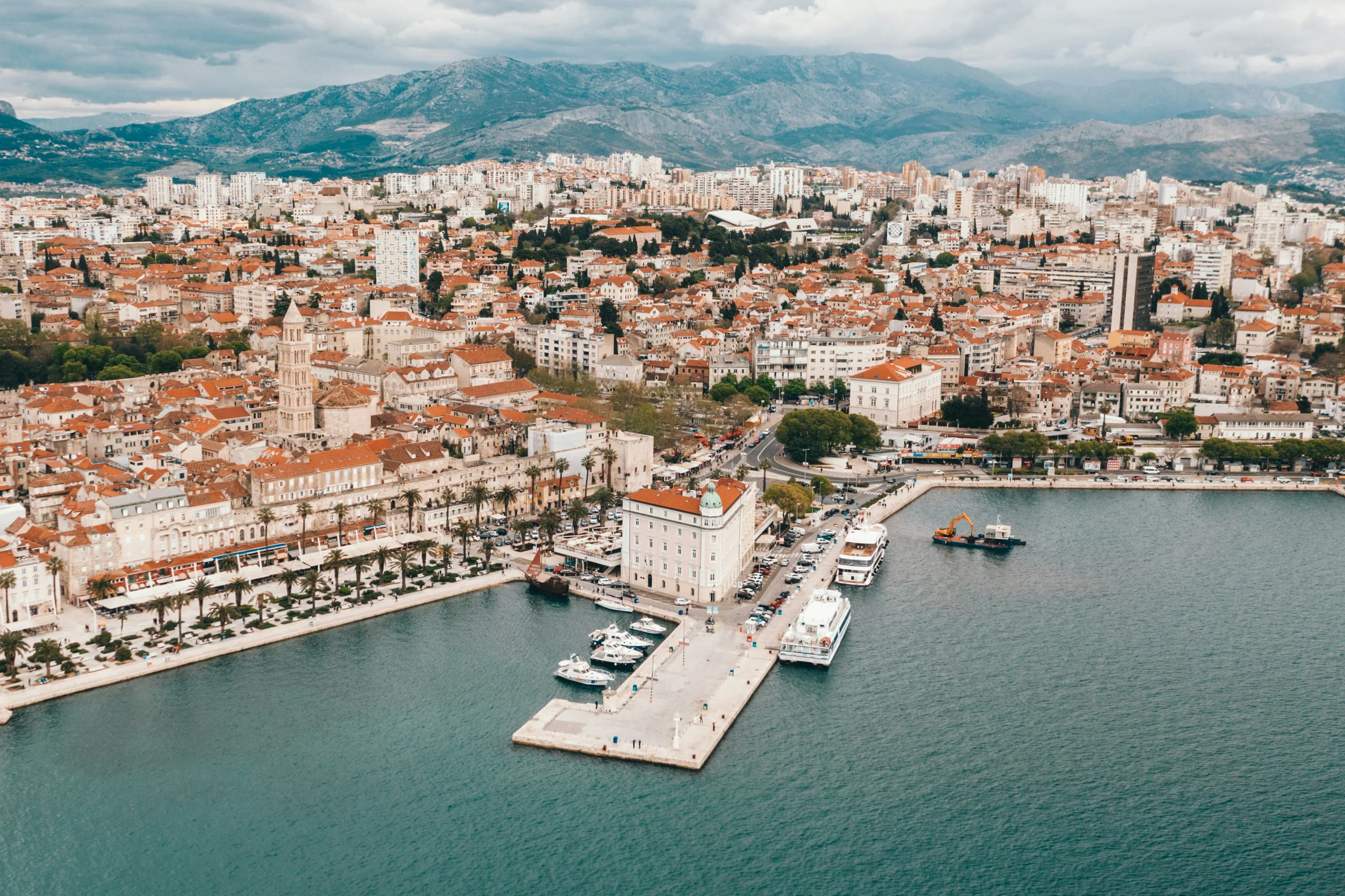
The city sits at the geographic centre of the Dalmatian coast, making it a practical base for reaching the Dalmatian hinterland, the Cetina canyon, and the islands of Brač, Hvar, and Šolta by ferry or private boat. A luxury hotel suite in Split is therefore not just a room: it is a position within one of the Mediterranean's most historically dense and scenically varied territories.
Areas of Split worth understanding before you book
The old town and Diocletian's Palace
The palace district is the most sought-after address in Split. Staying within or immediately adjacent to its walls means waking to stone corridors, Roman columns, and a peristyle that doubles as a public square. Hotels occupying palace-era buildings tend to be boutique in scale, with a limited number of rooms and suites. Architectural constraints mean that ceiling heights, room configurations, and noise levels vary considerably. Selecting the right property requires detailed knowledge of individual buildings and their position within the palace grid.
The Meštrović and Zvončac ridge
The hillside neighbourhoods west of the old town, including the area around the Meštrović Gallery, offer quieter residential settings with views over the harbour. Properties here tend to occupy larger footprints, allowing for suites with terraces and private outdoor space that are difficult to achieve within the palace walls. The trade-off is a short walk or transfer to the historic centre, which some guests prefer as a form of separation between rest and exploration.
The Bačvice and Firule seafront
The southern seafront promenade, stretching from Bačvice beach toward Firule, offers a different register of the city. Less touristically saturated than the old town, this stretch is residential, local in character, and within a reasonable distance of the historic core. Larger properties with sea-facing suites and structured amenities, including pools and spa facilities, are more commonly found here than inside the palace zone.
When to visit Split for a considered luxury experience
Split has a Mediterranean climate, with hot, dry summers and mild, wet winters. The high season runs from late June through August. During this period, the old town is at its most congested, suite availability at top properties is limited, and prices reflect that scarcity. Advance planning of three to six months is standard for the best options in peak summer.
May, early June, and September represent the most intelligent windows for suite travel. Temperatures are warm enough to use terraces and reach the islands comfortably, the city is operating at full capacity without the saturation of July and August, and hotel rates and availability are generally more favourable. October is increasingly recognised by experienced travelers as an excellent month: the Adriatic remains swimmable into early October, cultural life in the city continues, and the atmosphere shifts toward something more intimate and less performative.
The Split Summer Festival runs from mid-July to mid-August and brings classical music, opera, and theatre to outdoor venues including the peristyle of Diocletian's Palace. For culturally oriented guests, this is one of the stronger arguments for visiting during the high season despite the crowds.
Local luxury standards: what to expect from top-tier suites in Split
Croatia does not operate a formal palace hotel designation equivalent to France's Palaces classification. The local hotel grading system uses a standard star rating overseen by the Croatian Ministry of Tourism. Five-star properties are regulated under national criteria, and the designation carries legal weight, though the criteria differ from those applied in France or Italy.
In practical terms, the finest suites in Split tend to be found in boutique hotels with strong architectural identities rather than large international chain properties. Given the constraints of the old town, suites are frequently defined by their views, their material quality, and their spatial ingenuity rather than by sheer square footage. A suite overlooking the peristyle or the harbour requires a different evaluation framework than a large suite in a purpose-built resort.
Service in the best Split properties is characterised by a knowledgeable, often family-run culture. Access to concierge services, private boat transfers, island excursions, and restaurant reservations at the city's more serious dining addresses are reliable markers of a property operating at the upper end of the market.
How to choose the right luxury suite in Split
Historic fabric versus modern construction
The decision between staying within the palace walls and choosing a contemporary property outside them is substantive. Historic buildings offer authenticity and proximity to the city's defining spaces, but may limit suite size, soundproofing, and amenity infrastructure. Modern properties, or those in extensively renovated nineteenth-century villas, can offer more consistent luxury standards in terms of bathroom specification, climate control, and outdoor space.
Sea views and orientation
In Split, the distinction between a sea-facing suite and an interior courtyard suite carries significant weight. The harbour and the offshore islands of Brač and Šolta are visible from the right positions on the western and southern edges of the city. Confirming the specific orientation and view lines of a suite before booking is a practical step that significantly affects the quality of the stay.
Access and transfers
Split Airport is located approximately twenty-five kilometres northwest of the city centre, near the town of Kaštela. Transfer time by private car is typically between twenty-five and forty minutes depending on traffic. For guests arriving by yacht or private vessel, the ACI Marina Split is located immediately west of the old town, offering a direct connection to the city's historic core. Some properties can coordinate yacht-side transfers and luggage handling for arriving guests.
The value of curation in a city with limited top-tier inventory
Split's luxury accommodation market is small by the standards of comparable Mediterranean destinations. The number of properties genuinely operating at the upper end of the market is limited, and the differences between them are meaningful. A suite that appears comparable on paper may differ substantially in terms of noise exposure, view quality, bathroom finish, or the calibre of staff and service culture.
La Suite approaches the Split market with the same editorial discipline applied to destinations with far larger inventories. Only properties that meet consistent criteria across space, materiality, service, and position are included in the curated selection. For a destination where the wrong choice is easy to make and the right choice requires detailed local knowledge, the value of that curation is concrete rather than theoretical. The La Suite selection exists to remove the friction of that decision and place the guest in the right property from the outset.