Why L'Isle-sur-la-Sorgue rewards a suite stay
Best areas to stay around L'Isle-sur-la-Sorgue
The island centre
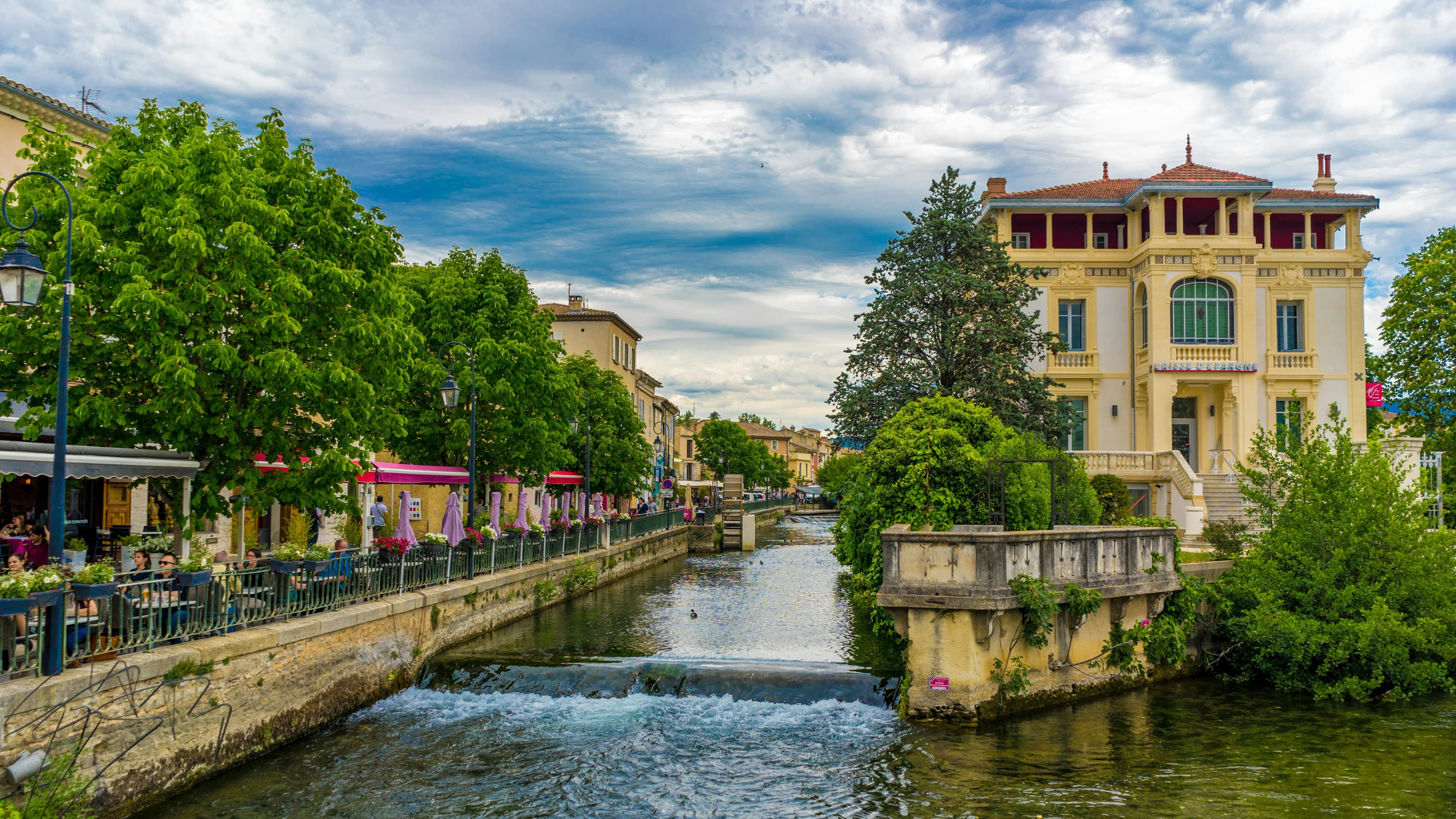
The historic core of the town sits between the Sorgue's distributary channels. Properties here place guests within walking distance of the place de la Liberté, the antique dealers' galleries, and the weekly markets. The acoustic texture of the place is defined by water: mill wheels still turn in several locations, and the light on the canals shifts continuously through the day. A suite positioned here offers immediate access to the town's social and commercial life, with the river providing natural acoustic separation from street noise at night.
The surrounding Luberon approaches
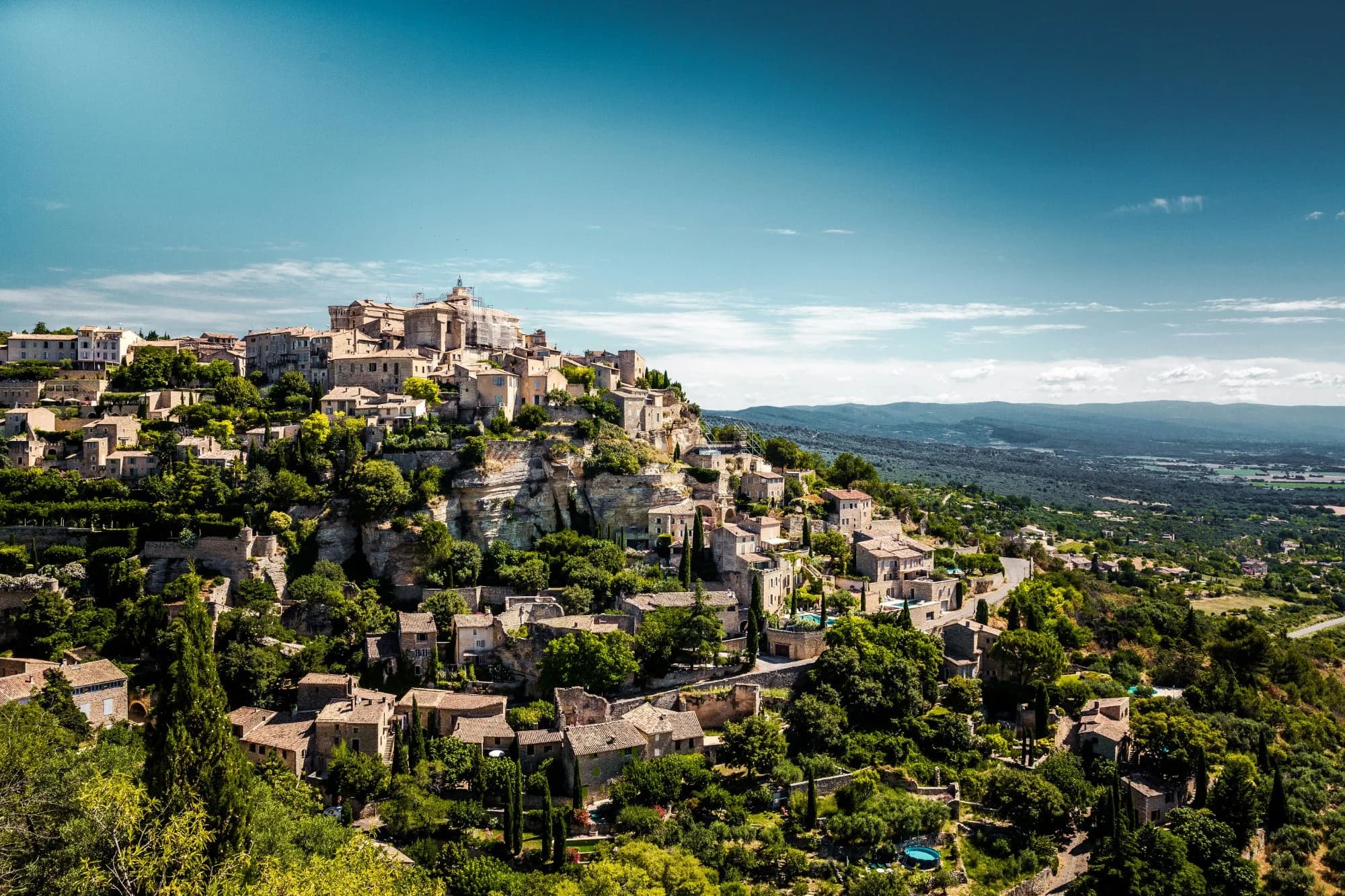
The Luberon massif begins within a short drive of the town, and several properties occupy mas and bastide conversions along the approach roads. This is a different proposition: quieter, more agricultural, with wider grounds and an orientation toward the landscape rather than the market town. Guests who want to use L'Isle-sur-la-Sorgue as a geographical pivot point for Luberon villages such as Gordes, Roussillon, and Bonnieux will find these properties logistically well placed and experientially distinct from the urban core.
The Fontaine-de-Vaucluse corridor
The Sorgue river originates at Fontaine-de-Vaucluse, one of the most powerful resurgent springs in France, approximately eight kilometres from L'Isle-sur-la-Sorgue. Properties along this corridor combine access to both the town and the spring valley, offering a greener, more secluded character while remaining connected to the town's cultural infrastructure.
When to visit L'Isle-sur-la-Sorgue
The town operates on a distinct seasonal rhythm anchored to its markets and to the broader Provençal calendar. The two principal market periods are the Easter antique fair and the August grand antique market, both of which draw international trade buyers and collectors and place significant pressure on suite availability. Booking well in advance for these periods is not optional: it is a condition of access to the better properties.
Late spring, from April through early June, offers the most temperate conditions, with the Luberon in bloom and the summer tourist volume not yet at its peak. September and October extend the warmth while the summer crowds retreat, and the light in Provence during these months has a clarity and angle that photographers and design-sensitive travelers consistently prefer. December and January are quiet, with many properties offering reduced rates, though a portion of antique dealers operate on reduced hours outside the main season.
Local luxury standards: what to expect from top-tier properties here
The luxury hotel vocabulary in this part of Provence is dominated by the mas and the bastide. A mas is a traditional Provençal farmhouse, typically built in stone, with thick walls, low ceilings in the original sections, and a functional agricultural history. Converted with precision, a mas offers a sensory experience that no purpose-built hotel can replicate: the smell of old stone in summer heat, the specific quality of light through deep-set windows, the acoustic weight of thick walls. A bastide is architecturally more formal, often with a symmetrical facade, a central staircase, and grounds that may include formal gardens, orchards, or olive groves.
The French designation Maison d'hôtes de charme and the broader Palace classification (reserved for the highest-tier urban properties in France) rarely apply directly to properties in this scale of town. What applies here is a different standard: intimacy, authenticity of fabric, quality of local material in the interiors, and the competence of the kitchen. The best suites in the L'Isle-sur-la-Sorgue area will typically include private terrace access, stone or terracotta floors, and an interior sensibility that reflects the antique culture of the town itself.
How to choose the right suite in L'Isle-sur-la-Sorgue
The first decision is between town access and landscape immersion. A suite in the island centre privileges walking, market attendance, and the particular urban pleasure of a Provençal canal town. A suite in a mas or bastide outside the centre prioritises space, silence, and the agricultural landscape of the Vaucluse. Neither is superior: they serve different travel intentions.
The second consideration is pool orientation. In July and August, afternoon temperatures in the Vaucluse regularly exceed 35 degrees Celsius. A suite with direct access to a private or semi-private pool, ideally with shade cover and a view of open land, is not an amenity: it is a functional requirement for comfort. Properties that position their suites with a northern or eastern pool orientation will typically offer cooler afternoon conditions than those with full southern exposure.
The third consideration is kitchen access or breakfast quality. The antique market culture of L'Isle-sur-la-Sorgue means that early mornings matter: the best finds at the Sunday market are gone by nine. Properties that offer early breakfast service, or suites with kitchenette capacity, give guests a practical advantage that affects the quality of the entire visit.
The value of a curated selection in this territory
L'Isle-sur-la-Sorgue is a small town. The number of properties that genuinely meet the standard for a luxury suite stay is limited, and the gap between a well-photographed conversion and a property that delivers consistent quality in its materials, its service, and its spatial experience is significant. La Suite applies a precise curatorial framework to this territory, selecting only the properties that demonstrate architectural integrity, genuine suite-level space, and a service approach appropriate to independent, design-literate travelers. The curated selection by La Suite removes the guesswork from a market where the vocabulary of luxury is not always matched by its execution.