Why Saint-Rémy-de-Provence rewards a suite-level stay
Best areas to stay in and around Saint-Rémy-de-Provence
The historic centre and its immediate edges
The old town of Saint-Rémy is walkable and largely pedestrianised at its core. Properties close to the Boulevard Mirabeau offer immediate access to the Wednesday market, the local galleries, and the network of plane-tree-lined avenues that define the town's spatial character. Suites here tend toward the converted townhouse typology: thick walls, high ceilings, and a certain quietness that the architectural fabric enforces naturally.
The Alpilles foothills and rural mas
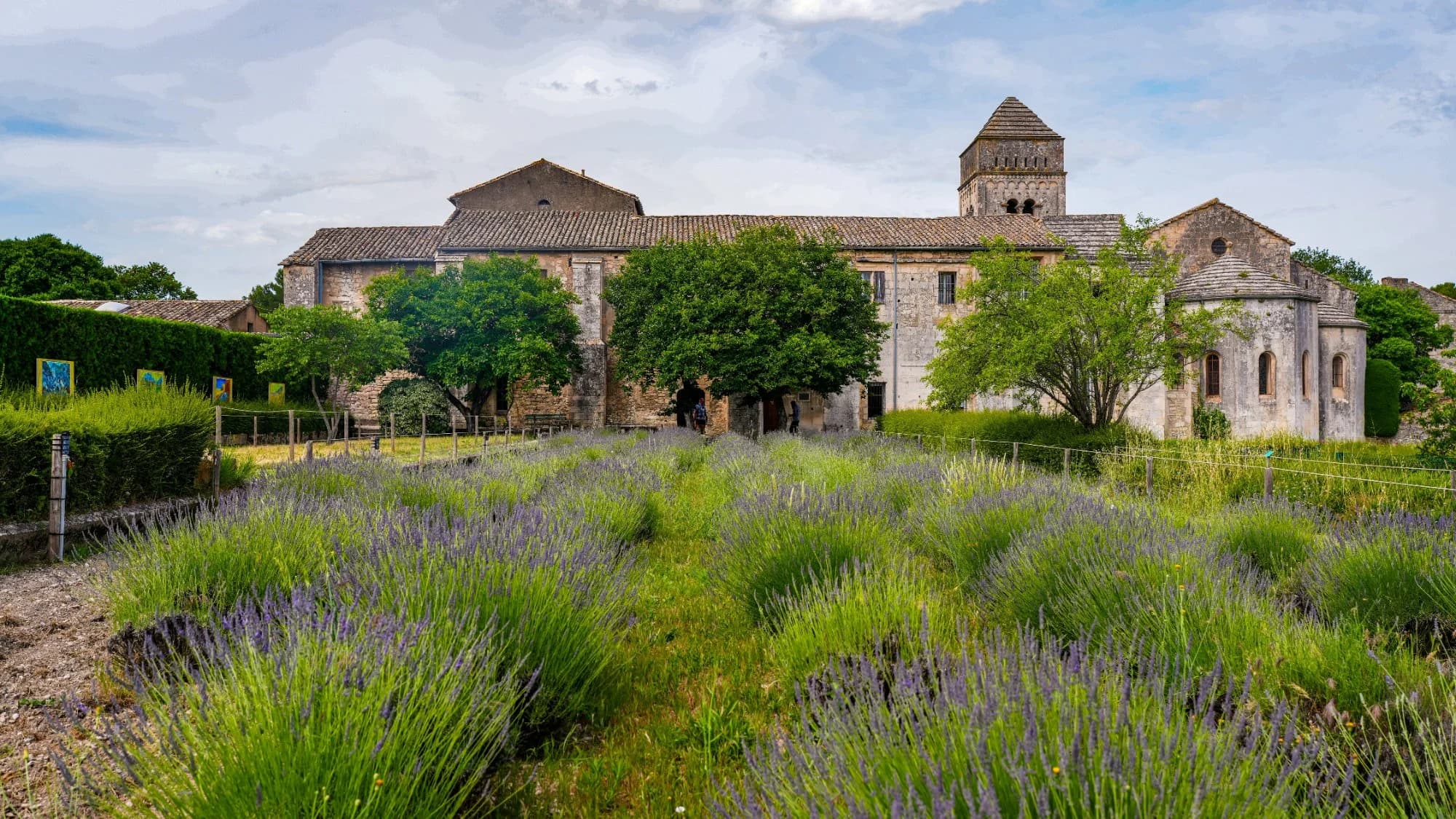
Beyond the town limits, the landscape opens into olive groves, dry-stone walls, and the limestone ridgeline of the Alpilles. A number of properties in this zone are built around the Provençal mas: a farmhouse typology characterised by irregular stone construction, internal courtyards, and a horizontal relationship with the land. Suites within a mas tend to occupy the most generous volumes, often with private pool access and views that remain uninterrupted for miles. This is the preferred choice for travelers who prioritise seclusion and outdoor space over proximity to the town centre.
Les Baux-de-Provence and the valley corridor
A short drive south through the Alpilles brings you to Les Baux-de-Provence, a fortified village of exceptional architectural severity perched on a white rock outcrop. The valley corridor between Saint-Rémy and Les Baux contains some of the most coveted addresses in all of Provence: properties that combine the agricultural heritage of the region with interiors of considerable restraint and elegance. Guests staying in this zone benefit from proximity to both the medieval drama of Les Baux and the market life of Saint-Rémy.
When to visit Saint-Rémy-de-Provence
The Provençal calendar imposes its own logic on travel planning. Spring, from late March through May, is the most considered season: temperatures are moderate, almond and cherry blossom precede the summer crowds, and suite availability is relatively open. The light in April and early May has the quality that drew Van Gogh to this specific territory: clear, mobile, and capable of extraordinary transformation across a single afternoon.
Summer, from June through August, is the high season in both attendance and price. The Wednesday market in Saint-Rémy becomes a significant cultural event drawing residents from across the Alpilles. The Fête de la Transhumance, held in Whitsun, moves several thousand sheep through the town centre in an annual ritual that has no equivalent anywhere else in France. Suite rates peak in July and August; advance planning of three to six months is standard for the most desirable properties.
Autumn is increasingly regarded by experienced travelers as the superior season. The harvest of olives and the vendange in the surrounding vineyards provide a specific agricultural rhythm. Crowds diminish sharply after mid-September, and the quality of light shifts toward a warmer, lower register that many find more photogenic and more intimate than the high summer version. October and November offer a persuasive argument for a return visit.
Winter in Saint-Rémy is quieter, occasionally cold, and subject to the Mistral: the regional north wind that arrives without warning and can persist for days. Some properties reduce their offering in January and February, but those that remain open provide a version of the town that few tourists experience. The Roman site of Glanum is walkable without crowds, and the truffle season in the nearby Luberon and Vaucluse reaches its peak between December and March.
Understanding local luxury standards in Provence
France maintains a formal classification system for its most distinguished hotel properties: the Palaces designation, awarded by Atout France, recognises properties that exceed the five-star standard in service architecture, heritage, and exceptional facilities. While Saint-Rémy itself does not host a Palace-classified property, it sits within reach of several of the most significant addresses in French hospitality. The regional typology of the mas and the bastide provides an alternative prestige reference: these are properties defined by agricultural origin, stone construction, and a relationship with land that the purpose-built hotel cannot replicate. In a luxury hotel suite within a converted mas, the prestige is spatial and sensory rather than institutional.
Provençal suites at the highest level typically feature: independent terrace or garden access, private or semi-private pool facilities, local artisanal materiality in the interior finish (linens from the Camargue, stonework from the Alpilles, ceramics from Apt), and a kitchen or kitchenette provision that acknowledges the primacy of local produce. The region's proximity to the Rhône wine corridor, the olive oil producers of Les Baux, and the herb-growing plateaux of the Alpilles makes in-suite provisions a legitimate extension of the destination experience.
How to choose the right luxury suite in Saint-Rémy-de-Provence
Several practical considerations distinguish a well-matched suite from a merely expensive one in this destination. First, orientation matters: Provençal light travels from east to west with particular intensity, and a suite with west-facing terrace access will reward late afternoons in ways that a north-facing room simply cannot. Second, noise environment deserves attention. Saint-Rémy's Wednesday market and its surrounding festival calendar introduce intermittent noise events into the old town; properties set back from the central avenues or positioned in the mas zone outside the town offer a different acoustic register. Third, pool typology is a meaningful differentiator. A shared pool in a well-designed property operates differently from a private plunge pool attached to a specific suite. For families or guests prioritising complete autonomy over the outdoor space, the latter justifies a significant premium. Finally, the question of architectural character should be resolved before booking. Saint-Rémy offers a spectrum from the formally restored historic townhouse to the contemporary interpretation of the Provençal vernacular. Both approaches have their advocates; the choice depends on whether the guest is seeking historical continuity or a clean, modern envelope within a historic setting.
The value of curated selection in this destination
Saint-Rémy-de-Provence occupies a specific and demanding position in the European luxury travel landscape. Its scale is intimate, its supply of genuine top-tier properties is limited, and the difference between a well-chosen suite and a misjudged booking is pronounced. The factors that determine that difference, including pool access, suite orientation, architectural typology, proximity to the town, and the quality of the in-suite finish, are not legible from standard booking interfaces. La Suite approaches this destination with editorial discipline: each property in the curated selection is assessed against a consistent framework, and the resulting recommendation reflects both the property's objective qualities and its fit within the broader context of what Saint-Rémy offers at the highest level. For the traveler who has already made the decision to stay in a luxury suite, the remaining question is which one. That is the question La Suite is built to answer.