El Born as a base for luxury travel in Barcelona
For high-end travellers selecting a luxury hotel suite in this quarter, the proposition is clear: immersion in Barcelona's most architecturally layered district, with the privacy and spatial standards that a curated suite provides.
Understanding El Born's character as a luxury destination
Architecture and urban fabric
El Born's urban identity is built on contrast. The neighbourhood's spine is the Passeig del Born, a wide promenade that has functioned as a public gathering space since the medieval period and is flanked today by cafés and galleries. Moving into the interior streets, the scale shifts dramatically: narrow, shaded lanes of Sant Pere and La Ribera open occasionally onto small plazas that function as neighbourhood living rooms. The Mercat de Santa Caterina, redesigned by Enric Miralles with its mosaic tile roof, provides the neighbourhood's most visually distinctive landmark and a working reference point for the quality of design thinking embedded here.
The El Born Cultural and Memorial Centre, housed in the original nineteenth-century iron market structure, preserves the archaeological remains of the 1714 siege of Barcelona beneath a restored Victorian frame. This is not decorative heritage but architectural palimpsest, and it sets the tone for how the neighbourhood relates to its own history.
Cultural and commercial density
The Picasso Museum on Carrer Montcada is one of the most visited in Spain, and its permanent collection traces the artist's early formation in a series of interconnected medieval palaces. Santa Maria del Mar, completed in 1384, is considered one of the finest examples of Catalan Gothic architecture in existence and is valued by architects and historians for the purity of its construction logic. Both institutions are walkable from any hotel in the neighbourhood.
The commercial layer is equally deliberate. El Born's retail offering concentrates on independent concept stores, atelier jewellers, and design studios rather than the international luxury flagships found on the Passeig de Gràcia. This reflects the neighbourhood's preference for curation over scale.
When to visit El Born for a luxury suite stay
Barcelona operates on a year-round tourism calendar, but El Born's particular character is best experienced outside peak summer. July and August bring significant visitor density to the narrow streets, which can compromise the sense of quiet and neighbourhood scale that makes the area distinctive for the luxury traveller. Late spring (April to June) and early autumn (September to October) represent the optimal windows: temperatures are moderate, the cultural programme is active, and the ratio of residents to visitors returns to a more balanced state.
The Festa Major de La Ribera, the neighbourhood's own local festival, takes place in late September and provides an unusually authentic window into the quarter's community life. The Primavera Sound festival, one of Europe's most respected music events, takes place in late May and early June and draws a culturally engaged, international audience that aligns closely with El Born's visitor profile.
Winter months (November through February) offer the most uncrowded version of the neighbourhood, with shorter daylight hours offset by dramatic light quality through the Gothic streets and consistent access to restaurants and institutions without reservation pressure.
Luxury hospitality standards in El Born
What to expect from a luxury hotel suite here
El Born's building stock is predominantly historic, which means that luxury hotels in the neighbourhood tend to occupy converted palaces, merchant houses, or early modern structures. Suite configurations in this context often prioritise ceiling height, original architectural detail, and interior courtyard access over the horizontal scale found in resort properties. Exposed stone, timber beaming, and interior patios are common features of the highest-tier rooms.
Spain does not operate a formal Palace hotel designation equivalent to France's official classification, but Barcelona's leading properties are recognised through their membership in international collections (such as Leading Hotels of the World or Relais et Châteaux) or through their positioning within global luxury groups. In El Born specifically, the boutique scale of most properties means that suite guests typically benefit from a higher staff-to-guest ratio and more personalised service than at larger urban hotels.
Spatial and sensory considerations
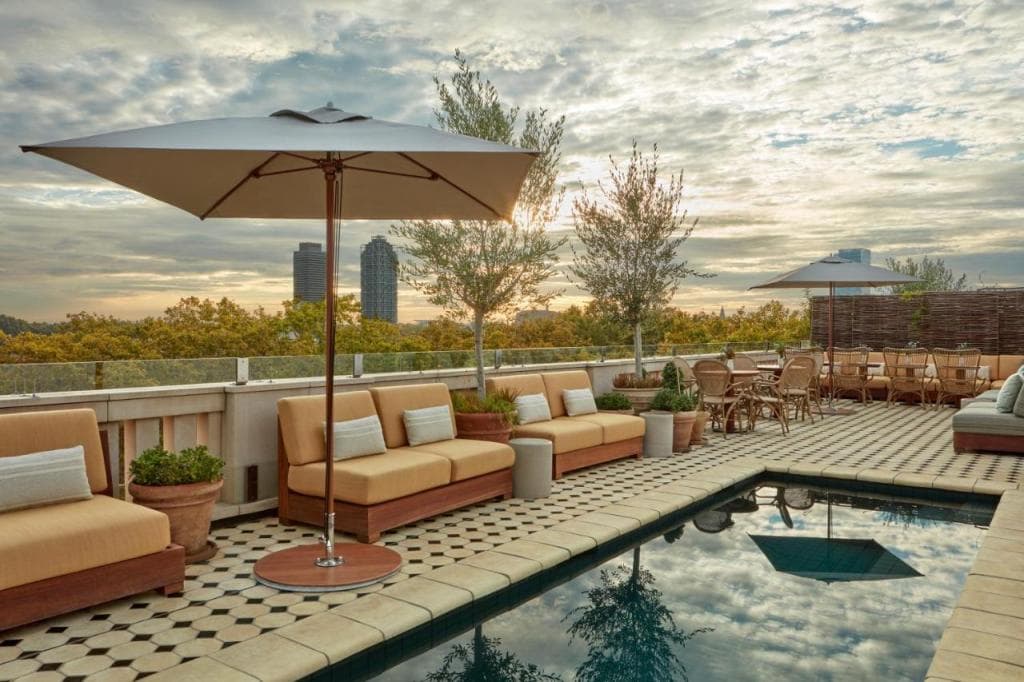
A well-chosen luxury hotel suite in El Born will use its architectural context deliberately. The best rooms face interior courtyards rather than the street, managing the ambient sound of the neighbourhood while maintaining a connection to its visual character. Terraces at roof level offer views across the low-rise medieval roofscape toward the sea, and this perspective, available only from upper-floor suites, is one of the neighbourhood's most distinctive spatial experiences.
How to choose the right luxury suite in El Born
The primary decision axis in El Born is between historic character and contemporary interior design. Some properties preserve and expose original architectural fabric as the primary design statement. Others use the historic shell as a neutral container for a more contemporary or minimal interior language. Both approaches can produce exceptional suites, but the experiential register is distinct, and the choice should reflect the traveller's preferences clearly.
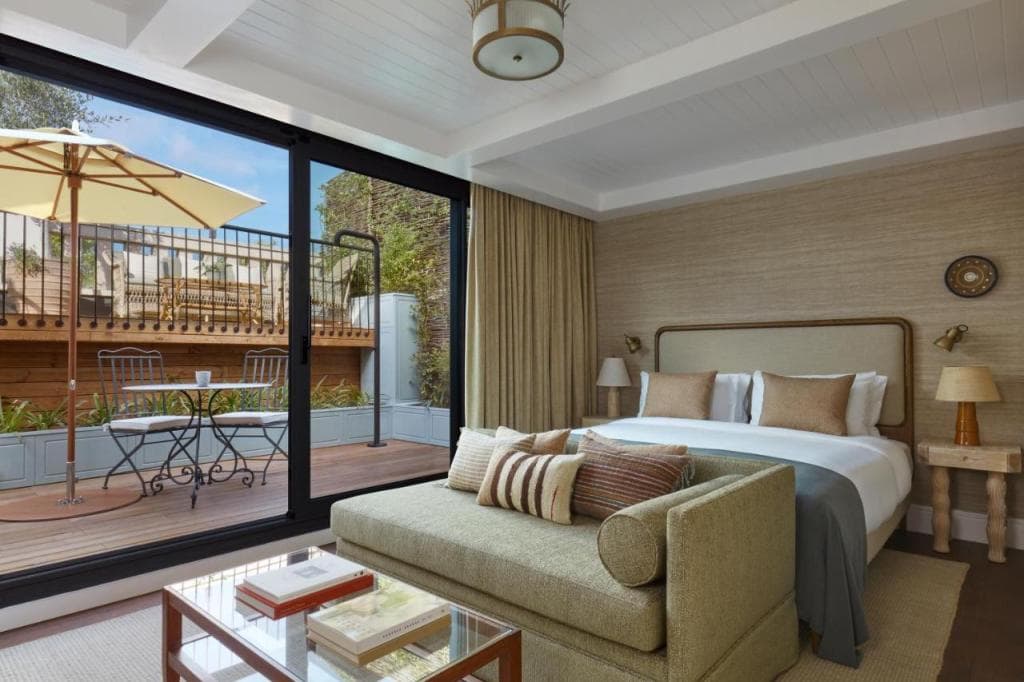
Proximity to the Passeig del Born versus the quieter interior of La Ribera is a secondary consideration. The promenade offers more immediate access to the neighbourhood's social life but carries more ambient sound. The interior streets provide greater quiet but require more navigation. For families travelling with children, ground-floor or lower-level suites with courtyard access tend to be more practical than upper-floor rooms with terrace-only outdoor space.
Concierge access, in-suite dining capability, and direct relationships with the neighbourhood's best restaurants are all indicators of suite quality worth verifying before confirming a reservation. In a neighbourhood this dense with quality dining, a hotel that cannot facilitate access adds little value over a standard room.
Why curated selection matters in El Born
El Born is a small neighbourhood with a limited number of genuinely high-quality hotel suites. The concentration of options makes curation more important, not less: with fewer properties to evaluate, the distinction between a suite that delivers on the neighbourhood's promise and one that merely occupies its geography becomes critical. La Suite's selection for El Born is built around properties where the suite experience is coherent with the neighbourhood's character: architecturally considered, spatially generous, and operationally precise.
For travellers building a broader itinerary across Barcelona, El Born functions as the culturally anchored complement to stays in other parts of the city. Its scale rewards deliberate, slow engagement rather than efficient sightseeing, and a carefully chosen luxury suite here provides the spatial and logistical base that makes that mode of travel possible.