Staying in Cardiff: what a luxury suite actually gives you
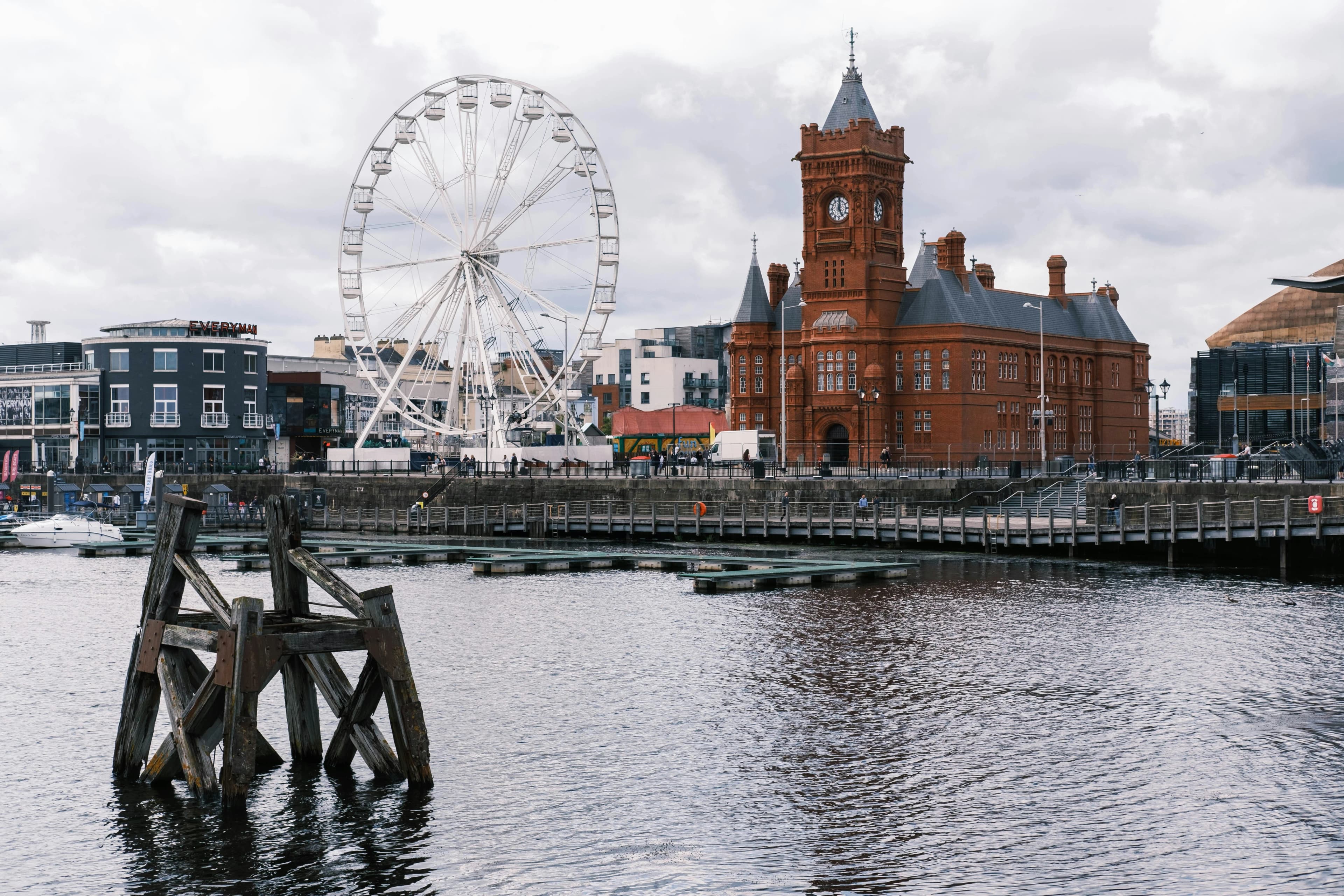
The city's architectural character is worth noting. Cardiff Castle sits at the urban core, flanked by the Victorian and Edwardian shopping arcades that cut through the city centre. Cardiff Bay, two kilometres south, is defined by the Wales Millennium Centre and the Senedd, both completed in the 2000s. These two poles, historic centre and contemporary waterfront, generate two distinct atmospheres for luxury accommodation.
Key areas for luxury accommodation in Cardiff
The city centre and castle quarter
The area immediately surrounding Cardiff Castle and Bute Park is the most historically saturated part of the city. Proximity here means walking access to the castle's Gothic Revival interiors, the National Museum of Wales (with its notable Impressionist collection), and the covered arcades that have defined Cardiff's retail character since the 1890s. Hotels in this zone tend toward classical architecture and benefit from established address prestige. For guests arriving for the Six Nations rugby internationals at the Principality Stadium, this location is logistically precise.
Cardiff Bay
The Bay district operates on a different register. Regenerated over three decades from the former Tiger Bay docklands, it now houses the Welsh national performing arts institutions, a waterfront restaurant scene, and a residential fabric that attracts a creative and professional demographic. Luxury hotel suites in the Bay area offer water views and contemporary design. The pace is quieter than the city centre, and the connection to Cardiff city centre by the Bay Link route is functional rather than scenic.
Pontcanna and the inner suburbs
Northwest of the castle, the leafy streets of Pontcanna and Canton have developed a reputation as Cardiff's most design-conscious residential neighbourhood. Independent restaurants, specialty coffee roasters, and boutique retail define the character here. Boutique properties in this area offer an alternative to the larger hotel formats, suited to travelers who prefer residential scale and neighbourhood texture over central convenience.
When to visit Cardiff for a luxury suite stay
Cardiff's events calendar creates genuine pressure on availability at the top of the market. The Six Nations Championship, running from late January through mid-March, brings international visitors to the Principality Stadium for Welsh home matches. Suite inventory at the better properties moves quickly during these weekends. The same applies to major concerts at the Principality Stadium, which regularly hosts large-scale artists, and to the Cardiff Singer of the World competition held at the Wales Millennium Centre in alternate years.
Outside these peaks, Cardiff operates with more consistent availability. The summer months (June through August) bring the longest daylight hours and the best conditions for day trips to the Gower Peninsula, the Brecon Beacons, and the Vale of Glamorgan coast. Autumn is architecturally photogenic and culturally active, with the Welsh Proms and various food and drink festivals occupying the calendar. Winter, outside the Christmas trading period, is Cardiff at its most accessible: pricing is rational, the arcades are atmospheric, and the museum collections are unhurried.
Understanding luxury hotel standards in Cardiff and Wales
Wales does not operate a formal palace hotel designation equivalent to the French Palace label. The relevant quality framework is the Visit Wales grading system, supplemented by AA Hotel ratings and Michelin recognition for dining. At the top of the Cardiff market, the reference points are five-star AA ratings and suite categories that include genuine separation of living and sleeping spaces, butler or concierge service at a meaningful level, and bathroom specifications that meet international luxury standards.
Wales has a distinct hospitality tradition rooted in country house hotels, particularly in rural Powys and the Vale of Glamorgan. In Cardiff itself, the luxury offer is more contemporary and tends toward full-service urban hotels rather than the country house model. Travelers familiar with the London five-star benchmark should calibrate expectations accordingly: Cardiff's top properties offer genuine quality but operate within a smaller market, which affects both choice and pricing dynamics.
For context on luxury accommodation across the broader territory, the United Kingdom destination guide on La Suite covers the full range of suite categories, from Scottish castle conversions to London townhouse properties and English country estates. Cardiff sits within this framework as a capital with its own distinct character.
How to choose the right suite in Cardiff
Several practical considerations shape the decision. First, proximity to the Principality Stadium is relevant if your visit coincides with a major match or concert. The stadium holds over 74,000 and its surrounding streets are dense with foot traffic on event days: a suite within walking distance eliminates transfer logistics. Second, consider the view orientation. Cardiff Bay suites with water-facing aspects offer a materially different visual experience from city-centre rooms facing the castle or Bute Park. Third, assess the dining offer within the property. Cardiff's independent restaurant scene has matured considerably, but for guests who value in-house dining at luxury level, the hotel's own restaurant or room service infrastructure becomes a deciding factor.
Architectural character is also worth considering. Cardiff's Victorian and Edwardian building stock creates opportunities for conversion properties with period detailing, while the Bay district offers contemporary architecture with large-format glazing and open-plan suite layouts. Neither is superior in absolute terms. The choice depends on the traveler's aesthetic preference and the purpose of the stay.
La Suite applies the same curation logic here as across Europe: properties are assessed on suite quality, service consistency, and experiential positioning, not on marketing category or star rating alone.
The value of a curated approach to Cardiff suite selection
Cardiff's luxury hotel market is relatively contained compared to London, Edinburgh, or Dublin. This has two implications. The range of genuinely high-calibre suite options is narrower, which makes the selection decision more consequential. And the variation between properties is significant: the difference in experience between a well-positioned suite and a standard room in a business hotel is substantial, even within the same price bracket.
La Suite's curated selection for Cardiff identifies properties that meet a defined threshold across suite specification, service infrastructure, and location logic. For travelers arriving for a specific cultural event, a sporting occasion, or a corporate engagement in the Welsh capital, this curation removes ambiguity from the decision. The properties presented are those that have been assessed against consistent criteria, and the suite categories described are verified rather than extrapolated from marketing copy.
Cardiff is a city that rewards deliberate travel. Its compactness, its cultural institutions, and its proximity to some of Wales's most distinctive landscape make it a credible destination for a considered short stay. The right luxury suite is not incidental to that experience. It is the base from which the city becomes legible.