Providing free on-site car parking in Bath, Bathen House provides a shared lounge and free WiFi. Built in 1910, the property is within 1.2 mi of Royal Crescent and 1.4 mi of The Circus Bath. The prope

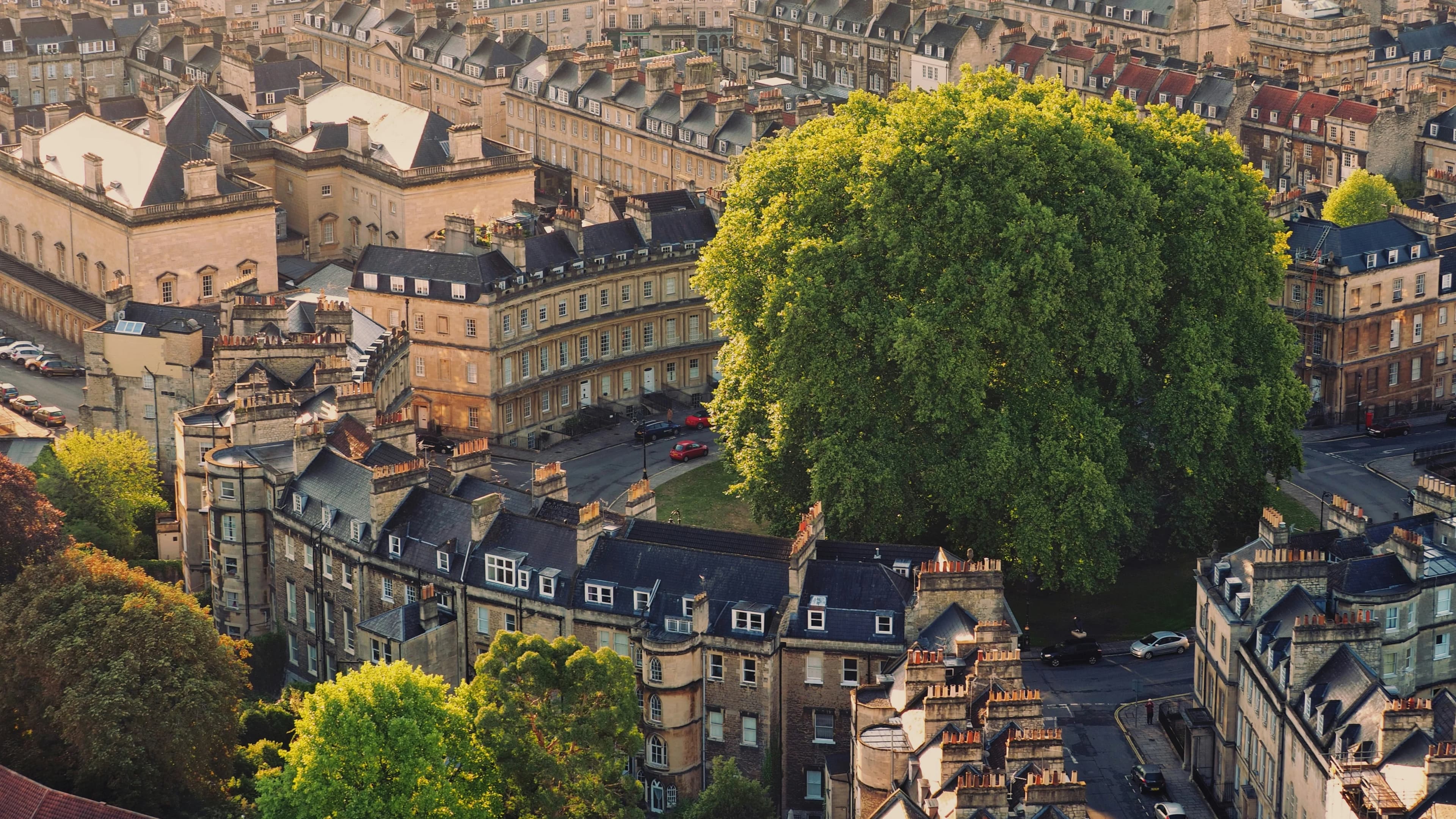
Bath is not a city that rewards haste. Its architectural coherence, the Royal Crescent, the Circus, Pulteney Bridge, the Pump Room, was the result of deliberate Georgian planning, and the city has protected that identity with notable consistency. A luxury suite here is not simply a place to sleep. It is a position from which to engage with one of England's most intelligently preserved urban environments. The correct suite in Bath carries period detail: sash windows, proportioned ceilings, plasterwork cornicing. It also carries the modern expectation of spa access, since the thermal tradition here is functional, not decorative.
13 hotels available

Providing free on-site car parking in Bath, Bathen House provides a shared lounge and free WiFi. Built in 1910, the property is within 1.2 mi of Royal Crescent and 1.4 mi of The Circus Bath. The prope

Originating from the 1780s, Henrietta House Hotel is a Georgian period townhouse set in the heart of Bath. It is a 10-minute walk from Bath Spa railway station. Free Wi-Fi is available to all guests.

Nestled in 20 acres of the serene Somerset countryside, Homewood Bath is the ultimate staycation destination. Eclectic, luxurious and slightly eccentric; think grand Georgian country house and grounds

Opened in December 2016, No.15 Great Pulteney is located just a 3-minute stroll from Pulteney Bridge, Bath Abbey and the Roman Baths. The hotel offers boutique townhouse accommodations in Bath, along

Set in Bath and with Bath Abbey reachable within 2297 feet, Pulteney House offers a shared lounge, allergy-free rooms, free WiFi and a garden. The property is located 1.4 mi from The Circus Bath, 1.6

Set within beautiful, award-winning oriental gardens, this 5-star guest accommodations features excellent views of Bath’s medieval abbey. It offers luxurious themed rooms and freshly cooked breakfasts

In a luxury country house set within 4 acres of beautiful grounds, The Bath Priory Hotel features a luxury spa and celebrated restaurant. The hotel is located less than 2 miles from Bath Abbey. The Ba

Located in central Bath, The Bird offers views over the city’s famous Recreation Ground, towards Bath Abbey. Offering free WiFi, this property is ideal for exploring Bath’s ‘World Heritage Site’ attra

Historic Setting The Gainsborough Bath Spa in Bath offers a 5-star experience within a historic building. Guests enjoy a hot spring bath, spa facilities, sauna, fitness center, indoor swimming pool, a

A Michelin Key boutique townhouse hotel in the center of Georgian Bath, The Queensberry mixes modern style with historic architecture, offering a quiet courtyard garden and an award-winning restaurant

Located in Bath's Royal Crescent, this magnificent 5-star hotel offers a fully equipped gym and a stunning spa, leading out onto a picturesque landscaped garden. It also offers an award-winning restau

This friendly, relaxing and elegant house is an easy walk from the historic city of Bath. Tyndall Villa Boutique B&B is a charming Victorian town house, built in 1874. It is tastefully furnished and

Wheelwrights Arms Country Inn & Pub is located in the peaceful village of Monkton Combe, surrounded by picturesque hills and valleys. The property is recommended by the Good Pub Guide and Michelin Gui
The western ridge of the city, anchored by the Royal Crescent and Brock Street, represents the apex of Bath's residential prestige. Hotels positioned in or adjacent to the Crescent sit inside Grade I listed Georgian terraces, which means rooms with genuine architectural weight: tall windows that frame the sweep of lawn below, original fireplaces, and a silence that the lower town cannot offer. This is the area for travellers who want their suite to double as a statement about how they engage with place.
The area around Grand Parade, Argyle Street and the eastern side of the Avon offers more commercial proximity. Hotels here tend to occupy large Georgian townhouses or converted civic buildings. Pulteney Bridge, one of only a handful of bridges in the world lined with shops on both sides, is walkable from this cluster. Suites in this corridor offer convenience alongside period character, and several properties here have invested seriously in their spa infrastructure, which matters in a city with direct access to naturally heated mineral water.
Within fifteen to thirty minutes of Bath, the landscape shifts into managed countryside. Country house hotels and former manor properties in this zone offer a different register entirely: parkland, silence, and an architecture that predates even Bath's Georgian moment. Travellers who want the city's cultural assets but the atmosphere of rural England often divide their stay between the two. La Suite covers both typologies.
Bath is navigable year-round, but the conditions shift meaningfully by season. Spring, from late March through May, delivers the clearest light in the limestone city, with the parks around the Crescent and Sydney Gardens at their most considered. Summer brings school groups and walking tours in volume, which compresses space in the streets and can test the patience of travellers accustomed to quiet. Autumn is the most coherent season for a suite stay: the crowds thin, the cultural calendar remains active, and the thermal baths feel proportionate again. The Bath Christmas Market, held across late November and into December, is one of the larger such events in England and briefly transforms the city centre around Bath Abbey into a high-footfall destination. Suite availability at premium properties tightens significantly during this period, and rates adjust accordingly. The Bath Literature Festival (typically February to March) and Bath Festivals in May and June attract a culturally engaged visitor who aligns naturally with the suite-traveller profile.
England does not operate a formal palace classification in the manner of the French Palaces system. The closest equivalent for Bath's finest hotels is a combination of five-star ratings from the AA (the Automobile Association, which applies a rigorous annual inspection process) and membership of collections such as Relais and Chateaux or Leading Hotels of the World. These affiliations signal a level of physical investment and service philosophy that aligns with the expectations of serious suite travellers.
In Bath specifically, the finest suites tend to sit inside buildings that are listed at Grade I or Grade II by Historic England, which places constraints on structural alteration but also guarantees a certain material authenticity. You will find original stone fireplaces, deep window embrasures, and ceiling heights that modern construction cannot replicate. The premium suite in a well-restored Georgian property in Bath offers something that a contemporary five-star in a capital city does not: an architectural frame that predates the hotel concept itself.
Spa facilities carry particular weight here. The Thermae Bath Spa is the only natural thermal pool in operation in the United Kingdom, and several of the city's top hotels have built their wellness offering in dialogue with this heritage. Access to mineral water, hydrotherapy, and treatment programmes informed by the city's two-thousand-year bathing culture is a legitimate differentiator in Bath that would be merely decorative in other destinations.
The primary decision in Bath is between historical immersion and contemporary service infrastructure. The finest Georgian conversions deliver period character at a level that purpose-built hotels cannot match, but they also impose certain physical realities: no two rooms are identical, staircases can be steep, and accessibility varies. Travellers for whom physical comfort and predictability are primary considerations may prefer a large-scale hotel that has been purpose-built or extensively reconfigured within a period shell.
Position within the city matters more than surface area. A suite of moderate size on the upper floors of the Royal Crescent will deliver a view and a silence that a larger suite in a commercial district cannot compensate for. Bath is a city where context is everything, and the address of a hotel here functions as an editorial statement about what kind of stay you are constructing.
Parking is a practical consideration that affects the quality of arrival. Bath's city centre is subject to strict traffic management. Properties on the Crescent and in the upper town typically offer direct or valet arrangements. Confirming this detail before arrival is advisable for anyone driving from London, the Cotswolds, or the West Country.
Bath has a small but genuinely differentiated luxury hotel market. The gap between the city's finest suite product and its mid-range offering is significant, and the surface similarity of Georgian facades can obscure real differences in investment, restoration quality, and service calibre. La Suite applies editorial criteria to this market: architectural integrity, suite-specific amenity, service consistency, and the kind of cultural alignment that distinguishes a memorable stay from a comfortable one. For a city as contextually precise as Bath, that curation has direct practical value. You are not browsing a list of options. You are reading a considered shortlist.

Bath's finest suite product is concentrated in Georgian properties on and around the Royal Crescent, in restored townhouses near Pulteney Bridge, and in country house hotels within the surrounding Somerset and Wiltshire countryside. The quality differentiator is typically the quality of period restoration combined with contemporary spa infrastructure. La Suite curates this specific tier of the market.
Bath is approximately ninety minutes from London Paddington by direct train, making it one of the most accessible luxury short-break destinations in England. The city's architectural coherence and thermal heritage give it a distinct identity that longer-haul destinations in Britain cannot easily replicate. A two to three night suite stay is the most effective way to engage with it properly.
Autumn (September to November) offers the best combination of availability, pricing, and atmosphere in Bath. Spring is the next preferred window, particularly for travellers sensitive to light and outdoor space. Summer is navigable but crowds in the city centre can disrupt the quality of a high-end stay. The Bath Christmas Market period in late November and December compresses availability significantly.
Several of Bath's top-tier hotels have developed spa programmes that incorporate mineral-rich water treatments, informed by the city's Roman and Georgian bathing heritage. The Thermae Bath Spa, which operates the only naturally heated thermal pool open to the public in the United Kingdom, is also accessible independently and is walkable from most of the city's central hotels.
The majority of Bath's finest hotels occupy Grade I or Grade II listed Georgian buildings, largely the product of architects John Wood the Elder and John Wood the Younger, working in the Palladian tradition during the eighteenth century. This means original Bath stone facades, proportioned interiors, sash windows, and ceiling heights that contemporary construction cannot reproduce. The built environment is one of the most coherent in England.
Bath sits in a distinct category within the UK luxury market. It lacks the cultural mass of London and the Highland drama of Scotland, but it offers an urban architectural coherence and a spa heritage that neither can match. For travellers who prioritise built environment, historical depth, and a human-scaled city, Bath is among the most rewarding suite destinations in Britain.
Within fifteen to thirty minutes of Bath, particularly in the Somerset and Wiltshire countryside and along the southern Cotswolds fringe, a number of country house hotels and manor properties offer suite accommodation with parkland settings. These properties operate in a different register to the city hotels: more private, more rural, and often with a history that predates Bath's Georgian period.
In Bath specifically, the distinction is architectural. A suite in a well-restored Georgian building will typically offer ceiling heights of three metres or more, original plasterwork, period fireplaces, and proportioned reception rooms that no standard room can replicate. The suite format in this context is not simply an upsized bedroom. It is a separate spatial experience, often occupying the principal floors of a listed townhouse.
Bath is a strong candidate for a honeymoon or significant anniversary. The city's relative compactness, its cultural density (the Jane Austen Centre, the Roman Baths, the Assembly Rooms), its restaurant quality, and its spa heritage create a self-contained experience that does not require a car or a complicated itinerary. A suite in one of the Royal Crescent or upper town properties carries an appropriate sense of occasion.
The choice depends on the primary purpose of the stay. If cultural engagement with the city itself (architecture, the Roman Baths, restaurants, walking) is the priority, a city-centre suite in the upper town is the correct choice. If the objective is retreat, privacy, and landscape, a country house property within the surrounding countryside will deliver that more completely. Some travellers divide a longer stay between the two typologies, which La Suite's curated selection is designed to support.