Kings Head Hotel, abbaye Cirencester
Located in the historic town of Cirencester, in the heart of the Cotswolds, the Kings Head Hotel offers elegant and modern guest rooms, a restaurant and a bar. All the air-conditioned rooms at Kings

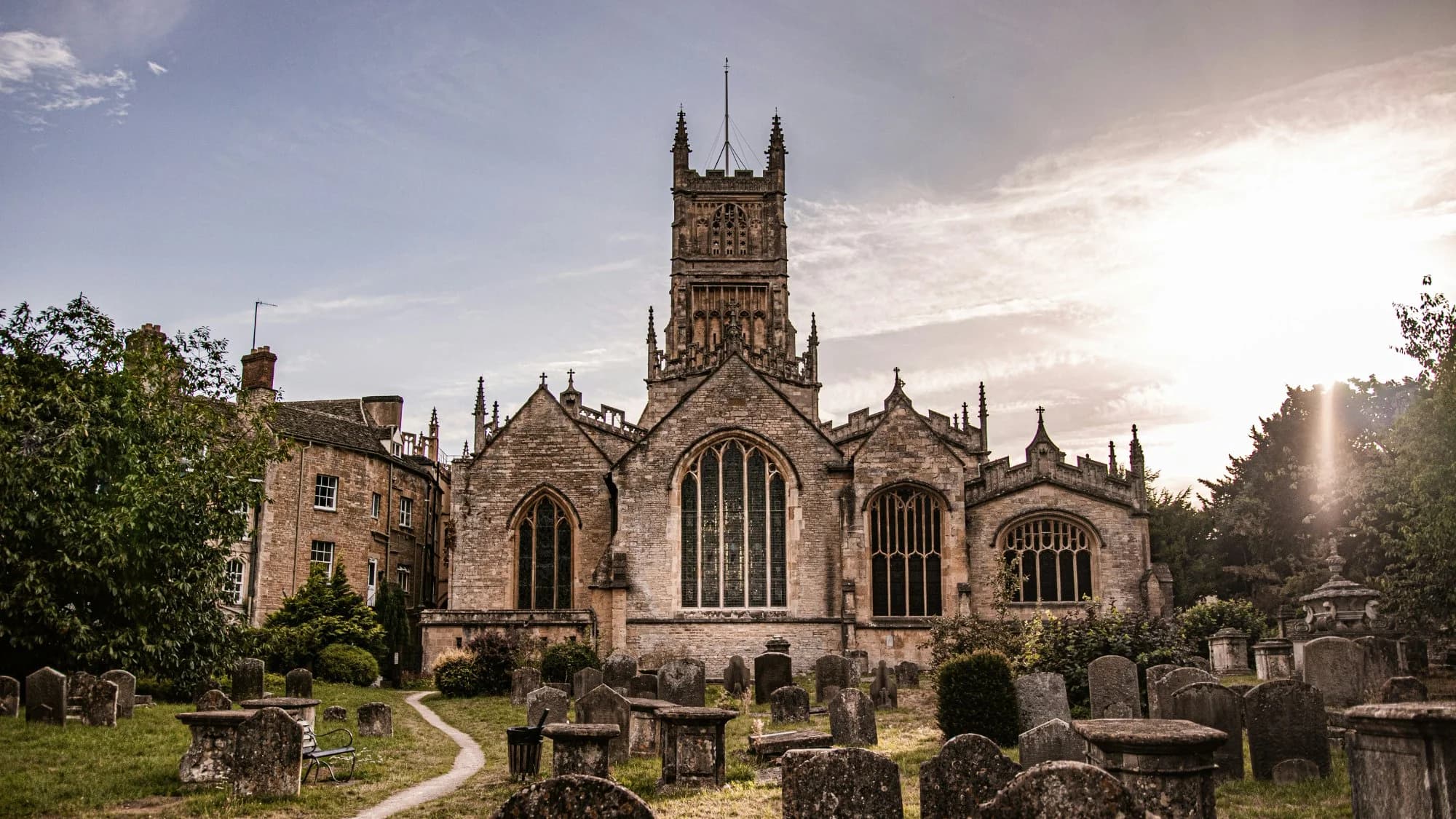
Cirencester is not a destination that announces itself. There are no grand resort strips, no airport transfers measured in minutes. What it offers instead is density of character: a Roman amphitheatre tucked behind residential streets, one of England's finest parish churches at the centre of a working market, and an art school (the Royal Agricultural University sits just outside town) that keeps the population culturally alert. Travellers who choose this corner of the United Kingdom tend to do so deliberately. They are drawn by the Cotswolds' particular cadence, by proximity to estates, galleries, and the kind of antique dealers who do not need to advertise. A luxury hotel suite here is a base camp for that kind of exploration, not a spectacle in itself.
2 hotels available

Located in the historic town of Cirencester, in the heart of the Cotswolds, the Kings Head Hotel offers elegant and modern guest rooms, a restaurant and a bar. All the air-conditioned rooms at Kings

Comfortable Accommodations Wild Thyme & Honey in Cirencester offers family rooms with private bathrooms, parquet floors, and garden or river views. Each room includes a work desk, TV, and free toi
Hotels in the area, but in a neighbouring town.

Comfortable Accommodations Cricklade House Hotel, Sure Hotel Collection by Best Western in Cricklade offers family rooms with balconies and kitchenettes. Each room includes a work desk, bathrobes, and

Located the market squarein Fairford, The Bull Hotel is a Grade II listed coaching inn featuring an on-site restaurant with private-dining and traditional pub bar serving local craft beers, spirits an
Staying within or immediately adjacent to the town gives direct access to the market square, the Corinium Museum (one of the most important Roman collections in Britain), and the independent retailers that line Black Jack Street and Cricklade Street. Properties here tend to occupy Georgian or earlier stone buildings, and the finest luxury suites in these settings lean into original architecture: exposed stonework, sash windows, proportioned rooms that no contemporary build can easily replicate.
Cirencester sits at the southern edge of the Cotswolds Area of Outstanding Natural Beauty, placing it within easy reach of the Churn Valley to the north, the Thames Path to the south, and the string of villages (Bibury, Bourton-on-the-Water, Burford) that form the essential Cotswolds itinerary. Many high-end travellers choose a property just outside the town boundary, where grounds are larger and privacy is absolute. For a broader view of suite options across this part of Europe's most visited countryside corridor, the selection across the Cotswolds repays careful attention.
The Beaufort Polo Club and the Cirencester Park Polo Club (one of the oldest in England, established in 1894 within the Bathurst Estate) draw an international set each summer. Properties within driving distance of these grounds attract a clientele that values discretion above all else. Suites with private entrances and dedicated parking are not an optional extra in this context; they are a baseline expectation.
The Cotswolds have a pronounced seasonality that any serious traveller should factor into planning. Late spring, specifically May and early June, offers the most agreeable conditions: the stone villages read best against green fields, the light holds until well past eight in the evening, and the summer school holiday crowds have not yet arrived. This is also when the polo season opens, and when the Festival of Archaeology (centred partly on Corinium) begins its programme.
July and August bring warmth and long days but also the highest demand for suites across the region. Availability at the most sought-after properties contracts sharply, and rates reflect that pressure. Travellers with flexibility are well advised to target September, when the light takes on a lower, more amber quality, the hedgerows are in full colour, and the rhythm of the town returns to something closer to its year-round character.
Winter, particularly December, has its advocates. The Cotswolds in frost and low mist is a specific aesthetic experience, and several properties programme their most considered hospitality offers around the Christmas period. Suite availability is generally better, though some smaller country house hotels operate reduced schedules outside peak season.
England does not operate a formal palace hotel classification in the manner of France (where the Palace label is awarded by Atout France against a strict technical checklist). The closest equivalent in the British market is the AA Five Star designation and, separately, the Small Luxury Hotels of the World membership, which a number of Cotswolds properties carry. Neither is a guarantee of suite quality in isolation, but both signal a minimum threshold of service standard and physical condition.
What distinguishes the finest properties in and around Cirencester is typically a combination of provenance and restraint. The best luxury hotel suites here do not compete with London for modernity or spectacle. They offer something more considered: rooms of genuine architectural interest, often in listed buildings with thick walls and uneven floors that carry the weight of several centuries. Bathrooms tend toward the generous and the traditional, with freestanding tubs and locally sourced stone or tile. Technology is present but not foregrounded.
Service in this corner of England reflects a particular school of hospitality: attentive without being present, knowledgeable without being instructive. The best staff in the best properties know the surrounding countryside, its walking routes, its farms, its practitioners of traditional craft, and they communicate that knowledge without being asked twice.
The choice in this market is rarely between good and bad. It is between different expressions of quality. A suite in a converted coaching inn in the town centre will give you history, texture, and urban proximity. A suite in a country house property two miles outside town will give you grounds, silence, and a different quality of light at breakfast. Neither is superior; they serve different travel intentions.
For a destination where the landscape is a primary draw, the relationship between a suite and its exterior space matters considerably. Properties with private terrace access, walled gardens, or direct access to walking paths across managed estates represent a distinct category of experience. If walking the Cotswold Way or cycling the lanes of the Churn Valley is part of the plan, factor the property's relationship to those routes into the decision.
Cirencester is not served by a mainline railway station; the nearest significant rail connection is Kemble (four miles south, with direct services to London Paddington in approximately 80 minutes). Most high-end travellers arrive by car, and parking provision matters. Properties that offer discreet, secure parking as part of the suite experience are worth prioritising. For international arrivals, Birmingham Airport is approximately 50 miles north; Heathrow is 80 miles to the east.
The Cotswolds luxury accommodation market is, by any measure, crowded. The combination of proximity to London, strong domestic demand, and an internationally recognised landscape has produced a dense concentration of properties, all of which present well in photography. Differentiating between them from a distance is difficult without specialist knowledge.
La Suite applies a consistent editorial filter to this market. The properties that appear in our curated selection for Cirencester and the surrounding Cotswolds have been assessed not only for physical quality but for the coherence of their offer: whether the suite experience is genuinely distinct, whether the service model suits independent, high-expectation travellers, and whether the property's relationship to its landscape and local context is authentic rather than decorative.
For travellers building a broader itinerary through the United Kingdom, Cirencester sits naturally within a circuit that might include Bath (19 miles south-west), Oxford (30 miles north-east), or the Vale of Evesham. The curated selection by La Suite allows that itinerary to be constructed with confidence at every stop, without the friction of research that the volume of available properties would otherwise require.

The finest luxury hotel suites near Cirencester are concentrated in two distinct settings: converted manor houses and country estates on the outskirts of town, and carefully restored coaching inns or Georgian townhouses within the market town itself. Properties within the Bathurst Estate corridor and along the Churn Valley tend to offer the greatest combination of grounds, privacy, and architectural character. La Suite curates only those properties whose suite offer is genuinely differentiated from the broader mid-market accommodation in the area.
Cirencester has no mainline railway station, but Kemble station (approximately four miles to the south) offers direct services to London Paddington in around 80 minutes. From Kemble, taxis and private transfers connect to all major properties in and around Cirencester. Many luxury hotels in the area offer a private transfer service from Kemble or from further afield, including Heathrow and Bristol Airport, as part of their suite packages.
Late spring (May to early June) offers the most favourable combination of weather, light, and availability. September is an excellent alternative, with softer light, reduced crowds, and full seasonal produce at local markets. July and August carry the highest demand across the Cotswolds, which compresses suite availability and pushes rates upward; booking several months in advance is essential if travelling during this period.
Cirencester is one of the most practical bases in the Cotswolds for broader exploration. It sits at the intersection of several key routes, placing Bibury, Burford, and Bourton-on-the-Water all within 20 minutes by car, and Bath within 35 minutes. A well-chosen luxury hotel suite in Cirencester eliminates the need to move properties mid-itinerary while still giving access to the full range of Cotswolds landscapes and villages.
Cirencester Park Polo Club, based within the Bathurst Estate, runs its main season from May through September, with significant fixtures concentrated in June and July. During peak polo weekends, demand for luxury suites within a 15-mile radius of the club increases sharply, particularly from international visitors. Travellers planning to attend matches should book suite accommodation at least two to three months in advance for the June to July peak.
In the Cotswolds market, the distinction lies primarily in space, architectural authenticity, and a coherent design approach that respects the building's original character. The best luxury suites in this region offer rooms of genuine proportion (not simply a standard room with a sofa added), bathrooms with freestanding bathtubs or high-quality stone finishes, and a direct relationship with the property's grounds or garden. Service quality and local knowledge on the part of the staff are equally significant differentiators.
Several properties in and around Cirencester cater specifically to guests seeking extended stays, offering self-contained suite arrangements with kitchen facilities, private garden access, and flexible service models. These are typically found in converted outbuildings or cottage annexes attached to country house hotels. For families or travelling executives who require a consistent base over multiple weeks, this category of accommodation offers considerably more privacy and flexibility than a standard hotel suite configuration.
Cirencester's luxury accommodation market is smaller in volume than that of destinations such as Cheltenham (which has a broader five-star hotel infrastructure) or the villages directly on the tourist trail such as Bourton-on-the-Water. However, it offers a more authentic urban context, with a working market town of genuine historical depth rather than a heritage set piece. Travellers who prioritise cultural substance alongside physical comfort will generally find Cirencester a more satisfying base than the more heavily visited Cotswolds villages.
The Corinium Museum holds one of the most significant Roman mosaic collections in Britain and provides essential context for the town. The Bathurst Estate, with 3,000 acres of managed parkland directly adjacent to the town, is accessible to visitors and offers one of the more unusual walking experiences in the Cotswolds. The town's twice-weekly market is a genuine agricultural market, not a tourist-facing one, and the independent food and antique traders along Black Jack Street repay an unhurried morning.
La Suite's curation covers the full range of high-end suite configurations, including those suited to families travelling with children or small private groups requiring interconnecting rooms, private dining arrangements, or exclusive-use options. In the Cirencester area, several country house properties offer exclusive buyout arrangements for the main house or specific wings, which represent a distinct category of privacy and flexibility for group travel. These options are identified within La Suite's curated selection where relevant.

Chippenham is a Wiltshire market town in the west of England, positioned between Bath to the south-west and the Cotswolds to the north-east. It sits within reach of Lacock, one of the best-preserved medieval villages in the United Kingdom, and the Marlborough Downs to the east. The town itself is primarily a service and transport hub, but its surrounding countryside carries considerable architectural and cultural weight. For the suite traveler, the value here is not in the town centre but in the broader Wiltshire and North Somerset corridor that radiates outward from it.

46 km away
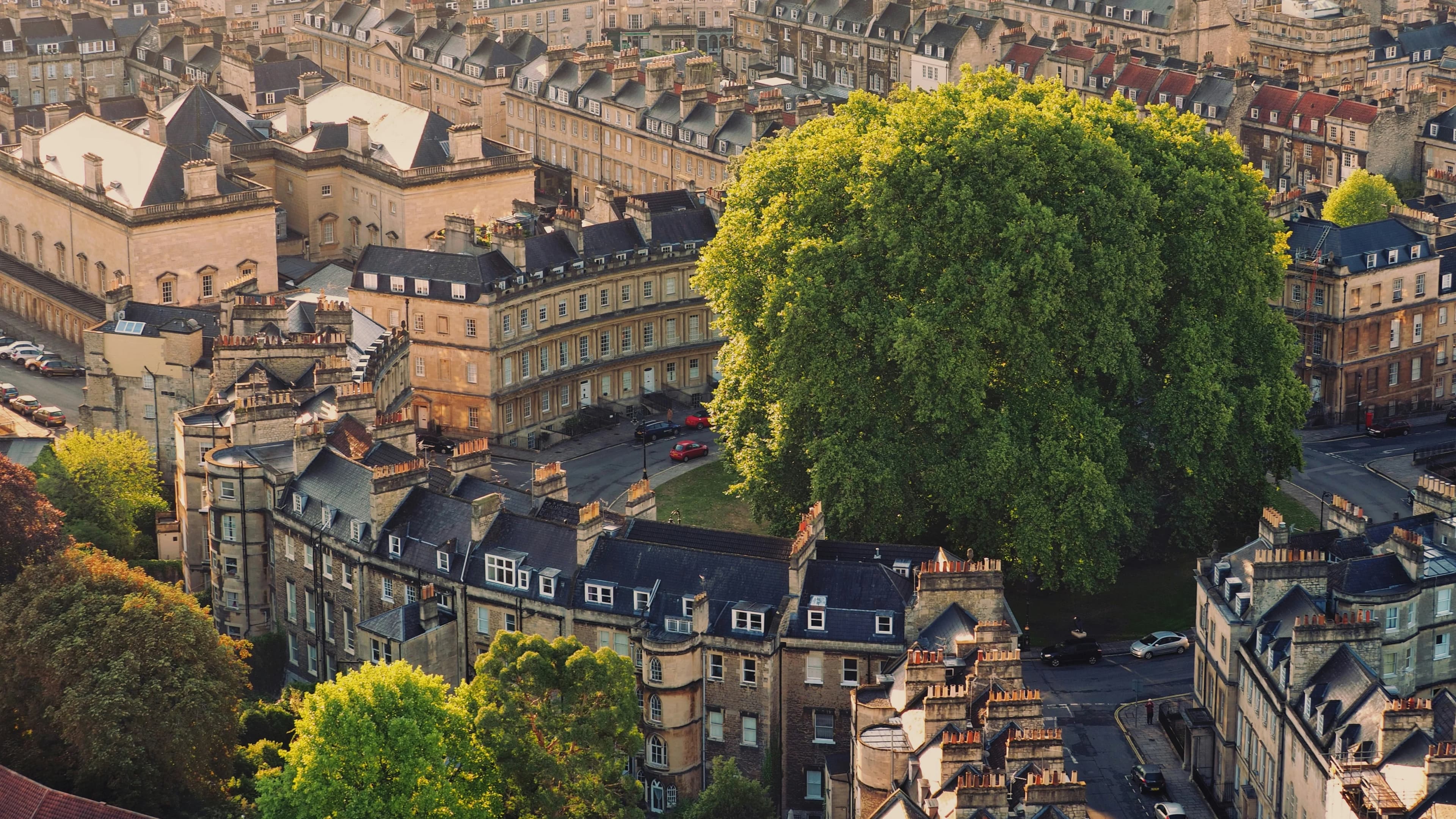
Bath is not a city that rewards haste. Its architectural coherence, the Royal Crescent, the Circus, Pulteney Bridge, the Pump Room, was the result of deliberate Georgian planning, and the city has protected that identity with notable consistency. A luxury suite here is not simply a place to sleep. It is a position from which to engage with one of England's most intelligently preserved urban environments. The correct suite in Bath carries period detail: sash windows, proportioned ceilings, plasterwork cornicing. It also carries the modern expectation of spa access, since the thermal tradition here is functional, not decorative.

Cheltenham is not a city that announces itself through spectacle. Its authority is architectural, social, and cumulative. The town centre is one of the best-preserved examples of Regency planning in Britain, composed of wide promenades, Ionic terraces, and municipal gardens that were designed to be inhabited at a slow pace. Arriving with a suite as a base means arriving with room to match that rhythm. The space to lay out clothes for a race day, to receive guests for a pre-dinner drink, to close a door on the world after an evening at the Everyman Theatre: these are the functional arguments for a luxury hotel suite here. The aesthetic argument is simply that a town built with this much compositional intelligence deserves accommodation that answers it.