Why Cheltenham rewards a suite stay
Areas to consider when staying in Cheltenham
The Promenade and town centre
The Promenade is Cheltenham's central axis, a broad, tree-lined boulevard that connects the retail core to Montpellier, the most architecturally coherent quarter of the town. Staying in or immediately adjacent to this corridor places guests within walking distance of the principal restaurants, galleries, and the Cheltenham Art Gallery and Museum. Hotels operating at the upper end of the market in this zone tend to occupy converted Regency townhouses or purpose-built properties that sit within the period streetscape. The relationship between interior design and the surrounding architecture is a meaningful consideration here: the best luxury hotels in Cheltenham read as continuations of the neighbourhood, not interruptions to it.
Montpellier
Montpellier retains the most concentrated density of listed Regency buildings in the town, including the Montpellier Rotunda, modelled loosely on the Pantheon in Rome. The district has evolved into Cheltenham's most design-conscious address, with independent wine bars, contemporary restaurants, and specialist retailers occupying ground-floor spaces beneath Georgian stucco facades. A suite in this quarter offers proximity to the town's more considered social infrastructure and the particular pleasure of walking out each morning into streets that were built, from the outset, to be beautiful.
The edges: Cleeve Hill and the Cotswold approach
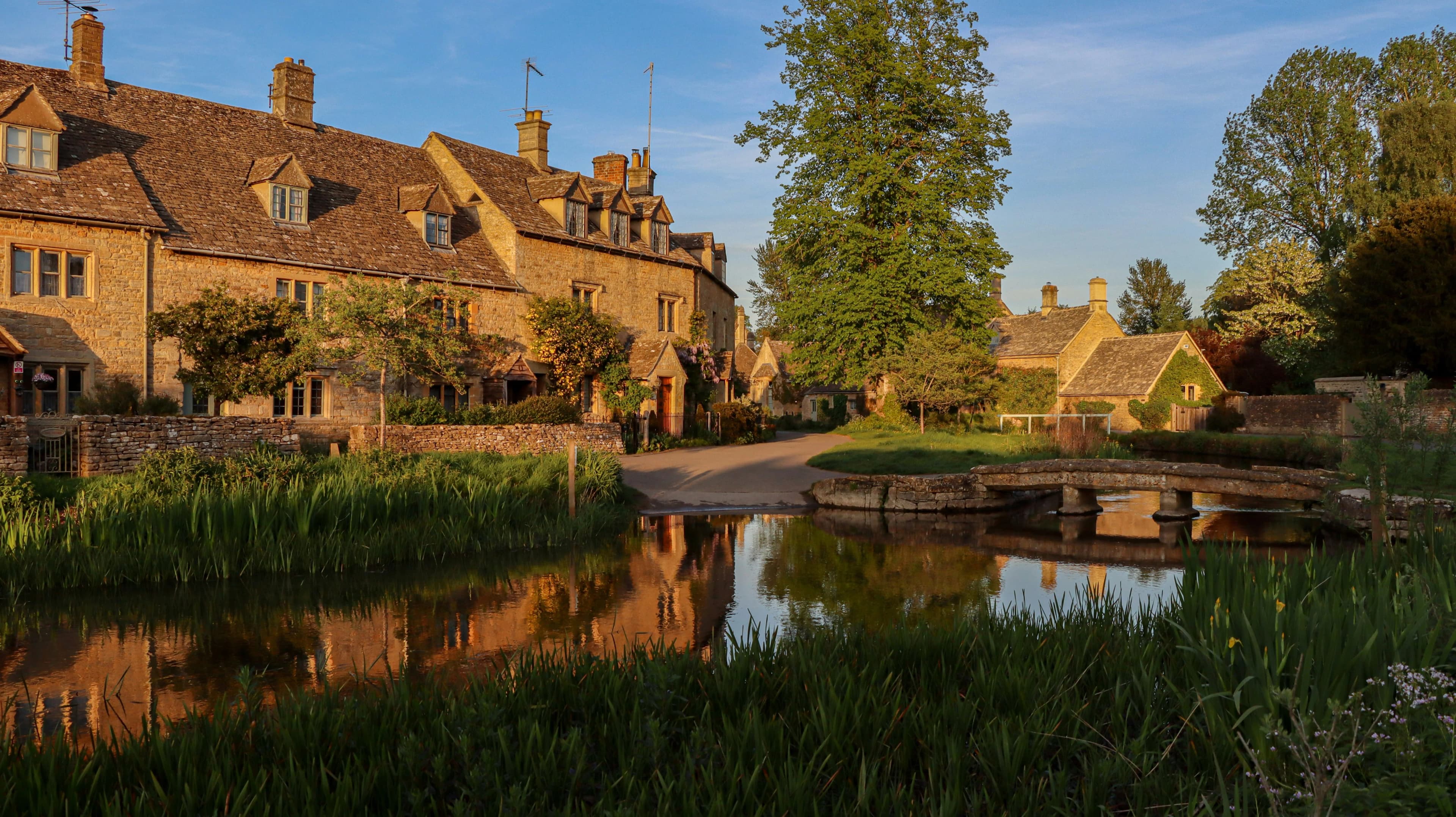
For travellers whose primary draw is the Cotswolds landscape rather than the town itself, properties on Cheltenham's northern and eastern periphery offer a different proposition. Cleeve Hill, the highest point of the Cotswolds escarpment, is accessible within minutes of the town centre. Luxury hotels and country house properties in this zone tend to offer a different spatial language: grounds, long views, and the sensory shift that comes with genuine elevation above the Severn Vale. These properties appeal particularly to travellers combining a Cheltenham itinerary with time in Broadway, Bourton-on-the-Water, or Stow-on-the-Wold.
When to visit Cheltenham
Cheltenham's social calendar is unusually well defined for a town of its scale, and timing a visit around its key events alters the character of a stay considerably.
The Cheltenham Festival, held each March at Cheltenham Racecourse, is the defining fixture of the National Hunt racing season. Four days of Grade One racing draw a crowd whose dress standards and appetite for hospitality are matched by few other events in the British sporting calendar. Suite availability at this period compresses sharply and rates rise accordingly. Travellers intending to attend the Festival should plan six to twelve months in advance.
The Cheltenham Literature Festival, held each October, is one of the largest literary events in the world. It brings a different kind of traveller to the town: culturally oriented, less focused on display, and typically interested in the town's independent food and retail landscape. Autumn in the Cotswolds is also, climatically, one of the more persuasive times to be in this part of England. The light flattens and golds, the crowds of the summer walking season have dispersed, and the countryside settles into a register that suits a longer, quieter stay.
Summer, particularly June and July, brings the Cheltenham Music Festival and Cheltenham Jazz Festival, the latter held in late April. Spring arrivals coincide with the racing calendar and the first warmth reaching the Cotswold stone villages. There is no genuinely poor season to visit, but October and March represent the clearest alignment of climate, cultural programme, and social intensity.
Understanding luxury standards in Cheltenham
Britain does not operate the Palace designation applied to grand hotels in France, but its own hierarchy of prestige is equally legible to those who know what to read. The AA rosette and star system, along with inclusion in the Relais and Chateaux or Small Luxury Hotels of the World portfolios, signals a consistent level of operational discipline. In Cheltenham specifically, the luxury hotel market is characterised more by intimacy and architectural authenticity than by scale.
The most distinguished properties tend to be smaller: converted Regency townhouses or privately owned country house hotels on the town's fringes. Room counts are low, staff ratios are high, and the emphasis falls on considered detail rather than the full-service infrastructure of a large urban hotel. A luxury hotel suite in this context typically means a generous floor plan within a listed building, period features combined with contemporary comfort standards, and a level of service that reflects the property's scale. Travellers accustomed to metropolitan super-suites should recalibrate expectations toward craft and character rather than square footage alone.
How to choose the right suite in Cheltenham
The primary decision for a traveller booking a luxury suite in Cheltenham is the choice between a town-centre property and a countryside property at the town's edge. Both are valid but they deliver materially different experiences. A town-centre suite prioritises walkability, architecture, and social access. A countryside suite prioritises space, landscape, and quiet. The choice depends entirely on the purpose of the visit.
For Festival travel, proximity to the racecourse and the town's hospitality infrastructure is the practical priority. For a Cotswolds-focused itinerary, the countryside properties offer better access to the villages and walking routes that make this region distinct. For a cultural visit built around the Literature Festival or a longer stay combining both registers, a town-centre suite with a car provides the most flexible base.
It is also worth noting that Cheltenham's best properties book out well in advance around peak events. A curated approach to selection, working from a verified shortlist of properties with confirmed quality standards, removes the risk of misaligned expectations that comes from navigating unfiltered aggregator results.
The value of a curated selection by La Suite
Cheltenham's luxury hotel market is small enough that the difference between the right property and the wrong one is significant. There is limited redundancy at the top of the market: if the suite you wanted is unavailable and you have not planned in advance, the next option may represent a material step down in quality or positioning. La Suite's curated selection exists precisely to address this constraint. By mapping the town's best suites against a consistent set of criteria covering space, design, service standard, and location, La Suite reduces the decision to a clear, verified shortlist. For a traveller whose time and expectations are both in limited supply, that clarity is not a convenience. It is the point.