London's distinct neighbourhoods for luxury suite stays
Mayfair and Belgravia represent the traditional centre of gravity for high-end hospitality in London. The streets here carry a particular architectural weight: Georgian and Regency townhouses, private members' clubs, and discreet entrances that reward those who know where to look. A luxury suite in this part of the city places the guest within walking distance of Bond Street, the Royal Academy, and the quieter galleries of Cork Street.
Knightsbridge, anchored by Hyde Park and the cultural infrastructure of the V&A and Natural History Museum, attracts a different profile: families with a longer itinerary, travellers who value green space and proximity to the museum quarter. The suites available here tend toward larger floor plans, with residential proportions that suit extended stays.
The City of London and its immediate neighbour Shoreditch have seen significant investment in luxury hotel development over the past decade. The appeal here is architectural contrast: a luxury hotel suite set within a converted Victorian warehouse or a purpose-built tower offers a fundamentally different aesthetic experience from the period properties of the West End. For the design-literate traveller, this part of the city is worth serious consideration.
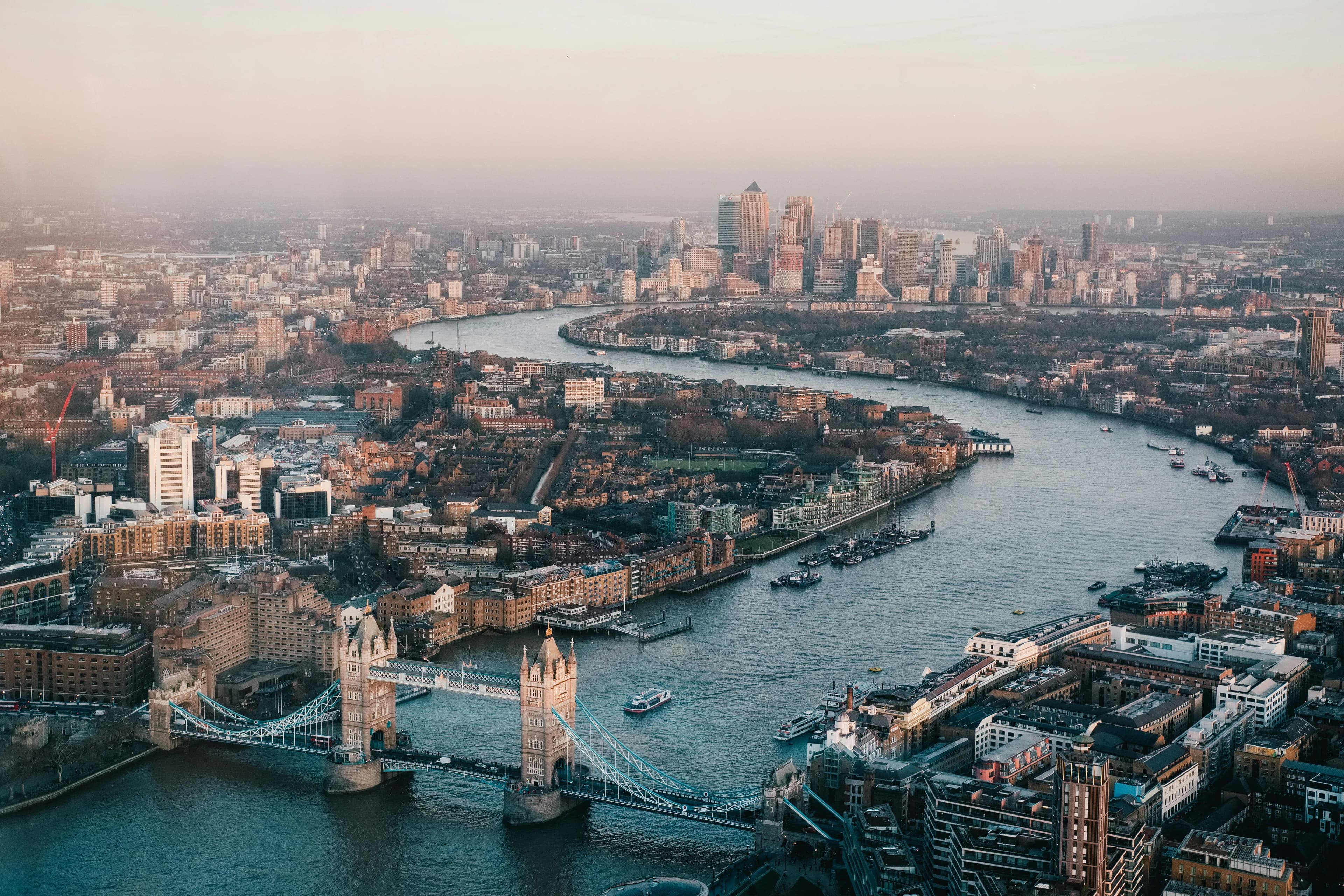
South Bank, once overlooked by luxury operators, now holds several properties of genuine distinction. The views across the Thames toward St Paul's Cathedral and the City skyline are among the most legible in London, and suites positioned on upper floors of riverfront buildings deliver a perspective on the city that is both panoramic and historically layered.
When to visit London for a luxury suite experience
London does not have a single optimal season. Its cultural calendar is distributed across the year with unusual consistency, and the luxury hotel market reflects this.
The summer months of June through August bring the highest occupancy rates across the city's top-tier properties. Wimbledon, the Chelsea Flower Show in late May, and the summer exhibitions at the major institutions all drive demand for luxury hotel suites. Rates peak accordingly, and availability at the most sought-after properties requires significant advance planning.
September and October represent a more considered window. The cultural season reopens after the summer pause, the weather remains temperate, and the city's rhythm settles into a more deliberate register. The Frieze Art Fair in October draws a significant international audience with a strong appetite for quality accommodation, making early booking essential for that period specifically.
The winter months carry their own particular logic. December in London is commercially intense but architecturally arresting: the light is low, the city is lit, and the private atmosphere of a well-chosen suite becomes a genuine counterpoint to the energy outside. January and February offer the most competitive rates in the luxury segment, with availability at properties that are otherwise fully committed for most of the year.
Understanding London's luxury hotel standards
The United Kingdom does not operate a formal palace designation equivalent to the French system. London's luxury hotel market is instead stratified through a combination of Forbes Travel Guide ratings, AA Five Star classifications, and the accumulated reputation of individual properties over decades of operation.
The most historically significant category within London luxury hospitality is the grand hotel, a typology established in the mid-nineteenth century and still represented by a small number of properties that have maintained continuous operation and consistent standards. These buildings carry genuine institutional weight: their suites are not simply well-appointed rooms but spaces with traceable histories and considered proportions.
A parallel category has emerged more recently: the design-led boutique hotel, typically operating between twenty and eighty rooms, in which the suite offering is central rather than supplementary to the property's identity. These properties attract a different guest profile and deliver a more curated, less ceremonial experience. The quality of materials, the coherence of the interior programme, and the calibre of the service model are the relevant metrics here.
London also maintains a strong tradition of residential-style suite hotels, particularly in Mayfair and Kensington, where properties are configured almost entirely around suite-format accommodation. For travellers who prioritise space, privacy, and the capacity to operate with a degree of domestic independence, these properties are functionally distinct from conventional hotel formats.
How to choose the right luxury suite in London
The London luxury hotel market is large, competitive, and uneven in quality. Several considerations are worth applying systematically before making a decision.
Floor plan and orientation matter more in London than in many comparable cities. The city's predominantly low-rise character means that upper-floor suites in taller modern properties command genuinely different views from their lower-floor equivalents. Equally, a suite in a period building with north-facing windows will receive markedly less natural light than one oriented toward the south or west. These are architectural realities that affect daily experience in a direct way.
Noise exposure is a practical consideration that is rarely addressed directly in standard hotel communications. London is a dense, operational city. Properties on primary thoroughfares, even at significant cost, can deliver a compromised sensory environment. Suites positioned on internal courtyards, upper floors, or quieter secondary streets represent a meaningfully different acoustic proposition.
The service model should be assessed alongside the physical product. London's top-tier properties are staffed to different ratios, and the distinction between a property with a dedicated butler programme and one operating a conventional concierge model is material for guests with specific requirements. For extended stays or itineraries that require active coordination, this distinction is worth investigating explicitly before arrival.
Why a curated selection matters in London
London lists more hotel suites than almost any other European city. The volume of options, combined with the inconsistency of quality across price points, makes independent navigation genuinely time-consuming and the margin for error correspondingly high.
La Suite applies a consistent editorial standard across every property in its London selection. The criteria are architectural, sensory, and experiential: floor plan quality, material integrity, service calibre, and the coherence of the overall guest environment. Properties are assessed on the suite offering specifically, not on the hotel's general reputation or marketing position.
The result is a selection that is deliberately limited and directly useful. For a traveller allocating significant expenditure to a London stay, the curated selection by La Suite removes the noise and delivers a set of options that have already passed a rigorous threshold.
To learn more about London, check out our London guide to discover more about the city, its history, and its architecture, and find out how to choose the right hotel suite.
Also check out our selection of the most beautiful luxury hotel suites in London.
If you’re traveling to London for work, check out our selection of the best suites for working.
If you’d like to combine a suite with an exceptional experience, check out our guide to the most beautiful Parisian-style suites paired with London’s finest bars.
And if you’d like to see the city from above, check out our guide to London’s most beautiful penthouses.