Understanding Baltimore as a luxury destination
The city's luxury hospitality market reflects this character. Properties tend toward the historically grounded or the architecturally adaptive, converting warehouse structures, Beaux-Arts buildings, and Federal-era facades into hotels with a clear sense of place. A luxury hotel suite in Baltimore is rarely anonymous. The best options carry the material weight of the city's history while offering the spatial and service standards expected by a discerning guest.
Best areas to stay in Baltimore for luxury suite travelers
Inner Harbor and the waterfront corridor
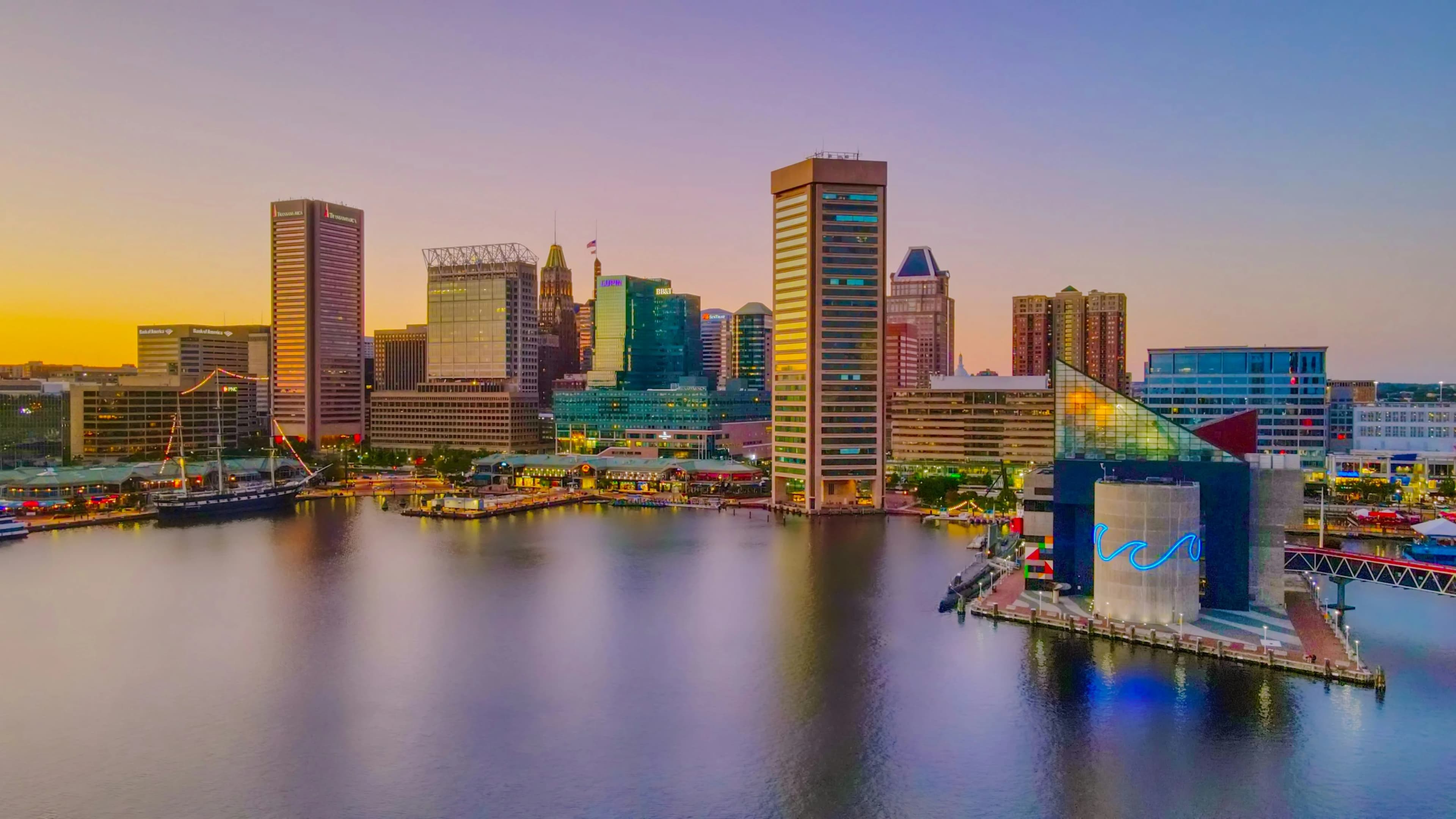
The Inner Harbor remains the city's most legible geography for first-time visitors and returning guests alike. Suites in this corridor offer direct water orientation, proximity to the National Aquarium and the Maryland Science Center, and easy access to the city's primary dining and cultural circuit. Properties here tend to position themselves toward the corporate and leisure premium market, with suites that prioritize views and floor area over architectural idiosyncrasy.
Mount Vernon
Baltimore's Mount Vernon neighborhood carries the density of a 19th-century civic ambition. The Washington Monument, predating its more famous counterpart in the capital, anchors a district of brownstones, galleries, and the Peabody Institute. Staying in or near Mount Vernon places the guest inside the city's oldest cultural infrastructure. Suites in this area tend to reflect the neighborhood's Federal and Italianate architectural vocabulary, offering a more historically grounded experience than the waterfront.
Harbor East
Harbor East represents Baltimore's most contemporary luxury residential and hospitality district. Developed largely in the early 2000s, this neighborhood offers polished urban infrastructure: high-end retail, a concentrated restaurant circuit, and proximity to both the waterfront and Fell's Point. Suites here are typically modern in finish and spatial configuration, appealing to guests who prefer clean architectural lines over historical patina.
Fell's Point
One of the oldest continuously inhabited neighborhoods in the United States, Fell's Point retains its cobblestone streets and maritime rowhouse typology. Boutique properties in this area offer suites of an intimate scale, embedded in a neighborhood that operates on foot. The sensory experience here is entirely different from the Inner Harbor: narrower, quieter in the early morning, with a directness of atmosphere that appeals to guests who favor immersion over distance.
When to visit Baltimore
Baltimore's climate follows a four-season Mid-Atlantic pattern. Spring, from April through early June, is the period of highest aesthetic return: the city's parks and residential streets benefit from tree canopy bloom, and temperatures remain moderate. This is also the period surrounding the Preakness Stakes, held annually at Pimlico Race Course in May. The Preakness functions as Baltimore's most prominent luxury hospitality moment, driving significant suite demand in the weeks surrounding the event.
Late summer carries the weight and humidity characteristic of the Chesapeake Bay region. September and October represent a secondary window of quality: the heat subsides, cultural programming resumes, and the city's restaurant and gallery circuit enters its most active phase. Winter is quieter, with reduced leisure demand and generally more accessible suite availability across the city's primary properties.
Local luxury standards: what to expect from top-tier suites in Baltimore
The American luxury hotel market does not operate on the same labeling architecture as European systems. There is no equivalent to the French Palace designation or the Italian Relais and Chateaux classification as a regulatory standard. In Baltimore, quality is assessed through brand affiliation, independent review infrastructure, and the spatial and service specifics of individual properties.
Top-tier suites in Baltimore typically offer between 600 and 1,200 square feet of interior space, separate living and sleeping areas, and in some cases private terraces or direct harbor orientation. The service model in Baltimore's best properties reflects American hospitality norms: attentive, responsive, and operationally efficient without the formality associated with European luxury traditions. Guests arriving from international markets should calibrate expectations accordingly: the standard is high, but the register is warmer and less ceremonial.
Amenities in the city's leading luxury suites commonly include dedicated concierge access, premium in-room technology, curated minibar programs, and access to spa and fitness facilities. Properties with strong culinary programming often integrate their suite offer with dining experiences that reflect the city's Chesapeake identity, with blue crab, oysters from the bay, and regional produce forming the core of serious kitchen menus.
How to choose the best luxury suite in Baltimore
The first distinction to make is between waterfront orientation and neighborhood immersion. A suite facing the Inner Harbor or the harbor in Harbor East offers a specific visual and spatial grammar: open, contemporary, water-defined. A suite embedded in Fell's Point or Mount Vernon offers a different proposition: enclosed, historically textured, defined by the street rather than the horizon. Neither is superior in absolute terms. The choice depends on the traveler's preferred mode of engagement with the city.
The second consideration is scale. Baltimore is not a large luxury market by international standards. The concentration of high-specification suites is modest compared to cities like New York, Chicago, or Washington D.C. Travelers should evaluate availability with some lead time, particularly during the Preakness period and over major holiday weekends in spring and autumn.
Architecture matters in Baltimore in a way it does not in cities with more homogeneous hotel stock. A converted warehouse in the harbor district will carry a different material and acoustic atmosphere than a purpose-built tower. A renovation of a Federal-era building in Mount Vernon will offer ceiling heights and room proportions that a modern property cannot replicate. These are not merely aesthetic variables. They affect the physical experience of inhabiting a suite across an extended stay.
Why a curated selection by La Suite makes sense in Baltimore
Baltimore's luxury suite market is compact and specific. The number of properties offering genuinely premium suite product is limited, and the differences between them are meaningful. A curated selection by La Suite removes the friction of undifferentiated search results and positions the traveler directly within the properties that meet the spatial, architectural, and service criteria that define a genuine luxury suite experience.
La Suite approaches Baltimore as it approaches every destination: through the lens of the suite itself. Room category, floor area, orientation, service model, and architectural context are the variables that matter. The platform exists for travelers who have already decided they want a suite and need a reliable, editorially rigorous source to identify the right one. In a city like Baltimore, where the market is navigable but not self-evident, that function is particularly useful.