What defines the Magnificent Mile as a luxury suite destination
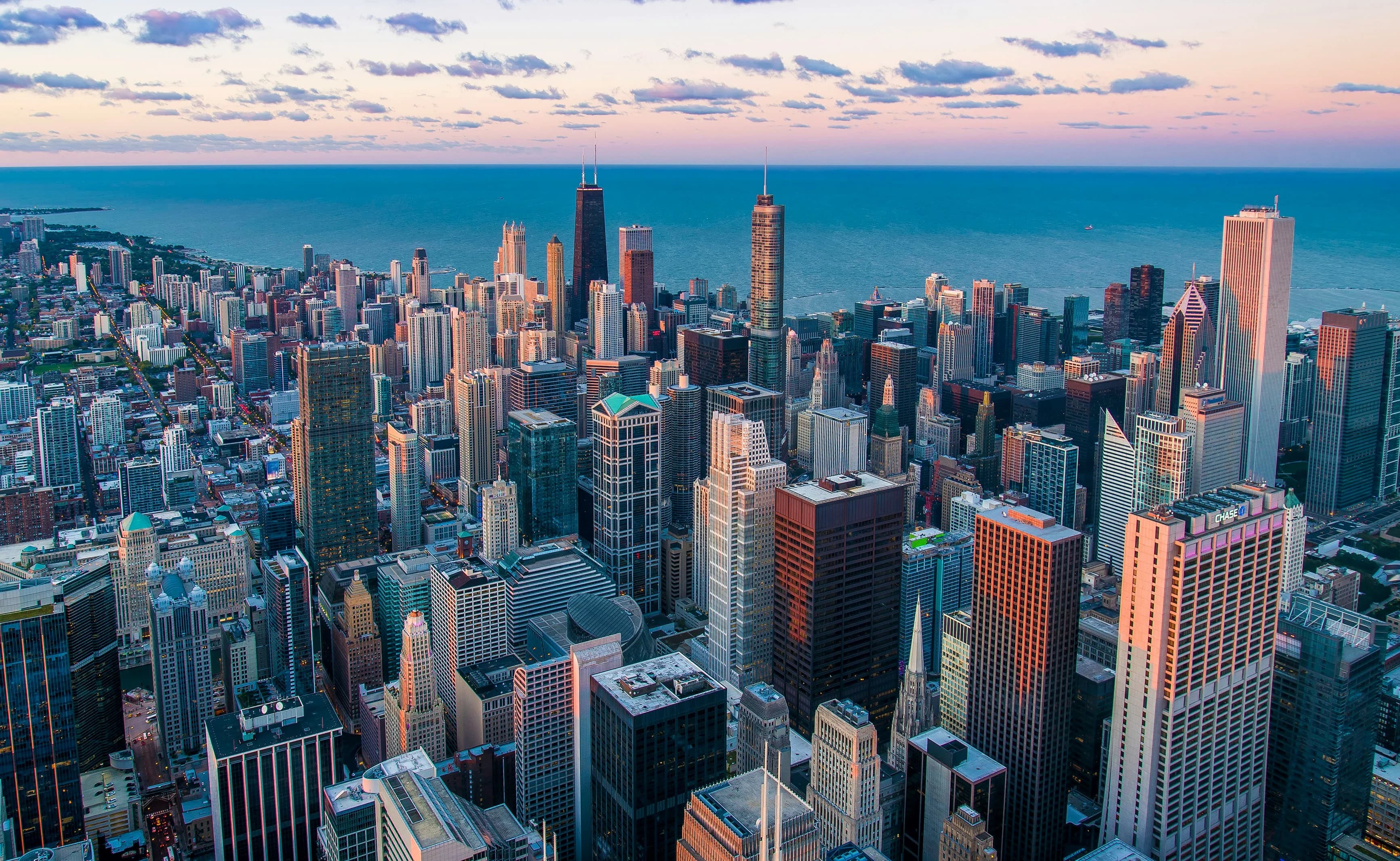
The density of premium hospitality along this stretch is notable even by the standards of major American cities. Properties here compete for guests who expect square footage, discretion, and views calibrated to the tower heights that define the skyline. For travelers exploring Chicago, the Magnificent Mile functions as the most legible entry point: central, walkable, and oriented toward the lake.
The distinct character of suites along North Michigan Avenue
Suites in this corridor tend to occupy upper floors of towers built between the 1920s and the 2000s, a range that produces genuinely varied spatial experiences. Older properties offer ceiling heights, material choices, and room proportions that newer construction rarely replicates. Contemporary towers deliver floor-to-ceiling glazing and unobstructed sightlines toward Lake Michigan, the Chicago River bend, or the grid of the Loop to the south.
The standard expected at this address is consistently high. Butler service, dedicated check-in protocols, and in-suite dining from kitchens with serious culinary programs are broadly available. What distinguishes individual properties is their relationship to the building's architecture: whether the suite reads as an extension of a considered design language or functions as a generic premium room with upgraded finishes.
Views and orientation
Orientation matters significantly here. East-facing suites open toward Lake Michigan, offering a visual scale that few inland American cities can provide. North-facing rooms look toward the Gold Coast and Lincoln Park. South and west exposures frame the density of the Loop and, on clear days, the geometry of the city's rail infrastructure and river system. Guests selecting a suite for the first time in this district should treat orientation as a primary filter, not an afterthought.
When to stay on the Magnificent Mile
Chicago's climate is genuinely four-season, and each period carries distinct conditions for suite travel. Late spring and early summer, from May through June, offer the most balanced combination of mild temperatures and full access to outdoor terraces, the lakefront path, and rooftop amenities. July and August bring the city's warmest weeks, coinciding with the Chicago Air and Water Show and several major food festivals along the lakefront.
Autumn, particularly September and October, is widely regarded by design-conscious visitors as the most rewarding period. The light quality changes, cultural programming intensifies across the city's museums and galleries, and hotel rates often reflect more favorable positioning than peak summer. The Chicago Architecture Biennial, held in alternate years, draws an internationally literate audience and fills premium inventory early.
Winter on the Magnificent Mile is cold by most standards, with temperatures regularly dropping below freezing from December through February. The corridor remains active, and suite rates during this period are typically at their lowest annual point. For travelers whose primary interests are the Art Institute, the Chicago Symphony Orchestra, and the city's restaurant culture, winter offers access without compression.
Understanding luxury hospitality standards in this district
The United States does not operate a formal national designation equivalent to the French Palace classification, but the Forbes Travel Guide Five-Star rating functions as the most widely recognized benchmark at this level of the market. Properties carrying this designation in Chicago tend to concentrate on or immediately adjacent to the Magnificent Mile.
AAA Five Diamond ratings provide a parallel reference point, assessed against criteria that weight service consistency, facility condition, and culinary program quality. Both systems are useful as baseline filters, but neither captures the spatial and architectural dimensions that matter most to guests who choose suites as a primary category rather than an upgrade.
What the best suites in this district share is a commitment to material quality that holds under close inspection: stone, hardwood, and textiles selected for longevity rather than photographic appeal. Service models tend toward anticipatory rather than reactive, with staff ratios that allow for genuine personalization across a multi-night stay.
How to choose the right suite on the Magnificent Mile
The decision framework for selecting a suite in this corridor should begin with purpose. A guest arriving for a corporate engagement requires different spatial logic than a couple celebrating a significant occasion or a family traveling with specific requirements around room count and connectivity.
For guests whose primary interest is architectural character, properties occupying buildings constructed before 1970 offer proportions and material palettes that reflect the city's historical ambition. For those prioritizing contemporary amenity packages and the most current technology integration, towers completed in the past two decades typically lead on those dimensions.
Proximity to specific anchors also matters. The Art Institute of Chicago is a twenty-minute walk south along Michigan Avenue. The Museum of Contemporary Art sits two blocks east of the northern end of the strip. The Chicago Riverwalk is accessible from the corridor's southern edge. Guests with a defined cultural itinerary should map their suite selection against it.
Practical considerations
Parking in this district is expensive and logistically complex. Guests arriving by car should confirm valet arrangements directly with the property before arrival. O'Hare International Airport connects to the Blue Line, which runs to a station a short cab or rideshare distance from most Magnificent Mile hotels. Midway Airport is accessible via the Orange Line with a transfer. For guests arriving by private aviation, Palwaukee Municipal Airport (now Chicago Executive Airport) is the closest reliably served option.
Why a curated selection by La Suite changes the decision
The Magnificent Mile contains a high density of premium hospitality, which creates a genuine selection problem for travelers who approach the category seriously. Not every property that commands premium rates delivers the spatial and experiential quality that justifies them. The gap between a well-marketed suite and a genuinely considered one is rarely visible in standard booking interfaces.
La Suite's editorial process filters by criteria that do not appear in star ratings or review aggregates: ceiling height, window proportion, the logic of the floor plan, the coherence between the suite's design language and the building's architectural identity. For guests exploring the broader North America luxury hotel market, this level of specificity matters. The curated selection by La Suite isolates the properties that perform on these dimensions, removing the noise that makes the category harder to navigate than it should be.