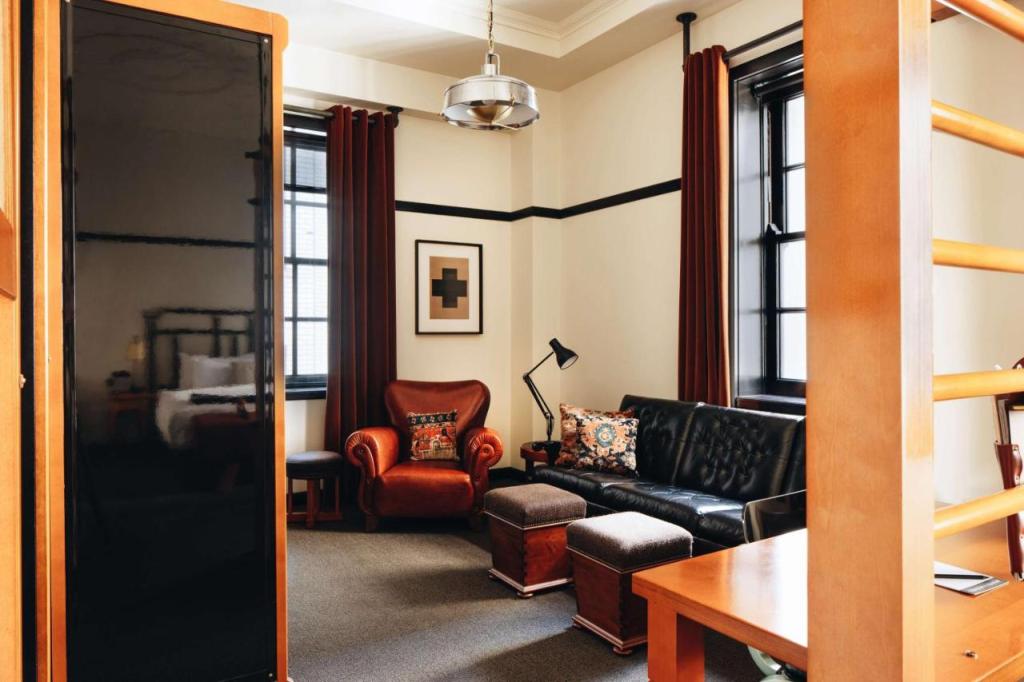
A rooftop bar overlooking Millennium Park, unique dining options and a social games room awaits at the Chicago Athletic Association, part of Hyatt. This hotel, located in a landmark building in downto

Chicago's geography is organized and legible, which makes the choice of neighborhood a meaningful one. The decision shapes not just logistics but the entire register of a stay.
20 hotels available

A rooftop bar overlooking Millennium Park, unique dining options and a social games room awaits at the Chicago Athletic Association, part of Hyatt. This hotel, located in a landmark building in downto

Just steps away from the luxury shopping, dining and entertainment on Michigan Avenue’s Magnificent Mile, this downtown Chicago hotel features skyline city views, an on-site restaurant and lavish spa.

Just blocks away from the luxury shopping, dining and entertainment of Michigan Avenue’s Magnificent Mile, this boutique hotel is located in the heart of the Loop in downtown Chicago and offers a roof

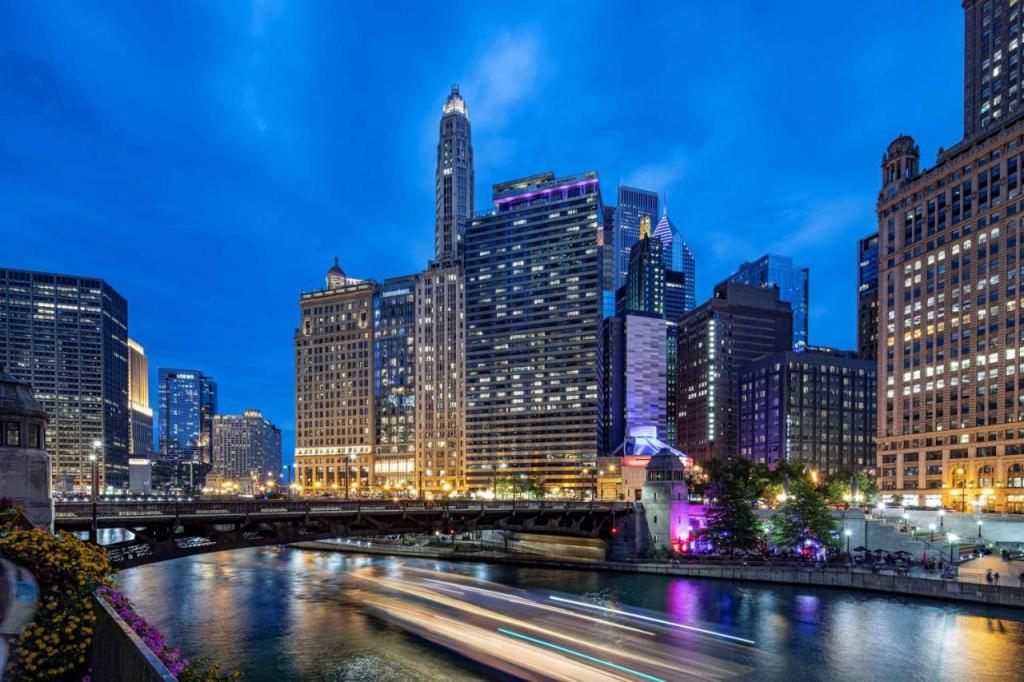
Sitting on Michigan Avenue and the Chicago River in a historic landmark building, LondonHouse features Chicago’s only tri-level rooftop bar. The hotel is less than 10 minutes’ walk from Millennium Par

Elegant Accommodations Nobu Hotel Chicago in Chicago offers luxurious rooms with private bathrooms, free WiFi, and modern amenities. Guests enjoy amenities such as a sauna, fitness center, indoor

Quintessentially Chicago with a landmark address just steps from historic Water Tower Park and the famed Michigan Avenue, is where you’ll find the reimagined Park Hyatt Chicago - a residential oasis f

Prime Location Pendry Chicago is located in Chicago city center, offering easy access to key attractions. Ohio Street Beach is a 19-minute walk away, while Millennium Park lies 1969 feet nearby. The A

Just 2 blocks away from the famed shopping, dining and entertainment on the Magnificent Mile, this luxury Chicago Gold Coast hotel is housed in a 32-floor prism glass building featuring stunning views

Steps away from the iconic shopping, dining and entertainment of Michigan Avenue’s Magnificent Mile, this downtown Chicago boutique hotel puts a spin on modern luxury and comfort. Each lifestyle-focus

Located among the bustling restaurant scene in the city’s West Loop neighborhood, this downtown Chicago hotel features on-site dining, a rooftop lounge and garden and contemporary guest rooms with fre

Overlooking iconic Lake Michigan, The Gwen, a Luxury Collection Hotel, Michigan Avenue Chicago is located in the heart of downtown and offers unparalleled amenities and services, including on-site res

Just 2 blocks away from the famed shopping, dining and entertainment on Michigan Avenue’s Magnificent Mile, this luxury hotel towers above the city in a skyscraper designed by renowned architect Mies

Located along the Magnificent Mile, this Chicago hotel is a 5-minute walk from the Museum of Contemporary Art. The hotel provides a full-service Asian-inspired spa, award-winning restaurants, and spac

Located atop the famous Water Tower Place in Chicago’s Gold Coast district, this hotel offers artfully decorated guest rooms that feature city of lake views from large picture windows. The luxury shop

Located in the heart of Chicago’s Wicker Park neighborhood, this historic hotel is located 3 miles away from the shopping, dining and entertainment on the Magnificent Mile. On-site dining and free WiF

Elegant Accommodations The St. Regis Chicago in Chicago offers luxurious rooms with air-conditioning, private bathrooms, and modern amenities. Guests enjoy lake, city, or river views, ensuring a comfo

Located in the Chicago city center, this luxury boutique hotel features an on-site restaurant and complimentary property-wide WiFi access. Shopping and dining on Michigan Avenue is 2 minutes’ walk awa

Featuring stunning views from every area of the hotel, this landmark building of stainless steel and tinted glass stands 92-stories above the Loop and North Michigan Avenue along the Chicago River. Lu

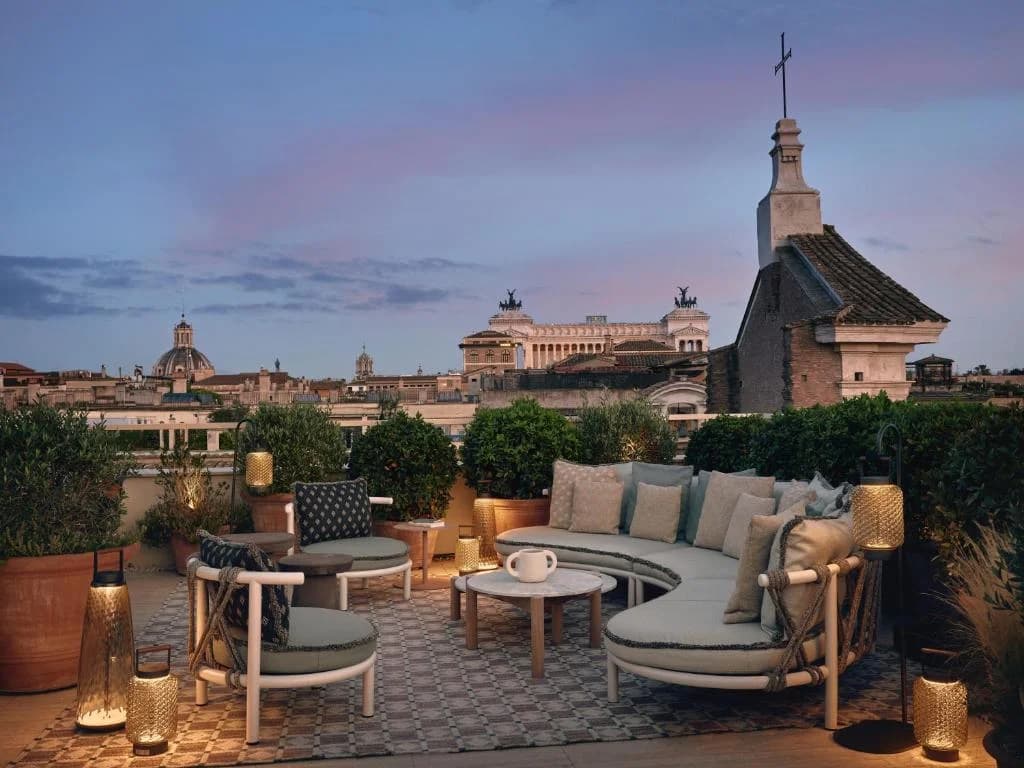
A Gold Coast landmark reframed with architectural precision. The rooftop skyline view is Chicago at its most compositional.

Located in Chicago's prestigious Gold Coast neighborhood, Waldorf Astoria Chicago offers a sophisticated retreat with timeless French-inspired elegance. Guests are welcomed by a stunning private court
The stretch of North Michigan Avenue known as the Magnificent Mile remains the most established corridor for luxury hotel suites in Chicago. The area sits between the Chicago River to the south and Oak Street Beach to the north, placing guests within walking distance of the city's principal commercial and cultural addresses. The lake is present as a constant reference point, visible from upper-floor suites. This is the district for travelers whose primary interest is efficiency: proximity to the Art Institute, the Chicago Symphony Orchestra, and the business addresses of the Loop is unmatched here.
River North, immediately west of Streeterville, has attracted a significant concentration of design-forward hotels. The neighborhood's industrial past is visible in its low-rise brick buildings and wide loft-style floor plates, which some properties have converted into architecturally distinctive suite configurations. A short distance north, the Gold Coast remains one of the most consistently affluent residential districts in the United States, with tree-lined streets, Gilded Age limestone mansions, and a quieter pace than the commercial corridors to the south. Luxury hotels in this area tend toward discretion over spectacle.
The West Loop has undergone a well-documented shift over the past decade. What was a meatpacking and cold-storage district is now the most concentrated dining destination in the city, anchored by restaurants that operate at a national level of attention. Luxury hotel development followed the restaurants, and the resulting properties tend to reflect a different aesthetic vocabulary from the Magnificent Mile: raw materials, considered industrial details, and suites that prioritize spatial volume over conventional opulence. For travelers whose itinerary centers on food, this district offers the most direct access.
Chicago's seasons are genuinely distinct, and each one reframes the city's character in ways that affect how a suite stay reads.
Late spring, specifically May and early June, offers the most reliable combination of moderate temperatures, open terraces, and full cultural programming. The Chicago Symphony Orchestra's season runs through June, and the city's gallery circuit is active. Early autumn, September through October, is equally well-regarded: the lake remains swimmable into September, the restaurant scene operates at full capacity, and the light over the water takes on a quality that is difficult to replicate in other seasons.
Summer in Chicago is genuinely warm, with temperatures regularly reaching the high 20s Celsius, and the lakefront becomes the city's primary public space. The Chicago Architecture Biennial, which runs in even-numbered years, draws a design-literate international audience and places pressure on suite availability at leading properties. Travelers with specific suite preferences should plan well in advance during Biennial years.
Winter in Chicago is cold by any measure, with wind off the lake amplifying temperatures that can fall well below freezing. The city does not close, however, and winter visitors often find the best suite rates of the year alongside a more local, less touristic version of the city's cultural life.
The United States does not operate a nationally standardized prestige classification equivalent to the French Palace designation. In practice, Chicago's top-tier hotels are identified through a combination of Forbes Travel Guide Star ratings, AAA Diamond classifications, and the sustained editorial attention of publications covering luxury travel and design.
At the highest level, a luxury hotel suite in Chicago is expected to deliver a specific set of conditions: significant floor area, dedicated living space separated from the sleeping area, premium bath fixtures, and a service infrastructure that includes 24-hour concierge and room service. The city's most considered properties go further, offering suite configurations with city or lake views from private terraces, in-suite dining programs, and direct relationships with cultural institutions for private access arrangements.
Chicago's architectural heritage means that the building itself is often part of the suite's value proposition. Properties housed in landmark structures, whether late 19th-century commercial buildings, early skyscrapers from the Chicago School tradition, or mid-century modern towers, offer a spatial and material experience that is specific to this city.
The primary distinction in Chicago suite selection is orientation: lake-facing suites offer views over open water toward the horizon, while city-facing suites place the density and geometry of the downtown grid in direct frame. Both are valid choices and the preference is genuinely personal, but it is worth deciding before booking rather than treating it as secondary.
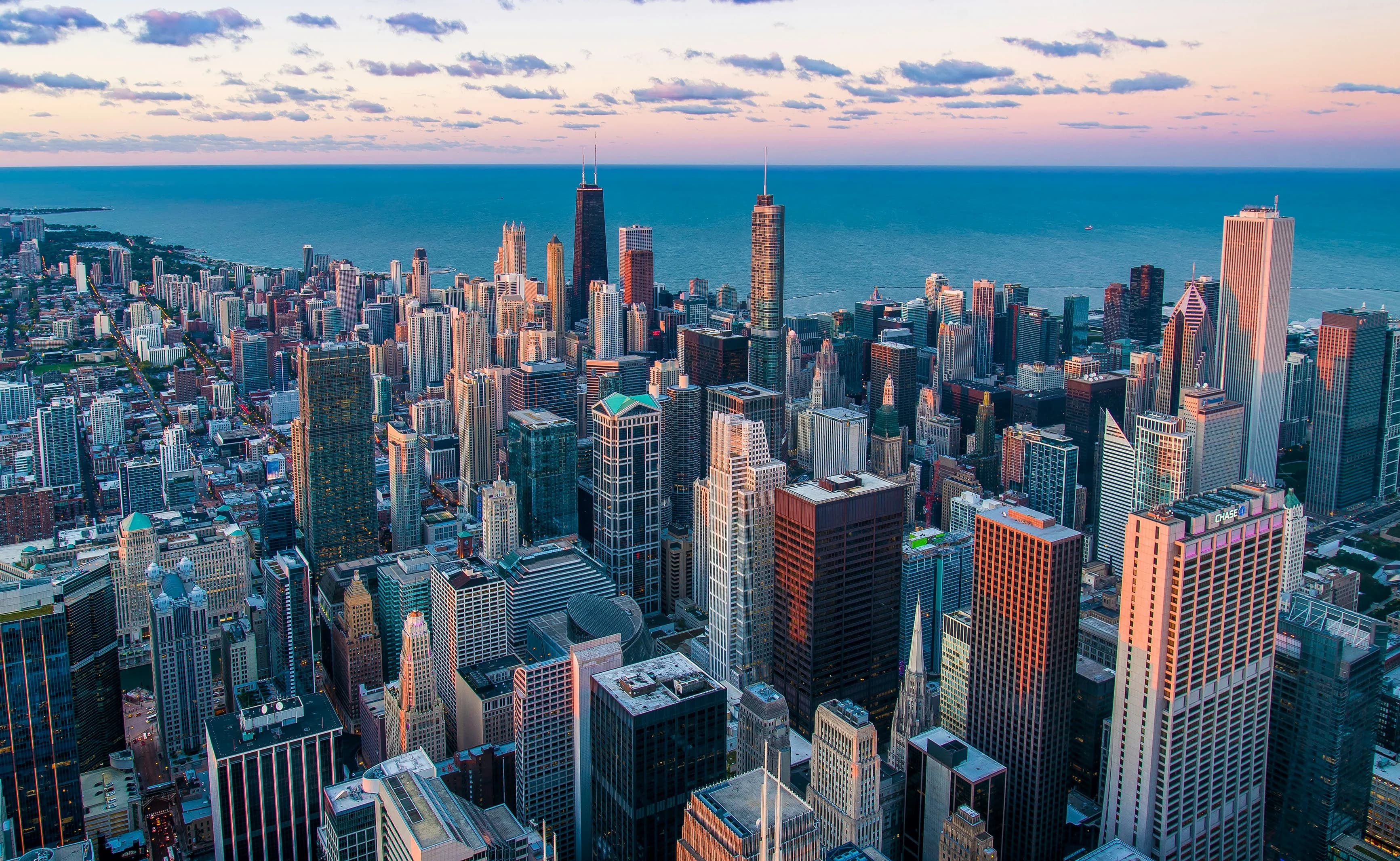
Floor level matters here in a way that is more pronounced than in lower-density cities. Chicago's skyline is active and layered, and suites on higher floors gain a qualitatively different visual relationship with the architecture below. This is particularly relevant in the Magnificent Mile corridor, where surrounding buildings can obstruct mid-floor views.
For travelers visiting primarily for business, proximity to the Merchandise Mart, the financial district in the Loop, or the McCormick Place convention center should factor into the selection. For cultural travelers, a suite within walking distance of the Art Institute, the Museum of Contemporary Art, and the Lyric Opera reduces logistical friction and allows the city's institutions to be accessed with the kind of frequency that transforms a visit.
Suite configurations in Chicago also vary significantly by property type. Historic conversions tend to offer irregular floor plans with higher ceilings and more complex spatial character. Purpose-built luxury towers offer more uniform layouts with engineered views and contemporary finishes. Neither is superior as a category, but the preference should be deliberate.
Chicago has a concentrated luxury hotel market with a relatively small number of properties genuinely operating at the top tier. This means the stakes of an uninformed choice are high: the difference between a suite that simply occupies space and one that actively shapes the quality of a stay is significant, and it is not always legible from a standard booking interface.
La Suite's curated selection for Chicago is built on direct knowledge of the properties, the specific suite configurations within them, and the service standards that distinguish the best from the adequate. For a city where architectural specificity, neighborhood character, and seasonal timing each carry real weight, a curated approach removes the noise and surfaces the options that align with how each traveler actually wants to experience the city.

Several properties along the Magnificent Mile and Streeterville offer suites with direct views over Lake Michigan, particularly on higher floors where surrounding buildings do not interrupt the sightline. The lake is large enough to read as open water rather than a contained body, which gives these suites a quality of light and scale that is specific to Chicago. La Suite's curated selection identifies which properties and which floor ranges consistently deliver this experience.
The Magnificent Mile and Streeterville offer the most established luxury hotel infrastructure and the closest access to the Art Institute, the lakefront, and the Loop. River North suits travelers drawn to design-forward properties with an industrial material palette, while the West Loop is the right base for itineraries centered on the city's restaurant culture. The Gold Coast offers a quieter residential register at a slight remove from the commercial core.
Late spring and early autumn are the most consistently rewarding seasons for a suite stay in Chicago. May through June and September through October offer moderate temperatures, full cultural programming, and active restaurant schedules. The Chicago Architecture Biennial, held in even-numbered years, significantly increases demand for premium suites, so early booking is essential during those periods.
At the top tier, a luxury suite in Chicago will include a dedicated living area separated from the bedroom, premium bath fixtures including a soaking tub in most cases, 24-hour concierge access, and in-room dining. Many leading properties also offer suite configurations with private terraces, butler service on request, and arrangements for private access to cultural institutions including the Art Institute of Chicago.
Yes. Chicago's status as the birthplace of the modern skyscraper and a center of late 19th and early 20th century commercial architecture means several luxury hotels occupy landmark structures. These properties tend to offer higher ceilings, distinctive structural details, and floor plans that differ from purpose-built contemporary towers. For design-literate travelers, the building itself is a meaningful part of the suite experience.
Entry-level luxury suites in Chicago at top-tier properties typically begin in the range of 700 to 1,200 US dollars per night, depending on season and floor level. Signature suites and penthouse configurations at leading hotels can reach considerably higher, particularly during peak periods such as the Architecture Biennial or major events at McCormick Place. Rates are generally more competitive in January and February.
A luxury suite offers meaningfully more floor area, a separate living space, and a higher specification of furnishings and fixtures. In Chicago's leading properties, suites also tend to occupy higher floors with more controlled views, and they come with a more attentive service tier including dedicated concierge access. The distinction is qualitative and spatial, not simply a matter of size.
Chicago's luxury hotel market has developed a strong offer for extended business stays, particularly in River North and the Loop-adjacent properties. Many leading suites include working desks, high-capacity connectivity, and in-suite meeting space. Several properties also offer serviced residence-style configurations for stays of a week or longer, with kitchen facilities and weekly housekeeping schedules adapted to professional travelers.
The West Loop is the right base for travelers whose itinerary prioritizes Chicago's restaurant culture. The neighborhood's concentration of critically regarded restaurants is the highest in the city, and the luxury hotels that have opened in the district reflect a design sensibility distinct from the Magnificent Mile. The area is also well connected by transit to the Loop and to O'Hare International Airport via the Blue Line.
La Suite evaluates properties based on a direct assessment of suite configurations, service standards, architectural quality, and location relevance for different traveler profiles. In a market like Chicago where the top-tier supply is concentrated, the curation focuses on the specific conditions that make a suite stay genuinely distinctive: floor level, orientation, building character, and the service infrastructure behind the room. The result is a selection built on precision rather than volume.