Where to stay in Buenos Aires: the city's distinct luxury districts
Recoleta is the traditional seat of Buenos Aires prestige. Its wide, tree-lined boulevards, the Cementerio de la Recoleta, and proximity to the Museo Nacional de Bellas Artes make it the natural address for travelers oriented toward culture and classical architecture. The residential density here is low, the noise levels controlled, and the proportion of international luxury hotel properties high. A luxury suite in Recoleta places you within walking distance of the city's most significant cultural institutions.
Palermo, particularly the sub-districts of Palermo Soho and Palermo Hollywood, occupies a different position in the city's geography. It is where Buenos Aires expresses its contemporary design sensibility: independent galleries, concept restaurants, and boutique properties that prioritize architectural intervention over convention. For travelers who read design publications and seek spatial originality, Palermo offers a different kind of luxury hotel experience.
Puerto Madero, the city's waterfront redevelopment, functions as a self-contained district of modern towers and converted grain warehouses. It is quiet, walkable within itself, and home to several large-format luxury hotels with river views. The distance from the city's cultural core is a consideration, but for travelers who prioritize privacy and views over neighborhood texture, it is a coherent choice.
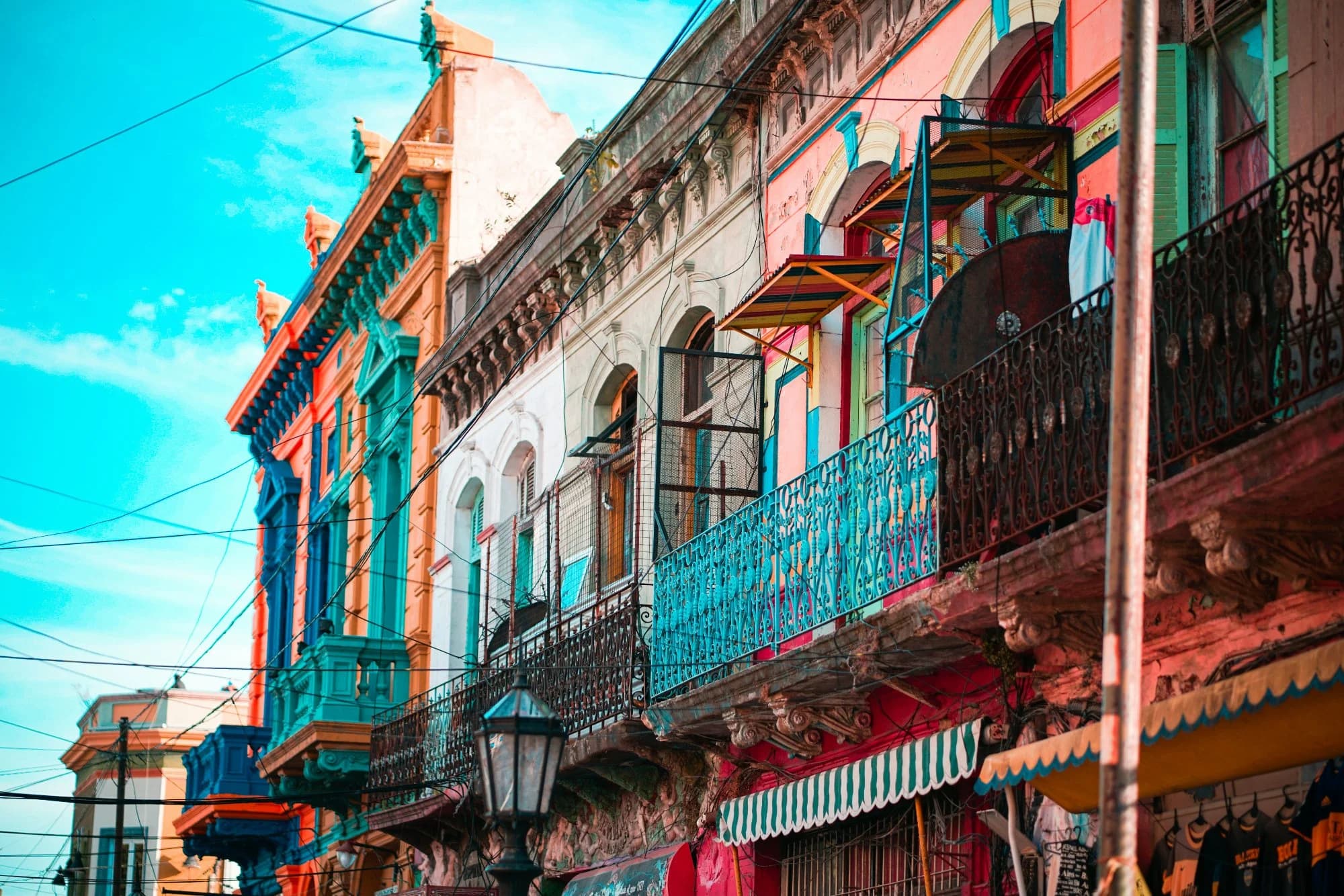
San Telmo retains the physical grammar of 19th-century Buenos Aires. The cobblestone streets, colonial architecture, and concentration of antique dealers and tango venues give it a sensory density that other barrios lack. Boutique properties here tend toward intimate scale, with a strong curatorial attitude toward interiors and local craft.
When to visit Buenos Aires for the best suite experience
Buenos Aires has a temperate climate shaped by its position in the Southern Hemisphere, which inverts the conventional travel calendar for visitors from the Northern Hemisphere.
The austral spring, running from September through November, is widely regarded as the city's most agreeable season. Temperatures are mild, the jacaranda trees in Recoleta and Palermo are in full flower, and the cultural calendar is active without the volume of peak summer tourism. Suite availability tends to be better than in January, and rates are often more negotiable with direct booking approaches.
December through February is high summer in Buenos Aires. The local population partially disperses to the coast and Patagonia, which means the city can feel quieter in residential barrios, but international visitors increase. Teatro Colón, the city's opera house and one of the finest acoustically in the world, typically closes for the summer recess.
March and April represent another strong window. The heat moderates, the city's social calendar reconvenes, and the Buenos Aires Design Week and other cultural programming create genuine reasons to visit beyond the standard tourist itinerary. The tango festival season also peaks in August, drawing a specific category of culturally motivated traveler.
July and August are winter months, with temperatures that rarely drop below five degrees Celsius. The city remains fully operational and, in some respects, more authentically itself without the overlay of summer tourism.
Understanding luxury hotel standards in Buenos Aires
Argentina does not use the Palace designation applied in France or Portugal to signal the highest tier of hospitality. The local classification system is the conventional star rating, which in practice tells you less than the property's ownership history, renovation cycle, and staffing philosophy.
The most reliable indicators of genuine luxury suite quality in Buenos Aires are the following: the age and condition of the building's fabric, particularly in Recoleta where heritage properties carry significant maintenance obligations; the presence of a dedicated concierge team with genuine local intelligence (not simply a list of partner restaurants); and the suite's orientation and acoustic separation from the street. Buenos Aires is a city that operates at volume until the early hours of the morning, and thermal and acoustic construction quality varies considerably between properties of ostensibly similar category.
Argentine hospitality has a particular warmth that is neither servile nor distant. At the best properties, the service culture is attentive and personal without the choreographed formality of some European counterparts. This informality, when done well, is one of the more distinctive qualities of a luxury hotel stay in Buenos Aires.
How to choose the right luxury suite in Buenos Aires
Several practical considerations apply specifically to Buenos Aires that do not arise in European or Asian luxury hotel markets.
Currency and payment structures in Argentina have been subject to significant fluctuation. It is worth establishing clearly with any property what currency rates apply to your booking and whether rates are set in Argentine pesos or US dollars, as this affects the final cost of your stay in ways that are not always transparent at the point of booking.
Floor and aspect selection within a suite category matters more in Buenos Aires than in many cities, because street-level noise from late-night activity in bar and restaurant districts can be considerable. Upper-floor suites with internal courtyard or river-facing aspects tend to offer materially better sleep conditions.
Transportation context is also relevant. Buenos Aires traffic patterns are dense and at times unpredictable. A suite in Recoleta or Puerto Madero places you closer to the main cultural and business corridors, reducing dependency on taxis for daily movement. Palermo's residential grid is navigable on foot if your programme is concentrated in that barrio.
For travelers arriving via Ezeiza International Airport, the transfer time to central Buenos Aires is typically between forty-five minutes and ninety minutes depending on traffic. Jorge Newbery Airport, which serves domestic routes and some regional connections, is immediately adjacent to Puerto Madero and significantly more convenient for onward travel within Argentina.
Why La Suite curates Buenos Aires differently
The Buenos Aires luxury hotel market contains a number of properties that market themselves at the upper tier but deliver inconsistently, particularly in areas like suite maintenance, kitchen quality, and the reliability of butler or concierge services. The gap between a property's self-presentation and its actual performance can be significant.
La Suite applies the same editorial standards to Buenos Aires that it applies to Paris, Tokyo, or Cape Town: direct assessment of spatial quality, service architecture, and the coherence of the overall guest experience. The curated selection on La Suite reflects only those properties where the luxury suite experience is defensible on factual terms, not on marketing position or star count.
For the traveler visiting Buenos Aires for the first time, this curation reduces the decision-making burden at a moment when the city's complexity might otherwise produce analysis paralysis. For the repeat visitor, it surfaces properties that may not be prominent in standard aggregator results but that meet a precise set of criteria for spatial quality and service consistency.