
The Complete Guide to Marrakech's Most Exquisite Luxury Suites
BY Jules Peulet

A curated selection of architecturally remarkable luxury suites in Marrakech, exploring private Moorish riads, monumental desert palaces and the finest indoor-outdoor Moroccan lifestyle.
Marrakech has firmly established itself as the capital of design and hospitality in North Africa, captivating the global elite through an intoxicating blend of imperial history, sensory intensity, and architectural mastery. Driven by extraordinary palatial commissions and the meticulous rehabilitation of historic structures, the Red City has transformed into a hyper-competitive theatre of ultra-luxury real estate. Yet for the discerning traveler, navigating this visually saturated market demands an uncompromising eye. A standard premium hotel room in Marrakech frequently struggles against the narrow constraints of historic urban footprints or generic resort layouts; to truly unlock the city's profound spatial rewards, one must demand the expansive, horizontally integrated volumes of its finest signature suites and private riads.
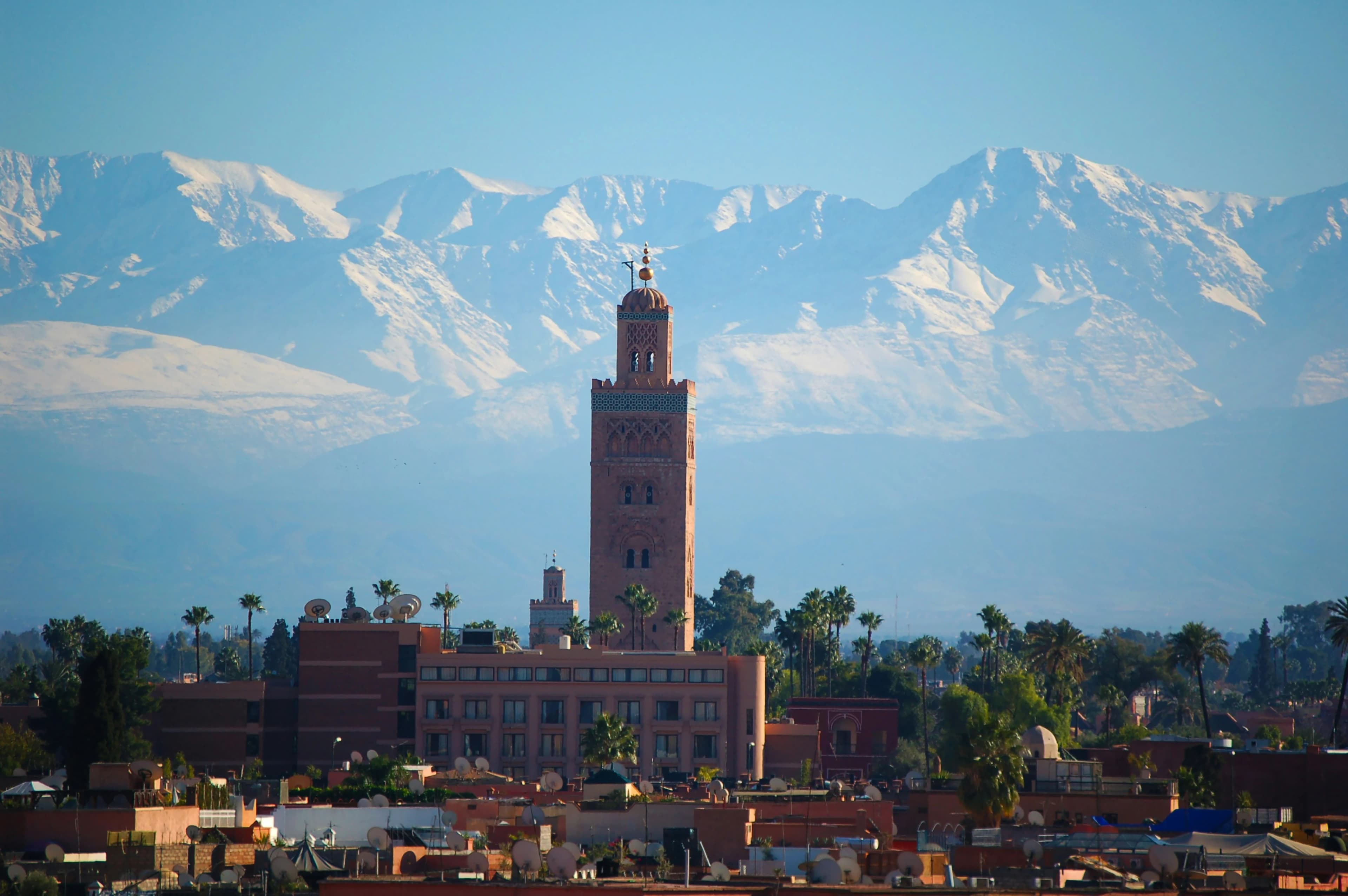
At La Suite, we operate with a rigorous editorial filter that privileges structural authenticity, volumetric grandeur, and seamless interior-exterior fluidity. In an oasis city renowned for its fierce desert sun, hidden patio geometries, and heritage craftsmanship, a world-class suite must function as an independent compound, a private sanctuary where the weight of historic Arab-Andalusian heritage coexists perfectly with the refined lines of contemporary minimalism. This guide serves as your definitive architectural compass to Marrakech's ultimate hospitality assets, mapping multi-storey private riads, monumental modern pavilions, and sun-drenched terraces overlooking the snow-capped Atlas mountains.
Discover all our luxury suites in Marrakech !
1. Architectural DNA & Spatial Philosophy
The architectural framework of ultra-luxury hotel suites in Marrakech is defined by a captivating spatial philosophy: the art of hidden interiors. Rooted in traditional Islamic architecture, Marrakech's design language completely rejects external displays of wealth. Façades are intentionally left as austere, windowless walls of pink clay, shifting all structural focus inward to celebrate symmetry, flowing water, and dramatic vertical volumes. Within the city's elite hospitality sanctuaries, this historic framework articulates itself through heritage Moroccan craftsmanship, employed not as superficial decoration, but as the foundational layer of the environment.
The physical shell of the ultimate Marrakech suite rests on highly tactile local materials. Spaces are formed by tadelakt, ancient lime plaster polished by hand and infused with olive oil soap that gives walls a smooth, satin finish. Floors and arches are lined with zellige (hand-cut terracotta tile mosaics) arranged in hypnotic mathematical patterns, while ceilings feature vertiginous domes in aromatic hand-carved cedar (zouaké). The architectural focus concentrates entirely on creating a sanctuary against the intense sun of North Africa, using deeply recessed shadowed loggias, structural water basins and geometric wooden light-filtering screens (mashrabiya) to create a constant interplay of shadow and light.
This historical vernacular has been radically reinvented by a restricted circle of visionary architects and designers. Legendary French designer Jacques Garcia has left an indelible mark on the city, celebrated for his transformation of the emblematic La Mamounia. Garcia employs a language of dramatic design, laden with chiaroscuro, layering silks in deep jewel-stone hues, sculpted velvet draping and complex sequences of Moorish columns directly against classical structures, ensuring that historical volumes remain intensely mysterious, opulent and enduring.
In striking contrast, the internationally acclaimed architecture firm Studio KO, founded by Karl Fournier and Olivier Marty, has pioneered a raw modernist desert brutalism that strongly influences contemporary suite design across the city. Studio KO eliminates ornamental noise to focus on monolithic volumes of local pink brick, raw granite and linear configurations that echo the expansive horizontality of the desert.
Meanwhile, Spanish interior architect Luis Bustamante introduces a refined contemporary classicism with masculine restraint into properties such as Amanjena. Bustamante uses imposing unadorned pink arches, perfectly symmetrical water axes and minimalist furnishings, proving that absolute luxury in Marrakech can be achieved through purity of geometric scale, material depth and silent spatial harmony.
2. Mapping neighbourhoods and atmospheres
Marrakech is a geographically and culturally fragmented city, divided into distinct neighbourhoods, each possessing its own rigorous architectural rhythm, its own social velocity and environmental energy.
The Medina: Historical intimacy and hidden sanctuaries
The ancient and fortified heart of Marrakech, designated as a UNESCO World Heritage site. Characterised by an extremely dense labyrinth dating back thousands of years, with lively souks, narrow earthen-floored alleyways and hidden doorways, the Medina represents the absolute essence of Moroccan heritage. Staying in a signature suite or private riad here, whose illustrious Royal Mansour Marrakech or the prestigious Riad Farnatchi, means living within a secret fortress.
The lifestyle is intensely atmospheric, historical and completely private once inside the walls. The suites are vertical residences, comprising multiple storeys, built around private central courtyards adorned with fountains and mature orange trees, seducing traditionalists, collectors and travellers who desire complete immersion in the city's living history.
Hivernage: Majestic palaces and international glamour
The polished residential quarter with broad avenues, originally developed during the French protectorate era. Located just outside the ancient ramparts, Hivernage is defined by its mature jacarandas, grand colonial-era villas and manicured high-end parks. This neighbourhood hosts the absolute hallmarks of monumental palatial luxury, spearheaded by the legendary La Mamounia and the contemporary design fortress The Oberoi, Marrakech.
The suites here display incredible horizontal physical scale, with soaring ceilings, formal reception salons and expansive private balconies. The ambiance is majestic, international and highly visible, attracting diplomats, titans of industry and high-profile global icons who demand impeccable service in traditional white and direct proximity to the city's elite gastronomic institutions.
La Palmeraie: Expansive desert peace and resort complexes monoliths
A vast sun-bleached oasis composed of hundreds of thousands of date palms stretching along the north-eastern edge of the city. La Palmeraie represents the ultimate escape for travellers who demand complete isolation, massive physical footprints and absolute silence. Characterised by vast estates of resort complexes hidden behind high adobe walls, this area is embodied by the emblematic Moorish pavilion design of Amanjena.
The suites here are self-contained residential pavilions featuring multiple bedrooms with substantial enclosed private gardens, heated deep swimming pools and outdoor dining loggias. The atmosphere is serene, meditative and intensely private, serving as a premier choice for families of old-world wealth and celebrities seeking an absolute sanctuary far from the chaotic urban core.
Gueliz (The New Town): Industrial-chic modernism and avant-garde design
The trendy, cosmopolitan heart of Marrakech's artistic, culinary and commercial revolutions. Developed by the French in the early twentieth century, Gueliz boasts a grid layout, mid-century Art Deco apartment buildings and terracotta-coloured facades.
Design boutique concepts and luxury lofts such as those near the Radisson Blu Hotel, Marrakech Carré Eden capture this creative and urban energy. Interior aesthetics lean toward raw concrete textures, industrial ironwork and mid-century Scandinavian furniture mixed with contemporary African art. The mood here is social, artistic and highly independent, attracting creative directors, independent collectors and global trendsetters.
The Atlas Foothills and Ourika Valley: Picturesque majesty and mountain isolation
Heading south toward the imposing snow-capped peaks of the High Atlas, this region represents the wild and majestic frontier of luxury in Marrakech. Characterized by deep river valleys, ancient Amazigh stone villages and olive groves, the foothills offer a dramatic climatic contrast to the desert plains below.
Sanctuaries such as the ultra-exclusive Olinto or the majestic Kasbah Tamadot perfectly embody this rugged and aristocratic aesthetic. The suites feature exposed wooden ceilings, hand-woven Amazigh rugs and expansive private terraces perched above the valleys. The mood is creative, intellectual and deeply secure, offering a tranquil retreat for writers, collectors and travellers seeking raw nature and total intimacy.
3. Residential layouts and volumes
The defining boundary between a standard premium hotel room key and an elite suite in Marrakech lies in the masterfully engineered architecture of absolute horizontal and vertical isolation. In a city where temperatures can regularly exceed 45°C in summer, a standard linear hotel room fails completely; it traps heat and offers no privacy. Renting a signature suite or private riad is the strategic acquisition of a spatial geometry specifically designed to deliver the circulation benefits and climate control of an authentic Moroccan estate.
The absolute apex of this design philosophy is the multi-story private hotel riad. Perfected in properties like the Royal Mansour, these spaces entirely reject the concept of shared corridors. Guests occupy an entire three-story private residence integrated into the hotel infrastructure.
The design relies on sharp vertical segregation of public and private volumes: the ground floor features a central courtyard open to the sky with a running fountain, a formal Moroccan salon and a private bar designed for grand entertaining. A private elevator or tiled spiral staircase ascends to the second floor, entirely reserved for the master bedroom suites and bespoke dressing-rooms.
The vertical ascent culminates at the private rooftop terrace. These expansive stone terraces integrate open diving pools, bespoke Bedouin tent lounges and summer kitchens. Moreover, elite suites incorporate spectacular underground residential features, notably private monolithic hammams carved into underground vaults, harnessing the earth's natural geothermal cooling properties to create a completely secluded wellness sanctuary.
4. The lifestyle ecosystem: gastronomy and haute retail
An elite suite in Marrakech serves as the operational hub of an incredibly rich sophisticated luxury ecosystem, seamlessly connecting cutting-edge Mediterranean-Moroccan gastronomy to the ultra-private worlds of historic craftsmanship.
Culinary integration in Marrakech's premier suites entirely redefines the concept of private room service. Rather than standard menus, the kitchens of the city's Michelin-starred properties treat the private dining rooms and interior courtyards of their signature suites as direct extensions of their main dining rooms. Guests can arrange private dinners orchestrated in-suite by acclaimed culinary masters, such as Chef Yannick Alléno's team at the Royal Mansour or world-class fusion concepts at La Mamounia.
The entire experience is elevated to performative art: master pastry chefs prepare personalized Moroccan breads and pastries live in your suite's kitchen, and sommelier chiefs travel directly to your salon to pair rare international vintages and selected local Meknes estate reserves sourced from the hotel's deep underground vaults.
Simultaneously, the close relationship between these elite suites and the city's master artisans opens entirely off-market shopping experiences. For occupants of Marrakech's premier suites, navigating the chaotic souks transforms into an entirely personalized and private affair.
Through elite lifestyle hosts, senior textile conservators and master carpet merchants will circumvent their public showrooms. Rare museum-caliber Berber carpets, hand-woven silks and bespoke leather goods collections are transported securely directly to your suite's living room. Master tailors will travel to your dressing room for personalized fitting sessions of premium silk caftans and structured resort wear, offering a completely relaxed and highly confidential acquisition experience far from intense public crowds.
5. The Cultural Canvas & Historical Anchors
The finest hotel suites in Marrakech function as living cultural repositories, masterfully curated to connect the modern traveler directly to the rich artistic soul and imperial heritage of North Africa. The interiors of these spaces are designed with museum-grade precision, treating historical relics not as static decoration, but as vital design elements that coexist with cutting-edge contemporary art.
Within these premium sanctuaries, original art is treated as a foundational design layer. It is commonplace to discover suites where nineteenth-century Orientalist oil paintings and antique weaponry sit alongside bold abstract canvases from the contemporary African avant-garde, or monolithic geometric sculptures inspired by the architectural minimalism of the neighboring MACAAL (Museum of Contemporary African Art Al Maaden). Hotels regularly partner with prominent regional foundations to rotate curated art collections within their premium signature suites, transforming the living volume into an exclusive private exhibition gallery for international collectors.
Beyond the physical artwork displayed in the rooms, staying in a leading Marrakech suite confers completely unprecedented, off-market access to the city's most guarded cultural institutions through elite hotel partnerships:
After-Hours Yves Saint Laurent Museum Access: Private, crowd-free morning or evening visits to the Yves Saint Laurent Museum Marrakech and adjacent Majorelle Garden, allowing guests to stand completely alone before archive haute couture collections, guided by a senior curator.
Royal Palace Tours: Exclusive closed-door access to restricted architectural wings and historical preservation restoration laboratories of the Bahia Palace and Saadian Tombs, entirely free of public crowds.
Contemporary Art Desert Privileges: Immediate VIP access, private artist encounters and curated behind-the-scenes installation tours in partnership with leading contemporary art galleries located in the Sidi Ghanem industrial zone.
6. The Aesthete's Overview (Our Signature Critique)
A rigorous and completely objective architectural critique of the ultra-luxury landscape of Marrakech suites reveals that behind the flawless palatial aesthetic lies a challenging environment where dramatic traditional layouts and extreme natural elements create significant operational friction.
The primary and most pervasive challenge of the historic riad suites in the Medina is the Courtyard Echo Chamber. Riad architecture is explicitly designed to maximize central interior acoustics, which means that every sound produced in the ground-floor fountain basin propagates vertically to the bedrooms. Moreover, because these structures are densely aligned side by side along narrow paved alleyways, high-frequency sounds from the outside world, notably the dawn Call to Prayer from nearby minarets, delivery scooters passing through, and late-night pedestrian traffic, resonate heavily through the central aerial opening. Even with advanced motorized glass retraction systems closed over the main rooftop courtyard, low-frequency acoustic vibrations can easily penetrate the main suites, making meticulous verification of a property's acoustic engineering absolutely essential.
Second, the architectural trend of open central courtyards introduces the Environmental Infiltration Trap during the relentless summer months. Marrakech experiences intense desert heat and frequent sandstorms generated by Saharan winds. Because traditional riad suites rely on doors opening directly onto an uncovered central courtyard rather than closed interior corridors, keeping dust, insects, and hot air out of the main bedrooms requires constant struggle. A guest paying high palatial rates may frequently find themselves in a space where the air conditioning system must operate at absolute maximum capacity to combat warm air drafts infiltrating each time an exterior door is opened, creating noticeable ambient noise.
Finally, the vertical nature of the classic riad creates severe Circulation and Light Deficits. Historic palaces converted to hotels were built horizontally for defense and shade, which resulted in very deep and narrow ground-floor living spaces. While modern street-facing penthouses enjoy brilliant sunlight, the lower levels of historic suites can feel exceptionally dark and cavernous, requiring artificial lighting even at noon in summer. Furthermore, installing modern passenger elevators within narrow, century-old masonry frameworks is an absolute nightmare. Elevators are often tiny and tucked away in remote service corners, meaning guests booking multi-level riad suites frequently must navigate steep and uneven tiled staircases to move between their bedroom and private rooftop pool, proving that Marrakech's historic soul demands a distinct degree of physical compromise.
Ultimately, booking an elite hotel suite in Marrakech is far more than a simple transaction; it is an intentional choice to align yourself with the unique engineering, spatial geometry, and intense light of the Moroccan oasis. The city's finest accommodations successfully dissolve the boundary between historical imperial gravity and modern luxury, allowing you to live intimately alongside centuries of Moroccan craftsmanship, culinary mastery, and panoramic mountain views. Whether your design preference leans toward the stripped minimalism and monolithic rose-brick pavilion of an Amanjena property or toward the grand vertical halls filled with antiques of a private riad in the Medina, the appropriate space must successfully master the challenges of its structure. By prioritizing acoustic screens and windbreaks of courtyards, verifying elevator accessibility, and selecting a depth of authentic materials, the discerning traveler can move beyond the appearance of superficial luxury to secure a private Moroccan sanctuary that delivers an unforgettable aesthetic milestone.
Frequently asked questions on architecture and travel
How does riad architecture preserve client privacy when served by dedicated in-house staff?
The layout of elite multi-story hotel riads is designed with structural discretion in mind. Properties such as Royal Mansour feature a complex network of hidden service corridors and independent entrances built behind visible walls. This allows your dedicated private butler, housekeeping service, and in-house chefs to access pantries, prepare meals, and refresh common areas entirely out of sight, ensuring that your personal living spaces and central courtyards remain completely private throughout your stay.
What is the practical layout difference between a suite with an interior courtyard view and a suite with an Atlas view?
The fundamental difference lies in natural light and emotional atmosphere. A suite with an interior courtyard view focuses entirely on Marrakech's traditional, inward-facing architectural style; it offers absolute visual privacy from the outside world, deep shade, and cool temperatures, but presents a distinct deficit of natural light. Conversely, a suite with an Atlas view is built horizontally on the upper floors of exterior resort properties. It features massive floor-to-ceiling windows and vast stone terraces that open onto the horizon, offering brilliant light but exposing outdoor living spaces to higher mountain wind conditions.
How do luxury suites in the historic Medina manage physical accessibility and heavy luggage logistics?
Because the old alleyways (derbs) of the Medina are too narrow for automobile circulation, traditional access is a major structural challenge. Elite properties address this issue by maintaining private fleets of customized electric golf carts parked at secure exterior depot gates outside the fortress walls. Your luggage trunks are safely transported to your suite via these vehicles or manually by hotel porters using traditional wooden hand trucks, while high-profile guests may request private security escorts to navigate the crowded alleyways from the gate to the hidden entrance of the riad.
More from the Journal

Rio de Janeiro: Three Addresses, Three Definitions of Exceptional Stays
Between the historic prestige of Copacabana, the international excellence of a five-star hotel facing the Atlantic, and the confidentiality of a guesthouse perched in the heights, Rio de Janeiro offers three distinct geographies of luxury. LaSuite deciphers each address to guide your choice according to your traveler profile.
BY Jules Peulet

City Break: 7 Urban Luxury Suites for an Inclusive Escape
Demanding LGBTQ+ travelers are no longer simply seeking "safe" urban destinations; they expect flawless architectural experiences and impeccable hospitality at the heart of the world's major cities. For this selection, Lasuite.com partnered with Mygayhotels.com. By combining their rigorous selection of certified "Travel Proud" establishments with our expertise in Quiet Luxury design, we have discovered 7 urban sanctuaries (Paris, New York, London, Madrid, Amsterdam, Rio de Janeiro and Rome). Each of these suites blends stunning aesthetics, strategic location and the assurance of hospitality that celebrates diversity.
BY Jules PEULET

Luxury suite with private jacuzzi near Paris: comparative guide for Île-de-France
Comparative guide to luxury suites with private jacuzzi in Paris and Île-de-France: objective criteria, neighborhoods to favor, comparative table, stay formats, occasions and budget.
BY Jules Peulet