


The Ultimate Guide to the Finest Luxury Suites in Sardinia
BY Jules Peulet

An exceptional selection of the finest luxury suites in Sardinia, exploring the bioclimatic design of the Costa Smeralda, private beachfront villas and the ultimate Mediterranean indoor-outdoor lifestyle.
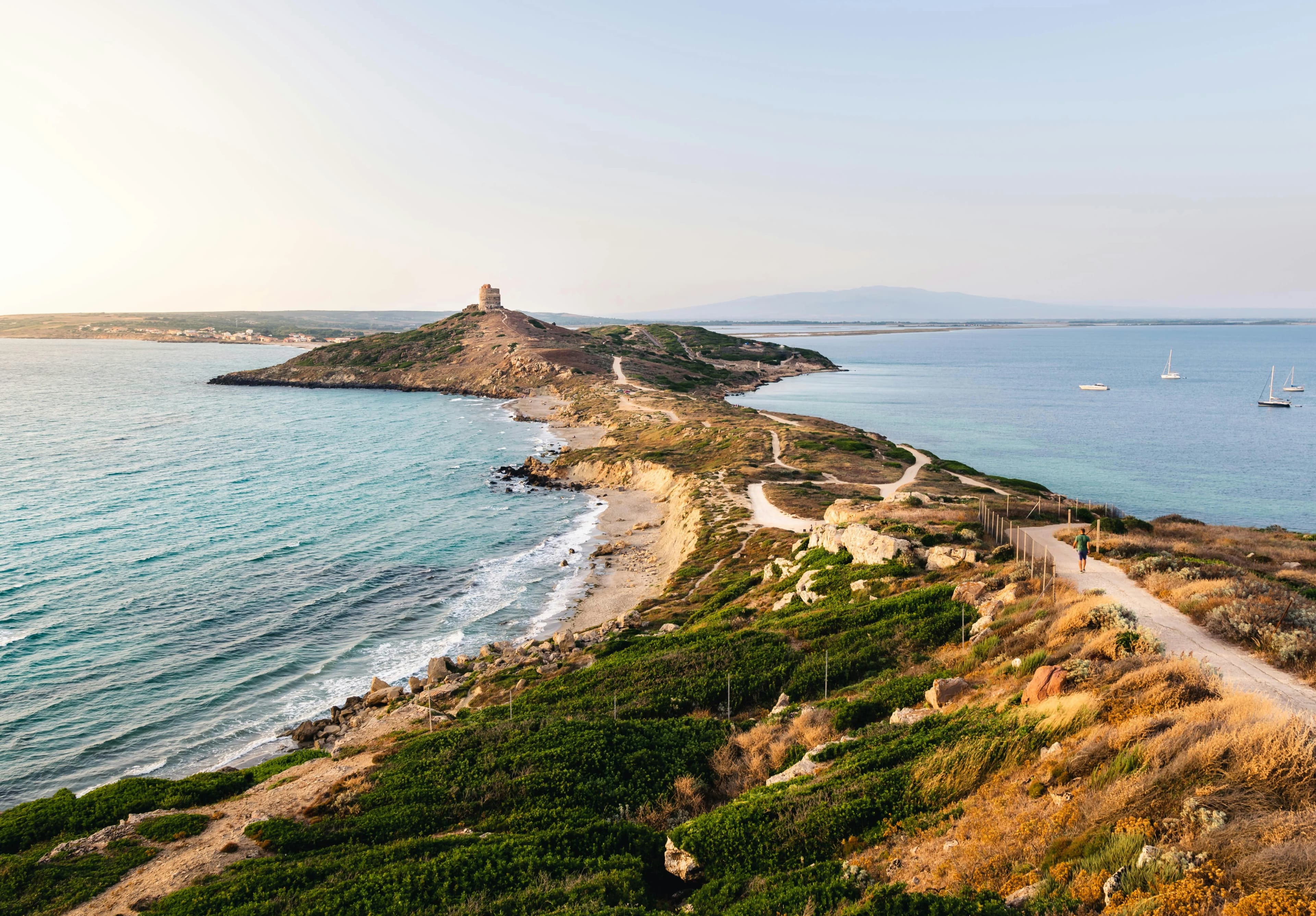
Sardinia, particularly its northern coast, functions as the ultimate summer playground for global plutocracy, mega-yacht owners and old-money dynasties. Since the Aga Khan transformed this rocky, granite landscape into Costa Smeralda in the 1960s, the island commands some of the world's highest seasonal room rates. Yet within an environment protected by incredibly strict environmental conservation laws (where new coastal construction has been completely prohibited for decades) navigating hotel real estate demands an expert architectural eye. A standard premium room in Sardinia is frequently constrained by the compact historical footprints of mid-century designs. To truly unlock the island's raw spatial rewards and claim your private slice of the Mediterranean, one must move beyond standard inventory and demand the vast, horizontally integrated volumes of its finest signature suites and independent waterfront villas.
At La Suite, we operate with a filter centred on uncompromising design that prioritises structural authenticity, material gravity and seamless indoor-outdoor flow. Upon a coastline defined by wind-sculpted granite cliffs, wild macchia scrubland and translucent turquoise waters, an elite suite must function as an independent private estate, a sanctuary where hand-crafted architecture effortlessly merges into private beaches. This guide serves as the ultimate strategic compass toward Sardinia's finest hotel assets, mapping the greatest organic living spaces, hidden mountain retreats and private waterfront terraces where emerald sea meets your personal dock.
1. Architectural DNA and Spatial Philosophy
The architectural framework of ultra-luxury hotel suites in Sardinia is defined by a singular, globally revered style: Costa Smeralda Architecture or Mediterranean Organic Modernism. Designed in the 1960s by visionary architects such as Jacques Couëlle, Savin Couëlle and Luigi Vietti, this design philosophy completely rejects rigid lines and industrial angularity. Instead, it treats the luxury suite as an organic extension of the earth, mimicking the smooth, wind-sculpted contours of Sardinia's native granite rocks. Within the island's elite hotel sanctuaries, this vernacular is articulated through an intensely physical and tactile material palette: hand-formed lime-washed plaster, irregular local dry stone, twisted rustic juniper wood columns, terracotta roof tiles and hand-painted Cerasarda ceramic glazes.
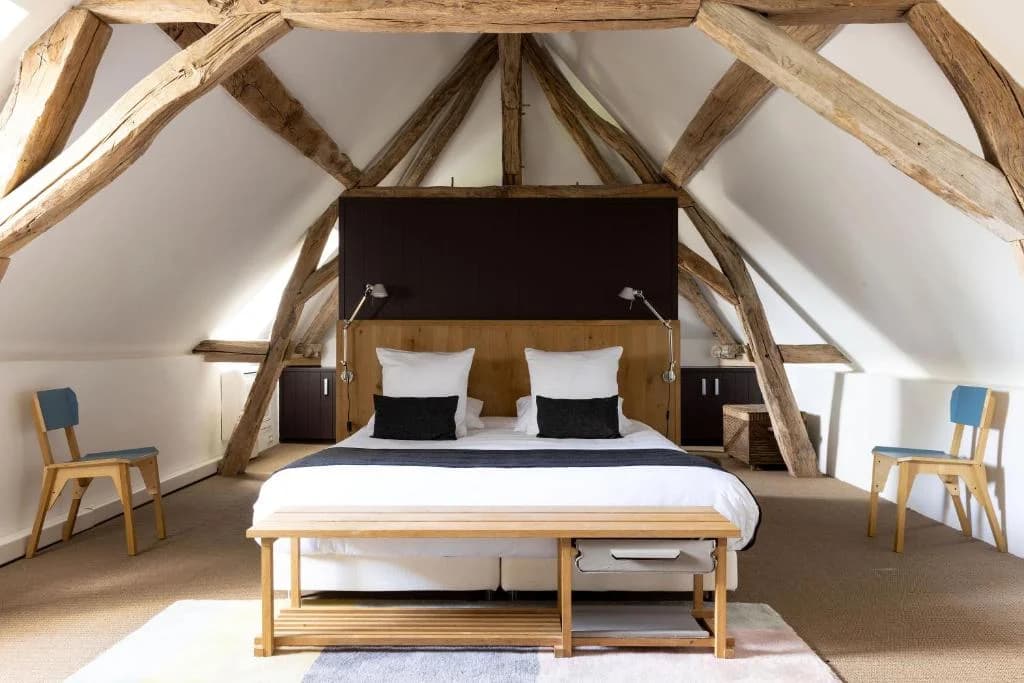
The structural shell of the ultimate Sardinian suite rests on fluid and asymmetrical geometries. Ceilings are accentuated by exposed, raw chevrons, while walls curve gently into alcoves of integrated masonry seating (uassi). Rather than imposing massive concrete blocks on the coastline, the architecture focuses on low, bioclimatic layouts that remain naturally cool, using deep shaded porticos, open arches, and internal stone steps to filter the intense Tyrrhenian sun.
This historical style continues to shape the island's premier suite portfolios. Savin Couëlle's legacy lives intensely at the legendary Hotel Cala di Volpe, where suites are treated as sculptural and cavernous masterpieces. Couëlle used irregular floor levels, stained glass that projects patterns of colored light onto raw plaster walls, and custom carved wooden doors to ensure that each space feels completely unique, primitive, and deeply elitist.
In striking contrast, contemporary designers have introduced refined sensory minimalism to properties like Petra Segreta Resort & Spa in the Gallura hills. Here, traditional Sardinian pastoral huts (stazzi) are enlarged into stone suites with high ceilings, polished concrete floors, minimalist platform beds, and expansive glass doors, proving that absolute Sardinian luxury resides in the weight of raw materials, spatial restraint, and an intimate connection to wild landscape.
2. Mapping neighborhoods and atmosphere
Sardinia is a massive and geographically diverse island divided into highly distinct coastal bands and mountainous interiors, each possessing its own social pace, architectural rules, and environmental energy.
Porto Cervo and the heart of the Costa Smeralda: high-shine glamour and mega-yacht curation
The undisputed world capital of seasonal wealth, high-visibility prestige, and maritime commerce. Built around a meticulously maintained reproduction of a historic Italian fishing village, Porto Cervo is a highly secured playground bordered by flagship luxury vessels, gastronomic pop-ups, and private helipads.
Staying in a signature suite along this crescent, dominated by the legendary Hotel Cala di Volpe or the ultra-private Hotel Romazzino, means occupying the absolute epicenter of summer jet-set elite. The atmosphere is fast, haute couture and highly social, making it the premier choice for international business leaders, yacht owners and travelers who want direct access to elite beach clubs and deep-water quays.
San Pantaleo and the Gallura hills: bohemian chic and jagged granite peaks
For design purists who reject the intense gloss of the waterfront, the historic village of San Pantaleo and the surrounding Gallura hills offer a raw and intensely sophisticated alternative. Characterized by enormous jagged granite peaks, ancient cork oak forests and independent artist studios, this inland enclave prioritizes intimacy and rustic elegance.
Boutique sanctuaries like Petra Segreta Resort & Spa capture this bohemian-aristocratic energy perfectly. The suites are isolated stone villas nestled in the heart of wild macchia, complete with private heated pools and panoramic views over the La Maddalena archipelago. The energy is meditative, slow and deeply confidential, attracting writers, creative directors and reclusive icons.
Porto Rotondo and Golfo Aranci: discreet residential luxury and private bays
Developed parallel to the Costa Smeralda by Venetian aristocrats, Porto Rotondo offers a gentler, more residential approach to upscale coastal living. The architecture draws heavily on local stone, circular piazzas and maintained private gardens.
Accommodations like the historic Hotel Abi d'Oru embody this discreet elegance. The suites feature expansive beach-facing terraces, traditional geometric hydraulic accents and direct access to tranquil sandy coves. The atmosphere is familial, discreet and deeply relaxed, seducing multi-generational dynasties and travelers who appreciate quiet luxury away from Porto Cervo's paparazzi canyons.
La Maddalena archipelago and Palau: wild nautical mastery and pink sands
An immaculate network of wind-whipped granite islands and turquoise waterways situated off the northern tip of Sardinia. Accessible primarily by private boat, La Maddalena represents the last frontier of raw nature and maritime isolation.
Luxury residences nestled along the coastlines around Palau and private islands favor low-impact ecological architecture that integrates invisibly into the rocks. The suites feature expansive wooden terraces, private mooring posts and panoramic windows framing wild islands. The atmosphere is intensely nautical, independent and adventurous, attracting sailing purists, wind sports enthusiasts and collectors of raw natural landscapes.
Southern Sardinia (Chia and Pula): Wild sand dunes and Phoenician footprints
Moving away from the overcrowded northern coast, the southern tip of Sardinia offers a completely different landscape of vast white sand dunes, pink flamingos and ancient Phoenician archaeological ruins.
Elite resort complexes such as the emblematic Forte Village Resort or the refined Falkensteiner Resort Capo Boi define this region. The suites here are massive, single-level beach bungalows hidden in private tropical gardens, placing strong emphasis on modern linear architecture and the execution of the resort's entirely autonomous lifestyle. The atmosphere is spacious, warm and highly secure, attracting multigenerational families and global travelers seeking a more tropical and unhurried Mediterranean pace.
3. Residential configurations and volumes
The defining boundary between a standard premium hotel key and an elite suite in Sardinia is the masterfully designed division of horizontal space and exterior territorial intimacy. Because strict coastal preservation laws (Legge Salva Coste) prevent hotels from extending their building dimensions beyond historical footprints, standard hotel rooms are often confined to compact early 1960s footprints. Renting a signature suite is a strategic acquisition of space, specifically designed to function as an independent private compound where public hospitality and absolute residential isolation exist in perfect alignment.
The hallmark of this layout philosophy is the autonomous multi-room Villa-Suite. Located in private waterfront points of the resort, these spaces completely reject the linear hotel corridor layout. Instead, guests enter through a generously designed open-air arched stone portico that functions as an outdoor reception lounge. The layout relies on clear segregation of volumes: the spacious interior living room features hand-molded plaster walls, functional fireplaces and custom wooden furnishings.
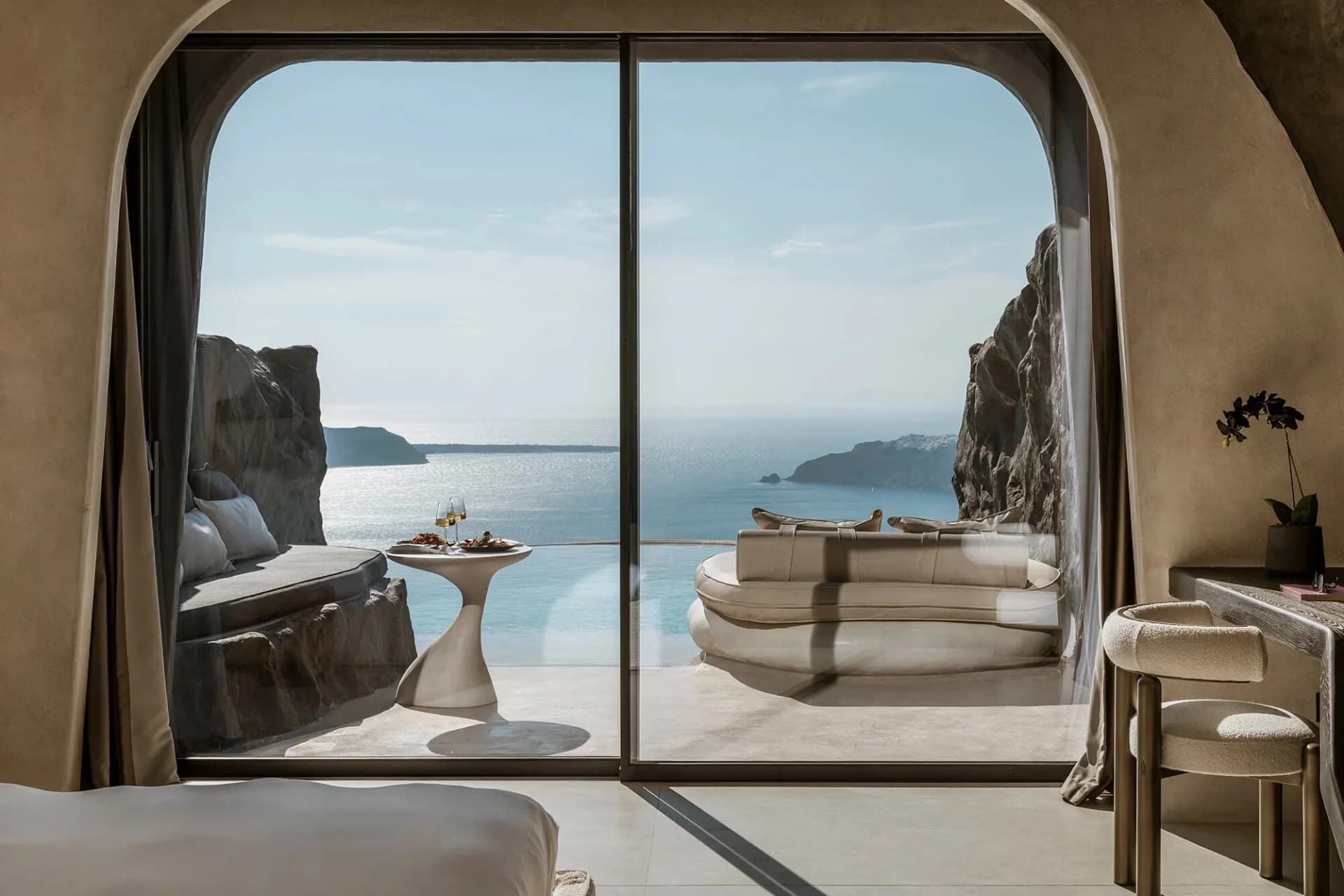
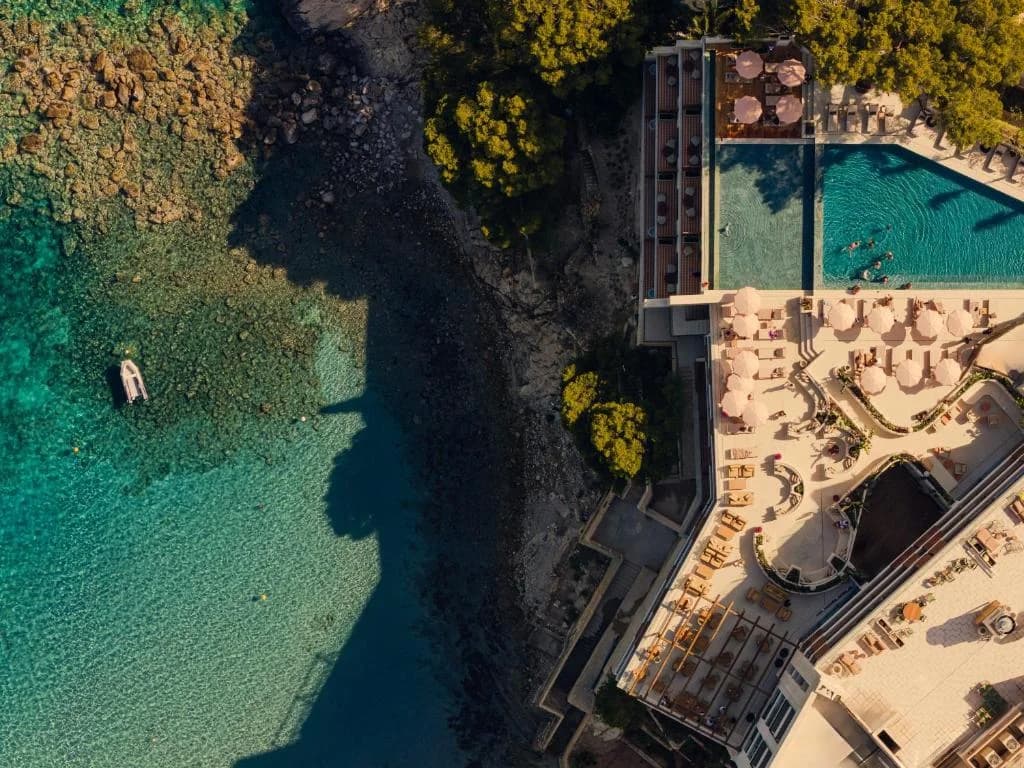
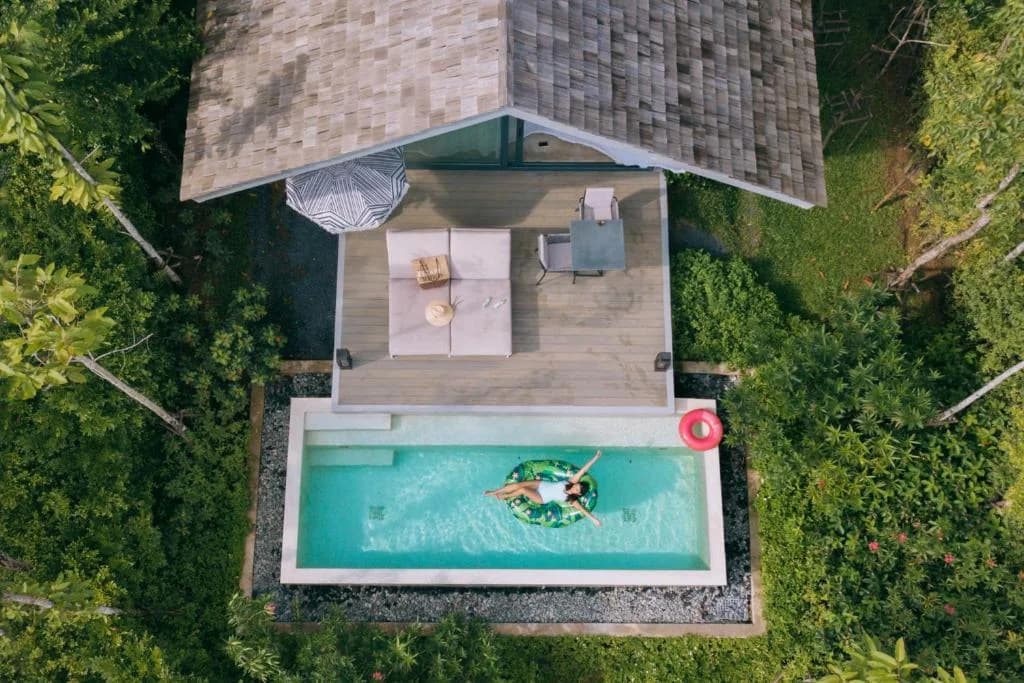
Completely separated from this entertainment zone by massive wooden doors are the master bedroom wings, private dressing areas and multi-room marble bathrooms equipped with sunken stone soaking tubs. Outside, these amenities integrate the ultimate territorial luxury: a private heated saltwater infinity pool built directly into granite rock formations, and a private stone promenade leading to a reserved sandy beach cove, guaranteeing your family complete isolation from the resort's public spaces for swimming and relaxation.
4. The lifestyle ecosystem: gastronomy and high-end retail
An elite Sardinian suite operates as the operational command center of an incredibly sophisticated luxury lifestyle ecosystem, seamlessly connecting high-performance beach club gastronomy to the closed-door worlds of haute summer fashion design.
Culinary integration within Sardinia's top-tier suites completely redefines private gastronomy. Rather than standard room service trays, properties with legendary culinary partnerships treat private terraces and shaded porticos of their signature suites as direct extensions of their main kitchens. Guests can host private dinners orchestrated in-suite by celebrated culinary institutions, such as world-class seafood curation at Cala di Volpe or elite global pop-ups like Zuma in Porto Cervo.
The entire experience is performative art: hardwood private grills are assembled on your stone terrace by a dedicated chef, while sommelier chefs travel directly into your living room to pair rare, non-commercialized Vermentino di Gallura whites and aged Cannonau reds selected from the hotel's deep underground vaults. Moreover, these leading suites offer extraordinary maritime luxury: a private motor yacht can collect you directly from your suite's private wooden dock, whisking you away to legendary waterfront destinations like Phi Beach or Nikki Beach without ever touching a crowded summer road.
Simultaneously, the tight relationship between these leading suites and the seasonal boutiques of the Porto Cervo Promenade unlocks entirely off-market retail experiences. For occupants of the island's ultimate suites, shopping completely bypasses the public store floor.
Through elite lifestyle hosts, the world's most powerful luxury houses, led by the summer salons of Dior, Louis Vuitton and Brunello Cucinelli styled as local stone grottos, will arrange private in-suite styling consultations. Complete summer runway collections, rare linen resort wear and high-value timepieces are safely transported directly into your suite's walk-in wardrobe, enabling a completely relaxed and highly confidential acquisition experience far from the public crowd.
5. The cultural tapestry and historical anchors
Sardinia's finest hotel suites operate as living cultural repositories, meticulously curated to directly connect the modern traveler to the island's rich artistic soul and millennia-old heritage. The interiors of these spaces are designed with curatorial precision, treating local Sardinian history not as static decoration, but as a vital design element that lives alongside contemporary architectural forms.
Within these sanctuaries of prestige, original art and heritage craftsmanship are treated as a foundational design layer. It is commonplace to discover suites where original sketches by historic local artists sit alongside bold contemporary sculptures and hand-woven textile works crafted on historic wooden looms from the village of Samugheo. Hotels regularly partner with prominent regional foundations to circulate curatorial collections of local pottery and hand-sculpted cork installations throughout their most exclusive signature suites, transforming the living volume into an exclusive private viewing gallery for international collectors.
Beyond the physical artworks displayed in rooms, staying in a Sardinian ultra-luxury suite grants unprecedented, off-market access to the island's most jealously guarded cultural and natural treasures, through elite hotel partnerships:
After-hours Nuragic archaeological access: Private, crowd-free morning or night visits to the thousands-of-years-old Bronze Age fortress monuments of Su Nuraxi di Barumini, guided by a senior archaeological historian.
Restricted La Maddalena naval excursions: Exclusive yacht entries, orchestrated by the hotel, into protected marine reserves and hidden historical fortresses of the archipelago that remain completely closed to standard commercial tourism.
Sovereign vineyard tastings: Private helicopter journeys to family vineyards inland within the steep mountains of Barbagia, unlocking private tastings of century-old Cannonau reserves directly with estate proprietors.
6. The Eye of the Aesthete (Our Signature Critique)
A rigorous and entirely objective architectural critique of Sardinia's ultra-luxury suite landscape reveals that the romantic appeal of residing within a beautifully preserved organic palace or a steep coastal cove introduces significant operational and environmental frictions.
The primary and most pervasive challenge along Sardinia's northern coast is The reign of Mistral wind. The island is famously exposed to the Maestrale, a powerful, high-velocity wind that blows from the northwest. While this wind maintains fresh, pure air, it poses significant risk to luxury suites situated on exposed promontories or north-facing exposed bays. When a Mistral attack occurs, wind speeds can easily exceed 50 knots, generating immense ambient noise and projecting salt sea spray directly onto outdoor living spaces. If a suite lacks advanced stone structural windbreaks or recessed courtyard architecture, its expansive outdoor dining portico, private infinity pool, and sun terraces can become entirely unusable for days, rendering your expensive private outdoor estate completely ineffective.
Secondly, the architectural commitment to preserving mid-century heritage structures creates a serious ceiling and plumbing bottleneck. Because the emblematic hotels of the Costa Smeralda were built in the 1960s under strict preservation laws, the physical concrete shells cannot be structurally modified. Consequently, even in signature suites costing several thousand dollars, guests frequently encounter surprisingly low ceiling heights (often barely 2.5 meters) that have been heavily rounded and concealed beneath thick layers of hand-sculpted white plaster to create a cavern effect. Moreover, these aging building cores may possess obsolete internal plumbing frameworks. During weeks of peak occupancy in August, when every megasuite operates with its multi-jet showers simultaneously, guests may face frustrating hot water delays or erratic drops in water pressure.
Finally, the island faces an extreme seasonal infrastructure disconnect. Sardinia's luxury economy operates on a highly compressed summer window, extending almost entirely from mid-June to late August. Outside this core of high intensity, the island rapidly transforms into a silent ghost-town environment. A guest booking a luxury suite in early June or mid-September may frequently discover that the hotel beach club elite partnerships, private yacht call networks, and haute couture retail pop-ups at Porto Cervo marina have not yet opened or closed earlier in the season. This infrastructure shutdown strips the suite of its essential lifestyle ecosystem, forcing the traveler to pay premium rates for an experience heavily compromised by the island's seasonal calendar.
In final analysis, booking an elite hotel suite in Sardinia is far more than a simple transaction; it is an intentional choice to align yourself with unique design history, floor plan geometry, and wild elements of the Balearic-Tyrrhenian landscape. The island's finest accommodations successfully dissolve the boundary between historic mid-century organic gravity and modern luxury, allowing you to live intimately alongside the cultures of Italian craftsmanship, culinary mastery, and breathtaking sea views. Whether your design preference leans toward the linear, streamlined stone minimalism of a contemporary stazzo in Gallura or toward the grand white hand-sculpted plaster living rooms of a Savin Couëlle palace in Porto Cervo, the ideal space must successfully master the challenges of its natural and structural setting. By prioritizing wind-protected bay orientations, verifying plumbing infrastructure updates, and checking seasonal activation calendars, the discerning traveler can look beyond the veneer of superficial luxury to secure a private sanctuary in Sardinia that offers an unforgettable aesthetic getaway.
Architectural and Confidential FAQ
How does the geographic orientation of a suite protect against extreme Mistral winds?
When selecting a signature suite along the northern coast of Sardinia, orientation is paramount. The Mistral wind blows relentlessly from the northwest. To guarantee absolute comfort, you must avoid suites with large, unprotected outdoor terraces facing directly toward the open sea along northwest axes. Instead, explicitly request a signature suite built with a southeast orientation or a layout that relies on a deeply recessed horseshoe-shaped interior courtyard (clastra). This structural stone arrangement acts as a natural screen, deflecting high-velocity wind across the roof and allowing you to dine al fresco in complete calm while the storm rages across the open waters.
Do Sardinia's private jetties and coves accommodate high-end luxury motor yachts?
Yes, but according to strict rules of geological navigation. Historic properties such as Hotel Cala di Volpe feature emblematic private jetties in wood and stone explicitly designed to accommodate high-end luxury motor yachts, sport RIBs and private water taxis up to approximately 55 feet. However, due to shallow granite rocky plateaus and strict regional environmental regulations protecting native marine life, large luxury superyachts must remain anchored in the deep waters of the bay, using the hotel's private tender service with skipper to transport guests directly from the yacht deck to the watertight suite entrance.
How do Sardinian suites manage privacy against paparazzi and charter cruise boats along public beaches?
Sardinian maritime law stipulates that all beaches are technically public until the high tide line, creating a unique security risk for high-profile guests. Premium properties address this layout challenge by constructing their premier signature suites on elevated granite promontories or behind thick rows of native vegetation and dry stone walls located strictly above the legal beach line. This ensures that while enjoying an unobstructed 180-degree panoramic view of the bay from your private terrace with pool, your interior living spaces and loungers remain completely hidden from the views of passing charter boats or pleasure craft below.
More from the Journal

Paris / Romance: Suites with Eiffel Tower Views to Book for Two
Paris and the Eiffel Tower embody intimacy for two. Discover four Parisian retreats where the view of the Iron Lady becomes the discreet setting for shared moments, between private balconies and suspended gardens.
BY Jules Peulet

Edinburgh / Autumn: The 5 Suites Where Season Becomes Art
In autumn, Edinburgh reveals a raking light that redraws every urban volume. Five exceptional suites transform this seasonal alchemy into a residential experience, where Gothic velvet mingles with refined marble and perspectives over the misty castle.
BY Jules Peulet

New York / December: Inside the Most Coveted Suites
December transforms Manhattan into a competitive arena for access to the most exclusive suites. Between structural scarcity and exponential demand, luxury hotels reveal the mechanisms governing seasonal luxury.
BY Jules Peulet