Understanding Casablanca as a luxury destination
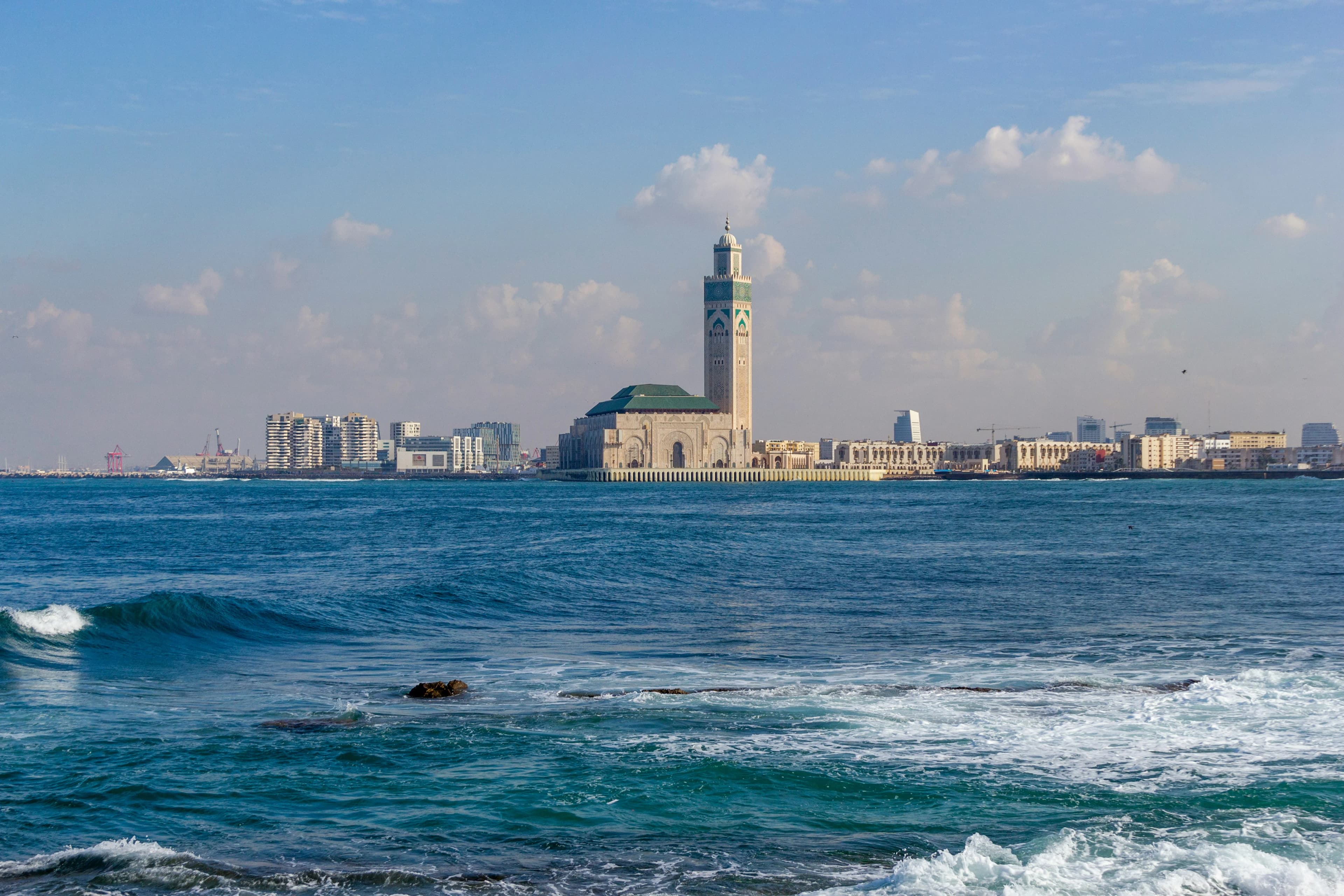
The Hassan II Mosque, completed in 1993 and designed by French architect Michel Pinseau, anchors the city's relationship with the Atlantic. It is one of the largest mosques in the world and its location on a promontory over the ocean remains architecturally decisive. The Corniche, stretching south from the mosque, frames the city's leisure geography: seafood restaurants, private beach clubs, and hotels facing open water.
Best areas to stay in Casablanca for a luxury suite experience
The Corniche and Ain Diab
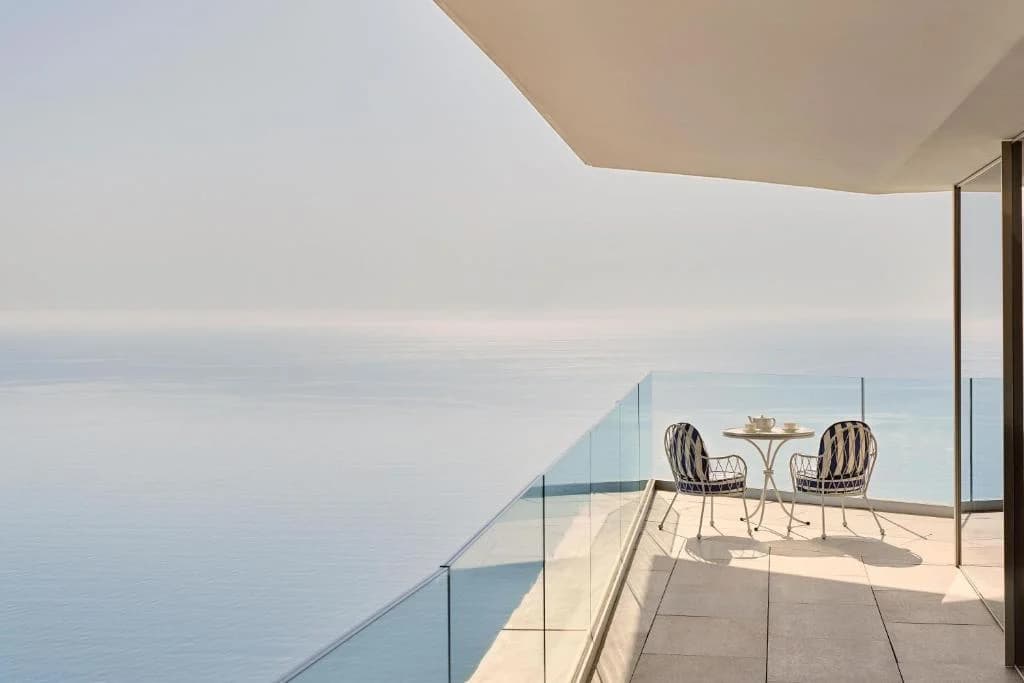
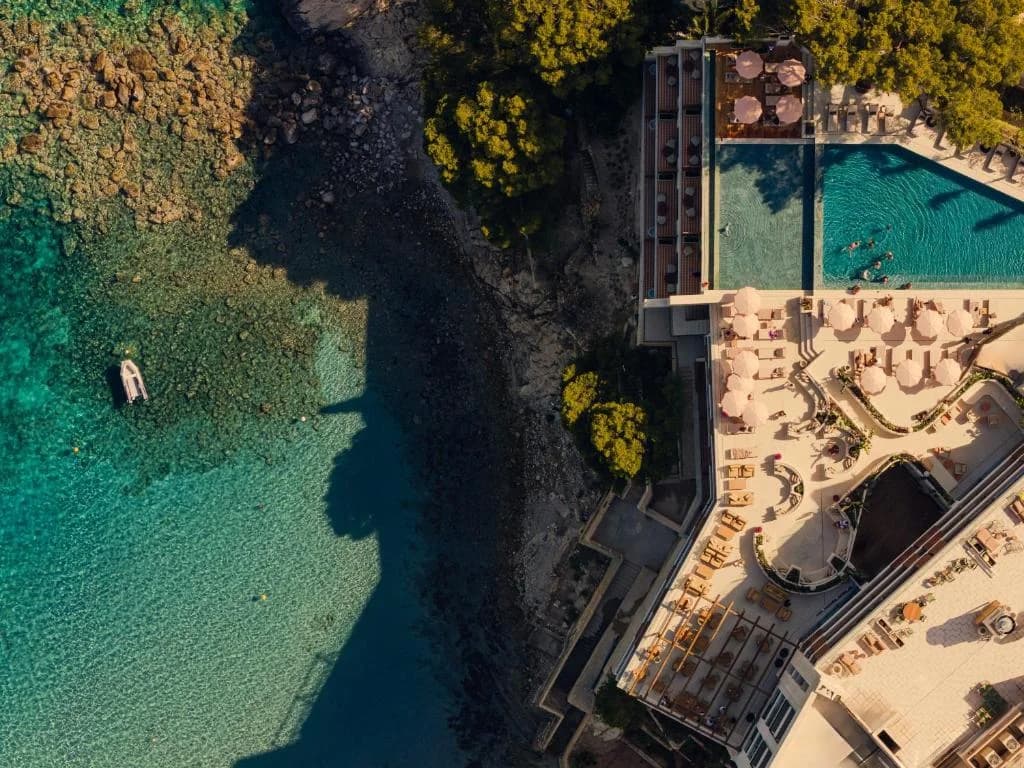
The Corniche district, centered on Ain Diab, is Casablanca's primary address for high-end hotels. The proximity to the Atlantic gives suites here a specific quality of light, salt air, and spatial openness that the inland districts cannot replicate. Properties in this zone typically offer direct sea views, access to private beach clubs, and a quieter residential atmosphere that contrasts with the commercial density of the city center. For travelers prioritizing sensory calm and physical access to the ocean, this is the most coherent choice.
The city center and Art Deco quarter
The historic downtown, concentrated around the Place Mohammed V and the adjacent administrative district, contains the highest density of Art Deco buildings in Africa. Staying here places guests within walking distance of architecture that defined an era of Moroccan urban planning. The pace is faster, the streets more active, and the sensory experience more layered. Suites in this zone tend to occupy buildings with historical character, offering an experience grounded in the city's architectural heritage.
The Anfa neighborhood
Anfa is Casablanca's established residential quarter, known for its wide tree-lined streets, private villas, and proximity to the Anfa Country Club. It carries a discretion that appeals to travelers seeking proximity to business contacts without the hotel-district atmosphere. Some of the city's most considered properties are positioned here, offering a residential scale that suits extended stays.
When to visit Casablanca for luxury travel
Casablanca's Atlantic climate moderates temperature extremes. Summers are warm but rarely oppressive, with ocean breezes keeping the Corniche tolerable even in July and August. Winters are mild by European standards, rarely dropping below 10 degrees Celsius, and the city maintains full operational rhythm year-round. Unlike Marrakech or the interior, Casablanca does not experience the severe summer heat that can make outdoor movement uncomfortable.
The spring months of March through May offer the most balanced conditions: moderate temperatures, clear light, and the city at its most professionally active. October and November are also strong months, with post-summer energy and cultural programming beginning to resume. The Casablanca International Film Festival, held annually, draws regional and international attention to the city's cultural ambitions. For business travelers, avoiding August, when European partners may be unavailable, is a practical consideration.
Moroccan luxury standards: what to expect from top-tier suites in Casablanca
Morocco's official hotel classification system designates five-star properties at its highest tier, but within the luxury segment, the distinction between international chain properties and independently operated boutique hotels is significant. Casablanca's top-tier market is dominated by internationally recognized brands with properties calibrated for business travel: large suites designed for working as much as resting, meeting infrastructure, and concierge services capable of navigating a complex city efficiently.
What distinguishes the finest suites in Casablanca is the synthesis of Moroccan craft traditions with contemporary spatial design. Zellige tilework, carved plaster, and cedar woodwork appear not as decorative gestures but as structural commitments. The best properties apply these materials with architectural seriousness, creating suites where the sensory experience extends beyond surface comfort to something more considered. Bathrooms in this tier typically feature hammam-inspired wet rooms, a direct expression of Moroccan bathing culture translated into a hotel context.
Service culture in Casablanca's leading hotels reflects the city's dual identity. Staff are often multilingual (Arabic, French, and English at minimum), attuned to the needs of international business travelers, and capable of operating at a pace that matches corporate schedules. The hospitality register is efficient without being cold, drawing on Moroccan traditions of guest reception while maintaining professional precision.
How to choose the best luxury suite in Casablanca
View and orientation
In Casablanca, the Atlantic orientation of a suite is a primary variable. Properties facing west toward the ocean offer a quality of afternoon and evening light that fundamentally changes the suite experience. This is worth prioritizing explicitly when selecting a property, as city-facing suites, while often architecturally interesting, do not carry the same spatial generosity.
Purpose of travel
Casablanca serves a more varied traveler profile than most Moroccan cities. Business travelers, transit guests en route to other Moroccan destinations, cultural visitors, and leisure travelers with specific interests in architecture or gastronomy each have distinct requirements. A suite optimized for extended working hours differs from one designed for sensory recovery. Clarifying the primary purpose of a stay before selecting a property ensures that the suite's design language matches the actual rhythm of the visit.
Proximity to key districts
Casablanca's geography rewards strategic positioning. The city is large and traffic can be significant during business hours. Choosing a suite located within reasonable distance of both the primary business districts and the leisure infrastructure of the Corniche reduces friction across the course of a stay.
Why a curated selection by La Suite matters in Casablanca
Casablanca's luxury hotel market presents a specific editorial challenge: it is a city where the quality gap between properties that understand their context and those that merely meet a star rating is wider than in more established luxury destinations. A five-star classification in Casablanca does not guarantee the spatial, material, or experiential coherence that defines a genuine suite experience. La Suite's curation process removes that uncertainty. Every property in our Casablanca selection has been assessed against criteria that go beyond classification: the quality of suite architecture, the integrity of material choices, the caliber of service culture, and the coherence of the overall guest experience. For a city that rewards those who engage with it deliberately, a curated selection is not a convenience. It is the starting point for a stay that matches the city's own complexity.