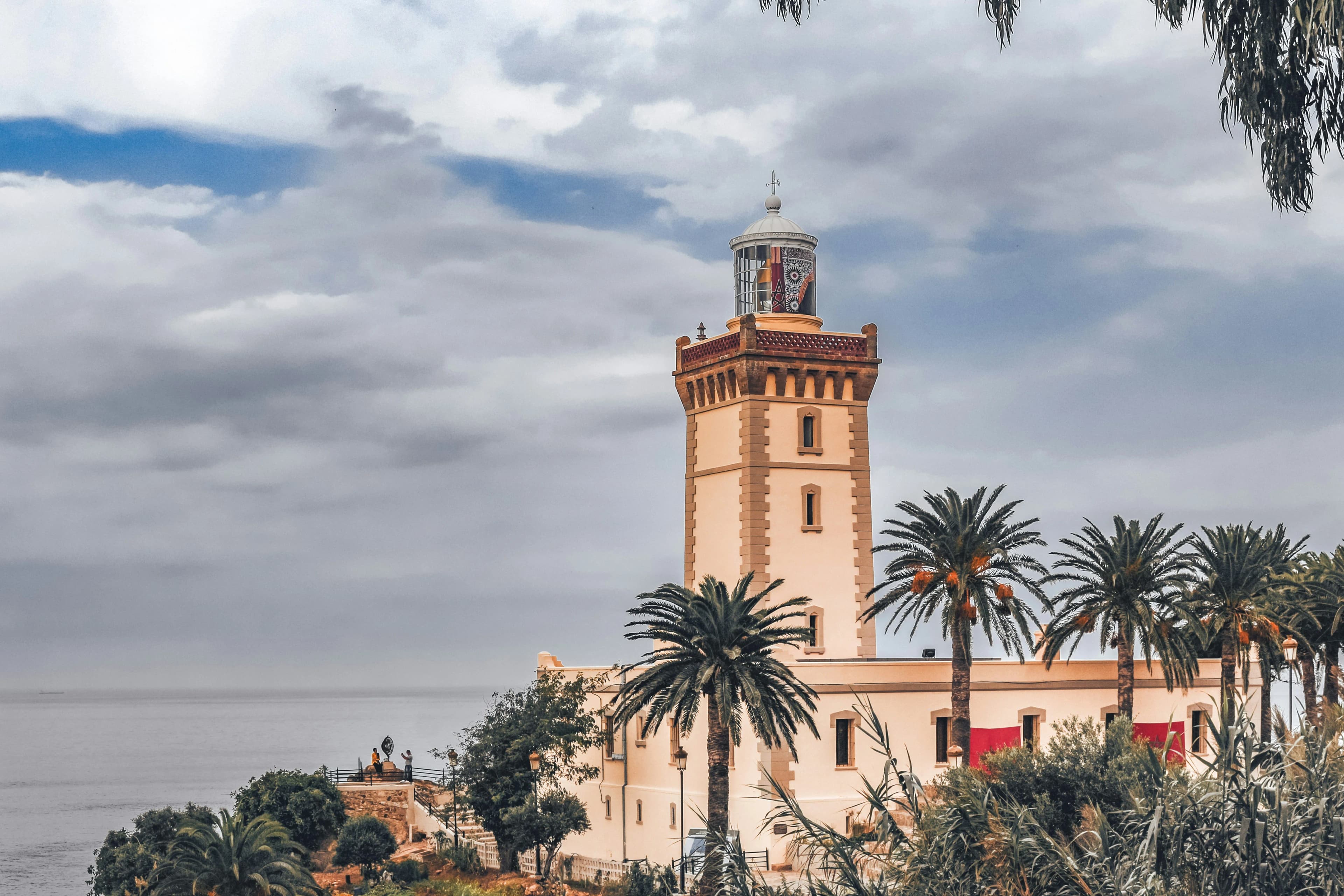
Understanding Tangier as a luxury destination
The city gained particular cultural gravity during the first half of the twentieth century, when its status as an International Zone made it a refuge for writers, artists, and individuals operating outside conventional social structures. Paul Bowles lived here for decades. The Beat Generation passed through. Matisse painted the light. That legacy has not been erased; it is absorbed into the texture of the medina, the galleries, and the renovated colonial-era properties that now serve as the city's most considered addresses.
Areas of Tangier worth understanding before you book
The medina and the Kasbah
The old city climbs steeply from the port toward the Kasbah, a fortified district that looks out over the strait. This is where the city's most atmospheric properties are concentrated, typically riads and small hotels converted from private residences. The geometry here is irregular and intimate. Streets are narrow, arrival by vehicle is often impossible, and the silence above the rooftops at night is absolute. A luxury suite in this quarter tends to prioritise architecture, courtyard light, and craftsmanship over surface area.
The Marshan and the western plateau
The Marshan is a residential plateau to the west of the medina, historically favoured by European diplomats and Moroccan aristocracy. Properties here tend to be larger, set within walled gardens, and oriented toward panoramic views of the Atlantic. The scale allows for a different kind of suite experience: more horizontal, more private, with the Atlantic light operating differently than the enclosed warmth of the medina.
The new city and the bay
The Ville Nouvelle, laid out during the French and Spanish protectorate periods, contains the city's formal boulevards, its main hotel corridor along the bay, and several properties that have been recently repositioned for the contemporary luxury market. The bay-facing rooms here offer unobstructed views of the Strait of Gibraltar and the Spanish coastline. This quarter is better connected logistically and suits travelers who want proximity to the port, the railway station, and the commercial centre.
When to visit Tangier for a suite stay
Tangier operates on a Mediterranean-Atlantic climate that makes it more temperate than much of Morocco. Summers are warm rather than extreme, moderated by sea breezes from both the Atlantic and the Mediterranean. The shoulder months of April, May, September, and October offer the most balanced conditions: clear light, manageable temperatures, and a pace of city life that is engaged without being congested.
July and August bring an influx of Moroccan diaspora travelers, particularly from Spain and France, which changes the atmosphere of the medina and increases demand for quality rooms. December through February is cooler and occasionally wet, but the city empties considerably and those who visit find a more private, local version of Tangier. For suite availability at top properties, advance planning of six to eight weeks is advisable in high season.
There are no large-scale international luxury events anchored in Tangier in the way that film festivals or art fairs define other cities. The cultural calendar is organic: gallery openings in the medina, literary events connected to the American Legation Museum (the first American public property outside the United States), and periodic programming at cultural institutions in the Ville Nouvelle.
Local luxury standards: what to expect from top-tier suites in Tangier
Morocco does not operate a formal palace classification system equivalent to France's. The national classification runs to five stars, with a small number of properties holding the Maison d'Hôtes de Luxe designation for high-end riad-style accommodation. In practice, the most considered properties in Tangier are boutique: rarely more than twenty rooms, operated with curatorial intent, and distinguished by the quality of their renovation rather than their scale.
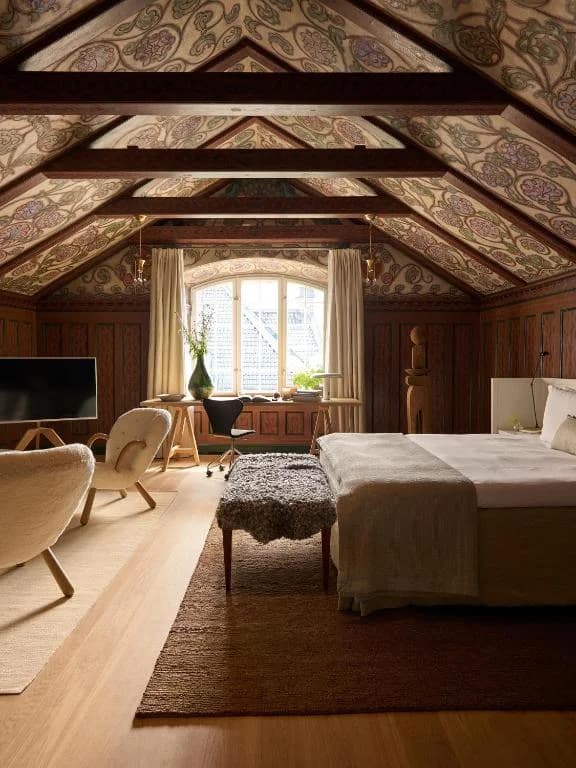
Zellij tilework, carved stucco, hand-painted cedarwood ceilings, and Andalusian courtyard proportions are the defining architectural vocabulary. In the best suites, these elements are handled with restraint: the craftsmanship is present but not performative. Contemporary properties in the Ville Nouvelle and along the bay corridor apply a different register, leaning toward minimalist interiors that frame the view of the strait as the primary design gesture.
Service standards vary more widely here than in a city like Marrakech, where luxury hospitality has been formalised over decades. In Tangier, the best properties tend to be staffed by small, attentive teams with deep local knowledge. The city's position as a transit point means that many staff speak Spanish, French, and Arabic as a matter of course, with English increasingly common in upper-tier properties.
How to choose the right luxury suite in Tangier
The primary decision is architectural: medina or modern. A suite inside a renovated riad in the Kasbah offers spatial intimacy, handcrafted detail, and direct immersion in the historic city. A suite in a contemporary property on the bay offers volume, view, and logistical ease. These are not equivalent experiences, and the choice should be made deliberately based on how you intend to use the city.
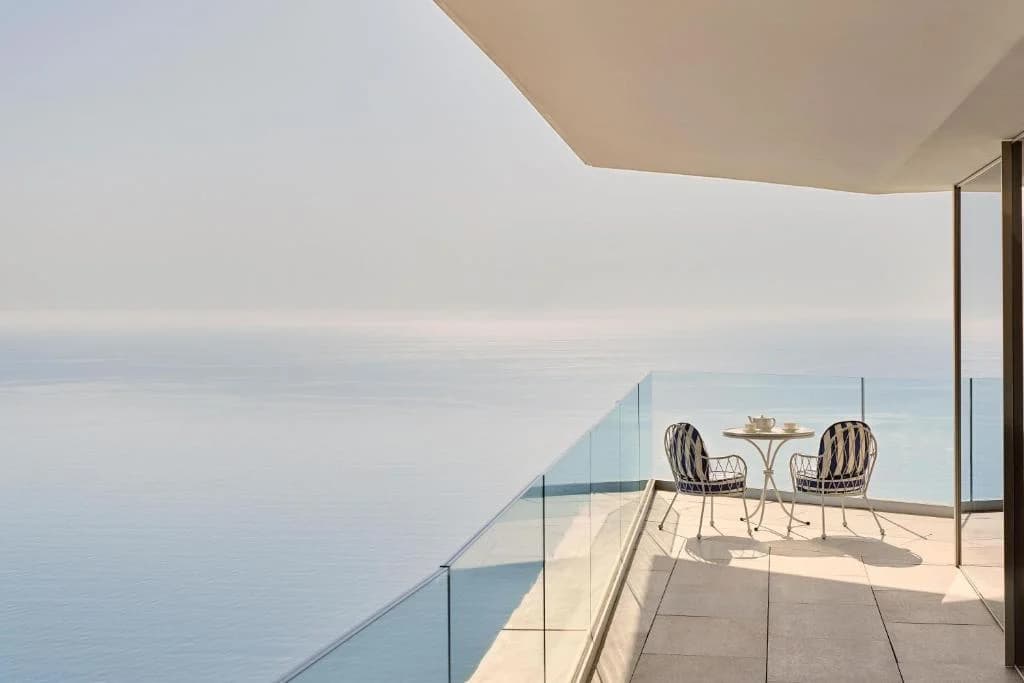
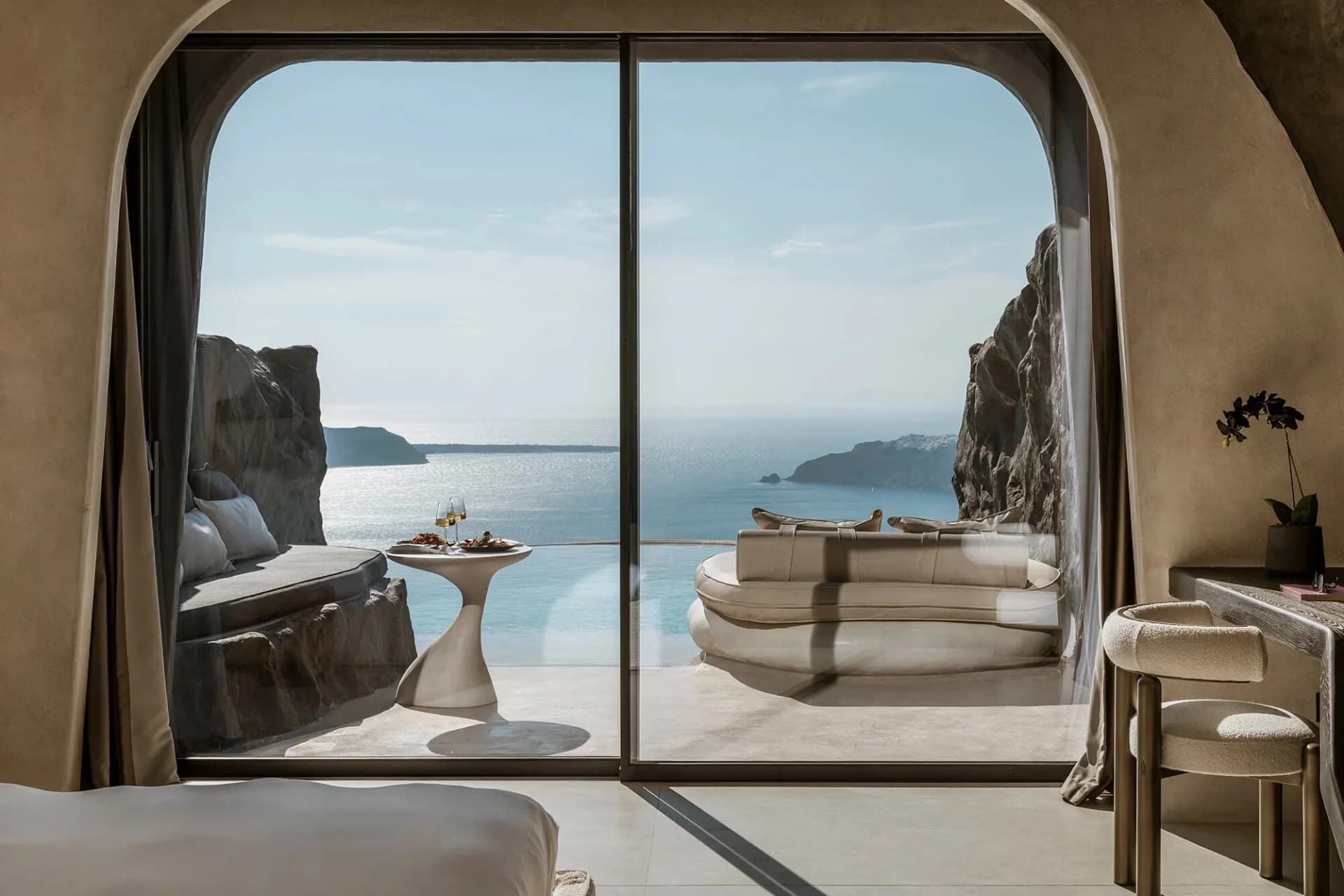
View orientation matters significantly in Tangier. Suites facing the Strait of Gibraltar carry a specific charge: on clear days, the Spanish coastline is visible, and the shipping traffic through the strait operates at a scale that reads as genuinely oceanic. Suites facing inward toward the medina or the Kasbah offer a different sensory register, one defined by the sounds and geometry of the old city rather than open water.
Accessibility is a practical consideration in the medina. The Kasbah district in particular involves steep, uneven streets that are inaccessible by vehicle. Luggage handling requires coordination with property staff, and arrival by foot over several hundred metres is standard. For travelers with mobility requirements, or those arriving with significant luggage, bay-facing properties in the Ville Nouvelle offer the more straightforward arrival experience.
Why a curated selection matters in Tangier
Tangier's luxury accommodation market is smaller and less consolidated than Marrakech or Casablanca, which makes independent research more difficult and the variance in quality more significant. A property that presents well visually may operate without the service infrastructure or physical condition that a top-tier suite requires. Conversely, some of the city's most considered addresses have minimal online presence, relying instead on referral and reputation.
La Suite applies the same editorial standards to Tangier that it applies to established luxury markets: direct site inspections, assessment of suite-specific criteria, and ongoing curation as properties evolve. The result is a selection that reflects the actual experience of staying in Tangier at the level where design, privacy, and service converge. For a city this particular, that filter is not incidental. It is the difference between an interesting trip and a genuinely formative one.