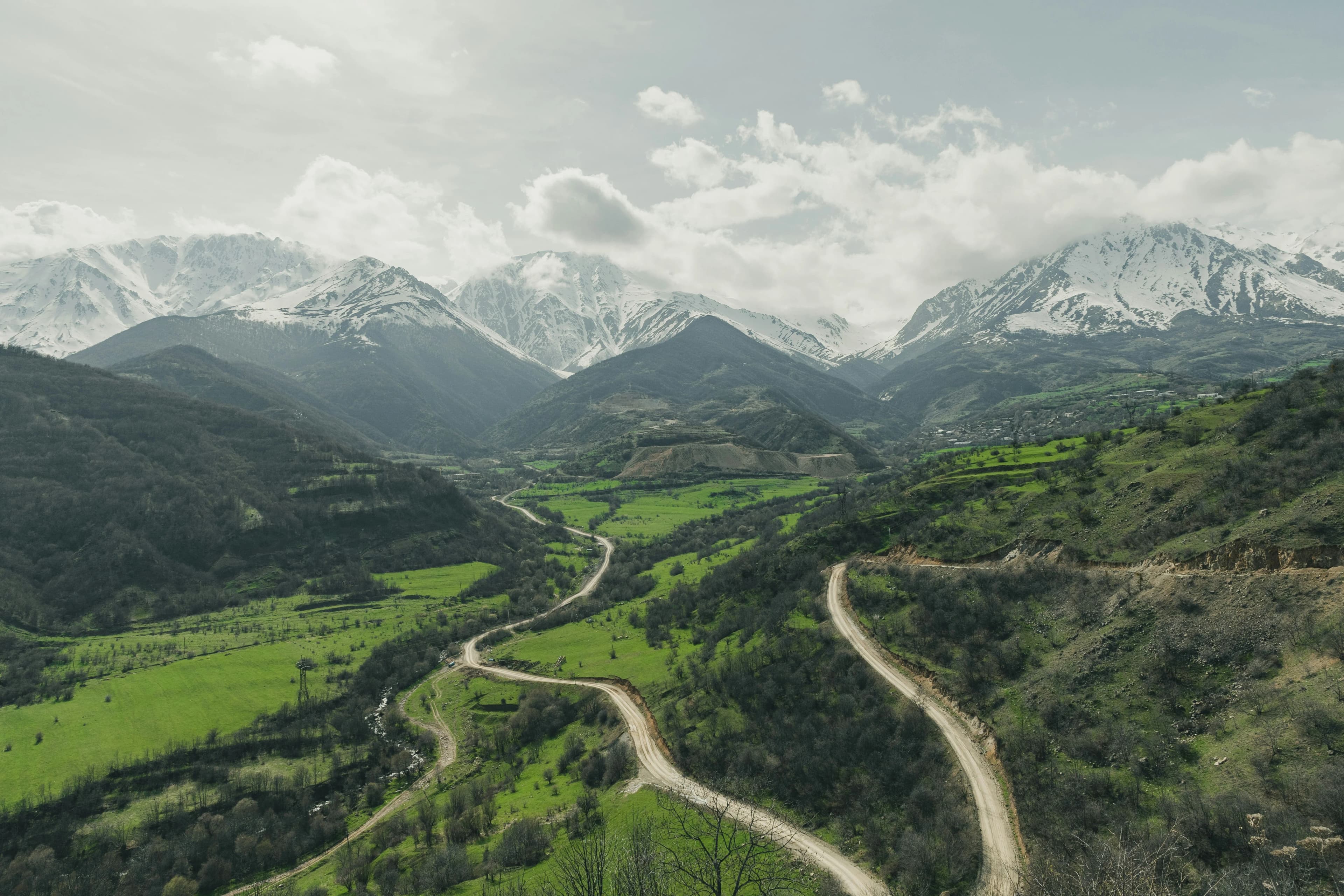
Where to stay in Armenia: key regions for luxury suite travelers
Yerevan and the Ararat plain
The capital sits on a broad volcanic plain framed by Mount Ararat to the southwest, a peak that lies across the Turkish border yet defines Yerevan's skyline and cultural identity. The city is built largely from pink and honey-toned tuff stone, a local volcanic rock that gives the urban fabric a warm, cohesive palette unlike any other capital in the region. The most considered luxury hotels concentrate here, offering proximity to the Republic Square, the Armenian Genocide Memorial, and the Cascade complex. For travelers who want urban cultural access paired with a high-specification suite, Yerevan is the default starting point.
Lake Sevan and the northern highlands
Lake Sevan, at approximately 1,900 metres above sea level, is one of the largest high-altitude lakes in the world and a significant summer destination for Armenian families and international visitors alike. The surrounding landscape is spare and tonal: bleached grassland, volcanic rock, and the 9th-century Sevanavank monastery on a former island now connected to the shore. Boutique properties in this region tend toward quieter, retreat-oriented formats, appropriate for travelers seeking distance from urban density.
The southern Vayots Dzor wine region
Vayots Dzor, southeast of Yerevan along the Arpa River valley, is where Armenia's wine renaissance has taken root with the greatest commercial and critical momentum. Areni-1 cave, located in this region, is the site of the world's oldest known winery, dated to approximately 4100 BCE. Several small estate properties have emerged here, combining vineyard access with architectural sensitivity to the surrounding canyon landscape. This region suits travelers whose itinerary prioritises provenance, terroir, and the slower rhythms of agricultural estates.
Dilijan and the northern forest zone
Dilijan, in the Tavush region, is sometimes called the Switzerland of Armenia, a comparison that understates its distinctly Caucasian character but gestures accurately at the forested mountain terrain. The area holds a number of restored 19th-century merchant houses alongside more contemporary retreat formats. Its relative coolness in summer and dense deciduous forest cover make it the preferred location for travelers seeking a naturalistic counterpoint to Yerevan.
When to visit Armenia: seasons, events, and suite availability
Armenia's climate is continental with significant altitude variation. The optimal window for most travelers runs from late April through October, with the peak summer months of July and August bringing high demand at the better properties, particularly those near Lake Sevan.
Late spring (May to June) offers mild temperatures across the Ararat plain, wildflowers across the high plateaus, and the apricot harvest, a fruit so culturally central to Armenia that its Latin name, Prunus armeniaca, carries the country's name directly. Autumn (September to October) is the harvest period for grapes in Vayots Dzor and is widely considered the most sophisticated time to visit for travelers interested in wine culture and cooler walking conditions.
The Yerevan Jazz Festival, held annually in October, draws international performers and a culturally attentive audience. The Golden Apricot International Film Festival takes place in July in Yerevan and has established itself as a reference point on the regional cultural calendar. Travelers planning around these events should secure suite reservations well in advance, as the supply of high-specification rooms in Yerevan remains limited relative to demand during peak cultural periods.
Local luxury standards: what defines a top-tier suite in Armenia
Armenia does not operate a formal national hotel classification system equivalent to France's Palace designation or the UAE's star-rating infrastructure. The concept of luxury accommodation here is relatively recent in its international-facing iteration, and the best properties tend to be independently operated rather than affiliated with the large global luxury chains that dominate markets like Dubai or Paris.
What distinguishes the leading properties is their relationship to local material culture: tuff stone construction, Armenian carpet traditions, bespoke use of local craftwork in interior programmes, and kitchens oriented around the country's exceptional agricultural produce, including pomegranate, walnut, dried fruit, and fresh herbs. A well-curated luxury suite in Armenia will typically reflect the specificity of its location rather than defaulting to an international template.
Some properties in the Dilijan area operate in the format of restored caravanserai or merchant house, offering a depth of architectural character that purpose-built hotels rarely achieve. In Yerevan, the most considered hotels integrate contemporary Armenian art collections, an increasingly significant cultural asset as the local gallery scene gains international recognition.
How to choose the best suite in Armenia: practical considerations
The first question is one of orientation: urban or rural. A Yerevan suite provides cultural density, restaurant access, and logistical convenience for a country-wide itinerary. A rural property in Vayots Dzor or near Lake Sevan requires a car and works best as either a dedicated retreat or as part of a broader circuit.
Suite formats in Armenia vary considerably. The most spacious options tend to be in Yerevan's newer hotel buildings, where floor areas and technical specifications meet international expectations. In rural and boutique contexts, suites may be architecturally compelling but smaller in footprint. Travelers with specific spatial requirements should confirm dimensions directly.
Service culture in Armenian luxury hospitality is warm and characteristically personal, often family-led at the boutique end of the market. This is not the anonymous efficiency of a large international chain, and for many travelers that distinction is precisely the appeal. However, it is worth noting that English-language service standards vary, and properties catering primarily to the domestic market may offer a different register of international hospitality than those explicitly oriented toward foreign visitors.
Connectivity and transfer logistics are relatively straightforward: Zvartnots International Airport serves Yerevan with direct connections from major European hubs, and the country is compact enough that most key destinations are within a two-to-three-hour drive of the capital.
Why curated selection matters in Armenia's luxury hotel market
Armenia's luxury accommodation sector is small, developing, and uneven in quality. The gap between a property that presents itself as luxury and one that genuinely delivers at that level is wider here than in more mature markets. For a traveler accustomed to the consistency of a Parisian palace or a Tokyo ryokan at the highest grade, navigating this landscape without reliable editorial guidance carries real risk.
La Suite applies the same curatorial standards to Armenia as to any other destination in its portfolio. The criteria are consistent: spatial quality, architectural intention, service depth, and the integrity of the overall experience. In a market where the vocabulary of luxury is still being established, that consistency is the traveler's most useful tool.
The curated selection by La Suite for Armenia reflects the current state of the market honestly: a small number of genuinely excellent properties, each justified by specific merit rather than brand recognition. As the sector develops, that selection will evolve accordingly.