Understanding Hong Kong as a luxury suite destination
What distinguishes Hong Kong's luxury hotel landscape from other Asian destinations is the convergence of influences. British administrative heritage, Cantonese cultural depth, and an unrelenting commercial drive have produced a hospitality culture that is formal without being stiff, attentive without being intrusive. The top-tier properties understand that their guests arrive with specific expectations: precision, discretion, and a suite that functions as an operational base as much as a place of rest.
Key areas for luxury suites in Hong Kong
Hong Kong Island: the historic and financial core
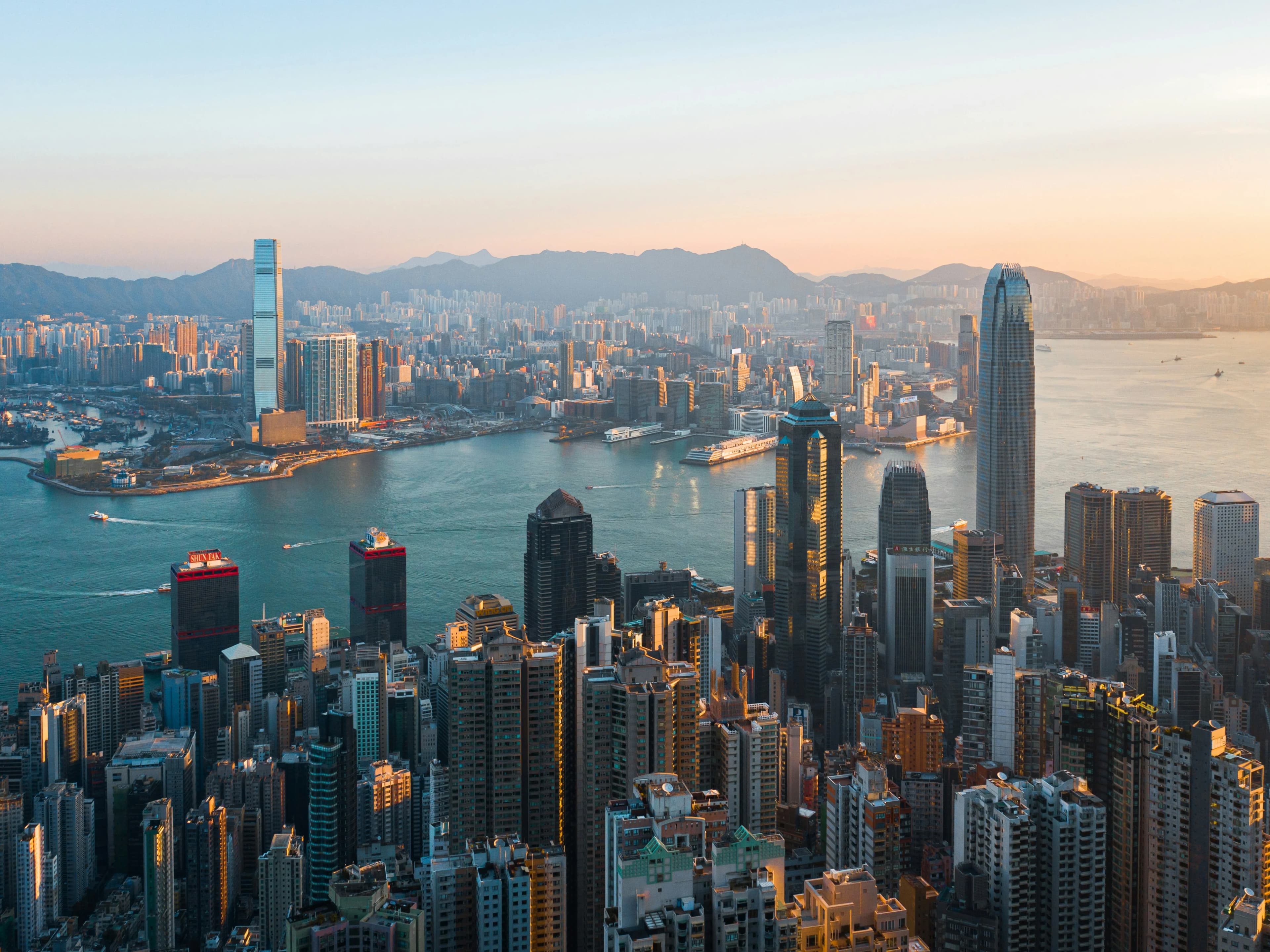
The northern shore of Hong Kong Island, from Central through Admiralty and into Wan Chai, concentrates the majority of the territory's flagship luxury hotels. This corridor sits at the intersection of finance, culture, and transport, with the Star Ferry, the MTR, and the city's principal business addresses all within reach. Suites on the upper floors of properties here offer unobstructed Victoria Harbour views, and the best among them are oriented to capture both the Kowloon skyline at night and the early-morning light off the water. The Peak, rising above Central, provides an alternative register entirely: quieter, cooler, and removed from the commercial intensity of the streets below.
Kowloon: density, texture, and a different perspective
Kowloon, on the peninsula directly across the harbour, offers a fundamentally different spatial experience. Suites here look back across the water toward Hong Kong Island, and the view from a high-floor harbour-facing room at night constitutes one of the more cinematically compelling urban panoramas in the world. The area around Tsim Sha Tsui retains a layered character, with heritage buildings from the colonial period sitting alongside contemporary retail and cultural infrastructure. For travellers who prefer a slightly removed vantage point, with the spectacle of Hong Kong Island as backdrop, Kowloon's prestige properties are the correct choice.
The outlying islands and New Territories
Lantau Island, home to Hong Kong International Airport and Disneyland, also contains pockets of resort-scaled accommodation with a quieter cadence. The New Territories, largely residential and semi-rural, are rarely the destination of choice for luxury suite travellers, though certain properties offer retreat-style experiences at a distance from the urban core. These options suit travellers extending a stay or seeking a deliberate contrast to the city's density.
When to visit Hong Kong for a luxury suite stay
Hong Kong's climate divides into two broadly useful windows for high-end travel. October through December is the most consistently comfortable period: temperatures drop to a manageable range of 18 to 25 degrees Celsius, humidity recedes, and the sky achieves a clarity that makes the harbour views from upper-floor suites particularly sharp. This is also the period when international business travel intensifies, and suite inventory at the leading properties can tighten. Advance planning is advisable.
March through May offers a secondary window, though humidity begins to build by April and the city can be overcast. The summer months, June through September, bring typhoons, sustained heat, and humidity levels that make outdoor movement uncomfortable. Suite rates may soften during this period, but the conditions require tolerance. Lunar New Year, which falls between late January and mid-February, transforms the city's rhythm entirely: some travellers find this period compelling for its cultural specificity, while others find the crowds and limited service availability a constraint.
Art Basel Hong Kong, held in March, and Hong Kong Sevens, typically in April, represent the two events most likely to affect suite availability at short notice. Both draw an internationally mobile crowd with preferences aligned with the city's top properties.
Hong Kong's luxury hotel standards: what to expect at the top tier
Hong Kong does not operate a formal national designation equivalent to the French Palace label, but the market applies its own hierarchy with considerable rigour. The properties that consistently lead the territory's luxury hotel market are characterised by a staff-to-guest ratio that exceeds most international benchmarks, a multilingual service culture (Cantonese, English, and Mandarin are baseline expectations), and a physical standard of suite finish that reflects the city's proximity to manufacturing excellence and its exposure to international design trends.
Suites in Hong Kong's leading hotels typically range from harbour-view junior configurations of 60 to 80 square metres through to full-floor penthouses exceeding 400 square metres. The most sought-after configurations include private terraces, dedicated dining areas, and butler service available around the clock. Connectivity standards are high: the city's digital infrastructure is among the most reliable in Asia, and business-grade suites are equipped accordingly.
The Cantonese culinary tradition, among the most technically demanding in Chinese gastronomy, is well represented at the in-suite dining level in the city's top properties. A well-curated room service menu here is not an afterthought. It is a direct expression of the kitchen's capability.
How to choose the right luxury suite in Hong Kong
The single most important variable in choosing a Hong Kong suite is orientation. Harbour-facing rooms command a premium, and the premium is justified: the view across Victoria Harbour is the defining sensory experience of the destination. Properties on the Kowloon side face west toward Hong Kong Island, while those on the Island face north toward Kowloon. Both perspectives are architecturally valid; the choice depends on whether the traveller prefers to look toward the financial concentration of Central or toward the denser residential and commercial texture of Kowloon.
Altitude is the second consideration. Hong Kong's towers are tall, and the difference between a suite on the 20th floor and one on the 40th is not merely a matter of price. Light quality, noise attenuation, and the psychological effect of elevation are all meaningfully different. For travellers whose primary interest is the harbour panorama, higher floors are categorically preferable.
The third consideration is connectivity to the city's transport infrastructure. The MTR is one of the most efficient metro systems in the world, and properties within walking distance of major interchange stations offer genuine operational advantage for travellers with a full programme of meetings or cultural visits. The Airport Express, connecting Hong Kong International Airport to Central in approximately 24 minutes, is a relevant factor for travellers arriving or departing on tight schedules.
Why a curated selection by La Suite matters in Hong Kong
Hong Kong's luxury hotel market is competitive and well-documented, but the density of options can complicate rather than simplify the decision process. Not every property described as five-star delivers at the suite level. Not every harbour-view suite delivers the view it implies. Orientation, floor level, internal layout, and the specific character of the service offering all vary in ways that are not visible from a standard hotel listing.
La Suite applies an editorial framework to this selection: only properties where the suite experience is demonstrably distinct from the standard room offering are included, and only configurations where the spatial, visual, and service standards meet the platform's criteria are presented. For a destination as concentrated and competitive as Hong Kong, this kind of pre-selection is not a convenience. It is the difference between a stay that meets expectations and one that defines the benchmark for future travel. The curated selection by La Suite removes the operational uncertainty from a market where the gap between the best and the merely good is wider than it appears.