Where to stay in Myanmar for a luxury suite experience
Bagan and the dry zone
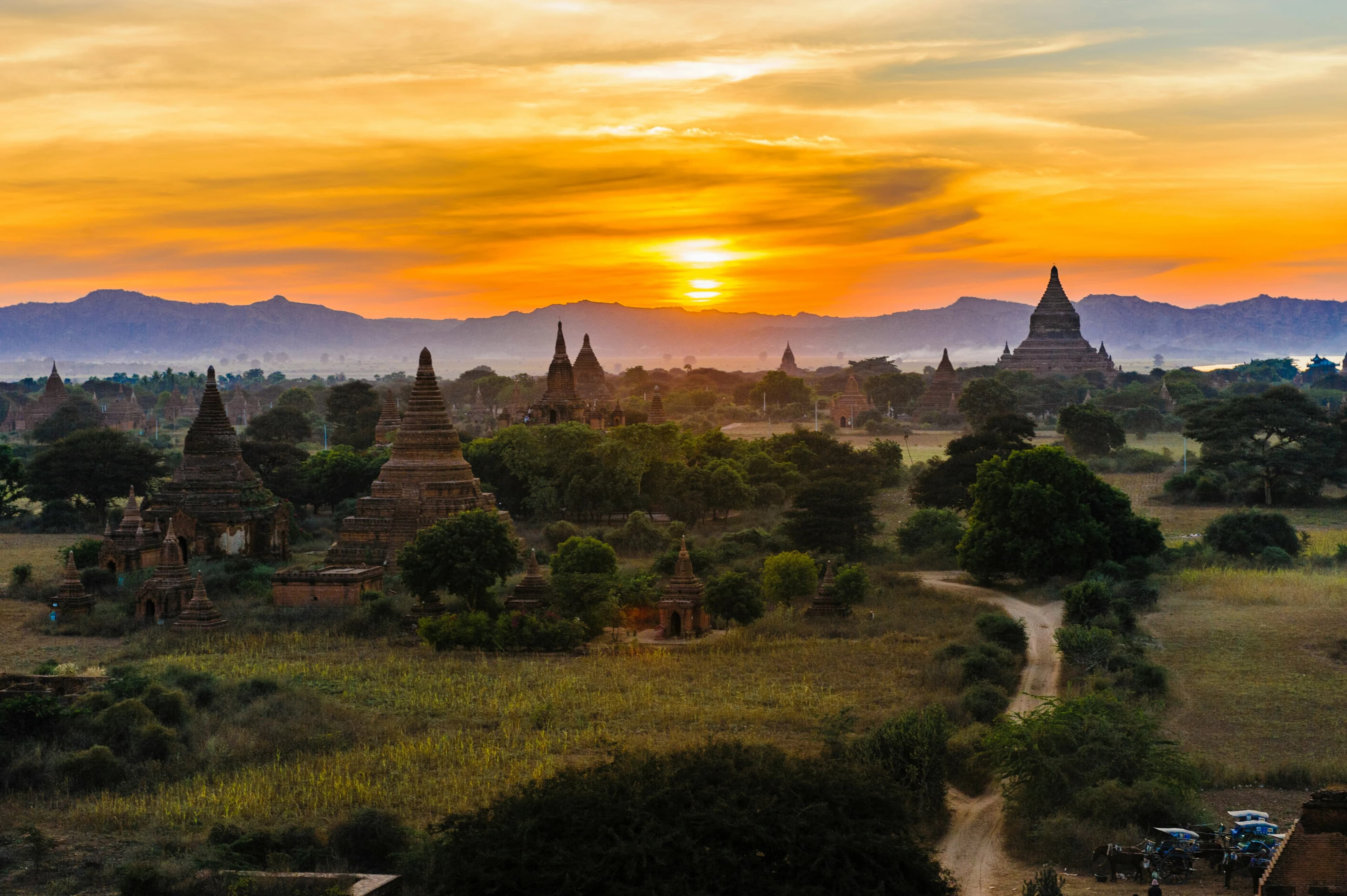
Bagan is the country's most architecturally significant landscape: over two thousand pagodas and temples distributed across a semi-arid plain on the eastern bank of the Irrawaddy River. The luxury properties here tend to position themselves at a careful remove from the busiest temple clusters, offering elevated views across the plain, particularly at dawn and dusk when the light operates on an almost geological timescale. The best suites in Bagan are designed to foreground this landscape rather than compete with it. Interiors are quiet, materials are local where possible, and the surrounding stillness is treated as an amenity in itself.
Inle Lake and the Shan Hills
Inle Lake sits at approximately 880 metres above sea level in Shan State, surrounded by hills and fed by over thirty tributaries. The lake culture here is distinctive: villages built on stilts, floating gardens, and the famous leg-rowing fishermen whose technique has become one of the defining visual signatures of the country. Luxury hotels in this area are frequently constructed over the water itself, with suites that open directly onto the lake surface. The cooler altitude, the particular quality of light on the water, and the relative quietness of the surrounding hills make this one of the most considered destinations in the country for an extended stay.
Mandalay and Upper Burma
Mandalay functions as Myanmar's second city and its cultural capital in a more active, lived-in sense than Yangon. The royal palace precinct, the crafts quarters for lacquerware and marble carving, and the monasteries that ring the city all make it a denser, more demanding destination. Luxury accommodation here tends toward restored colonial-era buildings or purpose-built properties that draw on Burmese architectural tradition. The surrounding region, including the ancient capitals of Amarapura, Inwa, and Sagaing, extends the cultural radius considerably for guests staying in this area.
Ngapali and the Bay of Bengal coast
Ngapali, on Myanmar's western Rakhine State coast, remains one of the least developed beach destinations in the Bay of Bengal. The beach itself is a long, clean arc of white sand with fishing villages at either end that remain genuinely functional rather than curated for tourism. Luxury properties here are typically low-rise, spread across generous land footprints, and oriented to maximise the view across open water. The season is sharply defined: the best months fall between October and April, outside the monsoon period that closes most properties from May through September.
When to visit Myanmar for the best suite experience
Myanmar's climate follows a clear three-season structure. The cool, dry season running from November through February is broadly considered the optimal window for travel across most of the country. Temperatures are manageable, the light is clear, and all regions are accessible. This is also the period of highest demand for the country's better properties, and availability at the top tier requires planning several months in advance.
March through May brings rising heat across the dry zone, which includes Bagan and Mandalay. Temperatures in Bagan can exceed 40 degrees Celsius in April and May, making outdoor activity between late morning and early evening uncomfortable. Suite travellers who visit during this shoulder period benefit from lower occupancy and rates, provided the suite itself is well-insulated and the property has reliable air conditioning infrastructure.
The monsoon period, from June through October, transforms the landscape dramatically. Inle Lake swells and the surrounding hills turn a sharp, saturated green. Bagan's plains are occasionally misted, which produces atmospheric rather than postcard conditions. A small number of luxury properties in highland areas remain open through the rains, and the experience for guests who plan around it is often more intimate and visually distinctive than the peak season alternative.
Key cultural events worth building an itinerary around include the Thadingyut Festival of Lights in October, the Ananda Temple Festival at Bagan in December and January, and the hot-air balloon season over Bagan which typically runs from November through February.
Understanding luxury standards in Myanmar
Myanmar does not operate a formal national hotel classification system equivalent to the French Palace designation or Thailand's star-grading infrastructure. In practice, the market self-selects into tiers that are identifiable through brand affiliation, architectural quality, service ratio, and location. The international groups with a presence in the country include properties operating under brands associated with Aman, Belmond, and Rosewood, among others, and these tend to anchor the upper end of the market.
Beyond branded properties, Myanmar has developed a category of independent boutique hotels, particularly around Inle Lake and Bagan, that offer a more architecturally specific and often more culturally immersive experience. The best of these properties invest in local materials, trained local staff, and programming that connects guests to the surrounding culture in a way that larger branded hotels do not always replicate.
Suite quality in Myanmar's top properties is genuinely competitive by regional standards. Expect generous floor areas, private terraces oriented to the principal view, bathroom volumes that reflect the space available on low-density sites, and in-villa services that compensate for the relative remoteness of the locations.
How to choose the best luxury suite in Myanmar
Several considerations are specific to selecting a suite in this country. First, location relative to the primary attraction matters more here than in more developed destinations. In Bagan, a suite with an unobstructed pagoda view from its own terrace removes the need to compete for viewpoints with other visitors. At Inle Lake, an overwater suite provides a fundamentally different experience from a garden villa set back from the shore.
Second, connectivity and infrastructure should factor into the decision. Myanmar's telecommunications infrastructure has improved significantly since 2012, but varies by region. Water supply, power continuity, and road conditions between the property and key sites are all practical questions worth investigating before confirming a booking.
Third, the architectural character of the property should align with the type of experience sought. A restored heritage building in Mandalay offers a different atmospheric register than a purpose-built contemporary resort on the Ngapali coast. Both can deliver suite-level comfort; the experience they frame is not equivalent.
Finally, given Myanmar's current political and travel advisory context, it is essential to consult the relevant government travel guidance for your country of departure before planning any visit. The situation has been fluid since 2021, and responsible travel planning requires current, verified information.
Why a curated selection by La Suite matters in Myanmar
The Myanmar luxury hotel market is smaller than comparable markets in Thailand, Indonesia, or Vietnam, but it is not without complexity. Properties open and close in response to the country's political and economic conditions, and the gap between a property's marketing presentation and its actual operational standard can be significant in a market with limited independent oversight.
La Suite's curation process applies the same criteria here as in any other destination: physical inspection where possible, verified guest intelligence, and an editorial filter that prioritises suite quality, design coherence, and service delivery above amenity count or brand recognition. For a destination as particular and as politically contingent as Myanmar, this filtering function is not a luxury. It is a practical necessity for any traveller who values their time and expects their accommodation to perform at the level they have paid for.