Where to stay in Nepal: distinct territories for luxury suite travel
Kathmandu Valley
The valley concentrates Nepal's administrative, cultural, and commercial density. Historic neighborhoods such as Thamel and Patan frame temples, courtyard bazaars, and the layered residue of several dynasties. The Rana period (nineteenth and early twentieth centuries) produced a specific typology: neoclassical palaces built by the ruling oligarchy, several of which have been converted into luxury hotels. Suites within these properties tend toward high ceilings, ornamental plasterwork, and internal courtyards. The valley sits at approximately 1,400 meters, which moderates temperature year-round and removes the climatic extremes that define other parts of the country.
Pokhara and the Annapurna foothills
Pokhara functions as the principal gateway to the Annapurna circuit and the Mustang region. The Phewa Lake shoreline and the Lakeside district support a growing category of design-conscious properties with direct sightlines toward the Annapurna and Machapuchare massifs. Suite travelers here tend to prioritize orientation: north-facing rooms with unobstructed mountain views command significant premiums and fill early in the season. Properties in this area range from boutique lakeside retreats to larger resort formats positioned on the hillside above the town.
Chitwan and the Terai lowlands
The Terai is the southern flatland belt bordering India, home to Chitwan National Park and Bardia National Park. Luxury accommodation here takes the form of tented camps and elevated jungle lodges, where suite-category rooms typically feature private decks, outdoor bathing facilities, and curated wildlife itineraries. The aesthetic is restrained and material-forward: natural fibers, local stone, canvas, and timber. Proximity to the park boundary is a decisive factor; the most considered properties maintain buffer zones that guarantee acoustic privacy and direct wildlife access.
Upper Mustang and the high-altitude regions
The restricted zone of Upper Mustang, accessible only via special permit, represents the frontier of luxury lodge development in Nepal. Properties here are few, deliberately so. Stone-built structures following local Tibetan-influenced vernacular architecture sit within a high-desert landscape that receives minimal annual rainfall. Altitude here ranges from 2,800 to over 4,000 meters, and the physical demands on travelers are significant. This is a territory for a specific type of suite traveler: one who prioritizes remoteness and cultural singularity over amenity range.
When to visit Nepal for a luxury suite stay
Nepal's travel seasons are defined by the monsoon cycle. The pre-monsoon window (March to May) and the post-monsoon window (October to November) represent the two primary high seasons for suite bookings, particularly in mountain-facing properties where atmospheric clarity is the central variable.
October and November deliver the most consistent visibility across mountain regions. The air is dry, temperatures at valley and mid-altitude elevations are moderate, and the post-monsoon vegetation remains green. This is the peak booking period, and premium suites in Pokhara and Kathmandu fill several months in advance.
March and April bring rhododendron flowering at mid-altitudes (approximately 2,000 to 3,500 meters) and warmer temperatures across the Terai. Wildlife visibility in Chitwan is excellent in the late dry season (February to April), when animals concentrate around water sources.
The monsoon period (June to September) is generally not recommended for mountain-region suite travel. Cloud cover eliminates the primary visual asset of most high-altitude properties, and road access to lodges can be disrupted. However, Chitwan and Bardia receive sophisticated travelers during this period who accept reduced wildlife visibility in exchange for significantly lower rates and near-empty properties.
Kathmandu maintains year-round relevance. The valley's festival calendar, including Indra Jatra (September) and Dashain (October), animates the city with ritual processions and cultural programming that give a stay additional texture regardless of season.
Luxury standards in Nepal: what defines a top-tier suite here
Nepal does not have a formal government hotel classification system equivalent to France's Palace designation or Thailand's official star categories. The category of luxury is therefore self-declared by properties, which makes independent curation more significant here than in more regulated markets.
The most credible indicators of suite quality in Nepal are: membership in recognized international luxury hotel consortia (such as Relais and Chateaux or Small Luxury Hotels of the World), direct management by internationally experienced hospitality professionals, and verifiable architectural or heritage credentials. Properties that have undergone serious conservation work on listed or historically significant structures represent a distinct tier.
Suite-category rooms in the most considered Nepalese properties typically include: a defined separation between sleeping and living areas, private outdoor space (terrace, deck, or garden), dedicated butler or attendant service, and bespoke programming options such as guided monastery visits, private cooking sessions with local ingredients, or arranged trekking departures. The inclusion of experiential programming within the suite rate, rather than as a heavily marked-up add-on, is a reliable signal of a property's positioning.
Materiality matters here. The strongest properties use regionally sourced materials: Newari woodwork, dhaka textiles from eastern Nepal, hand-knotted carpets, and local stone. Suites that default to generic international hotel finishes, regardless of price point, represent a missed opportunity in a country with such a rich material culture.
How to choose the right luxury suite in Nepal
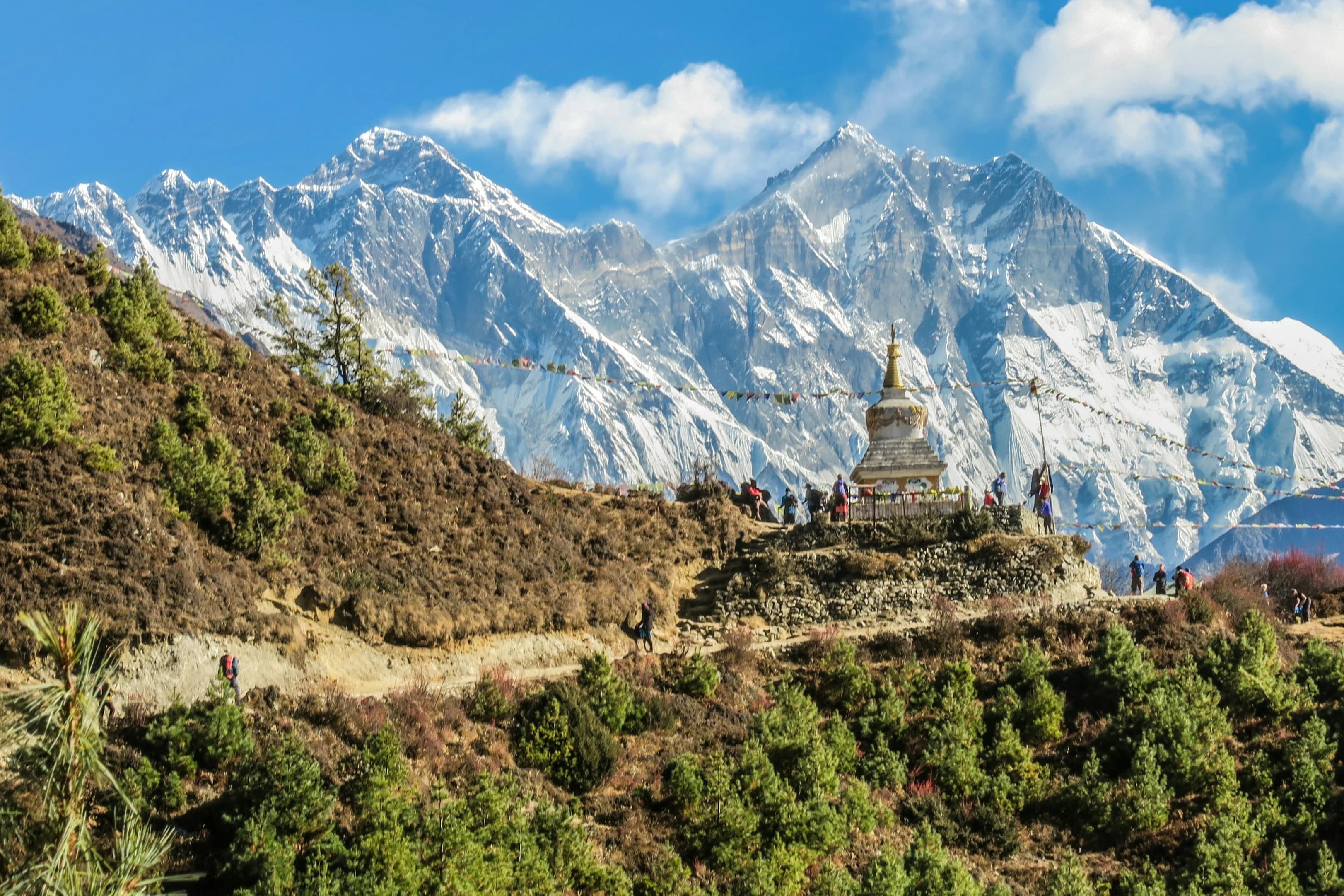
The most important variable in Nepal is not the suite itself but its altitude and position within the country's topography. A traveler who wants Himalayan mountain views must stay in Pokhara or a lodge in the foothills: no property in Kathmandu, which sits in a bowl-shaped valley, can deliver that specific experience. Conversely, a traveler focused on cultural immersion and heritage architecture should anchor in Kathmandu, where the density of historical sites within walking or short driving distance is unmatched.
Consider the physical itinerary in conjunction with the accommodation. Properties that serve as bases for trekking departures should be assessed on their logistical integration: early departure facilitation, equipment storage, guide coordination, and re-entry flexibility. Properties that serve as endpoints in themselves (destination lodges) should be assessed on their programming, material quality, and spatial generosity.
Connectivity is a practical constraint. Internet infrastructure varies significantly between Kathmandu and more remote properties. Travelers with operational demands should confirm connectivity specifications directly with properties before booking.
Why curation matters in Nepal's luxury hotel market
The Nepalese luxury hotel market is genuinely heterogeneous. A property may carry a high room rate and still deliver a materially inconsistent or operationally underpowered suite experience. The gap between price and quality is wider here than in more mature luxury markets such as the Maldives or Switzerland, where established brand presence and regulatory frameworks impose a degree of baseline consistency.
La Suite's curatorial approach in Nepal prioritizes three criteria: spatial integrity of the suite itself, authenticity of material and cultural engagement, and operational reliability at the service level. Properties that perform across all three represent a small subset of what is marketed as luxury in the country. The curated selection by La Suite is designed to make that subset immediately legible to a traveler who cannot afford to discover the gap between expectation and reality on arrival.