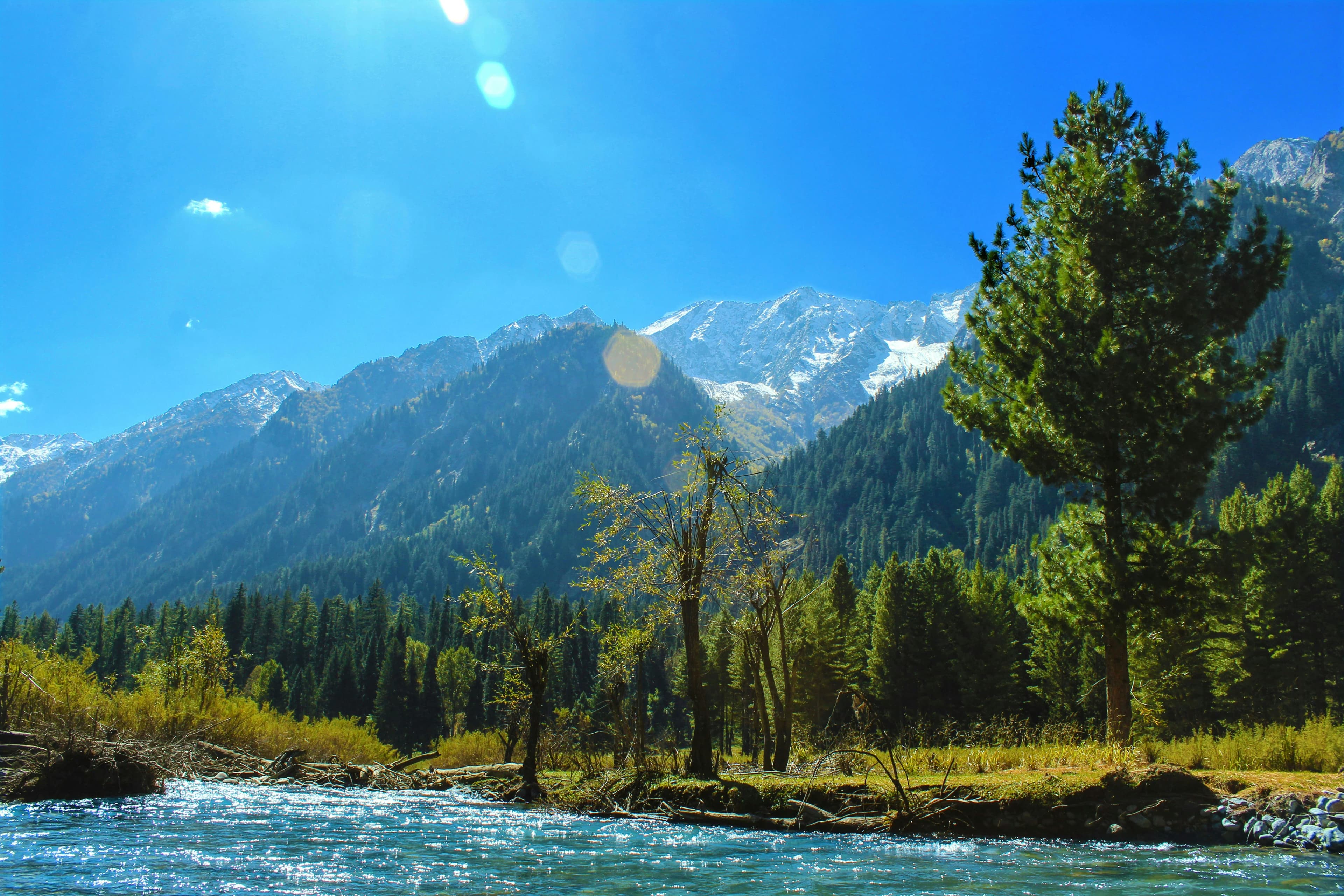
BROQ, Skardu
Located in Skardu, BROQ has a garden, terrace, restaurant, and free WiFi. The property has room service and a 24-hour front desk for guests. With a private bathroom equipped with a shower and free toi

Pakistan's geography is not uniform, and neither is its luxury accommodation landscape. Each region presents a different register of experience, and understanding those distinctions is essential before selecting a suite.
19 hotels available

Located in Skardu, BROQ has a garden, terrace, restaurant, and free WiFi. The property has room service and a 24-hour front desk for guests. With a private bathroom equipped with a shower and free toi

Cascade Resorts Ghawari, Gilgit-Baltistan is located in Kuru and features a garden. There's a restaurant serving Chinese cuisine, and free private parking is available. Complete with a private bathroo

Facing the beachfront in Shigar, Dera Lamsa Resort Shigar has a garden and a restaurant. The property has a 24-hour front desk, airport transportation, room service and free WiFi throughout the proper

Facing the beachfront, FortuNorth offers 5-star accommodations in Skardu and has a garden, private beach area and terrace. Featuring a concierge service, this property also provides guests with a play

Green Pak Naltar is located in Jugut. Featuring a garden, this 3-star hotel has air-conditioned rooms with a private bathroom. There's a restaurant serving Chinese cuisine, and free private parking is

Featuring a garden, GreenPak River Front Naran is located in Naran. Among the facilities of this property are a restaurant, room service and a 24-hour front desk, along with free WiFi throughout the p

Comfortable Accommodations Hashupi Resort Shigar in Skardu offers 4-star comfort with air-conditioned rooms featuring private bathrooms, balconies, and garden or mountain views. Each room includes

Himmel Skardu By Luxus is offering accommodations in Skardu. Among the facilities at this property are room service and a 24-hour front desk, along with free WiFi throughout the property. The hotel ha

The Islamabad Marriott Hotel is the epitome of luxury and convenience, offering a perfect blend of modern amenities and traditional hospitality. Whether you are traveling for business or leisure, our

Located in Islamabad, 2 miles from Shah Faisal Mosque, Movenpick Hotel Centaurus Islamabad provides accommodations with massage services and private parking. Each room at the 5-star hotel has city vie

Featuring 4 dining options, the Mövenpick Hotel Karachi features an outdoor pool, fitness center, free parking and luxurious rooms with city views. Conference and banquet facilities can be arranged, a

Overlooking the Kashmir Valley, the 5-star Pearl Continental Hotel, Bhurban is located atop a cliff. It offers a variety of recreational facilities, 3 dining options and modern room with free Wi-Fi.

Located in Islamabad, within 2.2 miles of Shah Faisal Mosque and 6.8 miles of Lake View Park, Presidential One Bedroom Suite In Elysium Tower Opposite Centaurus Mall Islamabad has accommodations with

Located in Lahore, 18 miles from Wagah Border, The Fred Hotel has accommodations with a fitness center, free private parking and a restaurant. With free WiFi, this 4-star hotel offers room service and

Located in Lahore, The Nishat Hotel welcomes guests with an indoor swimming pool and free airport shuttle services. Rooms are luxuriously furnished and cooled with air conditioning. Free WiFi is avail

Featuring free WiFi, The Nishat Hotel, Johar Town is city within a city which features Pakistan biggest "Emporium Mall" and the most spacious banquet halls, The Nishat Banquets. Guests can enjoy the o

Located in Gulmit, The Simurgh features a garden. There's a restaurant serving Italian cuisine, and free private parking is available. At the hotel, each room comes with a balcony with a garden view.

Featuring 5-star accommodations, The Townhouse Hotel - Small Luxury Hotels of the World is located in Islamabad, 1.7 miles from Shah Faisal Mosque and 7.3 miles from Lake View Park. Among the faciliti

Located in Skardu, Tibet Hotel has a garden. The hotel provides mountain views, a terrace and a 24-hour front desk. Guest rooms at the hotel are equipped with a seating area, a flat-screen TV with sat
Lahore functions as Pakistan's cultural and historical centre of gravity. The city carries the architectural legacy of the Mughal Empire in its mosques, gardens, and fort complexes. Luxury properties here tend to occupy either restored heritage structures or contemporary towers positioned near the historic walled city. A suite in Lahore allows proximity to one of South Asia's most concentrated urban heritage zones, while maintaining the privacy and spatial comfort that serious travel demands.
Pakistan's federal capital is a mid-twentieth-century planned city set against the Margalla Hills. Its luxury hotel infrastructure serves the diplomatic and corporate traveler, with properties offering suites designed around functionality, security, and views of the surrounding foothills. The pace here is more measured than Lahore, making it a coherent base for travelers combining cultural exploration with institutional appointments.
As Pakistan's largest city and primary financial hub, Karachi supports a tier of business-oriented luxury hotels along its coastline and in its commercial districts. Suites in this city tend toward the modern and the international in their design vocabulary, with Arabian Sea-facing accommodations offering a distinct counterpoint to the inland experience.
The northern territories of Pakistan, including the Hunza Valley and the approaches to K2, represent one of the planet's most dramatic high-altitude landscapes. Luxury accommodation here is more selective and deliberately small in scale. Properties in this region prioritise views, silence, and spatial isolation above all else. Suites positioned at altitude in Gilgit-Baltistan offer a fundamentally different experience from anything available in the plains: the emphasis is on landscape immersion rather than urban access.
The optimal travel window depends significantly on which region you intend to explore.
For Lahore and the cultural heartland of Punjab, the cooler months from October through February provide the most comfortable conditions for moving through open-air heritage sites and urban environments. Spring, particularly March and April, brings mild temperatures before the summer heat intensifies.
For the northern mountain regions, including Hunza, Skardu, and the Karakoram Highway corridor, the practical window is May through September. High-altitude passes are accessible during these months, and the landscape is at its most legible. Outside this period, many smaller properties close entirely and road access becomes unreliable.
Karachi and the Sindh coast maintain a more temperate year-round climate by Pakistani standards, with the period from November to February being the most comfortable for extended stays.
Cultural travelers should be aware of the Islamic calendar's influence on the rhythm of local life. Ramadan, whose dates shift annually, affects dining hours and the general tempo of urban areas. It is not a reason to avoid travel, but it warrants consideration when planning itineraries.
Pakistan's luxury hospitality sector operates within a distinct local context. The country does not use the French Palace designation or equivalent regional prestige labels. Instead, the top tier of the market is defined by international brand affiliations, independent heritage properties, and a growing category of boutique lodges in the northern territories.
In Lahore and Islamabad, the reference properties are typically five-star international hotels with suites designed to international specifications: dedicated living areas, high-thread-count linens, in-suite dining, and concierge services capable of navigating the considerable logistical complexity of travel in Pakistan.
In the north, the standard shifts. Here, the most distinguished properties are often intimate lodges or boutique camps that prioritise location and authenticity over conventional luxury metrics. A suite in Hunza or near Fairy Meadows will not resemble a suite in a Lahore city hotel. The value proposition is entirely different: altitude, silence, and direct visual access to some of the world's highest mountain terrain.
Travelers accustomed to Southeast Asian or Middle Eastern luxury benchmarks should calibrate expectations accordingly. Pakistan's top properties deliver a specific, context-dependent form of excellence rather than a globally standardised one.
Several practical considerations apply specifically to suite selection in Pakistan.
First, connectivity. Internet infrastructure varies considerably between urban centres and remote regions. Travelers requiring reliable high-speed connections for business purposes should prioritise properties in Islamabad or Lahore and verify suite-level connectivity before confirming a reservation.
Second, security and access. Pakistan is a complex travel environment and certain regions require advance coordination with local operators. Properties accustomed to international guests will have protocols in place, but selecting a well-established hotel with an experienced concierge team is not optional here. It is foundational.
Third, architectural character. Heritage suites in Lahore, often situated in properties that incorporate Mughal or colonial-era design elements, offer a materially different spatial experience from the glass-and-steel towers of Islamabad or Karachi. The choice between these registers is one of the central decisions facing the luxury traveler in Pakistan.
Fourth, the northern properties require forward planning. Suite inventory in Gilgit-Baltistan is limited, and the best lodges fill quickly during the May-to-September season. Early reservation is not a suggestion; it is a logistical necessity.
Pakistan is not a market where luxury accommodation is easy to assess from a distance. The gap between a property's self-presentation and its actual delivery can be significant, and the consequences of an ill-chosen base in a logistically demanding country are considerable.
La Suite applies its editorial and curatorial standards to the Pakistani market with the same rigour used for established luxury destinations. The properties selected are assessed on spatial quality, suite-level service, location intelligence, and the overall coherence of the guest experience. For a traveler arriving in Pakistan for the first time, or returning with elevated expectations, the curated selection by La Suite removes the most consequential uncertainty from the planning process.

The primary concentrations of luxury hotel suites in Pakistan are in Lahore, Islamabad, and Karachi. Lahore offers the strongest heritage context, with properties near the Mughal-era walled city. Islamabad provides a quieter, more secure environment favoured by diplomatic travelers. The northern territories, particularly the Hunza Valley and Skardu, offer a smaller number of boutique properties with exceptional high-altitude settings.
For urban destinations like Lahore and Islamabad, October through February offers the most comfortable temperatures for sightseeing. For the northern mountain regions, including Gilgit-Baltistan and the Karakoram corridor, the accessible season runs from May through September. Suite inventory in the north is limited, so early reservation during the peak summer months is strongly advisable.
Five-star suites in Lahore typically offer dedicated living and dining areas, concierge services, in-suite dining, and design that incorporates references to the city's Mughal architectural heritage or contemporary South Asian aesthetics. Properties at this level also provide security infrastructure and logistics support, which is a practical consideration for international travelers in this market.
Yes. A small number of boutique lodges and high-end camps in the Hunza Valley and broader Gilgit-Baltistan region offer suite-category accommodation. These properties prioritise landscape access, silence, and altitude over conventional luxury metrics. They differ substantially from urban five-star hotels and represent a specialised segment of Pakistan's luxury accommodation market.
Top-tier hotels in Pakistan are accustomed to serving international guests and maintain full food and beverage services within their properties year-round. During Ramadan, dining hours and the wider urban atmosphere shift noticeably, and alcohol service follows regulations that vary by property type and guest status. Travelers should familiarise themselves with the local calendar and confirm specific services directly with their chosen property before arrival.
Pakistan's major urban centres, particularly Islamabad and Lahore, have well-established luxury properties with professional security protocols designed for international guests. Travelers should consult current advisories from their home government before finalising itineraries, as conditions vary by region. Selecting a property with an experienced international concierge team significantly reduces logistical risk and enhances the overall experience.
Islamabad's luxury suites tend toward a functional, modern aesthetic with views of the Margalla Hills, serving a clientele that includes diplomats and corporate travelers. Lahore's top suites are more culturally immersive, often incorporating design references to the city's Mughal and colonial heritage. The two cities offer distinct spatial and experiential registers, and the choice between them depends on the traveler's primary purpose.
Most boutique properties and lodges in the Karakoram, Hunza Valley, and Gilgit-Baltistan operate seasonally, typically from May through September. Outside this window, road access at altitude becomes unreliable and many smaller properties close entirely. Travelers planning visits to the northern territories should confirm operational dates with individual properties and book suite-level accommodation well in advance.
Heritage suites in Lahore and Sindh offer spatial and cultural resonance connected to Mughal architecture, colonial-era structures, and local craft traditions. Modern luxury suites in Islamabad or Karachi deliver internationally standardised amenities in contemporary architectural settings. The decision depends on whether the traveler prioritises cultural immersion and material character or the predictability of a globally familiar luxury format.
Pakistan's luxury accommodation market is difficult to assess accurately from general booking platforms, where self-reported ratings can diverge significantly from actual delivery. La Suite applies a consistent editorial standard to its selection, evaluating properties on suite spatial quality, service coherence, location relevance, and overall guest experience. For a logistically complex destination like Pakistan, that curatorial rigour reduces the most consequential planning risks.