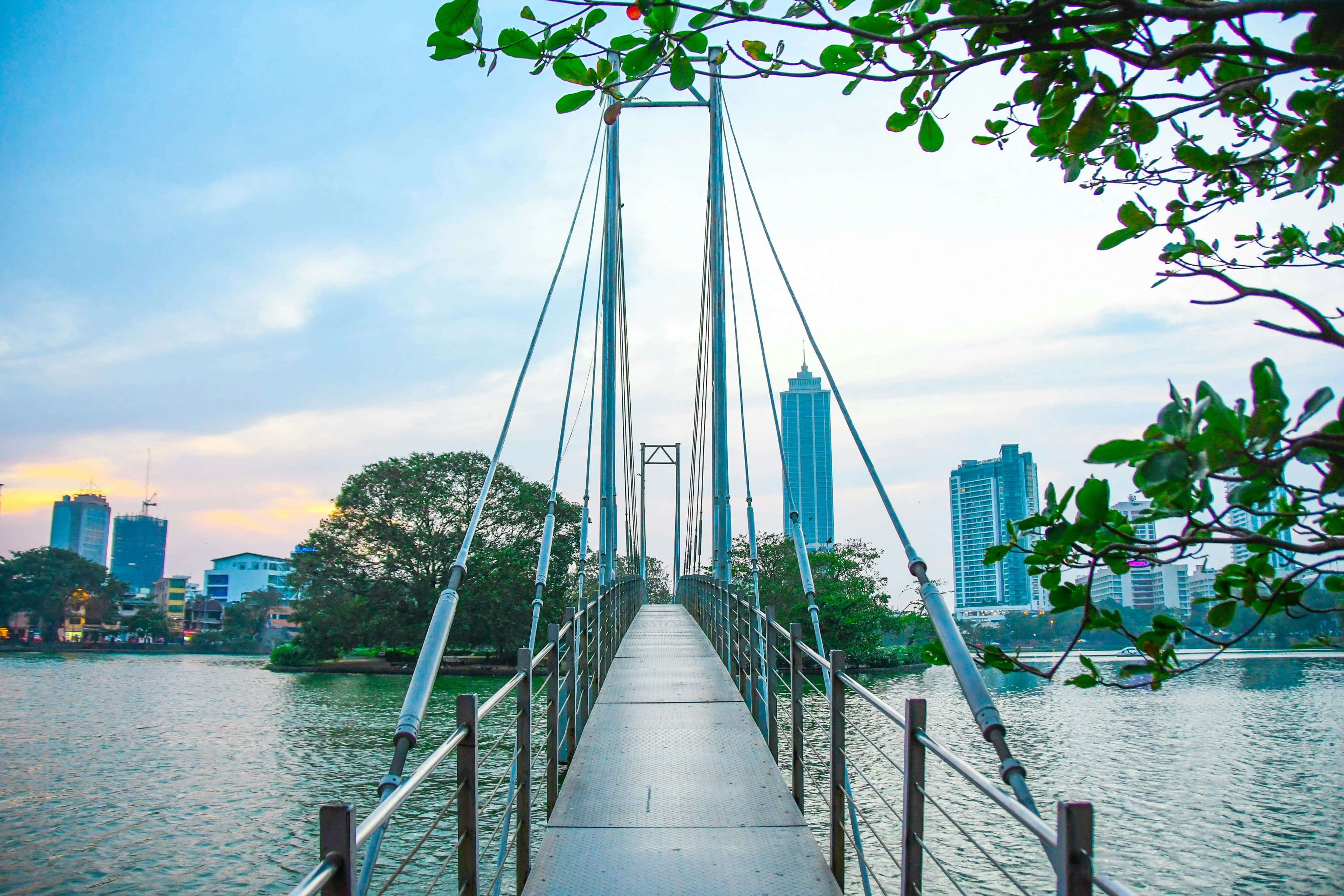
Understanding Colombo as a luxury destination
The city operates simultaneously as a gateway to the rest of Sri Lanka and as a destination in its own right. Many travellers use it as an entry point before moving to the Cultural Triangle, the southern coast, or the hill country around Kandy and Nuwara Eliya. A well-chosen luxury hotel suite in Colombo positions the traveller to do both: to engage with the city seriously and to depart efficiently for the broader island.
Key areas to consider when choosing where to stay
Cinnamon Gardens and Colpetty
These adjacent residential neighbourhoods, sometimes referred to collectively as Colombo 3 and Colombo 7, represent the most established addresses for high-end accommodation. Tree-lined avenues, the Viharamahadevi Park, and proximity to the city's gallery and museum infrastructure make this area coherent for travellers who want cultural access alongside residential calm. The architecture here is predominantly colonial and post-colonial, and the better properties preserve that scale while integrating contemporary interiors.
Fort and the Galle Face area
The Fort district is Colombo's historic commercial core, containing the oldest institutional buildings and the original harbour infrastructure. The Galle Face Green, a coastal promenade stretching along the seafront, anchors the southern edge of this area. Properties positioned here offer Indian Ocean views and proximity to the city's institutional fabric. The scale of development in this corridor has accelerated significantly since the early 2010s, and several significant hotel properties have established themselves along this stretch.
The Beira Lake corridor
Running between the Fort and Cinnamon Gardens areas, the Beira Lake corridor is characterised by a mix of mid-century civic architecture and newer mixed-use development. It is less residential than Cinnamon Gardens and less commercial than Fort, and properties here tend to appeal to travellers who want proximity to both without the intensity of either.
When to visit Colombo for a suite stay
Sri Lanka's climate is governed by two distinct monsoons, and Colombo's position on the southwest coast places it in the path of the southwest monsoon, which runs from May through September. The driest and most temperate period for visiting Colombo runs from November through to April, with December and January offering the most reliable conditions. The city does not experience the same seasonal closure patterns seen at beach resorts on the southern or eastern coasts, so luxury hotel suite availability is generally consistent year-round, but pricing and occupancy tend to peak during the northern hemisphere winter months.
Colombo does not have a single anchoring cultural event calendar in the way that certain European capitals do, but the Vesak festival in May, marking the Buddhist new year, transforms the city's public spaces with illuminated displays and street activity of considerable visual intensity. The Christmas and New Year period, coinciding with the dry season, brings the highest concentration of international arrivals and corresponding demand for premium accommodation.
Local luxury standards: what to expect from top-tier suites in Colombo
Sri Lanka does not operate a formal national hotel classification system equivalent to France's Palace designation. The market for luxury hotel suites in Colombo is therefore self-defined, and the range of quality between properties using the word luxury is considerable. The most reliable indicators of genuine quality at the top of the market are: the provenance of the building (restored colonial properties with original architectural features command a premium that is usually justified), the ratio of staff to guests, the specificity of the food and beverage programme, and the quality of the textiles and material finishes used in the suite itself.
Sri Lankan craft traditions are genuinely distinguished: the island has a long history of handloom weaving, lacquerwork, and wood carving, and the better properties incorporate these materials deliberately rather than decoratively. A suite in a serious Colombo luxury hotel should feel rooted in place, not assembled from a generic international hospitality catalogue.
Butler service is standard at the uppermost tier of properties. Suites at this level typically offer separate living and sleeping areas, private terraces or balconies in the case of colonial conversions, and access to a dedicated floor or wing that provides additional separation from the main hotel circulation.
How to choose the right luxury suite in Colombo
The primary decision is architectural: colonial conversion or purpose-built contemporary property. Each approach has a distinct logic. Colonial conversions, where the original structure has been preserved and the interior rebuilt around it, offer spatial proportions and material character that new builds cannot replicate. Ceilings are higher, corridors are wider, and the relationship between interior and garden or courtyard space is typically more generous. The trade-off is that these properties are smaller by definition, which affects the breadth of facilities on offer.
Purpose-built contemporary properties, several of which have opened along the Galle Face and Fort waterfront in the last decade, offer the full infrastructure of an international luxury hotel: multiple dining venues, full-scale spa facilities, large pool decks, and conference capacity. Suite inventory in these properties tends to be larger in absolute terms, which can be an advantage for travellers requiring connecting rooms or extended-stay configurations.
A second consideration is view orientation. Colombo is a coastal city, and suites with Indian Ocean exposure are categorically different in atmosphere from those oriented toward the city's interior. This distinction should be explicitly confirmed at the point of selection, as it significantly affects the quality of the suite experience, particularly in the morning and evening light.
Why curated selection matters in Colombo
The luxury hotel market in Colombo has expanded rapidly, and the terminology used across the sector is not always applied with consistency. Properties that describe themselves as luxury vary enormously in their actual delivery of space, service, and material quality. The volume of available options, combined with this definitional inconsistency, makes independent research time-consuming and the risk of a poor allocation higher than in more tightly regulated markets.
La Suite applies a single editorial standard across every property in its selection: the suite must justify its position at the top of the market through verifiable spatial, service, and design criteria. In a city where the gap between marketing language and actual experience can be significant, a curated selection by La Suite removes that uncertainty and allows the traveller to direct their attention toward the city itself.