Where to stay in Taipei: districts and their luxury character
Da'an and Xinyi: the commercial and cultural core
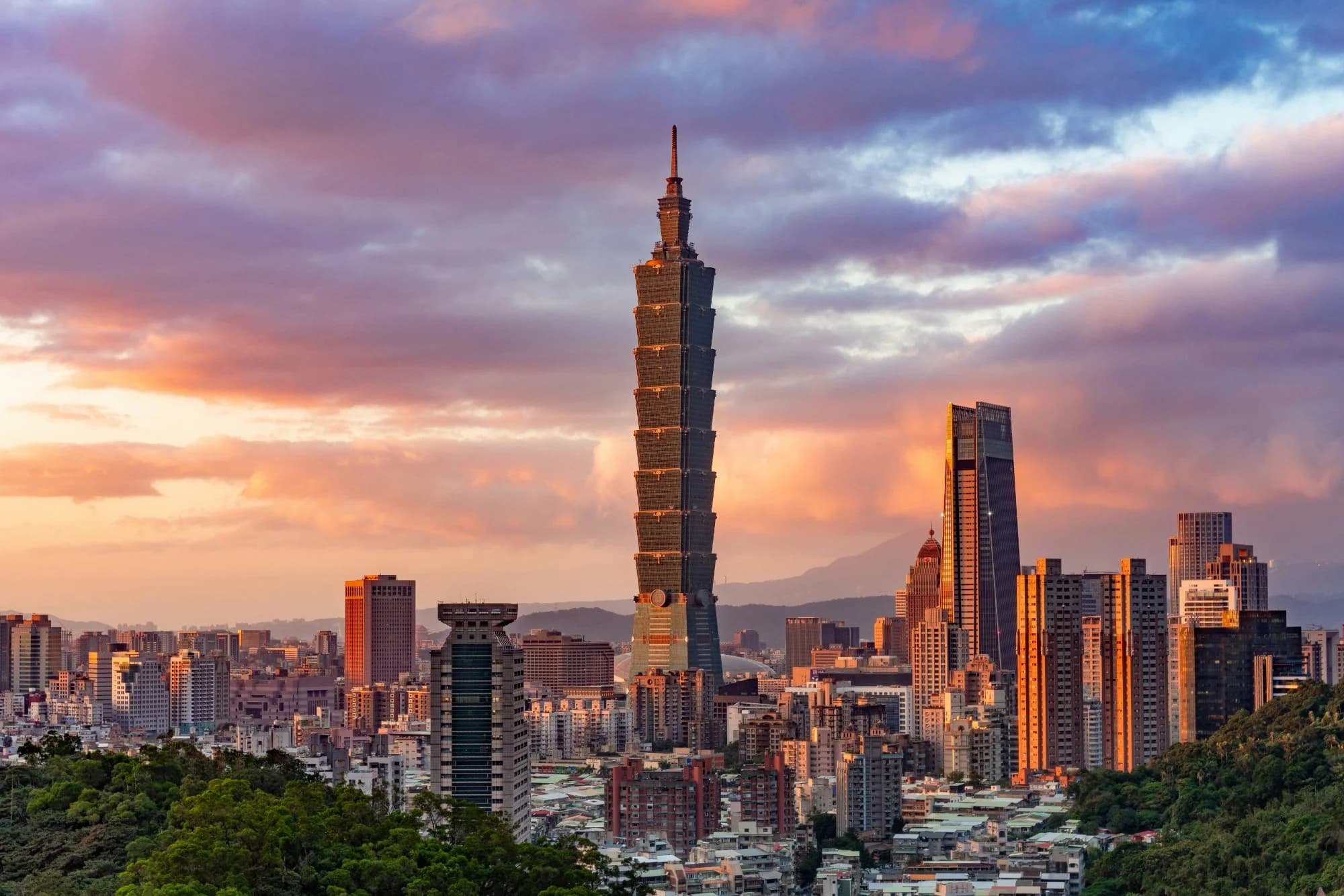
Da'an District is home to the National Taiwan University campus, tree-lined boulevards, and some of the city's most refined dining addresses. Its residential calm makes it a preferred base for travelers seeking quieter surroundings with immediate access to cultural institutions. Xinyi, by contrast, is Taipei's contemporary face: the district anchors the city's financial centre, hosts Taipei 101, and concentrates a significant share of the city's five-star hotel inventory. Suites in Xinyi tend to offer elevated city panoramas and proximity to flagship retail and convention facilities.
Zhongshan and Datong: creative layers and historic texture
Zhongshan is arguably Taipei's most architecturally layered district, where Japanese colonial-era buildings sit alongside independent design studios, gallery spaces, and selective boutique hotel properties. Datong borders it to the north and contains Dihua Street, a preserved 19th-century commercial strip that now houses fabric merchants, traditional medicine shops, and increasingly, considered hospitality concepts. Staying in these districts places guests closer to the city's curatorial side rather than its transactional one.
Tianmu and Yangmingshan: elevation and spatial distance
For travelers who prioritise space and natural proximity, the Tianmu area and the Yangmingshan mountain district offer a different entry point into Taipei. Yangmingshan National Park sits at the city's northern edge and contains volcanic terrain, hot spring resorts, and a cooler microclimate. Certain high-end properties here function less as urban hotels and more as retreat addresses, with suite typologies designed around thermal bathing, open-air space, and mountain outlook.
When to visit Taipei for a luxury suite stay
Taipei's climate is subtropical, which means humidity and heat are operative factors from May through September. October through December is widely considered the most comfortable period: temperatures are moderate, skies tend to clear after the summer rain season, and the city enters a culturally active phase.
The Taipei Dangdai art fair, held annually in January, has established itself as one of Asia's most focused contemporary art events, drawing gallery directors, collectors, and cultural figures from across the region. Suite availability tightens considerably during this period. The Lunar New Year, typically falling in late January or February, brings a different energy: the city partially quiets, which can appeal to travelers seeking a less activated urban atmosphere.
Spring (March to May) carries cherry blossom cycles at higher elevations and comfortable temperatures, making it a secondary peak for international arrivals. Advance planning for suite bookings is advisable for any travel coinciding with major holidays or cultural calendar events.
Local luxury standards: what defines a top-tier suite in Taipei
Taiwan does not operate a state-designated palace hotel classification in the manner of France's official Palace label. Instead, the luxury tier in Taipei is defined by a combination of international brand affiliation, service-to-space ratios, and what local hospitality culture calls ren qing wei (a concept loosely translating to warmth and attentiveness in human interaction). This last quality distinguishes Taipei's finest hotels from comparable properties elsewhere in Asia: the service orientation is genuine rather than performative.
Top-tier suites in Taipei typically offer between 70 and 200 square metres of interior space, floor-to-ceiling glazing oriented toward the city skyline or mountain backdrop, private dining capability, and butler or personal assistant services. Many five-star properties include club lounge access as a suite benefit, providing a secondary social and working space within the hotel.
Hot spring (wenquan) suites represent a distinct typology more common at properties in the Beitou district and Yangmingshan area. These suites incorporate private plunge pools or soaking tubs fed by natural thermal water, drawing on a bathing culture deeply embedded in Taiwanese daily life.
How to choose the best luxury suite in Taipei
The decision matrix for a Taipei suite begins with purpose. Business travelers anchored to the Xinyi financial district will weight proximity and connectivity differently than a cultural traveler prioritising gallery access and neighbourhood texture. Families visiting with children will require suite configurations that international five-star properties in Xinyi and Da'an handle reliably, with connecting room options and child amenity programs.
Architecture is a relevant filter. Taipei's luxury hotel stock includes both purpose-built contemporary towers and a smaller number of adaptive reuse projects that preserve mid-century or colonial-era building fabric. The experiential character of these two typologies differs substantially. A suite in a high-rise tower delivers altitude and panoramic orientation; a suite in a heritage-adjacent property delivers material depth and spatial intimacy.
Altitude matters in Taipei. Suites above the 30th floor in Xinyi-area towers offer uninterrupted lines of sight across the Taipei Basin, with Yangmingshan's forested ridgeline forming the northern horizon. Taipei 101, still among the tallest buildings in Asia, serves as a visual anchor from many suite vantage points across the city.
Dining access within the property is another practical consideration. Taipei's independent restaurant scene is sophisticated and concentrated, but for travelers who prefer to anchor meal decisions to the hotel, properties with multiple culinary concepts and room service capability at the suite level provide a meaningful advantage.
Why a curated selection by La Suite matters in Taipei
Taipei's five-star hotel landscape is not large by the standards of Tokyo, Singapore, or Hong Kong, but it is uneven. Properties vary considerably in terms of suite quality, service consistency, and architectural integrity. The city also has a tier of hotels that present well at the category level but deliver a less considered experience at the suite level specifically.
La Suite applies a filtering process oriented around space, design coherence, service depth, and experiential specificity. For a city like Taipei, where the difference between a suite that genuinely frames the city and one that merely occupies it can be significant, curation is a functional tool rather than a marketing gesture. The curated selection by La Suite removes the research burden and surfaces only the properties where a luxury suite stay in Taipei is architecturally and experientially defensible.