Amora Hotel Brisbane, Brisbane
Amora Hotel Brisbane is located only 300 mtrs from Central Station and within walking distance to The Queen St Mall, Treasury Casino, Suncorp Stadium and the entertainment precincts of Howard Smith Wh

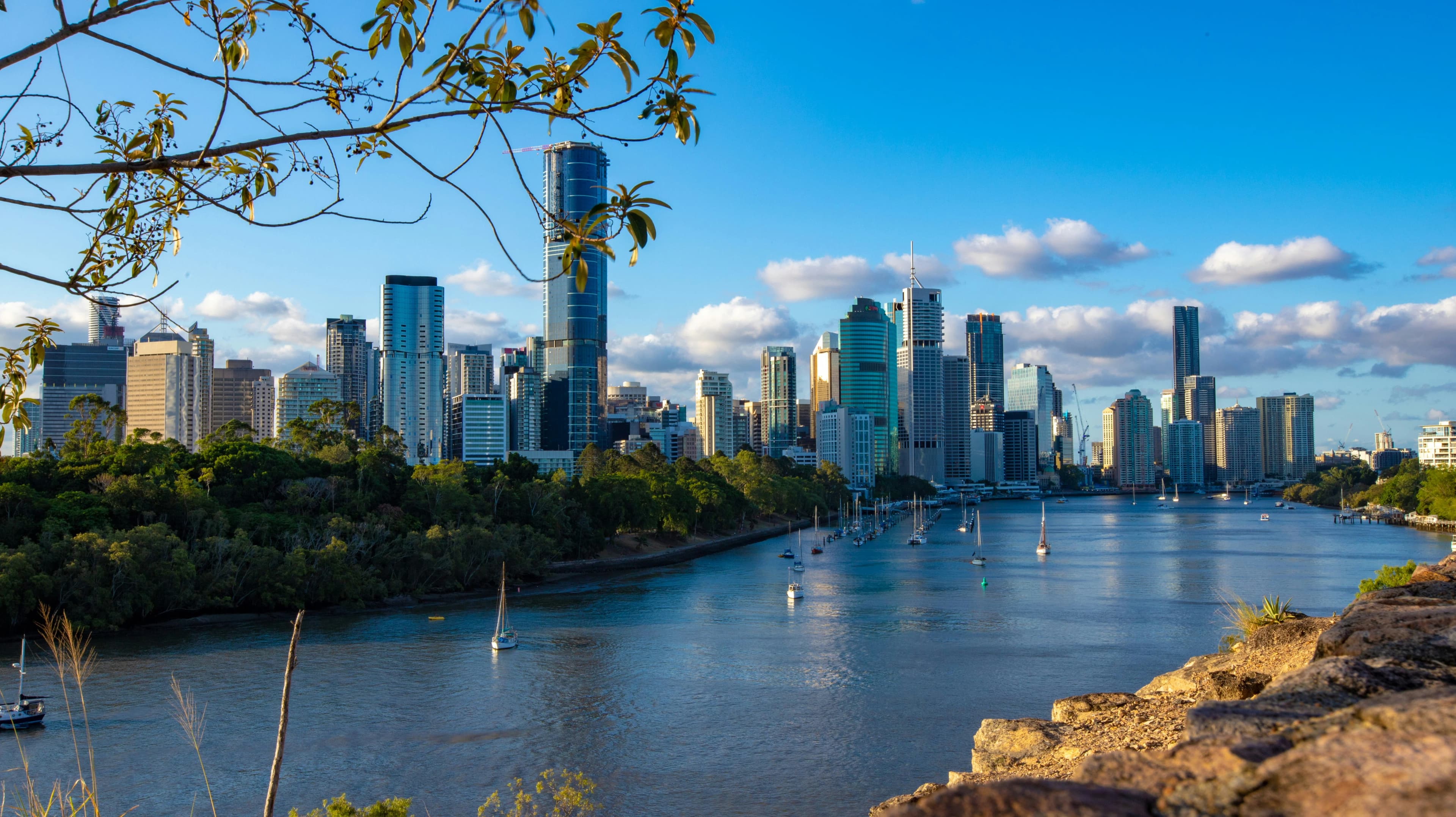
Brisbane is frequently underestimated, which is precisely what makes it interesting. The city sits on the Brisbane River, with a subtropical climate that produces long evenings of diffuse golden light and relatively mild winters. This is not the concentrated intensity of a dense European capital. It is expansive, low-rise in many quarters, and oriented around outdoor life in a way that rewards guests who choose accommodation capable of extending that openness inward. A well-positioned luxury hotel suite here offers river or city views that function almost as landscape art, shifting across the day in ways that denser urban rooms simply cannot replicate.
15 hotels available

Amora Hotel Brisbane is located only 300 mtrs from Central Station and within walking distance to The Queen St Mall, Treasury Casino, Suncorp Stadium and the entertainment precincts of Howard Smith Wh

Avani Living Queen's Wharf Residences is a condo hotel featuring rooms with free Wifi and air conditioning in the center of Brisbane. This 4-star condo hotel offers a 24-hour front desk and an elevato

Located in Brisbane's CBD (Central Business District), Brisbane Marriott Hotel, overlooks the iconic Story Bridge and offers modern rooms with extra-comfortable beds and panoramic views. The hotel fea

Boasting a fitness center and views of the river, Emporium Hotel South Bank is set in Brisbane, 1312 feet from South Bank Parklands. This property is located a short distance from attractions such as

Designed to spark curiosity, Hotel Indigo Brisbane City Center brings it’s electric charm and hidden artistic flair to Brisbane City. Think street art-inspired interiors, quirky design details, and an

Located in Brisbane, 1.9 miles from Streets Beach, Hotel X Brisbane Fortitude Vly, Vignette Collection by IHG provides accommodations with an outdoor swimming pool, private parking, a fitness center a

Located above the vibrant Queen Street Mall, Hyatt Regency Brisbane invites you to experience premium accommodations in the heart of the city’s central business and shopping district. Whether you are

Prime City Location InterContinental Brisbane by IHG is located in Brisbane city center, offering easy access to key attractions. Streets Beach is a 17-minute walk away, while Brisbane Airport lies 7.

Located in Brisbane's CBD (Central Business District), the 5-star Sofitel Brisbane Central features a day spa, an outdoor pool, indulgent rooms and an a la carte restaurant, Suzette Restaurant. It off

Located in the fashionable suburb of New Farm, Spicers Balfour Brisbane is an award-winning boutique hotel just 7 minutes’ from the Brisbane city center. The luxurious rooms at Balfour Spicers include

Located in the city of Brisbane, with direct access to restaurants, shopping and bars, The Calile Hotel features an outdoor pool, fitness center and spa facilities. You can complete your Brisbane expe

The Inchcolm by Ode Hotels offers accommodations in the heart of Brisbane. Set in a 1920’s era building this hotel features an on-site restaurant and bar. The property offers complimentary access to t

Featuring a garden, a restaurant as well as a bar, The Star Grand Brisbane is located in the center of Brisbane, a 12-minute walk from Streets Beach. This 5-star hotel offers a 24-hour front desk, an

Boasting an outdoor swimming pool, 24-hour fitness center and spa facilities, The Westin Brisbane is located in the heart of Brisbane CBD, surrounded by a variety of restaurants, cafes, shopping and a

W Brisbane is located on North Quay with views over the Brisbane River. Offering 312 spacious guest rooms, W Brisbane features three restaurants and bars, a spa and fitness center. The 5 star hotel is
The South Bank precinct, directly across the river from the CBD, houses the Queensland Cultural Centre, the Gallery of Modern Art (QAGOMA), and a series of public spaces designed with unusual civic care. The broader narrative of Brisbane's upgrade is architectural: new towers by internationally recognised firms, adaptive reuse of heritage warehouses in Fortitude Valley and Newstead, and a riverfront that has been progressively reactivated. For travelers arriving from London, New York, or Singapore, the entry point is not nostalgia for a colonial past but curiosity about a city in active formation.
The central business district remains the logical base for guests who want proximity to Brisbane's primary cultural and commercial infrastructure. The riverside corridor along Eagle Street and Queen Street connects financial Brisbane with its emerging hospitality offer. Suites in this zone typically command elevated river views and provide walking access to the Botanic Gardens and the ferry network, which functions as one of the more pleasurable modes of transit in any Australian city.
South Bank is culturally dense by Brisbane standards. Its gallery quarter, weekend markets, and proximity to the State Library make it a considered choice for guests whose travel is inflected by art, architecture, or design. West End, immediately adjacent, carries a more independent character: independent bookshops, specialty coffee roasters, and a dining scene that has moved well beyond its bohemian roots into something more technically accomplished. Properties positioned between these two precincts offer a useful dual access.
These inner-north suburbs represent Brisbane's most accelerated transformation. Fortitude Valley, long associated with nightlife, now contains a serious concentration of independent restaurants, design studios, and gallery spaces. New Farm, running along the river to its east, is residential and considered: it holds some of Brisbane's finest Victorian-era architecture alongside contemporary interventions. Boutique hotel development here tends toward smaller room counts and higher design attention, which suits guests for whom atmosphere outweighs amenity breadth.
Brisbane's subtropical climate means that the concept of a single optimal season is somewhat collapsed compared to more temperate destinations. That said, the months between May and October represent the clearest and most temperate window. Humidity is lower, temperatures are consistently comfortable for outdoor movement, and the risk of the heavy rainfall events that characterise the summer months is substantially reduced.
The winter months (June to August) draw a significant volume of domestic visitors from southern states seeking milder temperatures, which has a practical implication for suite availability at the upper end of the market. Booking lead times of six to eight weeks are advisable for premium rooms during this period. The January to March window, while warmer and wetter, often presents better suite availability and occasionally more competitive pricing structures, though the heat and humidity require accommodation with effective climate control and generous indoor space, both of which a properly specified luxury suite should provide by definition.
The calendar of cultural events has expanded considerably in recent years. The Brisbane Festival (held annually in September) brings an international programme of performing arts across the city. The Queensland Music Awards and a growing number of design and architecture-focused events reflect the city's broader repositioning. For guests whose travel itinerary is shaped by cultural programming, September is the most concentrated month.
Australia does not operate the formal palace classification system found in France, nor the ryokan grading traditions of Japan. The benchmark at the upper end of the Brisbane market is the five-star rating issued by Forbes Travel Guide and, domestically, the AAA Tourism system, though neither captures the full texture of what separates a genuinely considered suite from a large room with premium fittings.
The suites that merit serious attention in Brisbane share certain characteristics: generous floor plans calibrated for extended stays rather than overnight transits, material specifications that reflect considered procurement rather than volume hospitality purchasing, and a service register that is low-ceremony but attentive. Australian hospitality culture is inherently less formal than its European counterparts. The best operators in Brisbane have understood that this informality is an asset rather than a deficit, cultivating a precision of care that does not depend on scripted ritual. Guests accustomed to the more protocol-heavy environments of London or Hong Kong often find this approach refreshing.
The primary decision axis in Brisbane is orientation. River-facing rooms offer a distinct visual register that is particular to this city. The Brisbane River is not the Thames or the Seine in terms of cultural weight, but it provides a genuinely calming prospect and a sense of scale that city-facing rooms cannot replicate. For guests prioritising morning light, east-facing suites above the river or the valley deliver a quality of illumination that is specific to the subtropical latitude.
Floor count matters more in Brisbane than in cities with a denser skyline. Because much of the city remains relatively low-rise outside the core CBD towers, upper-floor suites achieve a panoramic openness that mid-floor rooms in a European capital would not. Guests with an architectural sensibility should also consider whether the property itself is a conversion of a heritage structure or a purpose-built contemporary tower, as the spatial logic differs considerably between the two typologies.
Practical considerations include proximity to the Airport Train link (which connects Brisbane Airport to Central Station in approximately twenty minutes) and access to the city's ferry network. For guests with extended stays or business commitments, suites with designated working areas and reliable connectivity infrastructure should be confirmed prior to booking rather than assumed.
Brisbane's luxury hotel market is smaller in absolute terms than Sydney or Melbourne, which means the gap between properties that genuinely deliver at the suite level and those that use the category loosely is wider than in more competitive markets. The risk of misalignment between marketing presentation and actual experience is real.
La Suite applies a consistent editorial standard to every property in its selection: spatial quality, material integrity, service calibration, and the less quantifiable quality of atmosphere. In a city where the luxury offer is still maturing and where new properties continue to enter the market, this curatorial filter has particular value. A curated selection by La Suite removes the friction of evaluating an unfamiliar market and ensures that the suite you choose corresponds to the experience you are seeking, whether that is a river-facing retreat during the Brisbane Festival or a quiet base for extended business travel in a city that is quietly becoming one of the more interesting places to stay in the Asia-Pacific region.

Brisbane has undergone significant investment in hospitality and cultural infrastructure, partly accelerated by its selection as host city for the 2032 Olympic Games. The combination of subtropical climate, a reactivated riverfront, and a growing arts and dining scene provides a genuinely considered environment for guests staying in high-specification suites. The city rewards guests who choose accommodation with space and position to engage with its particular scale and light.
The CBD riverfront corridor provides the most established concentration of upper-tier hotel suites, with river views that are particular to Brisbane's geography. South Bank suits guests with a cultural itinerary, given its proximity to QAGOMA and the Queensland Cultural Centre. Fortitude Valley and New Farm offer a more design-forward, smaller-scale hospitality experience for guests who prioritise atmosphere and neighbourhood character over full-service amenity.
The May to October period offers the most temperate conditions, with lower humidity and reduced rainfall. June through August draws higher domestic demand, so booking lead times of six to eight weeks are advisable for premium suites during this window. September is particularly well-timed for culturally oriented travelers, as the Brisbane Festival brings an international programme of performing arts across the city.
Brisbane's luxury hotel market is smaller in absolute volume than Sydney or Melbourne, which makes careful selection more important. The city's hospitality culture is characterised by precision without ceremony, a quality that distinguishes the best operators from more formulaic five-star environments. The suite offer is maturing quickly, with new properties entering the market that reflect international design and service standards rather than domestic convention.
Yes, provided guests confirm that the suite specification includes a dedicated working area, reliable high-speed connectivity, and adequate separation between sleeping and working zones. Brisbane is increasingly positioned as a business destination in the Asia-Pacific corridor, and the better properties have responded with suite configurations that accommodate extended professional stays without compromising residential comfort.
River-facing suites offer views across the Brisbane River, which provides a calming and visually distinct prospect specific to this city. Upper-floor suites in CBD towers achieve considerable panoramic openness because much of Brisbane remains relatively low-rise outside the central core. East-facing rooms above the valley deliver notable morning light quality, which is a function of the subtropical latitude and worth specifying when booking.
First-time visitors benefit from understanding the city's distinct neighbourhood logic before committing to a location. The CBD riverfront provides the broadest access to the city's primary infrastructure, while South Bank and the inner-north suburbs offer more textured and neighbourhood-specific experiences. Using a curated platform such as La Suite removes the risk of selecting a property that uses the suite category loosely, ensuring spatial and service quality aligns with expectation.
Australia does not operate a formal palace-tier classification equivalent to France's system. The primary quality benchmarks are the Forbes Travel Guide five-star rating and the domestic AAA Tourism grading. Neither system fully captures the distinction between a genuinely considered suite and a large room with premium fittings, which is why editorial curation based on spatial quality, material integrity, and service calibration provides a more reliable guide.
The Brisbane Festival in September is the most significant cultural event in the city's calendar, offering an international programme of performing arts across multiple venues. QAGOMA, one of Australia's most significant contemporary art institutions, runs a continuous programme of major exhibitions. The city's design and architecture events have expanded in recent years, reflecting Brisbane's broader repositioning as a destination of cultural ambition rather than simply a gateway to Queensland's coastal regions.
For travel during the peak June to August period, a lead time of six to eight weeks is advisable to secure the best suite configurations at the properties that meet a serious standard. For September, when the Brisbane Festival concentrates demand, similar lead times apply. Outside these windows, availability at the upper end of the market is generally more flexible, though specific suite categories with river views or corner configurations warrant earlier confirmation regardless of season.