Canberra

Canberra

Hotels with luxury suites in Canberra

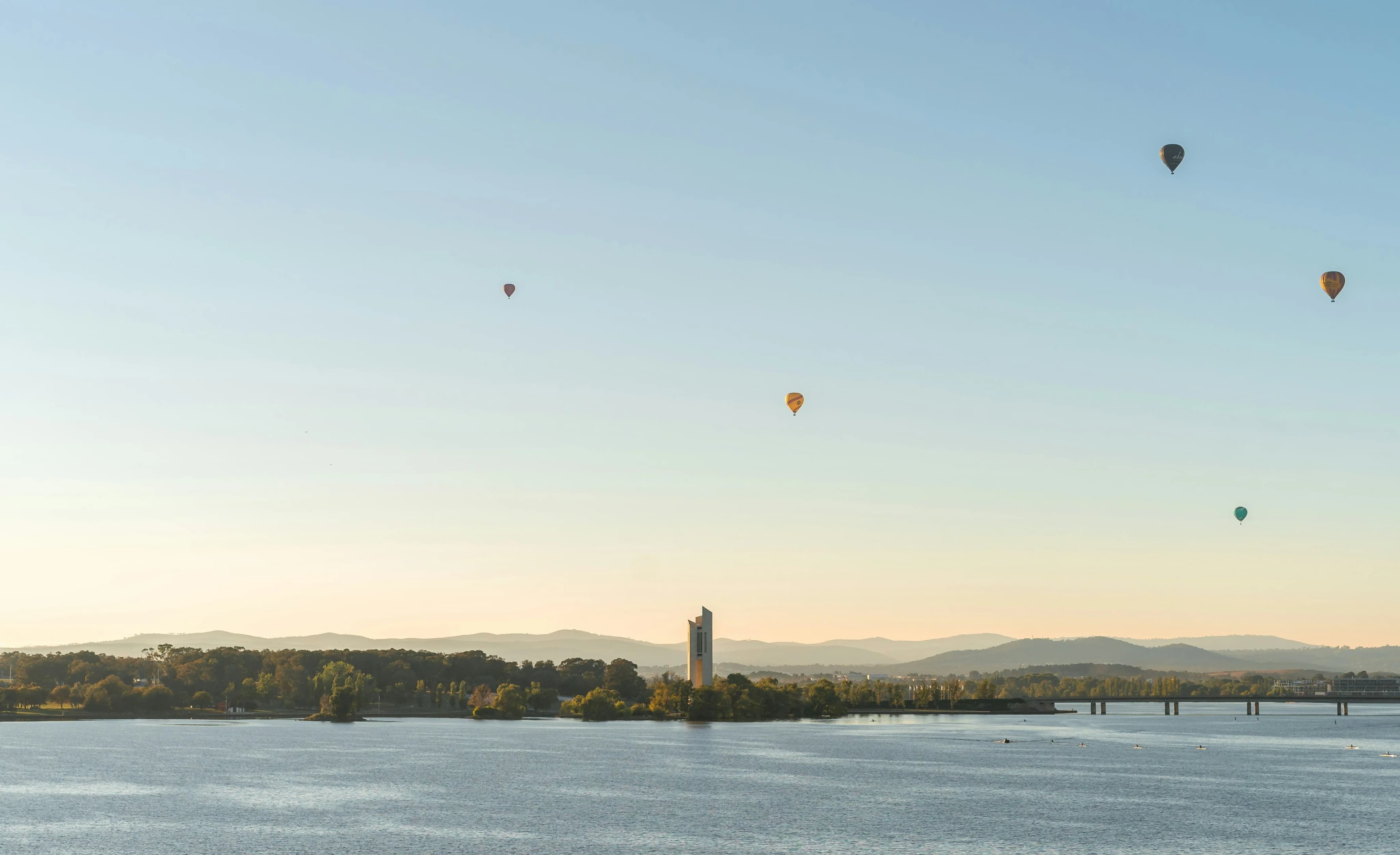
Canberra is not a city that announces itself loudly. Planned by American architects Walter Burley Griffin and Marion Mahony Griffin following an international design competition in 1911, it was conceived as a garden city, with wide boulevards, formal axes, and Lake Burley Griffin at its geographic centre. That original ambition for order and intention carries through to the contemporary experience. The capital draws a distinct traveler: diplomats, senior public servants, academics, cultural figures visiting the major institutions, and an increasing number of leisure visitors who appreciate the city's calm tempo and genuine cultural density.

List modeShow map

2 hotels available

Hotel Realm

Hotel Realm, Canberra

BarSpa and wellness centerSwimming poolRestaurant
More information

Located a 16-minute walk from Old Parliament House, Hotel Realm offers 5-star accommodations in Canberra and has a garden, a terrace and a bar. Providing a restaurant, the property also features a fit

Atrium Two-Bedroom Apartment

Atrium Two-Bedroom Apartment

111 m²

This 2-bedroom apartment offers a living area, aTV, a kitchen and a balcony. Both bedrooms have separate bathrooms with a shower.

Discover
One-Bedroom Suite - Realm

One-Bedroom Suite - Realm

64 m²

This suite includes complimentary WiFi and movies on demand. It also includes 1 king-sized bed, luxury bathroom amenities and a Nespresso coffee machine with coffee pods. There is a Smart TV, writing

Discover
Family Interconnecting Room

Family Interconnecting Room

101 m²

This two bedroom features a kitchenette with washer dryer, dishwasher, an oven and a microwave. Seating area, writing desk, bathrobes, slippers and hairdryer.

Discover
Deluxe King Suite

Deluxe King Suite

64 m²

This spacious suite consists of 1 living room, 1 separate bedroom and 1 bathroom with a walk-in shower and free toiletries. Guests can make meals in the kitchenette that is equipped with a refrigerato

Discover
Deluxe Family Suite

Deluxe Family Suite

101 m²

Offering free toiletries and bathrobes, this family room includes a private bathroom with a walk-in shower, a bath and a hairdryer. The well-equipped kitchenette has a refrigerator, a dishwasher, kitc

Discover
See the other suites

Hyatt Hotel Canberra - A Park Hyatt Hotel
More information

Offering a state-of-the-art fitness center with indoor swimming pool and sauna, this luxury hotel is only 5 minutes' drive from Parliament House. Guests can enjoy a decadent afternoon tea in the guest

Diplomatic Suite

Diplomatic Suite

240 m²

The spacious suite features air conditioning, a mini-bar, as well as a private bathroom boasting a bath and a shower. This suite features a dining area, a flat-screen TV with streaming services a tea

Discover

Understanding Canberra as a luxury destination

The luxury suite traveler finds Canberra rewarding precisely because it resists the noise of Sydney or Melbourne. The scale is human. Distances between key precincts are manageable. And the accommodation offering, while selective, has evolved significantly in the past decade to match the expectations of an international clientele.

Best areas to stay in Canberra

The city centre and parliamentary triangle

The parliamentary triangle, defined by Capital Hill, the National Gallery of Australia, and the High Court, forms the institutional and cultural core of the city. Staying in this zone places guests within reach of the most significant cultural addresses in Australia, including the National Portrait Gallery and the National Library. Properties in this precinct tend toward formal architecture and a considered aesthetic, suited to travelers on diplomatic or government-adjacent visits who require both discretion and proximity to the national institutions.

Barton and Kingston

Immediately southeast of the parliamentary triangle, Barton and Kingston represent Canberra's most refined residential and hospitality precincts. Kingston Foreshore, developed along the edge of Lake Burley Griffin, has become a focal point for serious dining and weekend leisure for Canberra's professional class. The architecture here leans contemporary, and the atmosphere is notably more relaxed than the city centre, making it appropriate for extended stays where the traveler wishes to integrate into the local rhythm rather than remain insulated from it.

Acton and the inner north

The inner north, including Acton and adjacent Braddon, represents the younger, more experimental face of Canberra's hospitality culture. Braddon in particular has developed a concentrated strip of independent restaurants, specialty coffee, and small-batch producers that sit comfortably alongside the Australian National University precinct. For the culturally oriented traveler who values the texture of a working neighbourhood, this zone offers a counterpoint to the more formal south-side precincts.

When to visit Canberra

Canberra's continental-influenced climate produces four genuinely distinct seasons, which is relatively unusual in the Australian context. The city sits at elevation, which means winters are cold by Australian standards, with overnight temperatures regularly falling below freezing from June through August. Autumn, from March to May, is widely considered the most visually compelling season, when the deciduous trees planted throughout the city's parks and avenues turn across a full spectrum of ochre, amber, and deep red. The annual Canberra Floriade festival in September and October draws significant visitor numbers for its display of tulips and spring blooms in Commonwealth Park.

For the luxury suite traveler, late autumn and early spring offer the most comfortable conditions and the least competition for inventory. The summer months, December through February, bring sustained heat and a quieter city as the political and public service calendar empties out. This period can suit travelers seeking privacy and reduced demand on premium accommodation. The major cultural season at the national institutions tends to run from February through November, aligning with the parliamentary and academic calendar.

Local luxury standards: what to expect from Canberra's top-tier hotels

Australia does not operate a formal palace designation equivalent to the French classification system. The upper tier of Australian hotels is typically assessed through international five-star ratings and the Forbes Travel Guide star system, with the most prestigious properties in Canberra holding five-star ratings under the Australian Star Ratings scheme administered by Tourism Australia.

What distinguishes the finest properties in Canberra is less the scale of spectacle and more a coherent editorial sensibility in design, combined with a high staff-to-guest ratio and access to Canberra's specific cultural infrastructure. Suites at the top level will typically offer generous floor plans by Australian standards, views oriented toward the lake or the Brindabella mountain range to the west, and dining programs that draw on the produce networks of the surrounding region, including the Canberra wine district, which holds a legitimate reputation for cool-climate Riesling and Shiraz.

How to choose the best luxury suite in Canberra

Several considerations are specific to Canberra and distinguish the selection process from other Australian cities. First, the orientation of the suite matters more here than in most destinations. Properties facing Lake Burley Griffin or the Brindabella ranges to the west offer a spatial quality that is genuinely distinctive, particularly in the early morning and at dusk. Second, because Canberra's luxury hotel market is smaller than Sydney or Melbourne, the difference between a standard five-star room and a genuine suite is significant in both space and service access. Identifying properties where the suite offering is architecturally intentional, rather than simply an enlarged version of a standard room, is the central curatorial judgment.

Third, proximity to the national institutions is a practical consideration. The cultural calendar in Canberra moves around major exhibitions at the National Gallery, the National Museum, and Questacon. Aligning a stay with a significant opening or event adds a layer of purpose that reflects how the most considered travelers approach the city. Finally, for visitors arriving from interstate or internationally, understanding that Canberra operates on a tighter hospitality infrastructure than the major coastal cities is important. Reserving well in advance, particularly around parliamentary sitting periods and major cultural openings, is advisable.

The value of curation in a selective market

Canberra's luxury accommodation market is curated by necessity as much as by design. The number of properties operating at a genuinely high standard is limited, which means the margin between an appropriate choice and an underwhelming one is narrower than in larger markets. This selectivity is precisely where La Suite's curatorial function adds the most value. Rather than presenting an undifferentiated inventory, the platform applies a consistent editorial standard: suite design, spatial generosity, service quality, and contextual relevance to the destination.

For the traveler arriving in Canberra for a significant occasion, a governmental engagement, or simply a deliberate cultural immersion, the suite selection process benefits from a framework that already accounts for the city's particular character. La Suite's curated selection for Canberra reflects the same quiet confidence the city itself projects: precise, considered, and resistant to unnecessary noise.

Frequently asked questions

What are the best luxury hotel suites in Canberra for a diplomatic or government visit?

Properties in the parliamentary triangle and the Barton precinct are best positioned for diplomatic and government visits, offering proximity to Capital Hill, the major ministries, and the national institutions. The top-tier suites in these areas tend to prioritize discretion, generous floor plans, and dedicated concierge access, which are practical requirements for high-profile visits.

Is Canberra worth visiting for luxury travel compared to Sydney or Melbourne?

Canberra offers a qualitatively different experience from the major coastal cities: quieter, more spatially generous, and with a cultural density that is disproportionate to its population size. For travelers who value privacy, intellectual engagement, and a deliberate pace, Canberra's top properties and national institutions represent a genuinely compelling alternative to the larger markets.

What is the best season to book a luxury suite in Canberra?

Late autumn (March to May) and early spring (September to October) are generally the most rewarding periods, combining comfortable temperatures with the city's peak cultural calendar. Autumn in particular offers exceptional visual character as the city's deciduous trees change colour across the avenues and parliamentary precincts.

How does Canberra's hotel suite market compare to other Australian capital cities?

Canberra's luxury suite market is smaller and more selective than Sydney or Melbourne, which means the gap between the best and the merely acceptable is more pronounced. This selectivity rewards travelers who approach the choice with precision, as the finest suites in Canberra offer a standard of spatial quality and service consistency that competes with the major markets.

What cultural experiences can I access from a luxury suite in Canberra?

Canberra holds the National Gallery of Australia, the National Portrait Gallery, the National Museum, the National Library, and Questacon, all within a compact and walkable cultural precinct. Major international exhibitions rotate through these institutions on a program that runs primarily from February to November, providing a substantive reason for culturally motivated visits throughout the year.

Does Canberra have a fine dining scene worthy of a luxury hotel stay?

Canberra's restaurant culture has developed significantly over the past decade, with a concentration of serious dining in the Kingston Foreshore and Braddon precincts. The city benefits from proximity to the Canberra wine district and the produce networks of the surrounding tablelands, which inform a regional cooking culture that has gained recognition from Australian food media.

What should I look for in a top-tier Canberra hotel suite specifically?

Suite orientation is a primary consideration in Canberra: properties facing Lake Burley Griffin or the Brindabella ranges offer a spatial quality that distinguishes the finest rooms from standard inventory. Beyond views, look for suites where the design is architecturally intentional, where the floor plan is genuinely generous, and where the property demonstrates a coherent editorial sensibility rather than a generic luxury formula.

When is Canberra at its busiest and hardest to find premium suite availability?

Demand peaks during parliamentary sitting periods, major cultural exhibition openings at the national institutions, and the Floriade festival in September and October. Corporate and government travel also creates consistent pressure on premium inventory during the February-to-November working calendar. Advance reservation is advisable for any visit coinciding with these periods.

What is the Canberra wine district and is it accessible from a city suite stay?

The Canberra wine district encompasses approximately forty wineries spread across the surrounding tablelands, within a thirty-to-ninety-minute drive of the city centre. The region has a strong reputation for cool-climate varieties including Riesling, Shiraz, and Pinot Noir. Many properties operate cellar doors and offer private tastings, making day visits straightforward for guests based in the city.

How does La Suite curate luxury hotel suites in Canberra?

La Suite applies a consistent editorial framework that evaluates suite design, spatial generosity, service standards, and contextual fit with the destination's character. In a market as selective as Canberra, this curatorial discipline is particularly valuable: it filters out properties that meet a generic five-star checklist but do not reflect the city's specific aesthetic and experiential register, presenting only the suites that genuinely correspond to the expectations of a discerning traveler.