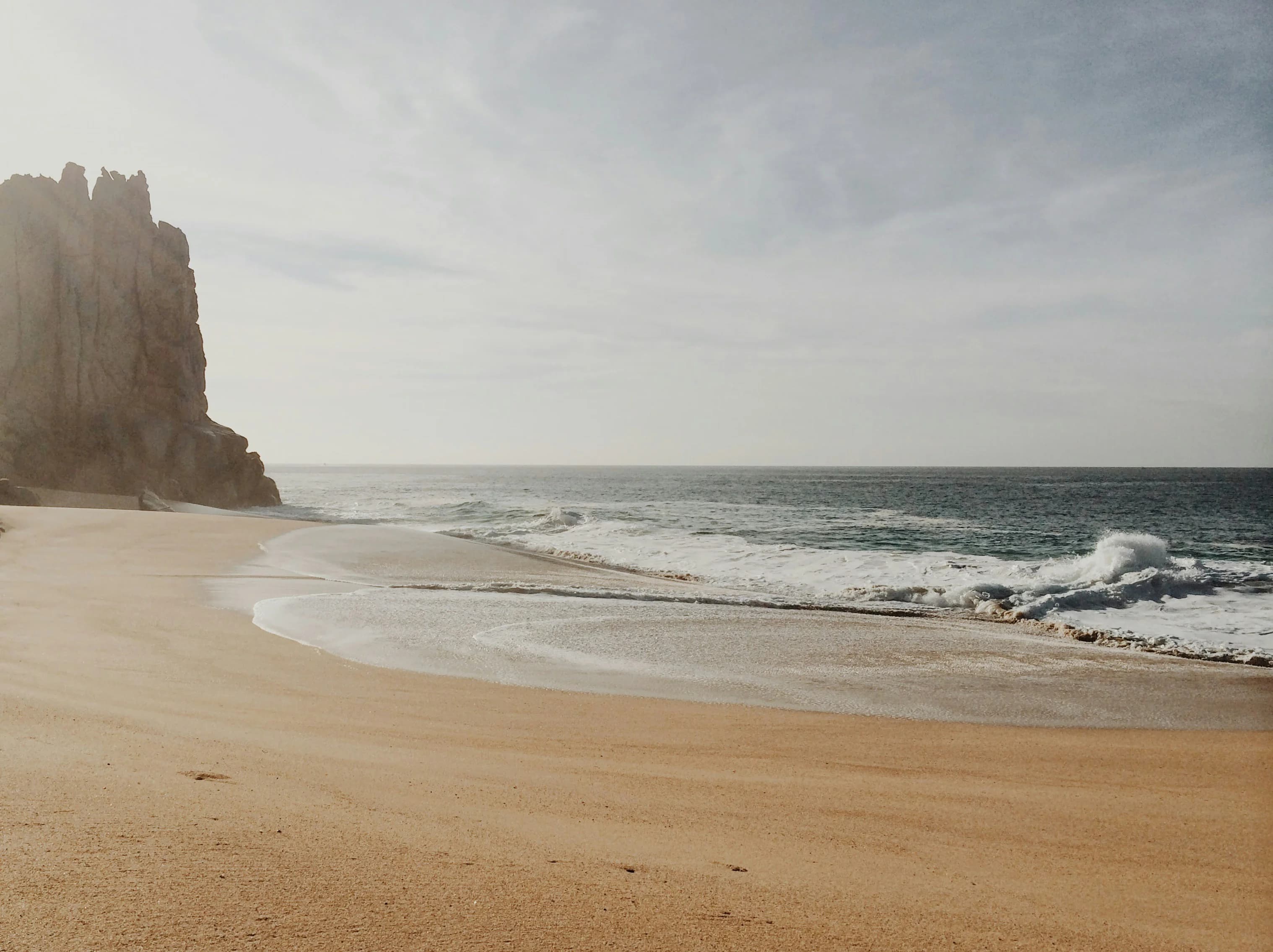
Where to stay in Baja California: distinct territories for the discerning traveler
Los Cabos and the southern tip
The southern terminus of the peninsula, known as Los Cabos, sits at the confluence of the Pacific and the Sea of Cortez. The architecture here tends toward bold geometric forms and open-air design, responding to a climate that allows year-round outdoor living. Properties in this zone typically prioritise private plunge pools, ocean-facing terraces, and direct beach access. The design language ranges from minimalist concrete to warm Mexican vernacular, depending on the property's positioning.
The East Cape and the Sea of Cortez corridor
Moving north along the eastern shore, the East Cape offers a quieter register. Development is sparser, the coastline more rugged, and the orientation more deliberately remote. Suites in this corridor tend toward ecological sensitivity, with lower building footprints and stronger connections to the marine environment. Jacques Cousteau once described the Sea of Cortez as the world's aquarium; staying in proximity to it carries a different sensory weight than a resort pool view.
Valle de Guadalupe and the northern wine country
In the northern state of Baja California, the Valle de Guadalupe has emerged over the past two decades as one of Mexico's most serious wine-producing regions. Accommodations here take the form of boutique properties and design-forward retreats set among vineyards. The aesthetic is raw and agricultural, with exposed concrete, natural wood, and outdoor kitchens oriented toward the harvest table. For travelers who organise their itineraries around food and wine, this valley offers a credible alternative to Napa or Tuscany at a different scale of intimacy.
Loreto and the central corridor
Loreto, founded in 1697 as the first permanent settlement on the peninsula, anchors the central Baja coastline. The surrounding islands form part of a UNESCO World Heritage site. The luxury proposition here is discretion and marine access. Properties are intentionally low-profile, and the quality of the suite experience is measured in proximity to untouched ecosystems rather than in amenity volume.
When to visit Baja California
The peninsula's climate varies significantly from north to south, and timing a visit correctly has material consequences for the suite experience.
In Los Cabos, the high season runs from November through May. Hurricane season (June to October) brings humidity and weather risk, though some travelers find value in the quieter properties during shoulder months. Water temperatures in the Sea of Cortez are warmest from July through October, making this period optimal for serious marine activity despite the climatic uncertainty.
The Valle de Guadalupe harvest takes place in August and September, drawing a sophisticated domestic and international audience. Properties book out early during this period, and the culinary programming reaches its annual peak.
In the north, winters are mild and the light is exceptionally clear, making October through March the preferred window for travelers seeking cooler, more contemplative conditions. Gray whale watching in Magdalena Bay and the Guerrero Negro lagoons occurs from January through March and represents one of the most significant wildlife encounters available anywhere in North America.
Understanding luxury hotel standards in Baja California
Mexico does not apply a formal palace classification in the manner of France. Quality assessment for high-end properties in Baja California therefore requires a different framework.
The most reliable indicators of genuine suite quality in this region include the calibre of spatial design (suite size, ceiling height, the proportion of glass to wall in relation to the view), the sourcing logic of the food and beverage programme (proximity to the Valle de Guadalupe, relationships with local fishermen and farmers), and the ratio of staff to guests. Properties that advertise exclusivity but operate at high occupancy are common in Los Cabos; the curated selection process is what separates architectural coherence from marketing language.
Several properties in the region have achieved international recognition through design awards and inclusion in collections such as Relais and Chateaux or Small Luxury Hotels of the World. These affiliations are useful signals but not definitive. A suite in a non-affiliated property that has been carefully designed and thoughtfully operated can represent a more precise experience than a branded flagship at higher volume.
How to choose the right suite in Baja California
The primary variable is orientation: Pacific versus Sea of Cortez. These are categorically different bodies of water. The Pacific side offers stronger surf, cooler water temperatures, and a more dramatic coastal topography. The Sea of Cortez is calmer, warmer, and more biodiverse, with visibility conditions that favour snorkelling, diving, and kayaking. Your suite's position relative to these two environments determines the texture of every morning.
The second variable is architecture. Baja California has produced a generation of Mexican architects working in a tradition that fuses modernist geometry with vernacular materials: volcanic stone, clay tile, and desert-adapted planting. Choosing a suite designed within this tradition rather than a generic resort footprint produces a measurably different relationship to place.
The third variable is access. Some of the most considered properties in Baja require a transfer by light aircraft or a sustained drive on unpaved roads. This is not a constraint; it is a design feature. The remove is part of the product.
The value of curation in a destination of this complexity
Baja California presents a selection problem. The range of properties spans all-inclusive resort complexes, design-led boutique hotels, vineyard retreats, and remote eco-lodges, and the quality differential within each category is significant. Marketing materials across this spectrum use similar language and similar photography. The distinctions that matter, spatial quality, service consistency, architectural integrity, and genuine connection to the local landscape, are not legible from a standard booking interface.
La Suite applies an editorial standard to this selection process. The properties featured represent a considered judgment about which suites in Baja California offer an experience commensurate with the investment. The curation reflects direct knowledge of the properties, not aggregated review scores. For a traveler allocating significant time and resources to this destination, that distinction is the relevant one.