Understanding Los Cabos as a luxury destination
Best areas to stay in Los Cabos
The Corridor
The Tourist Corridor, the stretch of highway and coastline between the two towns, is where the highest concentration of large-format luxury hotel properties sits. The terrain here is dramatic: desert hills dropping toward Pacific-facing beaches, many of which carry strong shore breaks that make them visually arresting but unsuitable for swimming. Properties along the Corridor are typically self-contained compounds with significant acreage, multiple pools, and direct beach access. The architectural language tends toward monumental modernism, making strong use of local stone, concrete, and open-air volumes designed to capture prevailing breezes.
San José del Cabo
The older of the two towns, San José del Cabo retains a colonial grid, a significant arts district, and a more measured tempo. Luxury accommodation here tends toward smaller boutique properties and design-led hotels that integrate with the town's historic fabric. The estuary at the edge of town is a protected natural area, and proximity to it shapes the identity of nearby properties. Travelers who prioritize cultural engagement, local dining, and a quieter footprint tend to gravitate toward this end of the corridor.
Cabo San Lucas
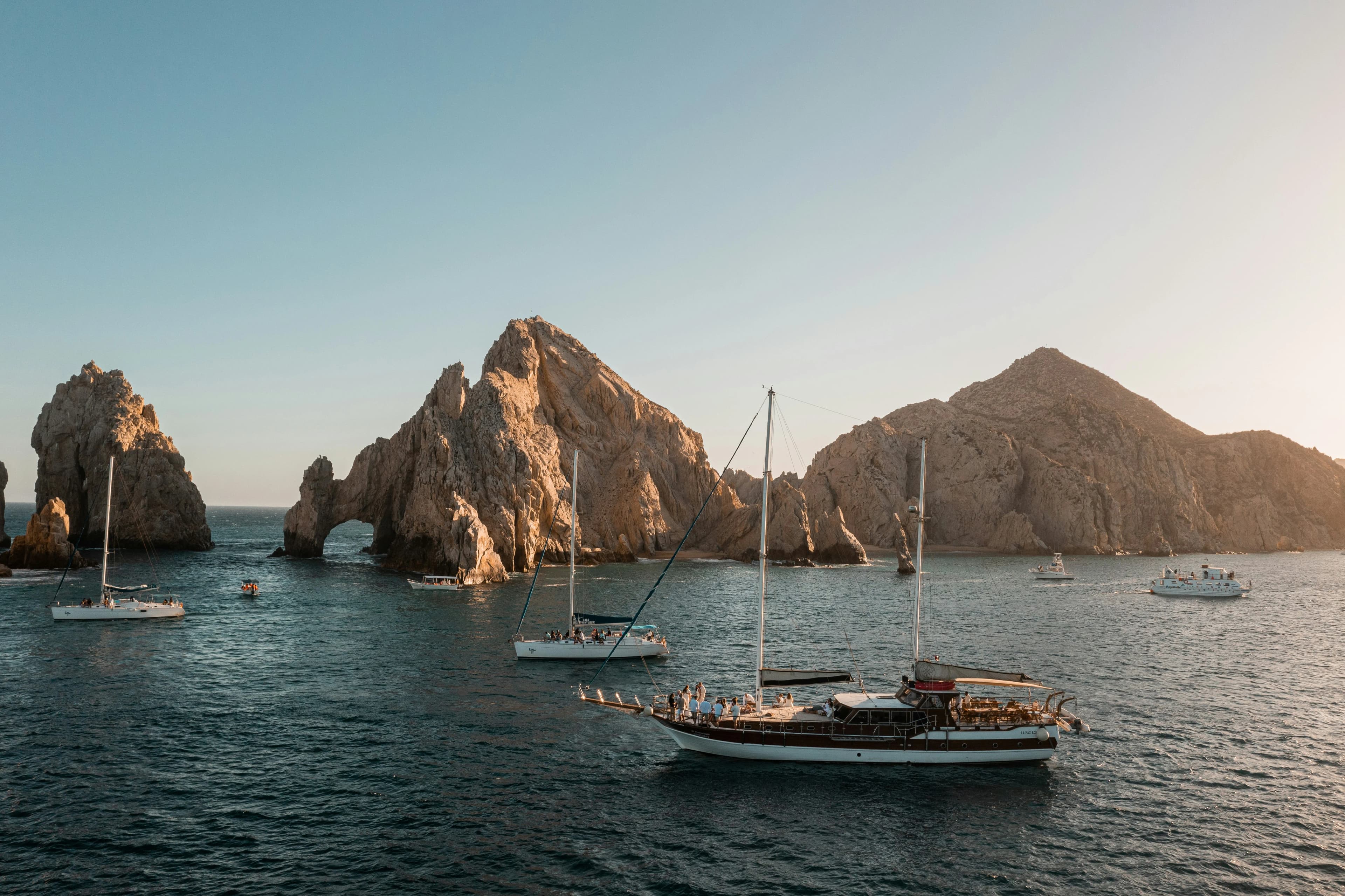
The marina at Cabo San Lucas and the iconic rock formation known as El Arco define the western terminus of the corridor. This end of the destination is more commercially active, with a concentrated dining and nightlife economy around the marina. Luxury hotel properties here are positioned to capture the spectacle of the arco and offer proximity to the marina infrastructure, including yacht charters and sport fishing. Suites facing the sea of Cortez junction carry some of the most cinematically compelling views in the destination.
When to visit Los Cabos for a luxury suite experience
The climate in Los Cabos is arid and predominantly sunny, with over 300 days of sunshine annually. The peak luxury travel season runs from November through April, when temperatures are reliably warm by day and cool at night, and the Pacific swell patterns attract serious surfers to breaks along the Corridor. This period also aligns with the highest suite rates and the greatest competition for preferred inventory at the best properties.
May through June offers a transitional window with reduced occupancy, more available suite options, and lower rates, while still maintaining pleasant conditions. The summer months, July through October, bring elevated humidity, occasional tropical storm activity, and the possibility of hurricane-season disruption. However, this period also coincides with whale shark aggregations in the Sea of Cortez and, later in the season, the arrival of humpback whales beginning their annual migration. Travelers who are flexible and prepared to accept weather variability can find significant value in this window, as well as a markedly quieter destination.
Major fishing tournaments, including the Bisbee's Black and Blue marlin tournament held in October, draw a specific and affluent fishing community and affect suite availability at marina-adjacent properties. Travelers who do not wish to coincide with that demographic would be advised to plan accordingly.
Local luxury standards: what to expect from top-tier suites in Los Cabos
Mexico does not operate a formal national palace hotel classification equivalent to France's Palace designation, but Los Cabos has developed its own coherent luxury register over the past two decades. The leading properties in the corridor typically carry AAA Five Diamond ratings or Forbes Travel Guide recognition, which serve as the most reliable independent benchmarks for service and physical product standards in the North American context.
Suite typologies in Los Cabos tend to be generous in scale, reflecting the large footprints of corridor properties and the premium placed on outdoor living. Plunge pools on private terraces are a near-universal expectation at the suite tier, as are expansive indoor-outdoor configurations that dissolve the boundary between the air-conditioned interior and the desert air. The best suites are essentially small pavilions, with dedicated butler service, direct beach or pool access, and deliberate separation from the main hotel circulation.
Local materials feature prominently in high-quality properties: Cantera stone, reclaimed wood, hand-thrown ceramics, and textiles sourced from Mexican craft traditions. The properties that handle these references most successfully do so with restraint, avoiding the folkloric register in favor of a contemporary interpretation of regional materiality.
How to choose the best luxury suite in Los Cabos
The primary axis of choice in Los Cabos is orientation. Pacific-facing suites offer dramatic surf views and powerful sunset positions but are typically fronted by non-swimmable beaches due to shore break conditions. Sea of Cortez-adjacent properties and those near the Cabo San Lucas marina offer calmer water and a different quality of light, particularly in the mornings. Neither orientation is categorically superior; the preference depends on whether the traveler prioritizes visual drama or physical engagement with the water.
A second consideration is the degree of enclosure. Some travelers seek a suite that functions as a private retreat within a larger resort, benefiting from full hotel infrastructure while maintaining spatial separation. Others prefer a more villa-like configuration, particularly at smaller boutique properties in San José del Cabo, where the relationship to the surrounding neighborhood is more porous and the experience more residential in character.
Practical considerations include the distance from the international airport, which is located closer to San José del Cabo. Properties at the western end of the corridor near Cabo San Lucas involve a transfer of approximately 45 minutes. For travelers arriving late or departing early, suite selection based on proximity to the airport is a legitimate operational variable.
Why curated selection matters in Los Cabos
The Los Cabos market has expanded rapidly over the past decade, and the volume of properties presenting themselves as luxury options has grown considerably ahead of consistent quality. The designation of luxury is applied broadly by the local hospitality market and does not reliably predict the physical or service standard of any given property. A curated selection by La Suite filters this landscape with precision, applying consistent editorial criteria across architecture, suite design, service culture, and the quality of the overall guest experience. For travelers investing meaningful time and resources in a Baja California stay, the difference between a suite that meets expectations and one that redefines them is not a matter of luck. It is a matter of access to the right information.