Best areas to stay in Nayarit for a luxury suite experience
Riviera Nayarit: the coastal corridor
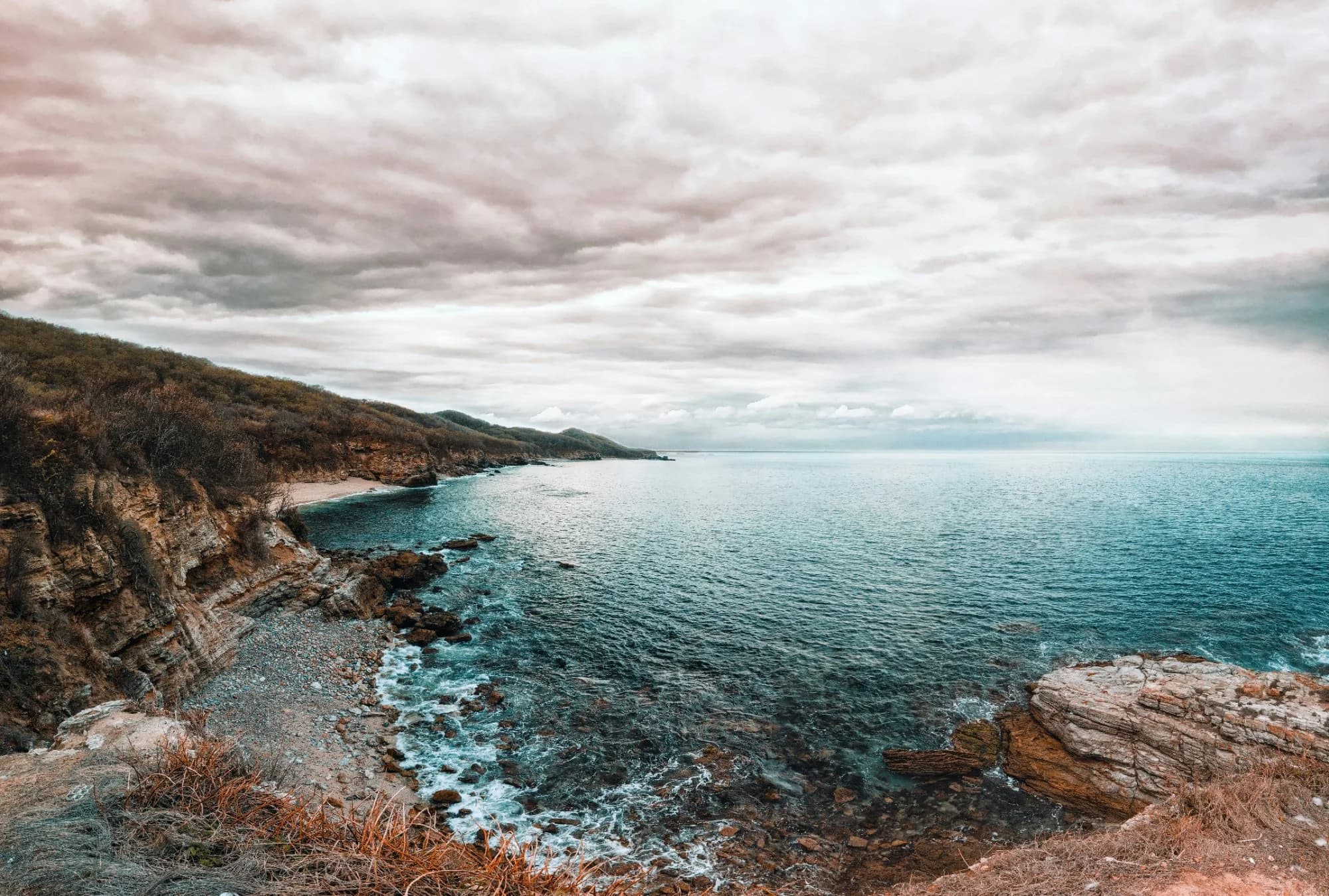
The Riviera Nayarit is the official tourism designation for the coastal strip running from Nuevo Vallarta northward through Punta de Mita and toward San Blas. This corridor contains the highest concentration of high-end hotels in the state. Nuevo Vallarta functions as the gateway, with a marina and a broader resort infrastructure, while Punta de Mita anchors the upper end of the market. The Punta Mita peninsula, a gated residential and resort community, hosts some of the most spatially generous suite offerings on Mexico's Pacific coast, with direct ocean access and golf facilities set against a backdrop of the Marieta Islands.
Sayulita and the pueblo corridor
Moving north along the coast, Sayulita has evolved from a surf village into a design-conscious small town with a distinct creative identity. The surrounding corridor, which includes San Pancho (San Francisco), attracts travelers who prefer smaller-scale boutique properties over grand resort complexes. Suite inventory here is more limited but often more considered in its architectural approach, integrating local stone, open-air volumes, and proximity to pedestrian village life.
Lo de Marcos, Guayabitos, and the quieter north
Further north, the coast becomes progressively quieter. Lo de Marcos and Rincón de Guayabitos attract a more domestic Mexican tourism market, though isolated private retreat properties exist in this area for travelers seeking genuine seclusion. The northern reaches toward San Blas offer a different environmental register entirely: estuary ecosystems, colonial architecture, and a birdwatching culture that draws a specific type of nature-oriented traveler.
When to visit Nayarit for a luxury hotel stay
Nayarit's climate follows a clear seasonal logic that directly affects the quality and character of a suite stay.
The dry season runs from November through May. During this period, temperatures along the coast sit between 24 and 30 degrees Celsius, humidity remains manageable, and rainfall is rare. This is the primary high season for luxury hotel occupancy, with December through April representing peak demand. January and February offer the clearest skies and most consistent Pacific swells for surfing. Humpback whales are observable offshore between December and March, a phenomenon that adds a specific environmental dimension to open-ocean suite terraces.
The wet season, from June through October, brings the tropical rains that sustain the jungle topography. Afternoons can see significant rainfall, but mornings are frequently clear. This period corresponds to reduced rates and lower occupancy at most properties, making it the more accessible entry point for luxury suite stays. Hurricane risk exists from August through October, though direct landfalls on this stretch of coast are less frequent than on the Gulf side. Travelers who understand this trade-off often find the wet season produces a more intimate, less crowded experience of the destination.
The Día de los Muertos period in late October and early November represents a culturally significant moment across Mexico. Nayarit's indigenous Huichol communities maintain their own ceremonial calendar, and certain cultural tourism experiences are available during specific periods for those who seek structured access.
Local luxury standards: what to expect from top suites in Nayarit
Mexico does not operate a national palace hotel classification equivalent to France's Palace designation. The country's hotel classification system uses the Gran Turismo category as its highest formal tier, but in practice the most meaningful signals of quality at the top end are brand affiliation, architectural provenance, and service ratio.
In Nayarit, the highest-performing properties tend to be either international luxury brand hotels operating within gated resort communities, or independent boutique hotels where the owner's architectural vision is the primary differentiator. The former category offers predictable service delivery and amenity depth. The latter often produces a more spatially original suite experience, where local materials, craftsmanship, and site-specific design choices generate a distinct sense of place.
Suite configurations in Nayarit's top properties typically prioritize outdoor living. Plunge pools on private terraces, outdoor showers, and open-air dining areas within suite boundaries are common at the higher price points. Ocean-facing suites on the Punta Mita peninsula are designed with the Pacific horizon as an architectural element. Inland or jungle-adjacent suites, more common in the boutique tier, integrate vertical green landscapes and natural acoustics into the spatial experience.
Service in this region is generally attentive and personal by Mexican hospitality standards, which prioritize warmth and responsiveness. At the top-tier properties, service ratios are high and concierge infrastructure extends to private yacht charters, surf instruction, spa services, and curated access to Huichol artisan communities.
How to choose the best luxury suite in Nayarit
The first decision is environmental orientation. Nayarit's suite market divides broadly between ocean-facing properties with direct Pacific access and jungle or lagoon-adjacent retreats where the sensory experience is more enclosed and ecological. Neither is superior in absolute terms; the choice depends on whether the traveler prioritizes open horizon and water access or shade, privacy, and natural immersion.
The second consideration is community context. Gated resort peninsulas like Punta Mita offer self-contained environments with high amenity density but limited connection to local Mexican life. Boutique properties in or near Sayulita or San Pancho place the traveler within walking distance of restaurants, markets, and street culture. Both models serve a luxury suite stay, but the experiential register differs considerably.
Practical factors include transfer logistics. The nearest major airport is Puerto Vallarta's Licenciado Gustavo Díaz Ordaz International Airport, which sits just south of the Nayarit state line. Properties in Nuevo Vallarta are accessible in under 30 minutes. Punta de Mita requires approximately 45 to 60 minutes, while Sayulita is roughly 45 minutes and San Pancho closer to an hour. For properties further north, ground transfer times extend accordingly, and some travelers opt for private helicopter transfers to minimize transit.
Suite booking lead times in peak season are significant. December and January inventory at the most sought-after properties is typically committed several months in advance, particularly for configurations with private pools or premium ocean positioning.
Why a curated selection by La Suite matters in Nayarit
The Nayarit coast presents a range of hotels that describe themselves with broadly similar language: ocean views, private access, personalized service. The practical variance between properties is substantial, and the gap between a well-marketed resort and a genuinely exceptional suite experience is not always apparent from standard booking channels.
La Suite applies an editorial standard that focuses on spatial quality, architectural integrity, and the actual conditions of a suite stay: terrace depth, view angle, acoustic privacy, bathroom proportion, and the coherence of the service model. In a market where visual presentation on digital platforms has become decoupled from physical reality, this level of selection reduces the decision risk for travelers whose time and expectations are both precisely calibrated.
The curated selection by La Suite for Nayarit identifies the properties where the suite product genuinely justifies the commitment, and presents them with the factual clarity that a discerning traveler requires to make a confident decision.