Casa Antonieta, Oaxaca City
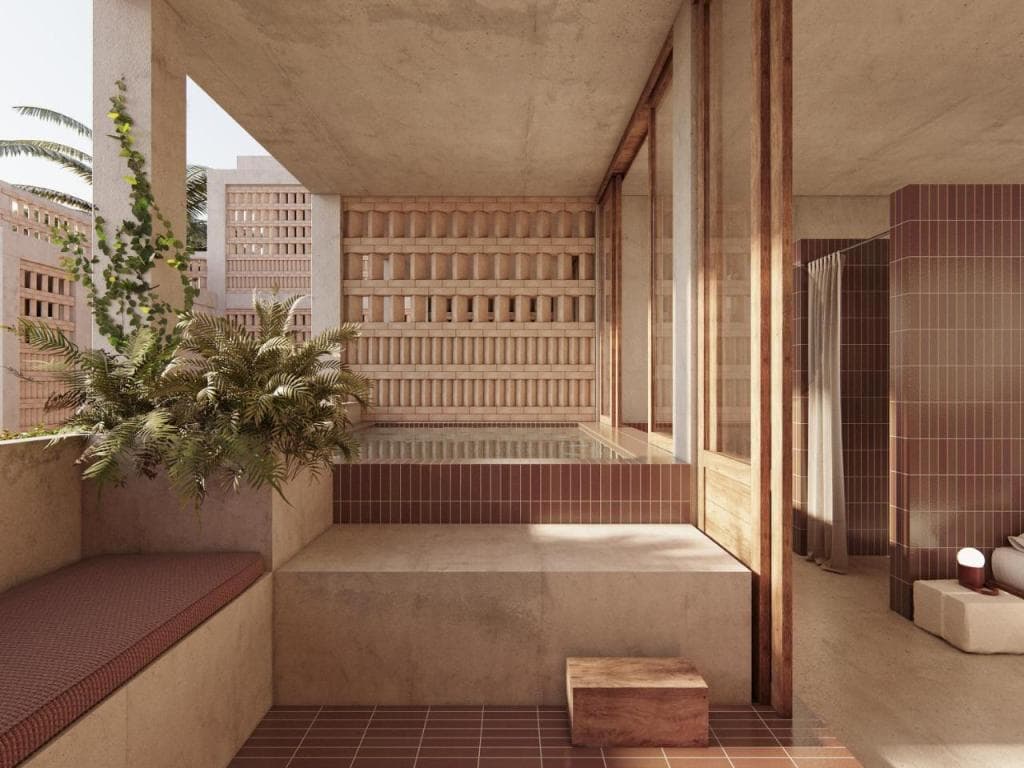
Comfortable Accommodations Casa Antonieta in Oaxaca City offers 4-star comfort with air-conditioning, private bathrooms, and free WiFi. Each room includes a work desk, TV, and private entrance. #

Oaxaca's geography divides naturally into distinct territories, each carrying its own character and its own relationship to stillness and spectacle. Understanding these zones is the first step toward choosing a suite that genuinely fits the trip.
34 hotels available

Comfortable Accommodations Casa Antonieta in Oaxaca City offers 4-star comfort with air-conditioning, private bathrooms, and free WiFi. Each room includes a work desk, TV, and private entrance. #

Comfortable Accommodations Casa de Adobe Gallery & Luxury Boutique in Oaxaca City offers four-star comfort with air-conditioned rooms featuring private bathrooms, balconies, and garden or pool views.

Prime Beachfront Location Casa Joseph Zicatela - Adults Only in Puerto Escondido offers direct beachfront access with stunning sea views. Zicatela Beach lies just yards away, providing easy beachf

Elegant Accommodations Casa Juliana in Paso Hondo offers a 5-star hotel experience with a year-round outdoor swimming pool and free WiFi. Guests enjoy air-conditioning, private bathrooms with free toi

Comfortable Accommodations Casa Levonka in Oaxaca City offers adults-only rooms with air-conditioning, private bathrooms, and modern amenities. Each room includes a mini-bar, TV, and free WiFi, ensuri

Beachfront Location Casa Lu Hotel Boutique in Mazunte offers direct access to a private beach area and beachfront. Guests enjoy stunning sea views and a swimming pool with a view. Comfortable Accommod

Comfortable Accommodations Casa TO - Adults Only in Puerto Escondido offers air-conditioned rooms with private bathrooms, terraces, and patios. Each room includes a hairdryer and free WiFi, ensuri

Elegant Accommodations Casa Xaviera in Puerto Escondido offers a 5-star hotel experience with free WiFi, air-conditioning, and private bathrooms. Each room features a kitchenette, dining table, and mo

Beachfront Location Casa Yati in Santa María Tonameca offers a private beach area and direct beachfront access. Guests enjoy sea views and a serene setting with Playa La Ventanilla just yards away. Ex

Facing the beachfront, Casona Sforza offers 4-star accommodations in Puerto Escondido and has an outdoor swimming pool, garden and private beach area. The property features a bar, as well as a restaur

Elegant Accommodations El Callejón Hotel Boutique in Oaxaca City offers luxurious rooms with air-conditioning, private bathrooms, and modern amenities. Guests enjoy garden or inner courtyard views, ba

Elegant Accommodations Ennea Hotel - Adults Only in Puerto Escondido offers a 5-star experience with adults-only access. Guests enjoy sea views, balconies, and terraces. Exceptional Facilities

Elegant Accommodations Flavia Hotel in Oaxaca City offers a 5-star experience with a swimming pool with a view, fitness center, garden, terrace, restaurant, bar, and free WiFi. Comfortable Ame

Exceptional Facilities Grand Fiesta Americana Oaxaca in Oaxaca City offers spa facilities, a fitness center, terrace, restaurant, bar, indoor swimming pool, and free WiFi. Additional amenities inc

Elegant Accommodations Hotel Boutique Pikiliki in Brisas de Zicatela offers a 5-star experience with an adults-only policy. Guests enjoy a lush garden, terrace, and a year-round outdoor swimming pool.

Elegant Accommodations Hotel Compartir in Brisas de Zicatela offers a 5-star experience with a terrace, year-round outdoor swimming pool, and free WiFi. Guests enjoy air-conditioning, private bathroom

Hotel Escondido Oaxaca, a Member of Design Hotels is attractively set in Oaxaca City, and has a garden, free WiFi and a restaurant. This 5-star hotel offers a 24-hour front desk and a concierge servic

Elegant Accommodations Hotel Humano in Brisas de Zicatela offers 5-star comfort with air-conditioned rooms featuring private bathrooms and sea views. Each room includes a terrace or balcony, ensur

Offering an outdoor swimming pool and a restaurant, Hotel Parador de Alcalá is located in Oaxaca de Juárez, 2 minutes’ walk from Contemporary Art Museum and from Santo Domingo Church. The rooms here w

Elegant Accommodations Hotel Sin Nombre in Oaxaca City offers adults-only rooms with air-conditioning, private bathrooms, and city views. Each room includes bathrobes, free toiletries, and a mini-bar.
Oaxaca City, the state capital, is a UNESCO World Heritage Site. Its grid of colonial streets, built largely from the distinctive green quarry stone known as cantera verde, contains some of the region's most architecturally coherent properties. Suites here tend to occupy converted colonial mansions, where interior courtyards, stone archways, and high ceilings define the spatial experience. Proximity to the Zócalo, the Templo de Santo Domingo, and the city's established gallery district makes the centre the natural choice for travelers whose priorities are cultural immersion and walkability.
The Central Valleys surrounding the city offer a markedly different register. Properties here are often set within agricultural land, amid agave fields and ancient zapotec villages. The scale is horizontal, the pace slower, and the connection to landscape more immediate. Stays in the valleys suit travelers drawn to the production of mezcal, traditional textile weaving in towns such as Teotitlán del Valle, and the ruins of Mitla and Monte Albán, which sit within reach of a morning excursion.
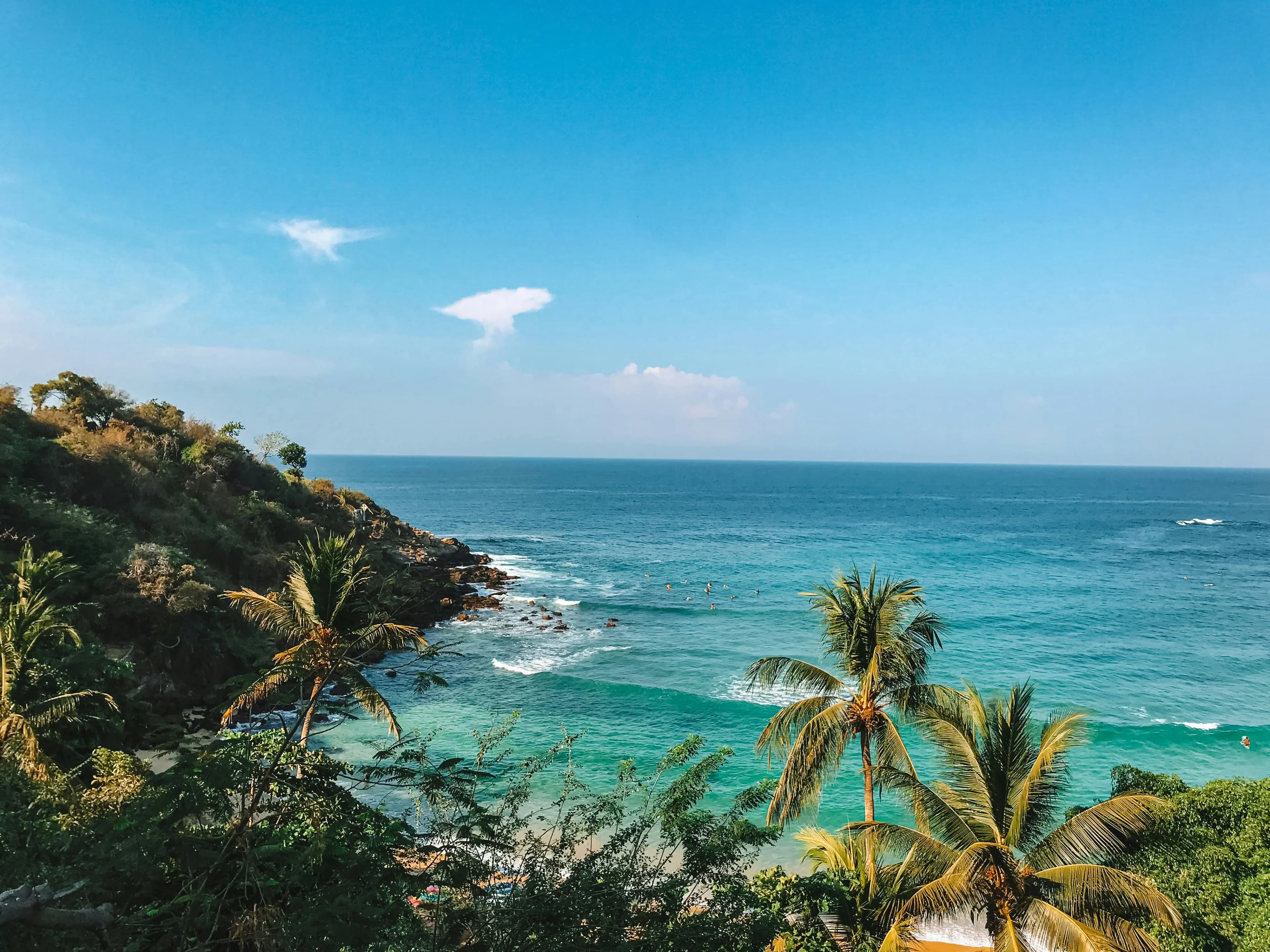
While administratively part of the state, the Pacific coastline, centred on the Bays of Huatulco and the fishing village of Puerto Escondido, operates as a separate travel proposition. Suites here are defined by their relationship to the ocean rather than to colonial heritage. Architectural priorities shift: outdoor terraces, natural ventilation, and proximity to surf breaks or protected bays become the relevant criteria. The drive between the coast and the city crosses the Sierra Sur mountain range, a journey of several hours that effectively treats the two zones as separate destinations.
Oaxaca's climate is temperate for a tropical latitude, sitting at an elevation of approximately 1,550 metres above sea level. Temperatures in the city remain moderate throughout the year, rarely exceeding 30 degrees Celsius. This elevation advantage distinguishes the capital from the more humid conditions of the coast.
The dry season, running from October through April, is broadly considered the optimal period for travel. Skies are clear, roads are accessible, and the valley landscape is at its most composed. November brings Día de Muertos, one of the most culturally significant and visually distinctive celebrations in the Mexican calendar. Oaxaca's version of this observance, centred on the cemeteries of Xoxocotlán and Atzompa, draws substantial international attention. Suite inventory during this period compresses sharply, and advance planning of several months is standard for properties of genuine quality.
July brings the Guelaguetza, a festival of indigenous dance and music from the region's various ethnic communities. It is one of the oldest indigenous cultural festivals in the Americas and occupies the city's hillside amphitheatre for two consecutive Mondays. This period also falls within the rainy season, when afternoon showers are predictable but rarely disruptive to the morning hours. Travelers who prioritise cultural programming over weather certainty often regard July as the most interesting month in the city's calendar.
Mexico does not operate a formal Palace classification equivalent to France's system. Quality in the luxury segment here is instead communicated through the language of craft, provenance, and spatial generosity. In Oaxaca specifically, the most credible properties tend to share a set of recognisable attributes.
Architecture is almost always the primary credential. Colonial-era buildings that have been restored with attention to original materials, proportion, and light carry a different weight than new-build properties. The quality of stone, the depth of interior courtyards, and the calibration of natural light through thick walls are the structural markers that distinguish the serious from the merely expensive.
Craft integration is a second register of quality. Oaxaca is one of Mexico's most productive states for artisanal goods: black clay pottery from San Bartolo Coyotepec, hand-loomed textiles from the Zapotec tradition, and carved alebrijes from Arrazola. Properties that incorporate these objects with editorial intelligence, rather than as decorative gesture, signal a deeper alignment with the region's cultural economy.
Food and mezcal programs have become a legitimate quality indicator in Oaxacan hospitality. The region's cuisine, built on mole negro, tlayudas, tasajo, and the use of indigenous corn varieties, is recognised internationally as one of Mexico's most complex culinary traditions. A hotel kitchen that works directly with local producers and markets earns a different credibility than one that gestures toward regional ingredients.
The first practical question is architectural preference. Colonial properties in the city centre offer spatial grandeur and cultural density but may sacrifice certain forms of outdoor privacy. Valley properties offer land, silence, and agricultural context at the cost of distance from the city's galleries, restaurants, and markets. Coast properties require the acceptance of a separate itinerary entirely.
The second consideration is the purpose of the stay. Oaxaca rewards travelers who arrive with a degree of cultural curiosity. A suite positioned near the city's Santo Domingo cultural corridor or within reach of a working mezcal distillery in the villages of Matatlan or Yutanduchi will yield a qualitatively different trip than one chosen primarily for pool access and retreat.
Suite scale in Oaxaca's historic buildings is often defined by volume rather than footprint. High ceilings, deep walls, and central courtyard views can make a suite feel architecturally expansive even when its square meterage is modest by international resort standards. Travelers accustomed to contemporary resort suites should calibrate expectations accordingly and read spatial descriptions with care.
Private terraces and rooftop access are disproportionately valuable in the city centre, where views over the colonial roofscape and toward the surrounding mountains constitute a genuine spatial amenity.
Oaxaca's luxury accommodation market is relatively small and not uniformly legible from the outside. A number of properties present themselves at high price points without delivering the architectural or cultural coherence that the destination demands. The category of boutique hotel here spans a wide range of genuine quality, and the signals that distinguish a considered property from a casual one are often architectural and curatorial rather than immediately visible through standard booking interfaces.
La Suite applies a consistent editorial framework to this market: spatial quality, craft integration, cultural alignment, and the capacity to support a genuinely immersive experience of the destination. In a region where the most interesting stays are often the least loudly marketed, curation is not a convenience. It is the mechanism by which the right suite becomes findable.

The historic city centre offers the most architecturally coherent luxury suite options, housed in restored colonial buildings with interior courtyards and proximity to major cultural sites. Travelers seeking more seclusion and landscape connection may prefer properties in the Central Valleys, which sit within easy reach of Monte Albán and traditional artisan villages.
Día de Muertos in Oaxaca falls on November 1 and 2, and the surrounding days represent the single highest-demand period for quality suite availability in the state. Bookings at reputable properties typically need to be secured four to six months in advance. Waiting until the autumn to book significantly limits the options at the upper end of the market.
In Oaxaca, the most meaningful differentiators in the luxury segment are architectural: ceiling height, original colonial stonework, courtyard access, and the quality of restoration. Top-tier suites also tend to integrate locally made objects, textiles, and ceramics with editorial intention rather than as generic decoration. Room size alone is less reliable as a quality signal than spatial composition and craft calibration.
Yes, the two offer fundamentally different spatial and experiential propositions. City suites in the colonial centre are characterised by stone architecture, urban cultural access, and interior volume. Coastal properties near Huatulco or Puerto Escondido prioritise ocean proximity, outdoor terraces, and a more resort-oriented spatial logic. The Sierra Sur mountain range between the two zones makes combining them in a single short trip logistically demanding.
The two anchor events for culturally motivated travelers are the Guelaguetza festival in July, which showcases indigenous dance and music from across the state's ethnic communities, and Día de Muertos in late October and early November. Both periods compress suite availability considerably. Travelers interested in the mezcal harvest and production cycle may also find the late summer and autumn months in the Central Valleys particularly compelling.
The dry season from October through April offers the most predictable conditions for travel in the city and valleys, with clear skies and accessible roads. The rainy season from May through September brings afternoon showers that are generally brief, and July remains one of the most culturally active months due to the Guelaguetza. The city's elevation of approximately 1,550 metres keeps temperatures moderate in all seasons, making it a viable destination throughout the year.
Priority criteria include the quality of the architectural restoration, the presence of a private terrace or rooftop with views over the colonial roofscape, and the calibration of natural light through the building's original thick-walled structure. Suite footprint can be relatively modest in colonial properties, so spatial volume measured by ceiling height and courtyard access is often a more accurate indicator of the experience than square meterage alone.
Oaxaca's culinary tradition is one of the most regionally specific in Mexico, built on mole negro, indigenous corn varieties, artisanal mezcal, and a network of local producers and markets. Properties that integrate this tradition through serious kitchen programs, direct producer relationships, and access to mezcal distilleries in the surrounding villages add a genuine layer of cultural depth to the stay. A hotel's food and drinks program is a credible quality signal in this particular destination.
Oaxaca City offers architectural density, cultural programming, restaurant access, and walkability within a UNESCO-listed colonial grid. The Central Valleys, by contrast, offer agricultural landscape, silence, proximity to archaeological sites such as Monte Albán and Mitla, and direct access to villages where traditional textile and pottery production is still active. The choice depends on whether the priority is urban cultural engagement or a more grounded, landscape-oriented form of immersion.
Oaxaca's luxury accommodation market presents significant variance in quality at similar price points, and the properties with the most considered architectural and cultural credentials are often the least prominently marketed through standard channels. La Suite applies an editorial framework focused on spatial quality, craft integration, and cultural alignment, making it possible to identify the genuinely exceptional options in a market where the surface signals can be misleading.