The distinct areas of Playa del Carmen for suite travelers
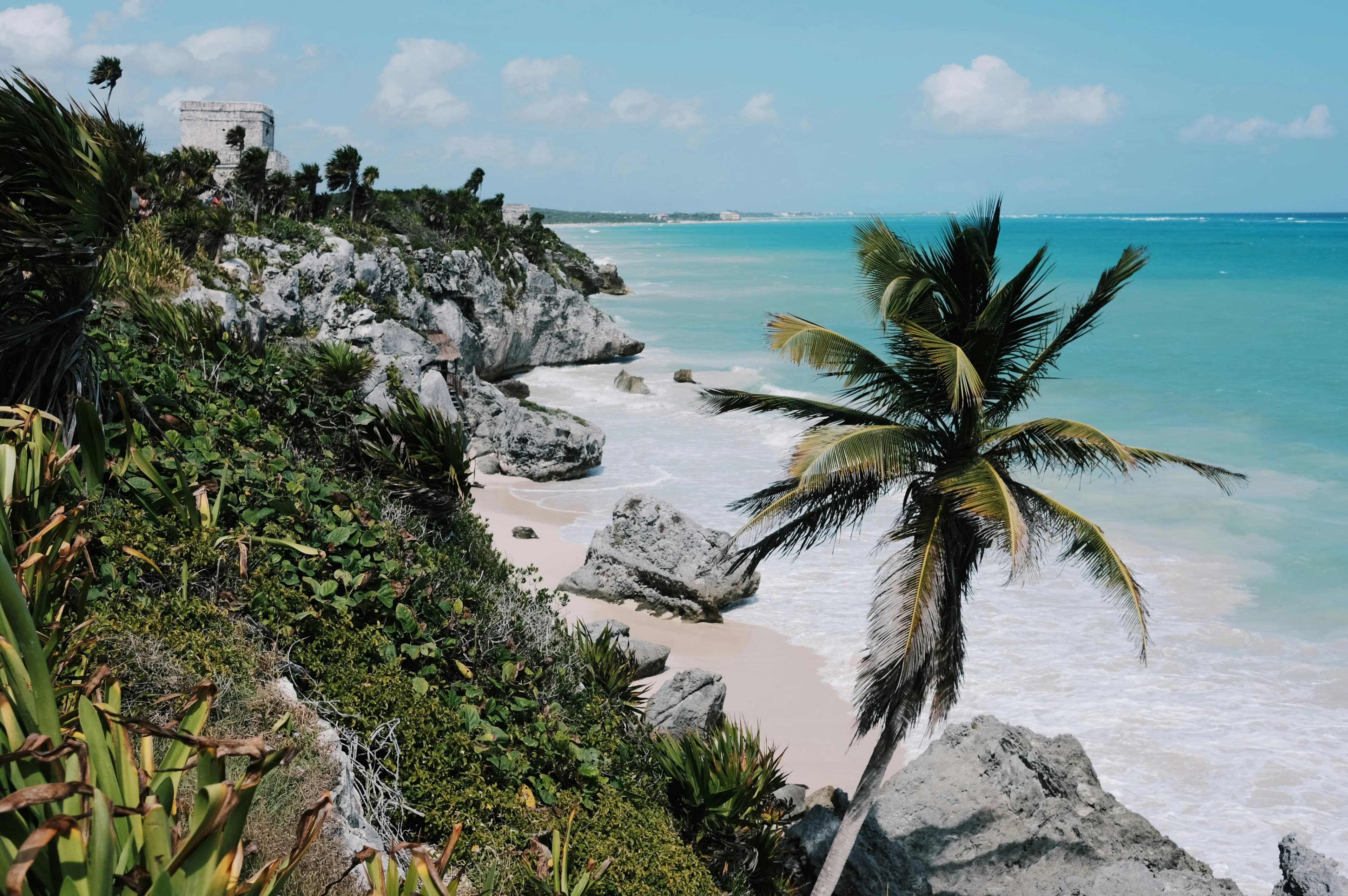
The northern zones, beyond the central tourist corridor, tend to accommodate properties with larger plot sizes, more generous suite footprints, and direct access to quieter sections of beach. The architectural language in these areas gravitates toward low-rise, reef-adjacent design, with natural materials and open-plan configurations that respond to the tropical climate rather than fight it.
The central zone, closest to Quinta Avenida, is more commercial in density but offers the advantage of proximity to the town's restaurant culture, contemporary art spaces, and evening activity. Suites in this zone often prioritize vertical design and rooftop orientation over beachfront access.
To the south, toward the Playacar residential district, the environment shifts toward gated planning, golf adjacency, and a quieter residential scale. Properties here serve travelers who prefer privacy and controlled access over proximity to the town's social infrastructure.
When to visit Playa del Carmen for a suite stay
The Yucatan Peninsula operates on two dominant seasonal registers. The dry season runs from late November through April, offering consistent sun, lower humidity, and the most predictable conditions for beach-oriented stays. This is the period when suite availability tightens and rates reflect demand. Advance planning is essential for premium inventory during the December to January holiday window and the spring break period in March.
The wet season, from May through October, brings afternoon rainfall and elevated humidity. However, experienced travelers recognize this period for its relative calm: lower occupancy, more attentive service ratios, and the particular quality of light that the Caribbean produces after rainfall. Hurricane risk is statistically concentrated between August and October, which requires practical consideration when booking, though properties of genuine quality maintain operational protocols and structural resilience that mitigate most concerns.
The shoulder months of May and November represent the clearest value opportunity for suite travelers: conditions remain favorable, the social environment is more contained, and room-to-service ratios at top properties are at their most generous.
Local luxury standards: what defines a top-tier suite in this region
Mexico does not operate a nationally standardized luxury classification system equivalent to France's Palace designation. Quality signals must therefore be read through other indicators. The most reliable markers in the Playa del Carmen context are architectural specificity, spatial design decisions, and service model.
Properties that have invested in locally sourced stone, palapa-influenced roofing executed with precision, and suite layouts that create genuine acoustic and visual privacy are operating at a different level from those that apply a generic resort formula. The quality of a private plunge pool, specifically its integration into the suite's architecture rather than its presence as an add-on feature, is a meaningful differentiator.
Service culture in the top tier of this market is notably direct and personal. The best properties in Playa del Carmen maintain low suite-to-staff ratios and operate butler-style concierge functions that extend beyond the standard front desk model. Anticipatory service, where preferences are noted and applied without prompting, is the standard against which serious properties are measured.
Access to the reef is another quality marker unique to this coastal geography. Playa del Carmen sits adjacent to the Mesoamerican Barrier Reef, the second largest reef system in the world. Properties that facilitate structured marine experiences, whether through on-site dive operations or vetted external partnerships, are leveraging a genuine environmental asset rather than offering generic excursion menus.
How to choose the right luxury suite in Playa del Carmen
The decision framework for a suite in Playa del Carmen requires clarity on a few specific axes that are particular to this destination.
Beachfront access is the primary spatial question. The distinction between a suite with a view of the water and a suite with direct, private access to the sand is significant and often under-communicated in standard listings. The latter requires a specific property configuration that not all sites along this stretch can deliver.
Architecture type matters more here than in many destinations. The choice between a contemporary concrete and glass property, a more traditional palapa and natural stone construction, and a hybrid boutique format will shape the sensory experience of the stay in a fundamental way. Neither approach is superior in absolute terms, but alignment with personal aesthetic preference is worth deliberate consideration.
Adults-only versus family-oriented properties represents a meaningful structural distinction in Playa del Carmen's market. The town has historically attracted both segments, and the suite inventory reflects that split. Travelers seeking acoustic privacy and a specific social register should confirm the property's occupancy profile before committing.
Suite size benchmarks in this market vary considerably. Entry-level junior suites in credible properties typically start around 55 square meters. Signature or penthouse suites in the upper tier can reach 200 square meters or more, with private terraces that function as independent outdoor living spaces.
The value of curation in a destination with uneven quality signals
Playa del Carmen presents a particular curation challenge. The destination's growth over the past two decades has produced a market with significant quality variation, where surface-level indicators such as visual marketing, price point, and generic review aggregates do not reliably predict the quality of the actual suite experience.
The properties that consistently deliver at the level that serious suite travelers expect share a set of characteristics that require direct knowledge to identify: genuine architectural investment, a service philosophy that extends to the suite itself rather than stopping at common areas, and a physical location that delivers on the spatial promises made in marketing materials.
La Suite applies a curatorial standard to this market that filters for those specific qualities. The selection prioritizes properties where the suite is the primary design intention of the building, not an afterthought category within a larger resort operation. For travelers who approach accommodation as an intrinsic component of the travel experience rather than a logistical requirement, that distinction is the relevant one.