AC Hotel by Marriott Veracruz, Boca del Río
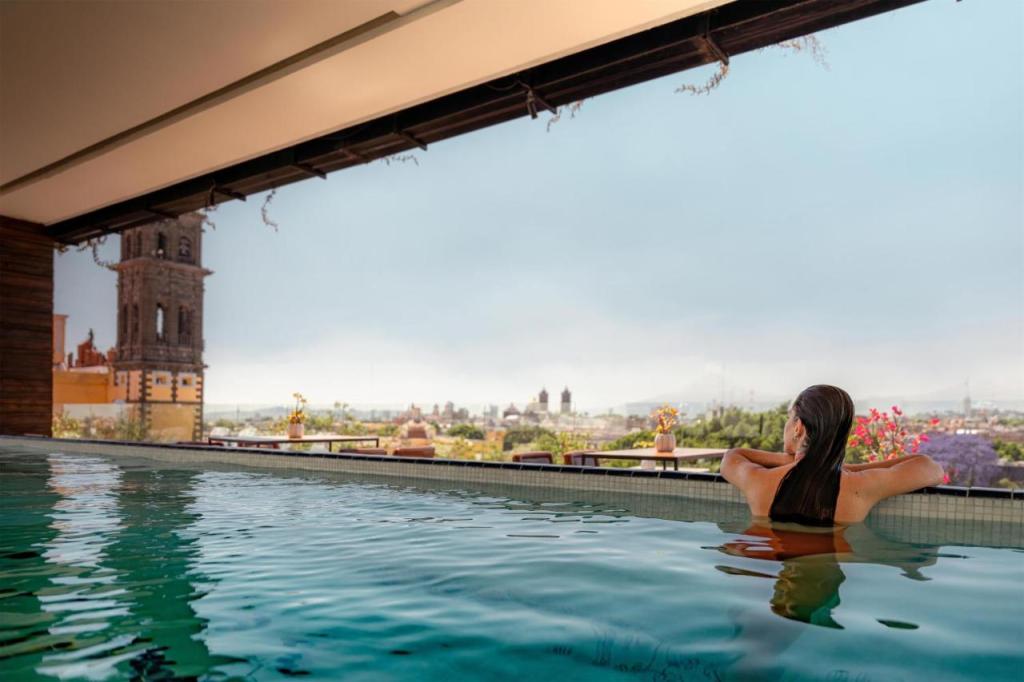
Located in Boca del Río, AC Hotel by Marriott Veracruz features an outdoor swimming pool and terrace. This 4-star hotel offers a restaurant. The hotel features an indoor pool and a 24-hour front desk.

Veracruz is not a single experience but a sequence of very different landscapes and cultural registers, each demanding a different approach to accommodation. The port city itself, known formally as Heroica Veracruz, is dense, atmospheric, and historically charged. The zócalo is one of the most active public squares in Mexico, and the neighborhoods surrounding it contain colonial architecture of genuine weight. A luxury hotel suite here places you at the intersection of maritime history and contemporary Mexican urban life.
9 hotels available

Located in Boca del Río, AC Hotel by Marriott Veracruz features an outdoor swimming pool and terrace. This 4-star hotel offers a restaurant. The hotel features an indoor pool and a 24-hour front desk.

Elegant Accommodations Banyan Tree Puebla in Puebla offers luxurious rooms with air-conditioning, private bathrooms, and city views. Each room includes a mini-bar, TV, and free WiFi, ensuring a co

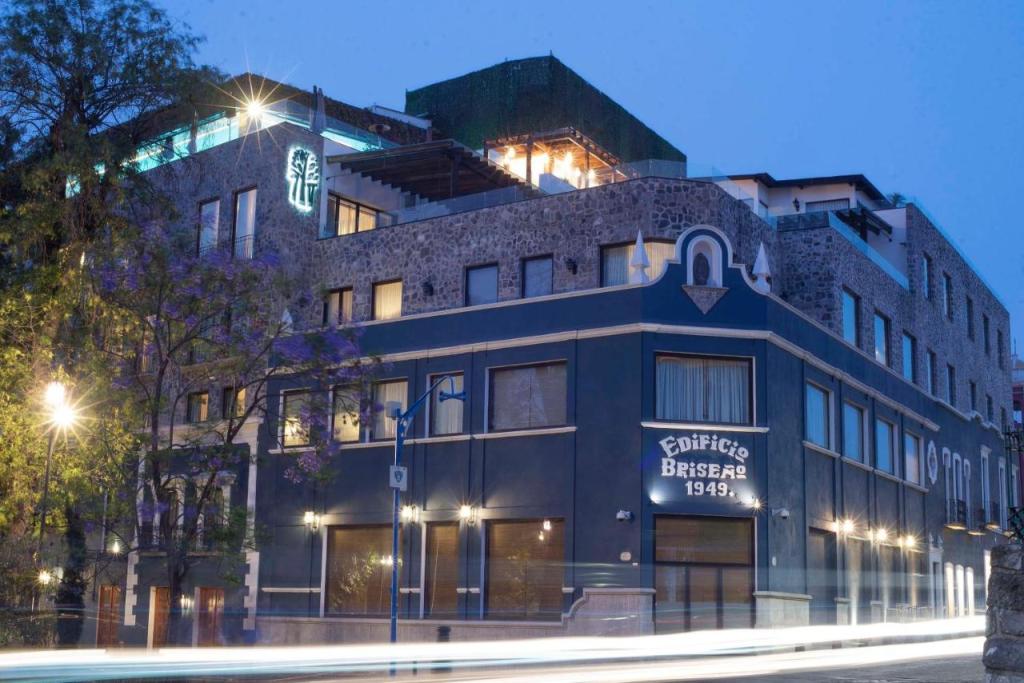
Casona de los Sapos Hotel Boutique is located in the town center of Puebla, 6.8 mi from Cholula. The hotel has a sun terrace and views of the city, and guests can enjoy a meal at the restaurant. Ever

Located in a select area of Boca del Río, this luxurious hotel offers relaxing spa services and enjoyable on-site facilities, such as 2 gourmet restaurants, just minutes from the convention center. Ro

Elegant Accommodations Hacienda Santo Cristo Hotel & Spa in Atlixco offers luxurious rooms with private bathrooms, air-conditioning, and modern amenities. Each room features a terrace or balcony with

Elegant Accommodations Hotel Boutique Casona de la China Poblana in Puebla offers a 5-star experience with adults-only access. Guests enjoy private check-in and check-out, a 24-hour front desk, and da

Prime Location L Hotel Perla Boutique in Puebla offers a central position with Hermanos Serdán International Airport 16 mi away. Guests enjoy easy access to key attractions such as the Cathedral and Z

Elegant Accommodations Molino de los Reyes in Totolac offers a 5-star hotel experience with spa facilities, a sun terrace, and a lush garden. Guests enjoy free WiFi, a restaurant, and a bar, ensuring

Located in the heart of Puebla’s Historic Center —declared a Cultural Heritage Site by UNESCO, Quinta Real Puebla invites you to enjoy a unique experience in a former 17th-century convent, carefully r
Moving inland, the state of Veracruz rises dramatically through tropical lowlands into the Sierra Madre Oriental, passing through coffee-growing highlands around Coatepec and Xalapa. Xalapa, the state capital, is a university city with a temperate climate, a serious fine arts museum, and a cultural density that surprises most first-time visitors. The surrounding region produces some of Mexico's most respected arabica coffee, and staying in this highland zone offers an entirely different sensory experience from the coast.
Further south, the Los Tuxtlas region introduces a landscape of volcanic lakes, cloud forest, and pre-Columbian Olmec heritage centered on Santiago Tuxtlas and San Andrés Tuxtla. This area rewards travelers with a serious interest in archaeology, ecology, and the deep roots of Mesoamerican civilization. Accommodation options here tend toward the intimate and naturalistic rather than the grand resort format.
The timing of a visit to Veracruz has a direct effect on both comfort and cultural access. The port city's Carnival, held in February or March depending on the liturgical calendar, is one of the largest and oldest in Latin America, drawing on African and Caribbean influences that are largely absent from Mexico's interior festivals. It is a genuinely distinctive event, but it compresses demand for quality accommodation significantly.
The dry season, running roughly from November through April, represents the most reliable period for coastal stays. Humidity drops, the Gulf is calmer, and temperatures in the port city sit at a manageable level. The highlands around Xalapa and Coatepec remain temperate year-round, with the coffee harvest occurring between October and February, offering an additional layer of experiential interest for travelers who approach food and agriculture as part of their itinerary.
The rainy season, from May through October, brings intense afternoon precipitation across the state and occasional tropical weather systems in the Gulf. Properties with well-designed interior spaces and strong culinary programs become significantly more valuable during this period, as the focus shifts from outdoor activity to interior comfort.
Mexico does not operate a formal national classification equivalent to the French Palace designation, but the country's luxury hospitality landscape has developed its own internal hierarchy. At the upper level, properties affiliated with international groups or operating under boutique luxury models tend to define the standard. In Veracruz specifically, the luxury offer is less concentrated than in Los Cabos or Mexico City, which means the finest suites here tend to be found in architecturally restored colonial properties or in design-forward boutique hotels rather than large international resort complexes.
The colonial buildings of the port city, constructed in coral stone and volcanic rock, offer a particular architectural character that contemporary design cannot replicate. Suites occupying these structures typically feature high ceilings, thick walls that provide natural thermal regulation, and courtyard orientations that create genuine privacy in an otherwise dense urban fabric. In the highlands, the aesthetic shifts toward hacienda-scale properties, where coffee plantations and forested grounds provide a different kind of spatial generosity.
Culinary standards in Veracruz deserve specific attention. The regional cuisine is considered among the most complex in Mexico, incorporating Spanish, African, indigenous, and Caribbean elements. A top-tier suite in this region should connect you to that tradition through in-room dining programs, partnerships with local producers, and access to markets and cooking experiences that go beyond the generic hotel restaurant offer.
The first decision is geographic: coastal or inland. The port city and its immediate surroundings offer urban density, historical texture, and direct access to the Gulf. The highlands offer cooler temperatures, exceptional coffee culture, and a pace that is genuinely restorative. The Los Tuxtlas region adds archaeological and ecological depth. These are not interchangeable experiences, and the right choice depends on what you are actually seeking from the trip.
Architectural character is a second meaningful variable. Colonial restoration projects in the port city carry historical resonance but may involve ambient noise from surrounding urban activity. Purpose-built luxury properties on the Gulf coast offer more controlled environments, typically with direct water access and larger suite footprints. Hacienda-scale properties in the coffee highlands provide the greatest spatial privacy and the most distinct sense of regional identity.
Practical considerations include transport logistics, as Veracruz state is large and internal distances are significant. The port city is served by General Heriberto Jara International Airport with connections to Mexico City and several domestic hubs. If your itinerary includes the highlands and the Tuxtlas region, ground transport planning becomes an essential part of the experience design. A suite with strong concierge infrastructure is not an amenity in this context; it is a functional requirement.
Veracruz does not have the saturated luxury infrastructure of Mexico's most marketed resort destinations. That relative scarcity means the distance between the right property and the wrong one is larger than in places where the entire market has been refined by decades of high-end tourism investment. The properties that genuinely meet the standard for a discerning traveler are fewer in number, more varied in character, and less immediately visible through conventional search and booking channels.
La Suite applies a consistent editorial standard across every property in its selection, evaluating suite quality, spatial design, culinary offer, service architecture, and the degree to which each property connects meaningfully to its specific location in Veracruz. The result is a curated selection that removes the research burden and delivers only the properties that hold up under serious scrutiny. For a destination as layered and geographically varied as Veracruz, that curation is the difference between a trip that reveals the region and one that merely passes through it.

Veracruz occupies the Gulf of Mexico rather than the Pacific or Caribbean coasts, which gives it a distinct climatic character, a denser historical identity rooted in colonial and African-influenced culture, and a regional cuisine that is among the most complex in Mexico. It attracts travelers interested in depth and specificity rather than resort standardization. The luxury offer here is more selective and architecturally distinctive than in Mexico's more heavily marketed beach destinations.
The dry season from November through April is generally considered the most comfortable period for coastal stays, with lower humidity and calmer Gulf conditions. The coffee-growing highlands around Xalapa and Coatepec are temperate year-round, with harvest season between October and February adding cultural interest. February Carnival is a significant cultural event but compresses availability at quality properties, requiring advance planning.
Yes. The port city contains a number of restored colonial buildings constructed from local coral stone and volcanic rock, some of which have been converted into boutique hotels with suite-level accommodation. These properties typically feature high ceilings, thick walls with natural thermal properties, and courtyard layouts that provide privacy within the urban fabric. They represent a materially different experience from international resort-format hotels.
Veracruz cuisine is a direct product of the region's history as a major colonial port, incorporating Spanish, African, indigenous, and Caribbean elements into a tradition that is recognized as one of the most sophisticated in Mexico. Top-tier properties in the region tend to integrate this through refined in-room dining programs, access to local fish and seafood markets, and curated connections to coffee producers and artisanal food networks in the highlands.
The highland zone around Xalapa and Coatepec contains former coffee haciendas, some of which operate as boutique luxury properties. These typically offer generous land, forested grounds, and a quiet that is structurally absent from the port city. Suite formats in these properties tend toward large private rooms with garden or mountain views, integrated spa facilities, and a material identity rooted in local wood, stone, and craft.
Veracruz can work well for families with a specific interest in culture, history, and nature, provided the itinerary is carefully designed. The port city, the Olmec archaeological sites of Los Tuxtlas, the cloud forests of the Sierra de Los Tuxtlas, and the coffee highlands each offer distinct educational and experiential content. Properties with larger suite configurations or connecting room options, combined with strong concierge support for logistics, are the practical requirement for family travel at this level.
General Heriberto Jara International Airport in Veracruz city handles domestic flights with connections primarily through Mexico City. Travelers from the United States typically route through Mexico City, Houston, or Miami depending on their origin. From the United Kingdom, the standard approach involves a transatlantic flight to Mexico City followed by a domestic connection. Travel time from Mexico City to Veracruz city is approximately one hour by air or four to five hours by road.
Veracruz city offers urban proximity, colonial architecture, and direct access to the Gulf waterfront, with a cultural and gastronomic density that suits travelers who engage actively with their environment. Los Tuxtlas, by contrast, is a largely rural region of volcanic lakes, tropical forest, and Olmec heritage sites, where accommodation tends toward intimate, nature-integrated properties. The suite experience in Los Tuxtlas is defined by spatial isolation and ecological immersion rather than urban access.
The key variables are geographic position (coastal versus highland versus forest), architectural character (colonial restoration versus purpose-built versus hacienda conversion), suite footprint and privacy, culinary program quality, and the property's connection to local culture and producers. Concierge infrastructure is particularly important in Veracruz given the state's geographic scale and the complexity of designing a multi-zone itinerary that connects the coast, the highlands, and the archaeological interior.
Standard booking platforms aggregate inventory without editorial filter, making it difficult to identify the small number of properties in Veracruz that genuinely meet a high standard for suite quality, spatial design, and experiential depth. La Suite applies a consistent curatorial framework across every property in its selection, which is particularly valuable in a destination where the luxury offer is selective and the gap between adequate and exceptional is significant. The curated selection by La Suite reflects direct evaluation rather than algorithmic ranking.