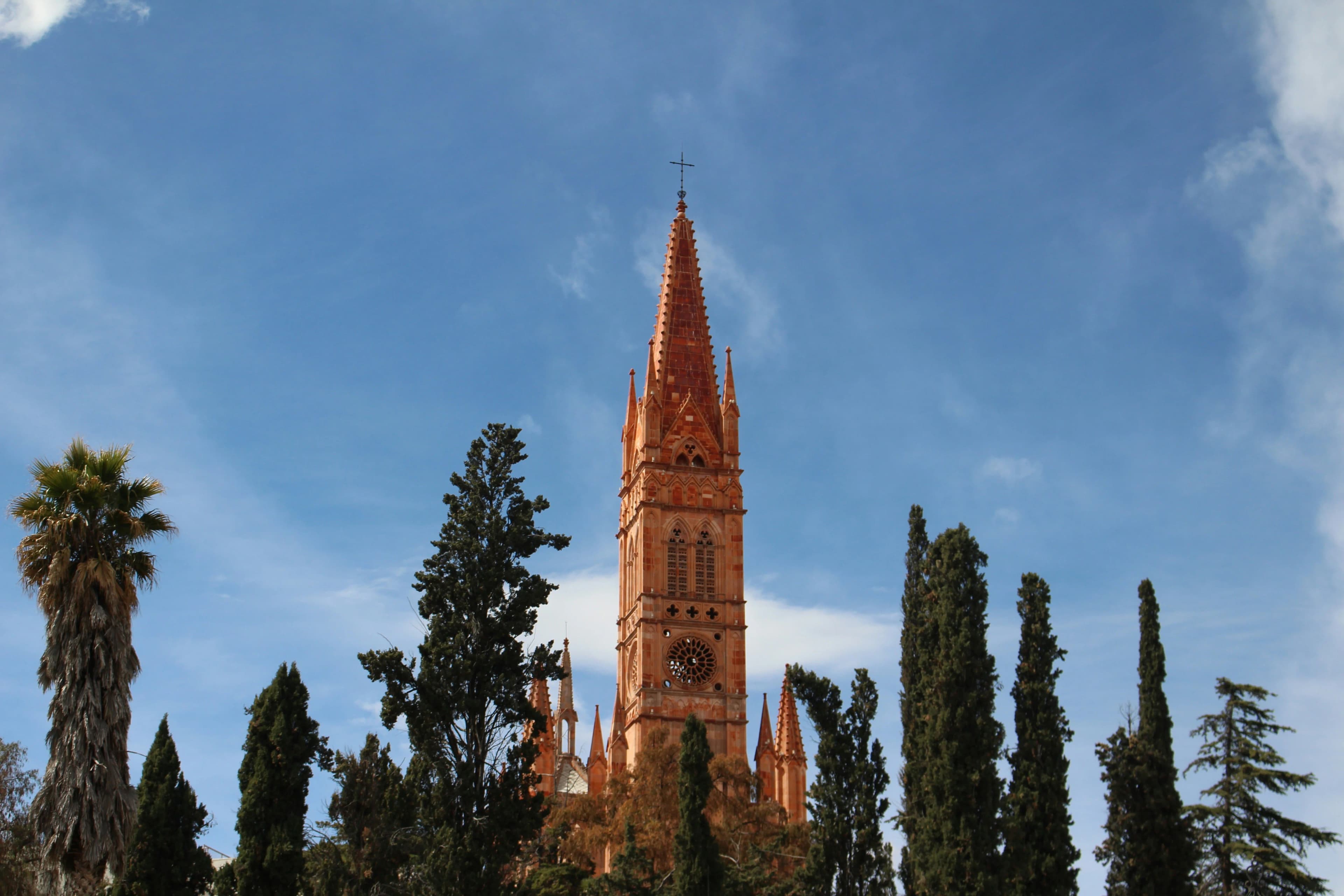
Where to stay in Zacatecas: understanding the territory
Beyond the centre, the surrounding state of Zacatecas offers a quieter counterpoint: haciendas set into semi-arid landscapes, ranching estates, and vineyards clustered in the Valparaíso and Ojo Caliente corridors. For travellers seeking privacy and space alongside cultural access, a property positioned on the outskirts of the city or in the broader highlands can offer a compelling alternative to purely urban accommodation.
When to visit Zacatecas for a luxury stay
The climate of Zacatecas is determined by its altitude rather than its latitude. Temperatures are mild year-round, rarely exceeding 25°C in summer and dropping to single digits on winter nights. This makes the city comfortable for cultural immersion across most of the calendar, without the oppressive heat that affects lower-altitude Mexican destinations.
The most significant cultural event in Zacatecas is the Feria Nacional de Zacatecas, held annually in early September. Running for approximately three weeks, it draws visitors from across Mexico and the wider region, combining bullfighting, regional music, agricultural exhibitions, and civic processions. Hotel availability tightens considerably during this period, and advance planning is essential for securing the better properties.
Semana Santa (Holy Week) is another high-demand period, characterised by processions through the colonial streets and a particular atmospheric intensity. For travellers prioritising privacy and reflective pace, the quieter months of February, March, October, and November offer the best balance of pleasant weather and reduced visitor density.
Local luxury standards: what to expect from top properties in Zacatecas
Zacatecas does not operate on the resort model that defines luxury in coastal Mexico. The prestige here is architectural and historical. The most respected properties occupy former colonial mansions, ecclesiastical buildings, or mining-era palaces, and their distinction derives from the quality of their restoration and the coherence of their design decisions rather than from square footage or amenity density.
Rooms and suites in heritage conversions typically feature thick stone walls, vaulted ceilings, hand-painted tiles, and interior courtyards. The thermal mass of cantera stone keeps interiors cool during the day and warm at night, a passive architectural quality that has practical value at altitude. Expect considered material choices: local ironwork, hand-woven textiles from the broader Zacatecan artisan tradition, and furniture scaled to high-ceilinged spaces.
The hacienda typology is also present in the region. These working or former ranching estates offer a different register of luxury: expansive grounds, equestrian facilities in some cases, and a spatial generosity that is absent in the urban core. The hacienda aesthetic prioritises land, silence, and a certain productive heritage rather than ornamental refinement.
Dining and cultural depth
Zacatecas has a distinct culinary identity rooted in the central highlands tradition. Asado de boda, a slow-cooked pork preparation with dried chillies, is the signature dish of the region and appears at formal occasions as well as at family tables. Birria, caldillo, and enchiladas zacatecanas round out a repertoire that is serious and regionally specific. Properties with in-house dining at the higher end of the market will typically engage with this local culinary language, often sourcing from regional producers in the surrounding agricultural valleys.
How to choose the right luxury suite in Zacatecas
The first decision is between the urban heritage experience and the hacienda or countryside alternative. These represent genuinely different trip architectures, not just different accommodation types.
Within the historic centre, prioritise properties that have approached restoration with material integrity. Heritage conversions where the colonial fabric has been preserved rather than cosmetically overlaid offer a more coherent and durable experience. Look for suites that open onto interior courtyards or that offer direct views of significant architectural landmarks. The verticality of the city, with its hillside streets and elevated viewpoints, means that upper-floor suites can command perspectives that are qualitatively different from ground-level rooms.
For hacienda properties, assess the quality and continuity of the surrounding landscape. The semi-arid terrain of Zacatecas has its own rigorous beauty, and a well-positioned hacienda suite that frames this landscape deliberately is worth prioritising over a property that simply occupies rural land without engaging with its visual context.
Practical considerations specific to Zacatecas include altitude adjustment, which some travellers require a day to manage, and the limited late-night service infrastructure compared to Mexico City or beach destinations. The city rewards an unhurried pace, and suites designed with generous seating, private terraces, and reading areas are particularly well suited to the tempo of this destination.
Why a curated selection by La Suite matters in Zacatecas
Zacatecas is not a destination that generates the volume of international press coverage applied to Los Cabos, Mexico City, or the Riviera Maya. This relative quietness is, for many travellers, precisely the point. But it also means that the information landscape is thinner, and distinguishing between a genuinely exceptional heritage property and a merely adequate colonial hotel requires closer attention than in more heavily documented destinations.
La Suite applies a consistent editorial standard to every property in its selection. In the context of Zacatecas, this means evaluating not only the quality of materials and spatial design within the suites themselves, but also the property's relationship to the city's architectural heritage, the coherence of its service model, and the degree to which it enables rather than mediates the traveller's connection to the destination. The curated selection by La Suite is built for travellers who regard a hotel suite as a considered spatial choice rather than a logistical necessity.