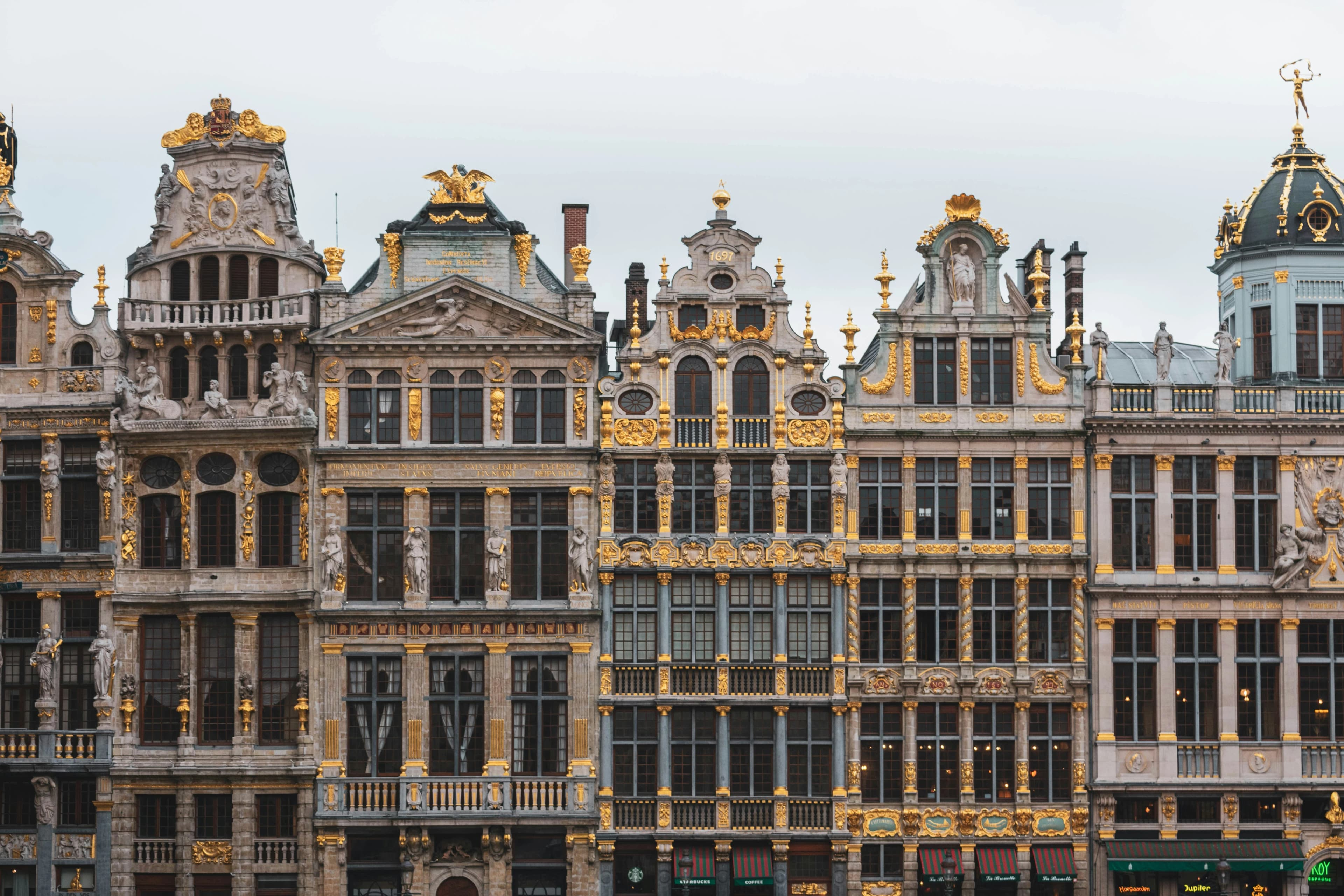
Saint-Géry and the broader context of luxury suite travel in Brussels
Understanding Saint-Géry requires placing it within the wider geography of Belgium's capital. The district sits within the Pentagon, the historic core defined by the inner ring road. To the north lies the Grand-Place; to the west, the Dansaert fashion corridor; to the south, the Marché aux Poissons and the lower town. This position makes Saint-Géry one of the most connected neighbourhoods in Brussels on foot, which matters enormously when evaluating suite locations.
Best areas to stay near Saint-Géry
The Dansaert axis
The Rue Antoine Dansaert, which borders Saint-Géry to the west, has been the reference address for Belgian fashion and design since the 1980s. Staying in a suite within walking distance of this street places guests in the orbit of the country's most significant contemporary designers. The architecture here is predominantly nineteenth-century commercial, with high ceilings and cast-iron facades that reward deliberate observation.
The lower town and the historic centre
The area immediately surrounding Saint-Géry, extending toward the Grand-Place and the Bourse, concentrates the civic architecture that defines Brussels internationally. Suites in this zone offer a particular kind of urban experience: the streets are narrow, the scale is human, and the transition between medieval lane and art nouveau facade can happen within a single city block. For design-literate travelers, this spatial compression is part of the appeal.
The upper town and the Sablon
A short walk uphill from Saint-Géry, the Sablon quarter operates at a different register entirely. Antique dealers, fine chocolate shops, and the Gothic church of Notre-Dame du Sablon define a neighbourhood that has maintained its commercial identity for centuries. Luxury hotel suites in this area tend toward the formal and the established, suited to guests whose priorities include proximity to the art market and the Musées Royaux des Beaux-Arts.
When to visit Saint-Géry and Brussels
Brussels has no single dominant season for luxury travel. The city functions as a European capital year-round, with institutional rhythms tied to the European Union and NATO calendars. That said, certain periods reward the suite traveler more than others.
Spring, from March through May, brings mild temperatures and the full bloom of the Parc du Cinquantenaire and the Royal Greenhouses at Laeken, which open to the public for a limited period each year. This is also when Brussels Design September begins its preliminary programming. Autumn, from September through November, is arguably the most productive period for cultural visitors: museum schedules are full, the design and fashion calendar is active, and hotel rates have not yet reached their December peak.
The Brussels Jazz Weekend in late May and the Brussels Summer Festival in August animate the public squares, including the area immediately around Saint-Géry. The Ommegang pageant, held at the Grand-Place in July, is one of the oldest civic ceremonies in northern Europe and draws a sophisticated international audience. Suite availability during these periods requires advance planning, particularly for larger accommodations with terrace access or city views.
Local luxury standards: what to expect from top-tier suites in Brussels
Belgium does not have a formal equivalent to the French Palace designation, which is awarded by Atout France to a small number of properties meeting strict criteria for architecture, service, and heritage. Brussels operates instead within the Benelux hotel classification system, where five-star status is the primary marker of quality. However, classification tells only part of the story.
The most distinguished hotel suites in Brussels are often found in properties that have converted significant historical buildings: former banks, aristocratic townhouses, and post-industrial spaces. These conversions tend to preserve original architectural details while introducing contemporary interiors, a combination that produces spaces with genuine character rather than generic luxury finishes. Ceiling height is a reliable indicator of quality in this context: the finest suites in the Saint-Géry area frequently occupy upper floors of nineteenth-century buildings where proportions are generous and natural light enters from multiple orientations.
Service standards in Brussels's best hotels reflect the city's position as an international diplomatic and institutional centre. Discretion, multilingual capability, and logistical competence are baseline expectations. Guests arriving for European Council meetings or international business have shaped a hotel culture that prioritises efficiency alongside comfort.
How to choose the best luxury suite in Saint-Géry and its surroundings
Several factors distinguish a well-chosen suite in this neighbourhood from a simply expensive room. The first is orientation. Saint-Géry's street grid is irregular, and the difference between a suite facing a canal arm and one facing a service alley is significant. Requesting specific floor plans or view confirmations before booking is standard practice at this level.
The second consideration is architectural period. Brussels contains exceptional examples of art nouveau, art deco, and contemporary Belgian architecture, and suites within each typology offer a different sensory experience. A suite in a Horta-era building will have organic ornament, coloured glass, and spatial sequences that unfold rather than open immediately. A suite in a converted industrial property will have exposed structure, generous volumes, and a different relationship to light. Neither is inherently superior; the choice depends on what kind of spatial experience the traveler is seeking.
The third factor is proximity to specific amenities. Saint-Géry is walkable to the Grand-Place, the Bourse, the Dansaert fashion district, and the canal. For guests whose itinerary centres on these points, a suite in this quarter reduces transit time and increases the spontaneity that characterises the best urban travel.
The value of curation in Brussels suite selection
Brussels presents a particular challenge for the independent researcher: the city's hotel offer is substantial, but the signal-to-noise ratio is low. A search for luxury suites in the Saint-Géry area will surface properties ranging from genuinely exceptional to superficially marketed, with little in the results to distinguish between them.
La Suite's curation process addresses this directly. Each property in the selection has been assessed against consistent criteria: architectural integrity, suite proportions, service quality, and the coherence of the overall experience. For a neighbourhood like Saint-Géry, where the best accommodation is often housed in converted or repurposed buildings with histories worth understanding, this contextual layer matters as much as the room specification itself.
Travelers who have explored La Suite's curated selections in other Belgian cities, or across Europe more broadly, will recognise the editorial approach: precise, factual, and oriented toward the traveler who treats the choice of suite as an extension of taste rather than a logistical decision. The curated selection by La Suite for Saint-Géry and the wider Brussels area reflects that same standard.