Hilton Brussels Grand Place, Brussels
In the heart of the historic city center of Brussels, right in front of Brussels Central Station, Hilton Brussels Grand Place is ideally located between the Grand Place and the Square Meeting & Conven

L'Îlot Sacré, which translates literally as "the sacred isle," occupies the historic center of Brussels. Its boundaries are loosely defined by the pedestrian streets radiating from the Grand-Place, including the Rue des Bouchers, the Petite Rue des Bouchers, and the Galeries Royales Saint-Hubert. The quarter is compact by design: it was shaped over centuries by the organic growth of a medieval mercantile city, not by Haussmannian planning. That compression is both its character and its constraint. Hotels operating within or immediately adjacent to this perimeter tend to occupy renovated 18th or 19th century structures, which means suites here are defined by heritage proportions rather than contemporary open-plan formats.
7 hotels available

In the heart of the historic city center of Brussels, right in front of Brussels Central Station, Hilton Brussels Grand Place is ideally located between the Grand Place and the Square Meeting & Conven

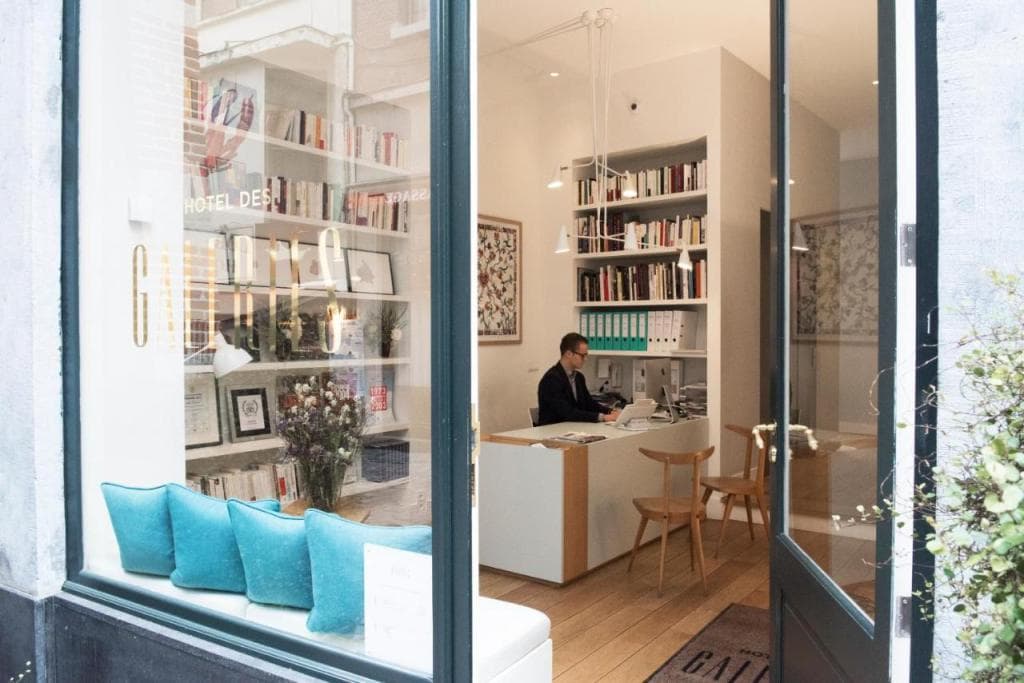
Enjoying a central location in the historical heart of Brussels, within a 2-minute walk from Grand Place and Manneken Pis, Hotel des Galeries offers modernly designed rooms, free WiFi access. All the

Comfortable Accommodations Hotel Fleur de Ville in Brussels offers 4-star comfort with air-conditioning, private bathrooms, and modern amenities. Each room includes a tea and coffee maker, mini-ba

Quiet elegance in the heart of Brussels, just a 2-minute walk from the Grand Place. Set in a historic townhouse, Hotel Le Dixseptième offers a rare combination of space, character and tranquility in t

This hotel is located 2 minutes from Grand Place and Central Station. Restaurants and shops surround the hotel and the Bourse metro station is a short walk away. Free WiFi is available throughout the

Comfortable Accommodations OPO Hotel in Brussels offers spacious rooms with private bathrooms featuring walk-in showers, free toiletries, and bathrobes. Each room includes air-conditioning, a work des

Newly-renovated and featuring a sleek, contemporary design, Radisson Collection Grand Place Brussels offers accommodations in the heart of Brussels. The property is only a 5-minute walk from Grand Pla

173 km away
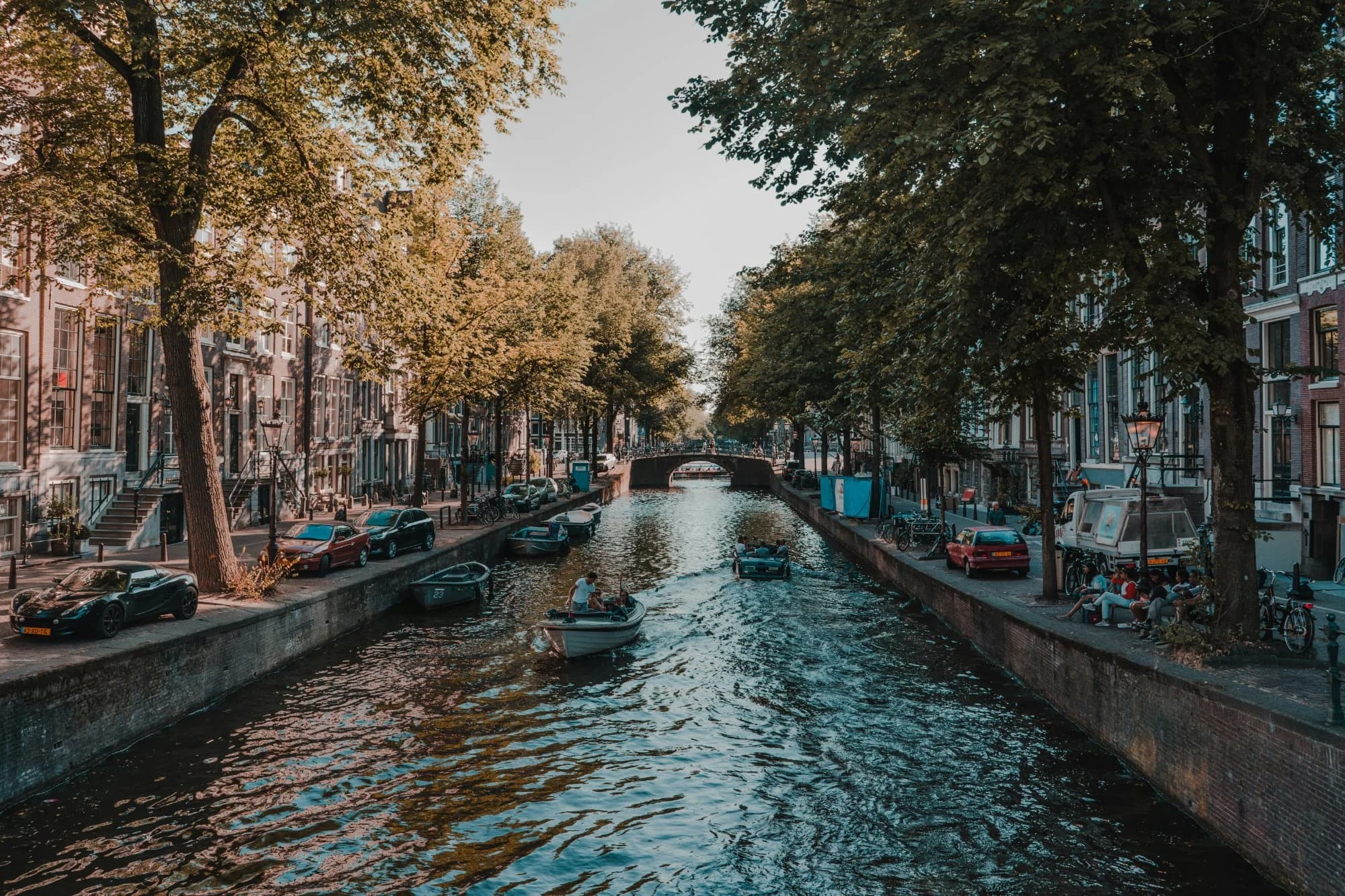
Centrum is not simply the geographic centre of Amsterdam. It is the city's original urban fabric, and its physical coherence is unlike almost any other European capital district. The canal ring at its core, inscribed as a UNESCO World Heritage Site, was engineered in the early 17th century as a deliberate act of urban planning. The result is a neighbourhood where every street, bridge, and gabled facade participates in a singular visual logic. A luxury hotel suite positioned within this framework offers something that no peripheral address can replicate: genuine immersion in the city's architectural identity.

Grachtengordel translates literally as "canal girdle": a semicircular belt of four principal canals, the Herengracht, Keizersgracht, Prinsengracht, and Jordaan-adjacent waterways, constructed during Amsterdam's Golden Age in the early 17th century. The district was planned with deliberate social hierarchy. The Herengracht, meaning Gentlemen's Canal, attracted the wealthiest merchant families, whose double-fronted houses with ornate gables set the architectural standard for the entire ring. Today, that hierarchy persists in a different register: the Herengracht corridor remains the address of choice for diplomats, institutional foundations, and the most considered hotels in Amsterdam.

174 km away
Le Jordaan sits in the western canal ring of Amsterdam, bounded by the Prinsengracht to the east and the Singelgracht to the west. Historically a working-class district of artisans and merchants, it has undergone a long and deliberate transformation into one of the most sought-after addresses in the Netherlands. Today, it is characterized by independent design shops, gallery-dense streets, and a low-rise streetscape that gives it an intimacy absent from more commercial parts of the city.
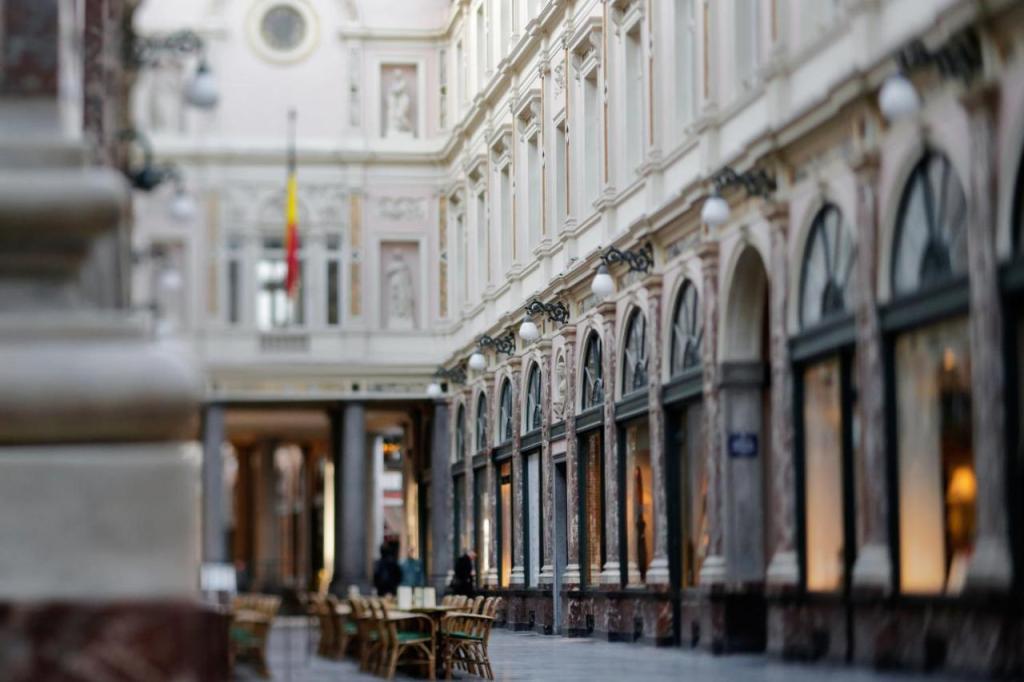
The Galeries Royales Saint-Hubert, completed in 1847, were among the first covered shopping arcades in Europe. Hotels positioned closest to this axis benefit from the most refined pedestrian environment in the neighborhood. The arcade's barrel-vaulted glass ceiling filters light in a way that is particular to 19th century iron-and-glass architecture. A suite with views over or adjacent to this structure occupies genuinely rare urban real estate.
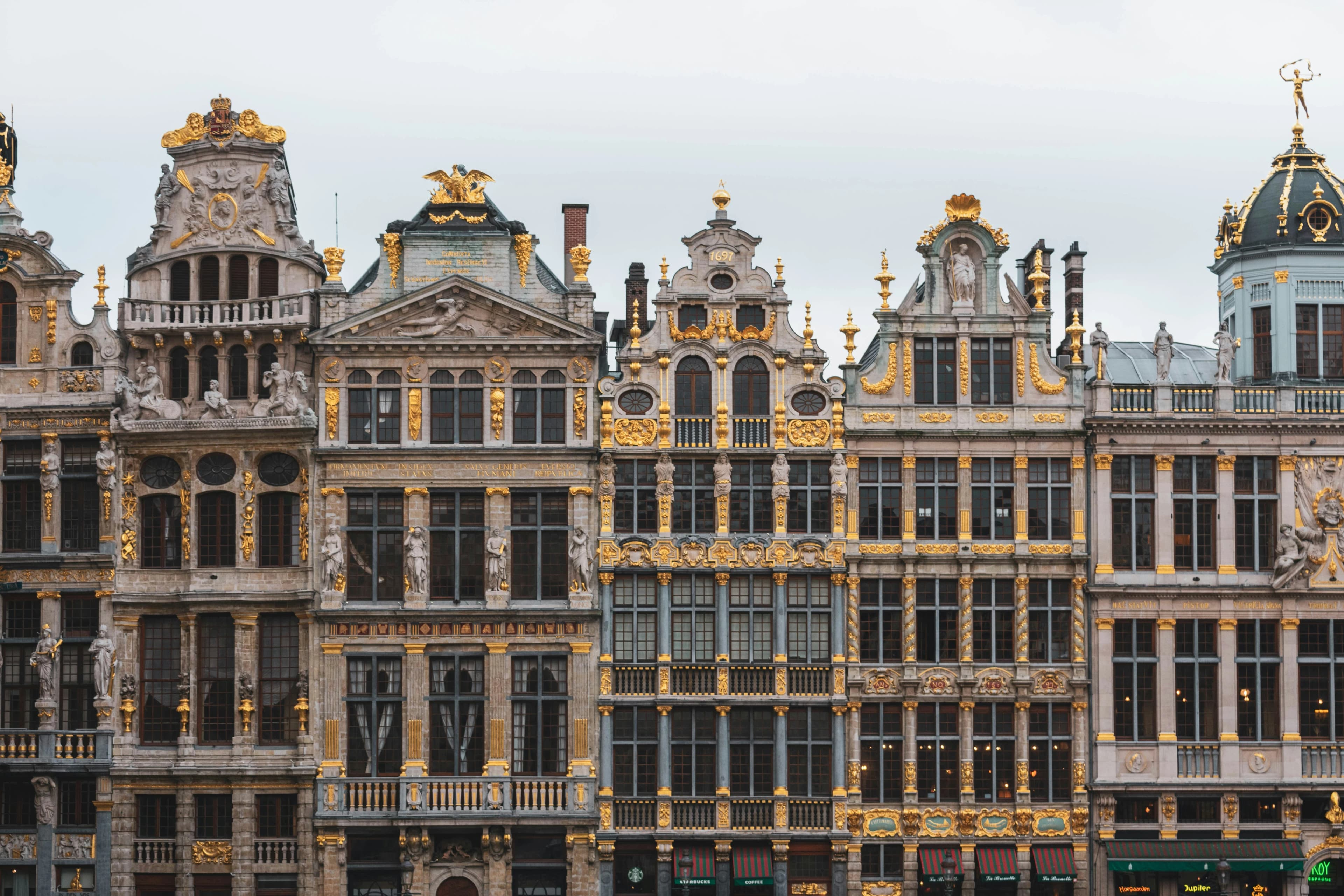
The Grand-Place itself is a UNESCO World Heritage Site, its baroque guild houses dating from the late 17th century reconstruction following French bombardment in 1695. Suites with direct or angled views of the square are among the most sought-after in the entire city. The acoustic and visual experience shifts dramatically between early morning, before tourist circulation begins, and the afternoon. Guests staying in a luxury hotel suite in this immediate orbit experience the square at its most intimate during the hours when most visitors have not yet arrived.
The Rue des Bouchers and its parallel lanes form the gastronomic corridor of the quarter. The density of restaurants here is exceptional. For suite travelers, this proximity means access to moules-frites, Belgian endive preparations, and the city's traditional brasserie culture within a two-minute walk. The trade-off is that this corridor is among the busiest pedestrian streets in Brussels, particularly between 18:00 and 22:00. Suites positioned slightly off this axis offer a more calibrated balance of access and quiet.
Brussels operates on a year-round calendar for the luxury traveler, but the quarter's character shifts meaningfully by season. Spring (April to June) brings moderate temperatures, lower tourist density than summer, and the full programme of cultural institutions including the Palais des Beaux-Arts (BOZAR) and the opera season at La Monnaie. Summer sees the Grand-Place at maximum occupation, which diminishes the contemplative quality of the space. September and October represent the most considered window: the cultural season has reopened, the light is architectural rather than harsh, and hotel availability is typically stronger than in peak summer. December brings the Brussels Christmas Market, which centres on the Grand-Place and the Place Sainte-Catherine nearby. The market draws significant crowds but also transforms the square's atmosphere in a way that is specific to northern European winter traditions. Suite rates during this period tend to reflect high demand.
Belgium does not operate a formal national palace classification equivalent to France's "Palace" label, administered by Atout France. Belgian luxury hotels are rated under the Benelux hotel classification system, with five stars representing the highest official tier. Within Brussels, the distinction between a standard five-star property and a hotel operating at genuine luxury suite level is best assessed through the quality of the suite's spatial configuration, its service protocol, and its architectural coherence with the building's heritage character.
In L'Îlot Sacré specifically, the most credible luxury hotel suites will typically feature: original architectural detailing preserved or restored rather than concealed, proportions that reflect the 18th or 19th century room structures of the building, and a level of material finish (stone, hardwood, bespoke millwork) that communicates investment in the physical space rather than in decorative surface only. Brussels has a strong tradition of Art Nouveau, though the quarter's architecture predates the Art Nouveau period. Guests drawn to that aesthetic should note that the primary Art Nouveau landmarks (Horta Museum, Hotel Tassel) are located in the Ixelles and Saint-Gilles districts, not in the historic center.
The tension in this neighborhood is between buildings that are genuinely old and interiors that have been modernized at varying levels of integrity. A suite that preserves original ceiling heights, plasterwork, and fenestration while integrating contemporary bathroom standards and technology infrastructure represents the highest category of execution. Suites where the historic shell has been entirely gutted and replaced with a generic luxury hotel interior represent a lower tier, regardless of the brand name attached.
L'Îlot Sacré is a pedestrian zone but not a silent one. Suites on upper floors or those oriented toward interior courtyards will offer meaningfully better acoustic conditions than ground or first-floor rooms facing the main tourist streets. Natural light in this quarter is also affected by the density of the urban fabric: streets are narrow and buildings tall, which means suites on higher floors receive substantially more light than those below. These are not trivial considerations for a multi-night stay.
The quarter is served by the Brussels metro at the Bourse and Gare Centrale stations, and the Eurostar terminal at Gare du Midi is accessible in under twenty minutes by taxi or metro. For travelers combining Brussels with other European cities, this connectivity is a practical advantage of basing oneself in the historic center rather than in the more peripheral luxury hotel corridors near the EU institutions in the Ixelles district.
L'Îlot Sacré is small enough that the number of genuinely credible luxury suite options is limited. The neighborhood's appeal is specific: it rewards travelers who understand what they are looking for and can distinguish between a suite that uses the word "historic" as a marketing descriptor and one where the historic fabric is actually present and intact. La Suite's curation process applies exactly that level of scrutiny. Rather than aggregating every property within a geographic boundary, the platform identifies the suites that meet a defined standard of spatial quality, material integrity, and service architecture. In a district where the wrong choice means a constrained room in a building that has compromised its heritage for commercial throughput, that distinction is consequential. The curated selection by La Suite removes the research burden and replaces it with a considered shortlist.

L'Îlot Sacré is the medieval commercial core of Brussels, centered on the Grand-Place and the Galeries Royales Saint-Hubert. Its compactness means that a luxury suite in this quarter places the guest within walking distance of the city's principal architectural, gastronomic, and cultural landmarks. The historic building stock, with its 17th to 19th century structures, gives suites here a spatial character that cannot be replicated in more modern hotel districts.
September and October represent the most considered window for a stay in this quarter. The cultural season at institutions such as BOZAR and La Monnaie is active, tourist density is lower than in summer, and the autumn light suits the stone and brick architecture of the neighborhood. Spring is also strong for availability and atmosphere. December has a specific character due to the Grand-Place Christmas Market, though rates reflect peak demand.
A small number of hotels in the immediate vicinity of the Grand-Place offer suites with direct or angled views of the square. These are among the most sought-after room configurations in Brussels, given that the Grand-Place is a UNESCO World Heritage Site with a baroque architectural ensemble that is particularly affecting at dawn and in the evening. Availability for these specific suite categories is limited and advance planning is required.
Belgium uses the Benelux hotel star classification, with five stars as the highest official tier. There is no national "Palace" label equivalent to the French system administered by Atout France. The practical implication for travelers is that the gap between a standard five-star property and a genuinely high-caliber luxury suite hotel must be assessed through criteria beyond the star rating, including spatial quality, material finish, service protocol, and architectural coherence.
The primary considerations are the suite's position within the building (upper floors receive more light and better acoustic conditions in this dense urban fabric), the integrity of the historic architecture relative to the interior fit-out, and the orientation toward street or courtyard. Suites that preserve original architectural details while integrating contemporary infrastructure represent the highest execution level in this neighborhood.
Yes. The neighborhood is well-positioned for multi-city itineraries. The Gare du Midi Eurostar terminal is accessible in under twenty minutes, connecting Brussels directly to London, Paris, and Amsterdam. The Brussels metro network also links the quarter to the main intercity rail stations. A luxury suite in L'Îlot Sacré functions effectively as a base for travelers using Brussels as a node within a broader European journey.
The Galeries Royales Saint-Hubert is a covered shopping arcade completed in 1847, one of the earliest of its kind in Europe. Its barrel-vaulted glass ceiling and neoclassical architecture create a pedestrian environment of genuine historical and aesthetic distinction. Hotels positioned closest to this gallery benefit from proximity to one of the most refined public spaces in Brussels, as well as to the chocolate and book establishments that occupy the arcade's ground-floor units.
The quarter is a pedestrian zone but carries significant foot traffic, particularly along the Rue des Bouchers corridor between late afternoon and late evening. Suites on upper floors or those oriented toward interior courtyards consistently offer better acoustic conditions than lower-floor rooms facing the main tourist streets. This is a meaningful consideration for travelers prioritizing sleep quality and daytime quiet during a multi-night stay.
From L'Îlot Sacré, guests can access on foot the Grand-Place, the Galeries Royales Saint-Hubert, the Manneken Pis, the Belgian Comic Strip Centre, and the historic Bourse building. The Musees Royaux des Beaux-Arts and BOZAR are within fifteen minutes on foot. The quarter is also the center of Brussels's traditional Belgian cuisine: moules-frites, waterzooi, and Belgian chocolate in its most established retail forms are all represented within the immediate perimeter.
The number of genuinely credible luxury suite options within L'Îlot Sacré is limited by the neighborhood's small geographic footprint and its heritage building constraints. Standard booking platforms aggregate all properties within a geographic filter without applying qualitative criteria to the suite itself. La Suite's curation focuses specifically on spatial quality, material integrity, and service architecture, which in a neighborhood this compact makes the difference between a suite that fully uses its historic setting and one that does not.