Ghent

Ghent

Hotels with luxury suites in Ghent

Ghent is not a city that performs for its visitors. It has a working cultural life, a university population that keeps its restaurants and bookshops serious, and a medieval core that has absorbed centuries of commerce without losing coherence. For travelers who choose suites deliberately, this seriousness is an asset. The accommodation you select in Ghent shapes the register of the entire stay. A suite in a converted merchant house along the Leie will give you a different reading of the city than a contemporary property near the Citadelpark. Both are legitimate choices. The point is that they are choices, not defaults.

List modeShow map

1 hotel available

1898 The Post & Porter's house

Boutique hotel 1898 The Post offers accommodations in an iconic, historical building in the heart of Ghent. It is located in the former post office. The hotel has 38 rooms and suites that are decorat

Duplex King Suite

Duplex King Suite

57 m²

This spacious suite features 1 bedroom, a seating area and 1 bathroom with a walk-in shower and a bath. The air-conditioned suite features a flat-screen TV with cable channels, soundproof walls, a min

Discover
One-Bedroom Suite

One-Bedroom Suite

42 m²

This suite, also known as Suite 23, features a mini-bar, flat-screen TV and iPod dock.

Discover
Duplex Deluxe King Suite

Duplex Deluxe King Suite

50 m²

This suite features a electric kettle, air conditioning and mini-bar. These suites are known as Suite 2 and Suite 18.

Discover
Duplex Suite

Duplex Suite

36 m²

This suite, also known as the Tower Suite, has a flat-screen TV, bathrobes and iPod dock.

Discover
Superior King Suite

Superior King Suite

58 m²

This spacious suite is consisted of of 1 living room, 1 separate bedroom and 1 bathroom with a walk-in shower and free toiletries. This suite features air conditioning, soundproof walls, flat-screen T

Discover
Junior Suite

Junior Suite

32 m²

This suite, also known as Suite 39, has a electric kettle, cable TV and iPod dock.

Discover
Duplex Loft

Duplex Loft

65 m²

This loft features a soundproofing, electric kettle and sofa.

Discover

Suite with Terrace

61 m²

Boasting 1 bedroom, this spacious suite has 1 bathroom with a walk-in shower, a seating area and terrace where you can relax. The air-conditioned suite features a flat-screen TV with cable channels, s

Discover
See the other suites

Why Ghent rewards a considered approach to accommodation

The distinct areas of Ghent for luxury stays

The historic core: Patershol and the Graslei quarter

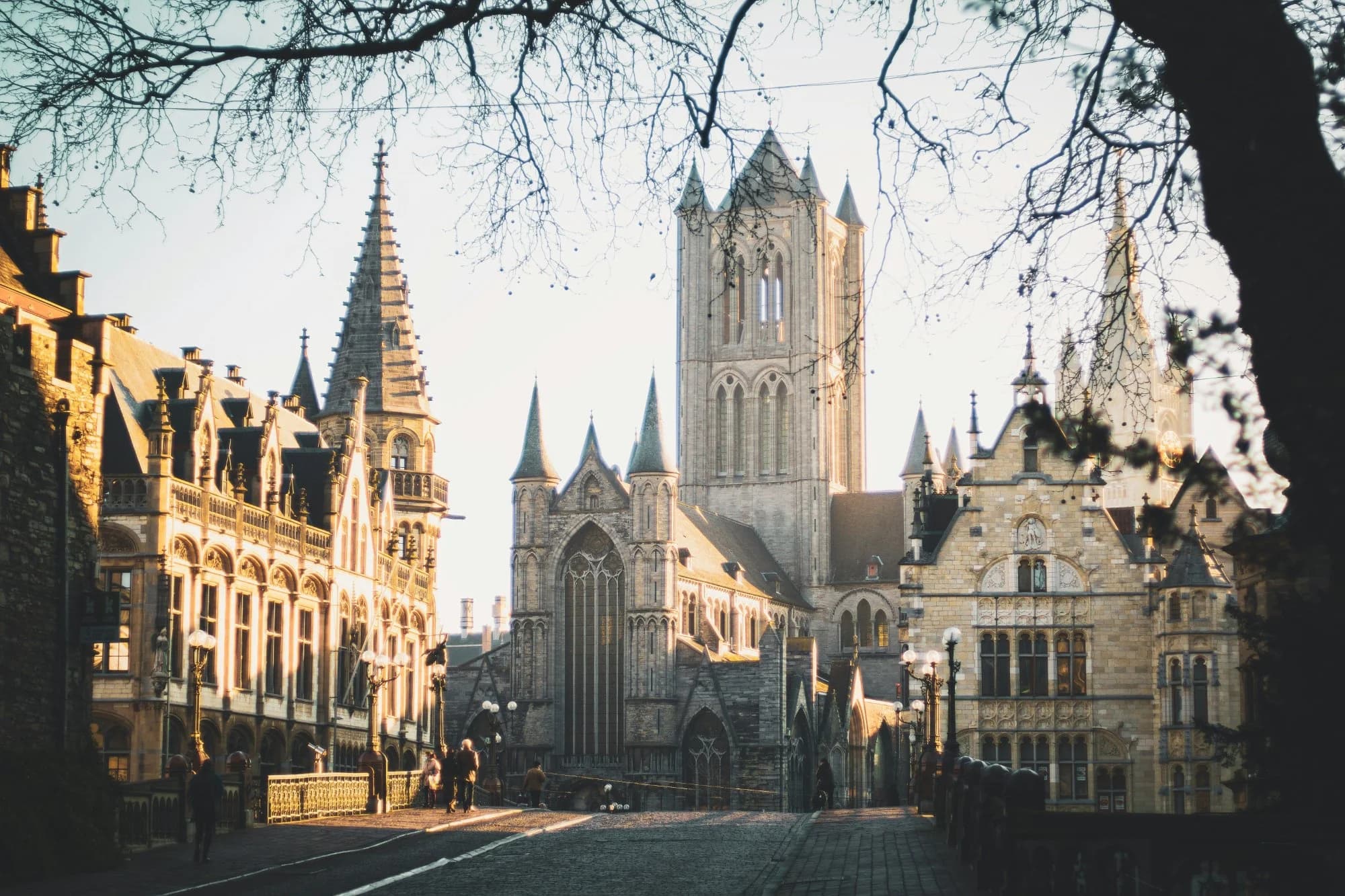
The medieval center of Ghent, anchored by the Graslei and Korenlei canal frontage, is where the city's architectural identity is most concentrated. Patershol, a former tanners' district turned into one of Belgium's more respected restaurant neighborhoods, sits immediately adjacent. Properties here occupy narrow Flemish townhouses or converted guild buildings, often with original stonework and interior volumes that no modern construction can replicate. For travelers whose interest is architectural and cultural, this is the natural center of gravity.

The Sint-Pieters and Citadelpark fringe

Moving south toward the Citadelpark and the area surrounding Sint-Pietersstation, the urban texture shifts. The late 19th-century boulevards here are wider, the buildings more eclectic in their historicist references, and the proximity to the Museum of Fine Arts (MSK) and SMAK gives the quarter a quieter, more institutional weight. Hotels in this zone tend toward grander footprints, with the possibility of larger suite formats and more structured gardens or courtyards.

The harbor and Dampoort quarter

Ghent's post-industrial fringe, stretching toward the port district and Dampoort, has attracted a wave of adaptive reuse projects. Former warehouses and industrial buildings now house design-forward hospitality concepts. This is the part of the city where contemporary suite design has the most room to operate. If the priority is architecture of the present rather than the past, this corridor deserves attention.

When to visit Ghent for the best suite experience

Ghent functions well across most of the calendar year, which is itself a distinction among European cities of its scale. The spring months from April through June bring the most agreeable light conditions and manageable visitor numbers before the summer peak. July hosts the Gentse Feesten, a ten-day cultural festival that transforms the historic center into a continuous public event. Suite availability during this period tightens considerably, and rates reflect the demand. Advance planning is not optional for the Gentse Feesten window.

September and October offer a compelling alternative for travelers who prefer the city at a lower register. The cultural season reopens, the university population returns, and the canal light takes on a quality that the summer months do not produce. Winter in Ghent is considered rather than festive in the way that Bruges can feel manufactured during December. The Christmas market exists, but the city does not reorganize itself around it. For a suite stay oriented toward galleries, restaurants, and unhurried walking, the winter months are underrated.

Local luxury standards: what to expect from top-tier suites in Ghent

Belgium does not have a formal palace designation in the way France applies the label through the Comité Colbert framework. What Ghent offers instead is a concentration of historically significant buildings that have been adapted for hospitality with varying degrees of ambition and care. The most credible luxury hotel suites in Ghent tend to be found in properties that have invested seriously in the relationship between original architecture and contemporary interior design.

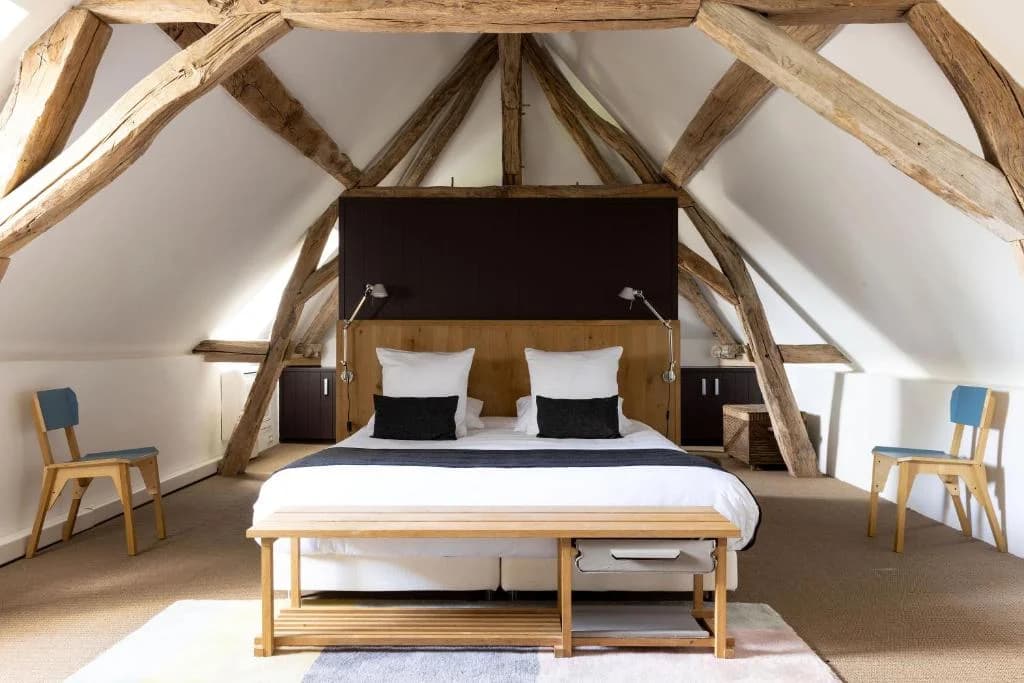
Expect original features: exposed brick or stone, timber ceiling structures, interior courtyards that function as acoustic buffers against the city. The better suites will layer these fixed conditions with considered furniture selection, curated art, and bathroom specifications that match the spatial ambition of the room. Belgium has a strong tradition in both textile design and graphic arts, and the best properties here reflect that in how fabrics and surface materials are chosen.

Service in Ghent's top properties tends toward the discreet rather than the demonstrative. The Flemish hospitality culture values precision and correctness over warmth performed for effect. For guests accustomed to that register, it reads as professional. For guests expecting more expressive engagement, the adjustment is worth anticipating.

How to choose the right luxury suite in Ghent

Historical fabric versus contemporary design

The core decision in Ghent is whether the architectural experience of the suite itself should echo the city's medieval and Flemish Renaissance character, or whether a sharp contemporary intervention inside a historic shell is preferable. Both approaches exist in the market. The former gives continuity between the suite interior and the street outside. The latter uses contrast as the design strategy, which can produce more dramatic spatial results but requires coherent execution to avoid feeling arbitrary.

Canal proximity and urban noise

Suites directly overlooking the Graslei or Korenlei carry a visual dividend that is significant. The canal views, particularly in morning and evening light, are among the strongest sensory arguments for staying in the historic core. However, the Graslei is also a gathering point on warm evenings, and noise management becomes a relevant specification. The quality of glazing and the floor level of the suite are practical considerations, not incidental ones.

Size and spatial format

Ghent's historic buildings impose physical constraints. Suites in converted townhouses are rarely large by the standards of purpose-built hotel towers, but what they offer instead is proportion: rooms designed to a human scale, with ceiling heights and window ratios that contemporary construction rarely achieves. For travelers who prioritize volume over intimacy, a property with a larger structural footprint will be the more suitable choice.

The value of a curated selection by La Suite

Ghent has a hotel market that ranges from international chain properties to ambitious independent concepts. Identifying which properties actually deliver at suite level, beyond lobby design and marketing language, requires editorial work that generic booking platforms do not perform. La Suite applies a consistent standard of spatial quality, service calibration, and design integrity to every property it presents. In a city where the gap between promise and delivery can be significant, that filter has practical value for the traveler who does not want to audit the market independently.

Frequently asked questions

What makes Ghent different from Bruges for a luxury hotel suite stay?

Ghent operates as a functioning city with an active cultural and academic life, which gives it a different texture from Bruges, where the historic center is more fully oriented toward tourism. Luxury hotel suites in Ghent are embedded in a city that has restaurants, galleries, and public life independent of the visitor economy. For travelers who want historical architecture without the feeling of a preserved exhibit, Ghent is the more considered choice.
Are there luxury suites in Ghent with canal views?

Several properties in the historic core of Ghent occupy positions along the Leie or near the Graslei and Korenlei waterfront, and the better suites in these buildings are positioned to take advantage of the canal aspect. The view quality varies by floor level and orientation, so confirming the precise suite position before booking is advisable. La Suite curates properties where the spatial and visual claims of a suite can be verified against the actual room.

When is the best time to book a luxury suite in Ghent?

Spring (April to June) and early autumn (September to October) are the periods that combine favorable light conditions with manageable visitor volumes and an active cultural program. The Gentse Feesten in July is a major cultural event that compresses suite availability significantly, and advance booking of several months is necessary for that window. Winter stays offer a quieter register and are well suited to travelers focused on museums, restaurants, and the architectural experience of the city.

What is the Gentse Feesten and how does it affect hotel suite availability in Ghent?

The Gentse Feesten is a ten-day cultural festival held annually in July, centered on the medieval historic core of Ghent, with free concerts, street performance, and civic events across the city. It draws several hundred thousand visitors over the period and places significant pressure on accommodation in all categories. Luxury suite availability during the Gentse Feesten window is limited, and rates reflect the demand. Travelers wishing to stay during this period should plan and book well in advance.

What architectural styles define the luxury hotel suites available in Ghent?

Ghent's hotel market is shaped by its Flemish Gothic and Renaissance built heritage, and the most characterful luxury suites occupy converted guild houses, merchant residences, and ecclesiastical buildings in the historic center. These interiors typically feature original stonework, timber structures, and interior proportions that contemporary construction cannot replicate. A separate category of contemporary design properties has emerged in the post-industrial fringe of the city, offering a different architectural experience within converted warehouses and former industrial buildings.

Is Ghent a practical base for visiting other parts of Belgium from a luxury hotel?

Ghent's rail connections are direct and frequent to Brussels (approximately 30 minutes), Bruges (approximately 25 minutes), and Antwerp (approximately 50 minutes), making it a functional hub for travelers who want to move across the country without relocating their accommodation. Staying in a luxury suite in Ghent as a fixed base is a reasonable strategy for a multi-city Belgian itinerary, particularly given the city's own cultural density, which justifies the time spent there between excursions.

What cultural institutions should inform the choice of neighborhood for a luxury suite in Ghent?

The Museum of Fine Arts (MSK) and the contemporary art museum SMAK are both located near the Citadelpark in the southern part of the city, which makes that area a natural base for travelers with a strong gallery focus. The Design Museum Gent is positioned in the historic core near the Graslei, as is the STAM city museum. The choice of neighborhood for a luxury hotel suite is therefore partly a function of which cultural institutions are priorities for the stay.

How does the service culture in Ghent's luxury hotels differ from other European destinations?

Ghent's luxury hospitality culture reflects a Flemish sensibility that tends toward precision, restraint, and correctness rather than expressive warmth. Service is attentive and technically proficient but rarely performative. Travelers accustomed to the more demonstrative service styles found in some Southern European or American luxury hotel contexts may notice this difference, though most guests who value discretion and professionalism find it entirely consistent with their expectations.

Are luxury suites in Ghent suitable for extended stays or longer visits?

The city's cultural depth, its restaurant scene (Ghent has a significant reputation in Belgium for its food culture, including a notable vegetarian tradition), and its walkable scale make it well suited to stays of three nights or more. Luxury hotel suites with distinct living areas and well-specified kitchenette or breakfast arrangements are available in the market and provide the spatial comfort that extended stays require. La Suite identifies properties where the suite format supports longer occupancy without friction.

What should travelers prioritize when comparing luxury hotel suites in Ghent?

The most important variables in Ghent are the relationship between the suite's interior design and the original architecture of the building, the suite's position within the building relative to canal views or courtyard quiet, and the spatial format (proportion and ceiling height carry more weight in historic conversions than raw square footage). Service calibration and the quality of the bathroom specification are secondary but relevant considerations. La Suite applies these criteria as editorial filters rather than leaving the assessment to the traveler.