Where to stay in the Faroe Islands: understanding the archipelago's distinct areas
Streymoy and Eysturoy: the central axis
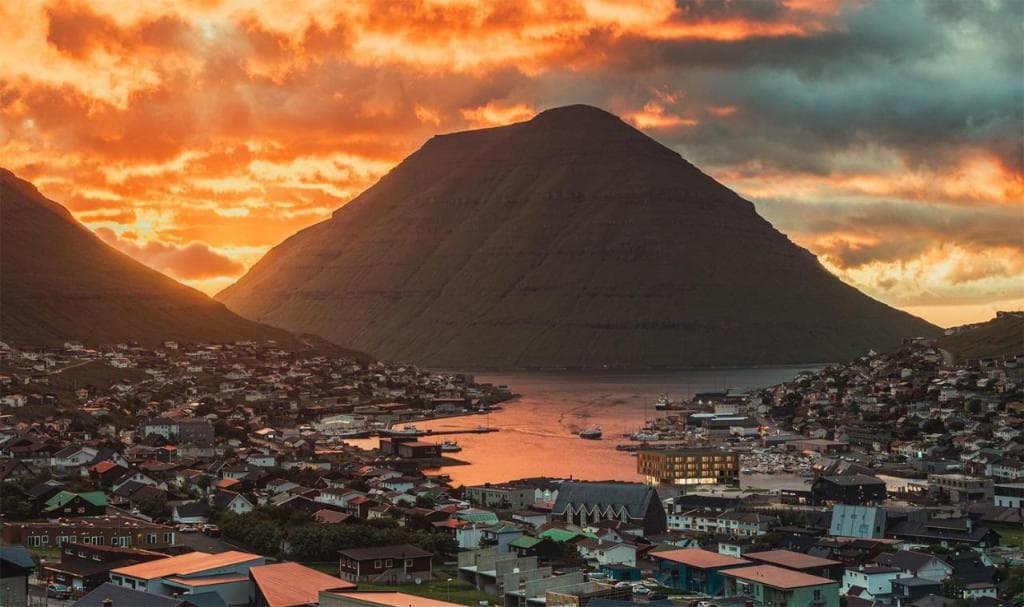
Streymoy is the largest island and hosts the capital, Tórshavn, which functions as the cultural and commercial centre of the archipelago. Despite its status, Tórshavn has a population of around 20,000, making it one of the smallest capitals in the world by scale. The old quarter, Tinganes, is built on a promontory of turf-roofed wooden structures that date back centuries. This is where the highest concentration of accommodation with genuine interior ambition exists. Eysturoy, connected to Streymoy by a subsea tunnel, offers a quieter counterpart with access to some of the archipelago's most recognisable geological features, including the sea stacks at Risin og Kellingin.
Vágar and the western islands
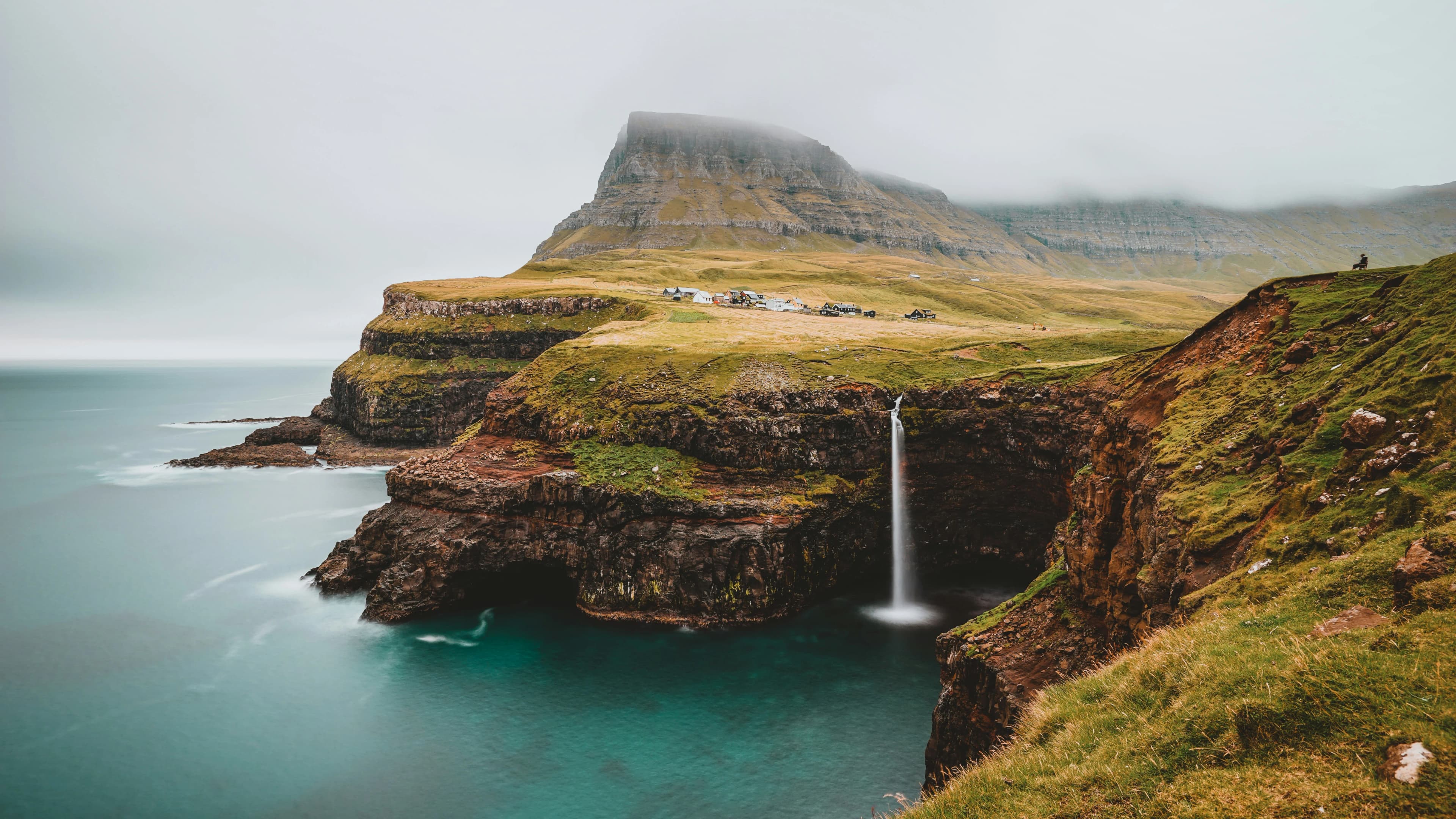
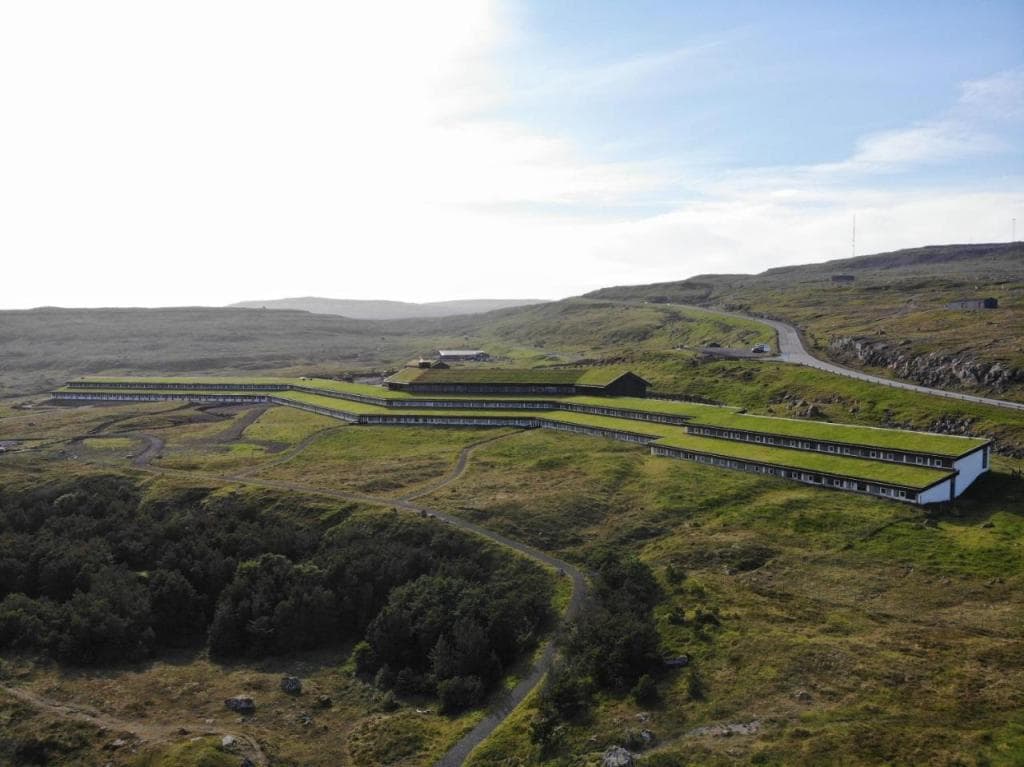
Vágar is where the international airport is located, and it is also the gateway to some of the most photographed landscapes in the archipelago, including Lake Sørvágsvatn, which appears from certain angles to sit above the ocean. The western islands tend to attract travelers with a stronger interest in hiking and raw landscape immersion. Accommodation here is sparse by design, and the properties that do exist often lean into the vernacular architecture of the islands: low-slung, stone-based, turf-roofed.
The northern islands: Viðoy, Borðoy, and Kunoy
The northern cluster is the most remote and the least visited. Access requires deliberate effort, whether by ferry or helicopter. For those seeking genuine detachment from circulation, this is where the Faroe Islands deliver something closer to solitude than almost any destination in Europe. Properties here are few, and the standard of finish is variable, but the environmental reward is significant.
When to visit the Faroe Islands for a luxury suite experience
The Faroe Islands do not conform to the conventional high-season model. The climate is oceanic: temperatures rarely fall below zero in winter or exceed 15 degrees Celsius in summer. Cloud, wind, and rapid weather changes are year-round constants rather than seasonal anomalies.
The summer months of June through August offer the longest daylight hours, with near-continuous light around the solstice. This is when hiking conditions are most accessible and the landscape's full tonal range, from vivid green grass to deep basalt grey, is most legible. July and August also correspond to the highest demand for accommodation across the archipelago.
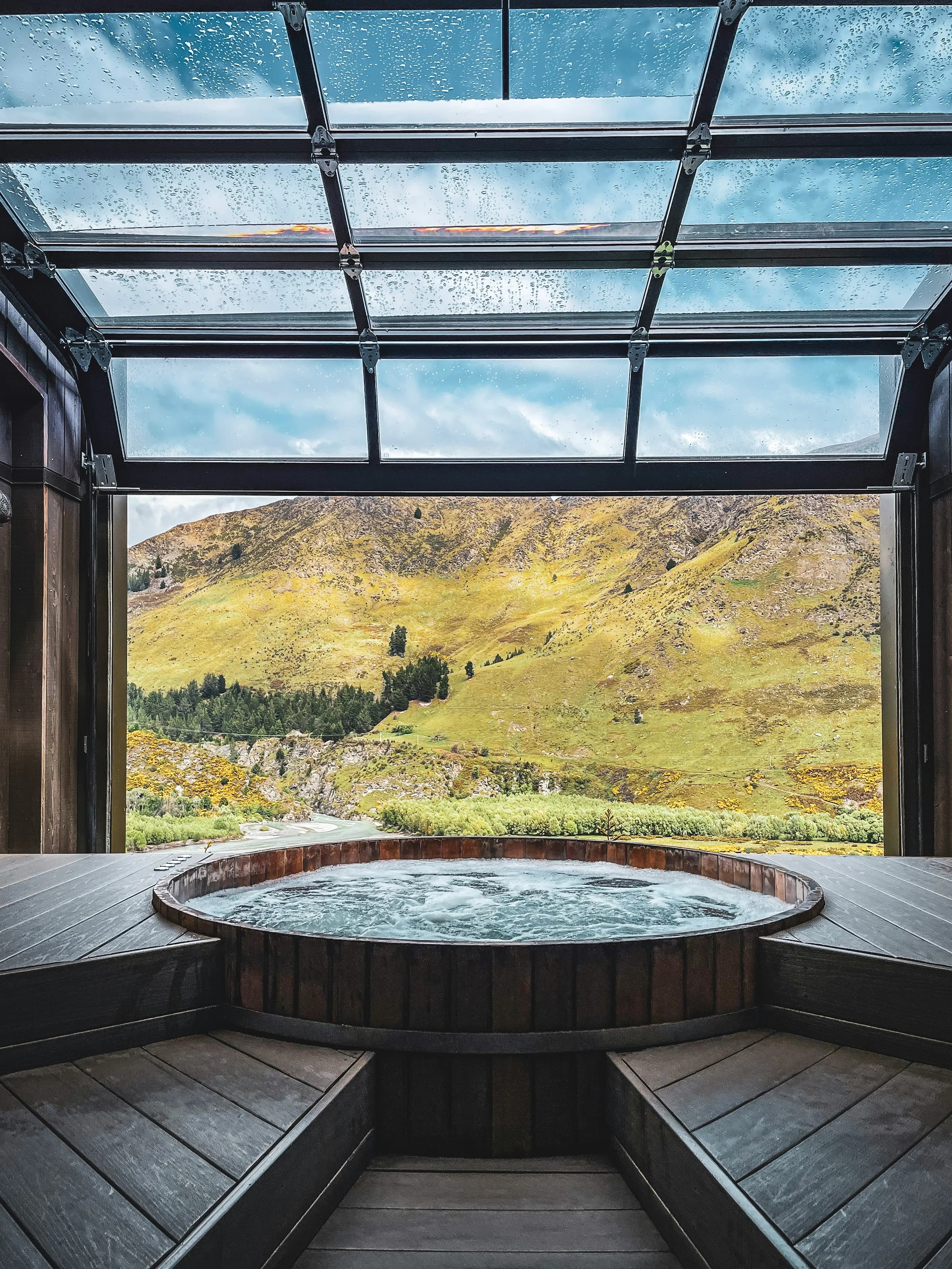
Autumn and winter present a different argument entirely. October through February brings the possibility of northern lights, a silence that is architectural in quality, and a degree of access to the islands that feels genuinely exclusive by virtue of low visitor numbers. Heating standards in quality properties are high, and the experience of watching North Atlantic weather move across a valley from inside a well-designed suite is one of the more singular things this destination can offer.
There is no major international luxury event calendar in the Faroe Islands in the way that Monaco or Cannes operates. The G! Festival in July and the Faroe Islands Marathon in September draw visitors but do not distort the accommodation market in the way that comparable European events do.
Local luxury standards: what defines a top-tier suite in the Faroe Islands
The Faroe Islands do not operate within the conventional European luxury hotel taxonomy. There is no local equivalent of the French Palace designation, nor a formal rating system calibrated to international five-star standards. What exists instead is a smaller, more curator-dependent landscape where the markers of quality are material rather than institutional.
The best properties in the archipelago are distinguished by their relationship to local craft and natural material. Faroese wool, locally sourced stone, and timber treated against the extreme maritime climate feature in properties that take their design brief seriously. Spatial generosity, in a territory where land is not scarce but where construction is genuinely difficult, is a meaningful signal of investment and intention.
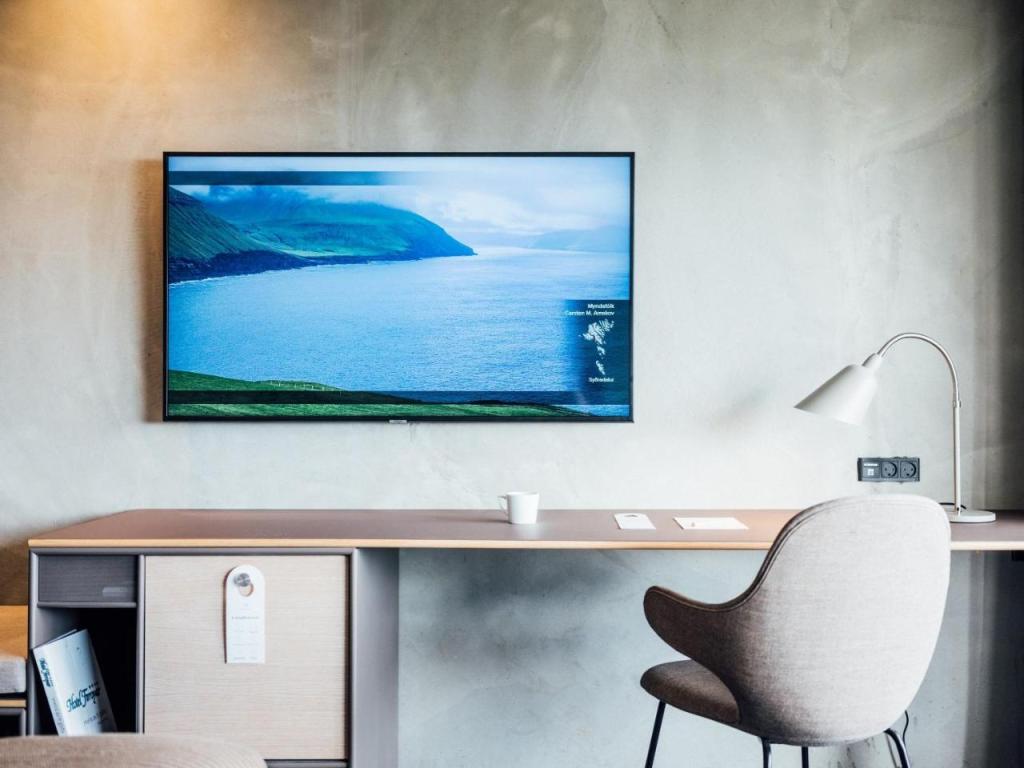
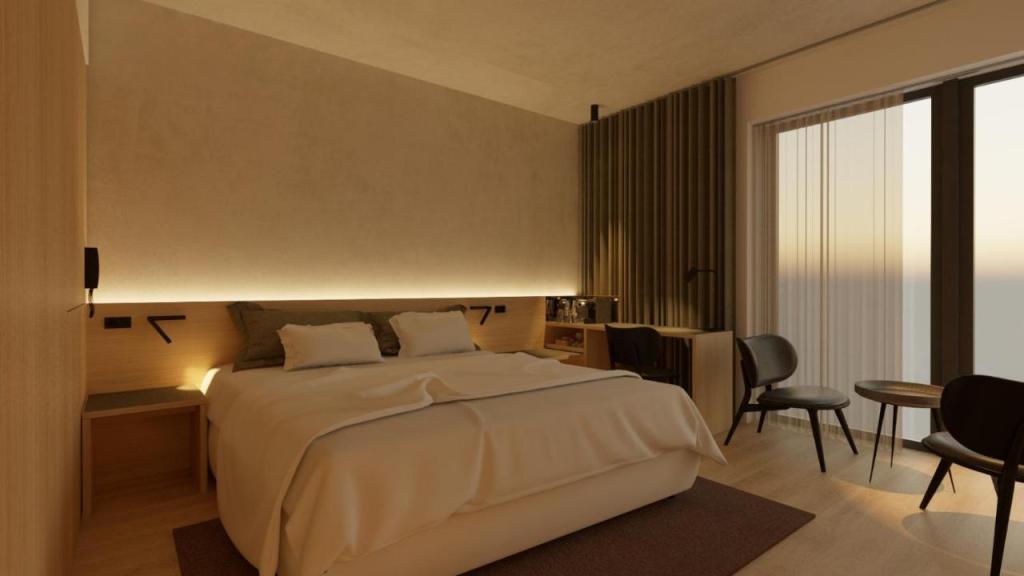
Suites in the Faroe Islands tend to be defined by view orientation and acoustic isolation rather than by amenity density. A suite positioned above a fjord, with full-height glazing and structural silence, represents a higher order of experience than a suite with a larger floor plan in a less considered location. The concept of lodge-style luxury, as distinct from urban hotel luxury, applies here: the surrounding environment is the amenity, and the suite functions as the instrument through which you engage with it.
How to choose the best luxury suite in the Faroe Islands
Several factors distinguish a considered suite choice in the Faroe Islands from a generic accommodation booking.
First, access matters. The archipelago's internal connectivity depends on a combination of tunnels, ferries, and helicopter services. A suite on an outer island may offer greater seclusion but requires logistical planning that a property on Streymoy does not. If your itinerary involves daily movement between islands, a central base reduces friction significantly.
Second, consider architectural approach. The Faroe Islands have a documented vernacular tradition of turf-roofed construction using local stone and timber. Properties that engage with this tradition, rather than importing a generic Scandinavian hotel aesthetic, tend to produce a more coherent sense of place. The difference between a suite that feels located in the Faroe Islands and one that could be anywhere in northern Europe is a function of these choices.
Third, evaluate the view. In a destination defined by landscape, the orientation and framing of a suite's outlook is not incidental. A suite that opens onto a fjord or a hillside with unobstructed Atlantic exposure offers something structurally different from one oriented toward a car park or a service road. Ask for floor plans and aspect information before committing.
Fourth, consider seasonality in relation to your specific interests. If northern lights are a priority, late autumn and winter are the operative windows. If the full extent of the landscape is the objective, summer daylight is the advantage.
Why curation matters in the Faroe Islands
The Faroe Islands present a specific editorial challenge: the market is small, properties are limited in number, and quality varies considerably. The archipelago has seen a sharp increase in international visitor interest since roughly 2015, driven in part by social media and in part by a broader appetite for what is sometimes called slow travel. Not all of the accommodation that has emerged to serve this demand meets the standard that a traveler used to top-tier suite experiences would expect.
La Suite applies the same curatorial criteria to the Faroe Islands that it applies to Paris, Tokyo, or the Maldives: spatial quality, material integrity, service architecture, and the credibility of the suite as a distinct spatial proposition rather than a rebadged standard room. In a market this size, that filter produces a short list. That short list is what matters.
Browsing the La Suite curated selection for the Faroe Islands removes the noise of an aggregated platform and presents only the properties where a luxury hotel suite can be said to genuinely earn that description in this specific geography.