Understanding Rennes as a luxury base in Brittany
For travelers accustomed to suites in Paris or Lyon, Rennes presents a different register. The scale is human, the pace is considered, and the cultural offer, from the Musée des Beaux-Arts to the Saturday market at Place des Lices (one of the largest traditional markets in France), rewards curiosity rather than consumption. Staying in a luxury hotel suite here means choosing proximity to this texture over coastal spectacle, a deliberate trade that suits certain travelers precisely.
Best areas to stay in Rennes
The historic center
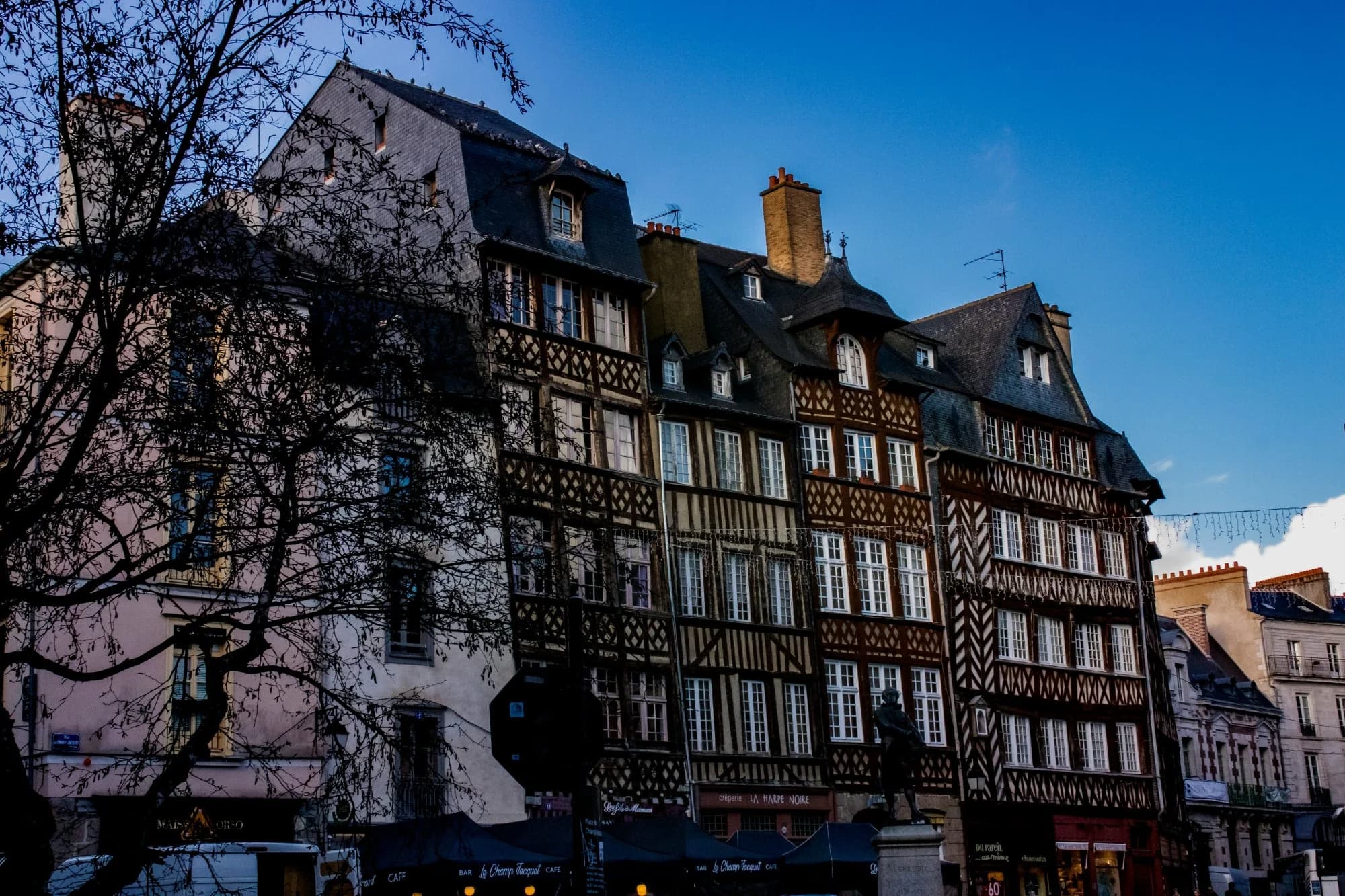
The area between Place des Lices and Place Sainte-Anne represents the densest concentration of medieval and post-fire architecture in the city. Streets here are narrow, pedestrian-friendly, and close to the main cultural institutions. A suite in this zone places guests within walking distance of the city's primary markets, restaurants, and galleries. The noise profile is manageable given that Rennes enforces relatively strict urban planning controls, though weekend evenings in summer can be lively near the student bars.
The parliamentary quarter
The area around Place du Parlement de Bretagne and the adjacent streets offers a quieter, more formally structured environment. The architecture here leans toward the neoclassical, with wide pavements and a sense of institutional weight. Hotels in this zone tend to attract business travelers and cultural visitors rather than the younger demographic that gravitates toward the Sainte-Anne area. For guests seeking a suite with genuine architectural context, this quarter is the most coherent choice.
The Thabor district
Adjacent to the Parc du Thabor, one of the most accomplished public gardens in Brittany, this residential district offers a calmer residential character while remaining within 15 minutes' walk of the center. The Thabor garden itself, designed in the French formal style with a rose garden and greenhouse, provides an unusual amenity for morning walks. Hotels here tend toward the boutique rather than the grand, with suite inventory that reflects the district's quieter profile.
When to visit Rennes
Rennes operates on a broadly temperate Atlantic calendar. Spring, from April through June, delivers mild temperatures, consistent daylight, and the reopening of outdoor market culture after the winter months. This is the most architecturally favorable season, with the half-timber facades of the historic center photographed under even, northern light rather than harsh summer sun.
The Transmusicales festival, held in December, is one of the most significant independent music events in Europe and draws a culturally engaged international audience. Suite availability during this period tightens considerably, and rates reflect the demand. The Les Tombées de la Nuit festival in early July transforms public spaces with a program of performance art and music that uses the city's architecture as a stage.
August sees the highest tourist volumes given the proximity to Brittany's coastal resorts, with travelers using Rennes as a transit point or urban counterpoint to the coast. September and October offer a more composed experience, with cultural programming resuming and the city returning to its working rhythm after the summer break.
Local luxury standards in Rennes and Brittany
France's national luxury hotel classification includes the Palace designation, awarded by Atout France to properties meeting specific criteria around architecture, service, and cultural contribution. No property in Rennes currently holds this designation, which is concentrated in Paris, the Riviera, and certain Alpine resorts. The relevant benchmark here is the four-star and five-star hotel category, where Rennes has a small but precise selection of properties offering suite-level accommodation.
Breton hospitality culture has its own character, distinct from Parisian formality. Service tends toward the direct and the practical, informed by a regional identity that values substance over ceremony. A luxury hotel suite in Rennes will typically offer generous square footage, well-considered local sourcing in its food and beverage programming, and a connection to the architectural history of the building rather than a standardized international aesthetic. The most considered properties commission local artisans for their interiors and source from the exceptional Breton larder, which includes some of France's most distinctive seafood, dairy, and charcuterie.
How to choose the best luxury suite in Rennes
Historic versus contemporary architecture
Rennes offers both registers. Properties housed within converted 18th-century townhouses or former institutional buildings carry a specific architectural weight: exposed stone, timber framing, proportioned windows, and ceiling heights that impose a particular kind of silence. Contemporary properties, often located in the city's expanding western districts near the Eurorennes development zone, offer a different proposition: clean lines, controlled acoustics, and a proximity to the TGV station that suits the business traveler on a tight schedule.
Size and suite configuration
In a city of Rennes' scale, suite inventory is limited compared to major French metropolitan centers. Travelers with specific requirements around separate sleeping and living areas, or those traveling with staff or family members requiring adjacency, should confirm configurations in advance. Junior suites in four-star properties will typically offer between 35 and 55 square meters. Full suites in five-star properties may reach 80 to 100 square meters, occasionally with terrace access over the rooftops of the historic center.
Proximity to transport
Rennes is connected to Paris Montparnasse by TGV in approximately 1 hour 25 minutes, making it a realistic weekend destination for Parisian travelers and an efficient entry point for international visitors arriving via CDG. The city's metro system, modest by metropolitan standards but clean and reliable, connects the station to the historic center in under ten minutes. Travelers intending to explore the wider Brittany coastline should consider car access and parking facilities when selecting a suite property.
Why curated selection matters in Rennes
Rennes' luxury hotel market is compact. The number of properties offering genuine suite-level accommodation, with the spatial quality, service depth, and architectural interest that define the category, is small enough that the wrong choice is easy to make without specific local knowledge. Generic booking platforms surface properties by price point and review volume, two metrics that correlate poorly with the specific qualities a suite traveler is seeking.
La Suite approaches this market with a different framework: each property is assessed for suite quality, architectural context, service consistency, and the broader experiential logic of the stay. In a city like Rennes, where the difference between a well-converted historic property and a commercially upgraded business hotel may not be visible from a standard listing, that editorial judgment is the most useful tool available to the traveler. The curated selection by La Suite reflects genuine familiarity with what this city offers at its best.