Where to stay in Saint-Malo for a suite experience
Intra-muros: the walled city
The historic centre, enclosed within its granite ramparts, is the architectural and emotional core of Saint-Malo. Properties here place guests within direct walking distance of the cathedral of Saint-Vincent, the fortified gates, and the elevated rampart walk that frames the bay. Suites in this zone tend to inhabit converted merchant townhouses or purpose-built structures whose facades comply with the strict heritage codes governing the walled city. The sensory register is particular: salt air, grey stone, the sound of the tide. Availability within the walls is limited by definition, which lends these addresses a scarcity that reinforces their value.
Paramé and the grand beach front
To the east of the walled city, the Paramé district extends along the Grande Plage, a broad sandy beach that faces north toward the Channel. The architecture here shifts from medieval to late nineteenth and early twentieth century, reflecting the period when Saint-Malo became a fashionable seaside destination for the French bourgeoisie. Larger hotels with generous suite floor plans occupy this seafront, offering panoramic Atlantic exposure and direct beach access. The pace is quieter than intra-muros, and the spatial logic of suites here tends toward residential scale.
Dinard, across the estuary
Accessible by seasonal ferry from Saint-Malo, Dinard sits on the opposite bank of the Rance estuary and functions as a compositional counterpart to the walled city. Its Belle Époque villas and manicured promenades attract a distinctly Anglophile sensibility, a legacy of the British aristocracy who built their summer residences here from the 1850s onward. For travelers seeking proximity to Saint-Malo without the density of the historic centre, Dinard offers a compelling alternative framework for a luxury hotel stay.
When to visit Saint-Malo
The Breton climate is temperate and maritime, with no extreme seasonal shifts, but the quality of light and the rhythm of the city change considerably across the year.
Late spring, from May through June, offers the most balanced conditions: mild temperatures, longer daylight, and a city that has not yet reached its peak summer density. July and August bring the largest visitor volumes, driven by French domestic tourism and international arrivals. Suite rates at luxury hotels typically peak during this period, and advance booking windows extend considerably.
September is arguably the most refined month to visit. The summer crowds recede, the light softens to a warmer register, and the sea retains enough temperature for swimming. The cultural calendar includes the Route du Rhum preparations in Olympic years and a series of literary and musical events that reflect the city's intellectual tradition.
The Etonnants Voyageurs literary festival, held in spring, draws writers and thinkers from across the French-speaking world and beyond, giving the city a distinct intellectual atmosphere during that period. Winter visits are not uncommon among travelers who prefer the raw Atlantic character of Saint-Malo without the social layer of high season.
Understanding luxury standards in Saint-Malo
France operates a formal hotel classification system that extends up to five stars, alongside the Palace designation awarded by the French ministry in charge of tourism to properties meeting a set of architectural, spatial, and service criteria that exceed the standard five-star threshold. Within Brittany, the Palace category remains rare, and Saint-Malo itself does not currently hold a Palace-designated hotel, which makes the selection process at the upper end of the market more nuanced.
What distinguishes a genuine luxury hotel suite in Saint-Malo from a merely comfortable room is largely architectural and contextual. The best properties in this city are those that work with the grain of the local building stock: exposed granite, deep window reveals, views that frame the ramparts or the open sea. Suite configurations here tend toward the horizontal rather than the vertical, with generous terrace or balcony space treated as a primary room rather than an afterthought.
Thalassotherapy, the therapeutic use of seawater, is a legitimate wellness tradition embedded in Breton coastal hospitality. Several properties in the Saint-Malo area have built serious spa facilities around this practice, drawing on the thermal and mineral properties of the local seawater. For travelers for whom the spa dimension is central to a suite experience, this regional specificity is worth factoring into the selection process.
How to choose the best luxury suite in Saint-Malo
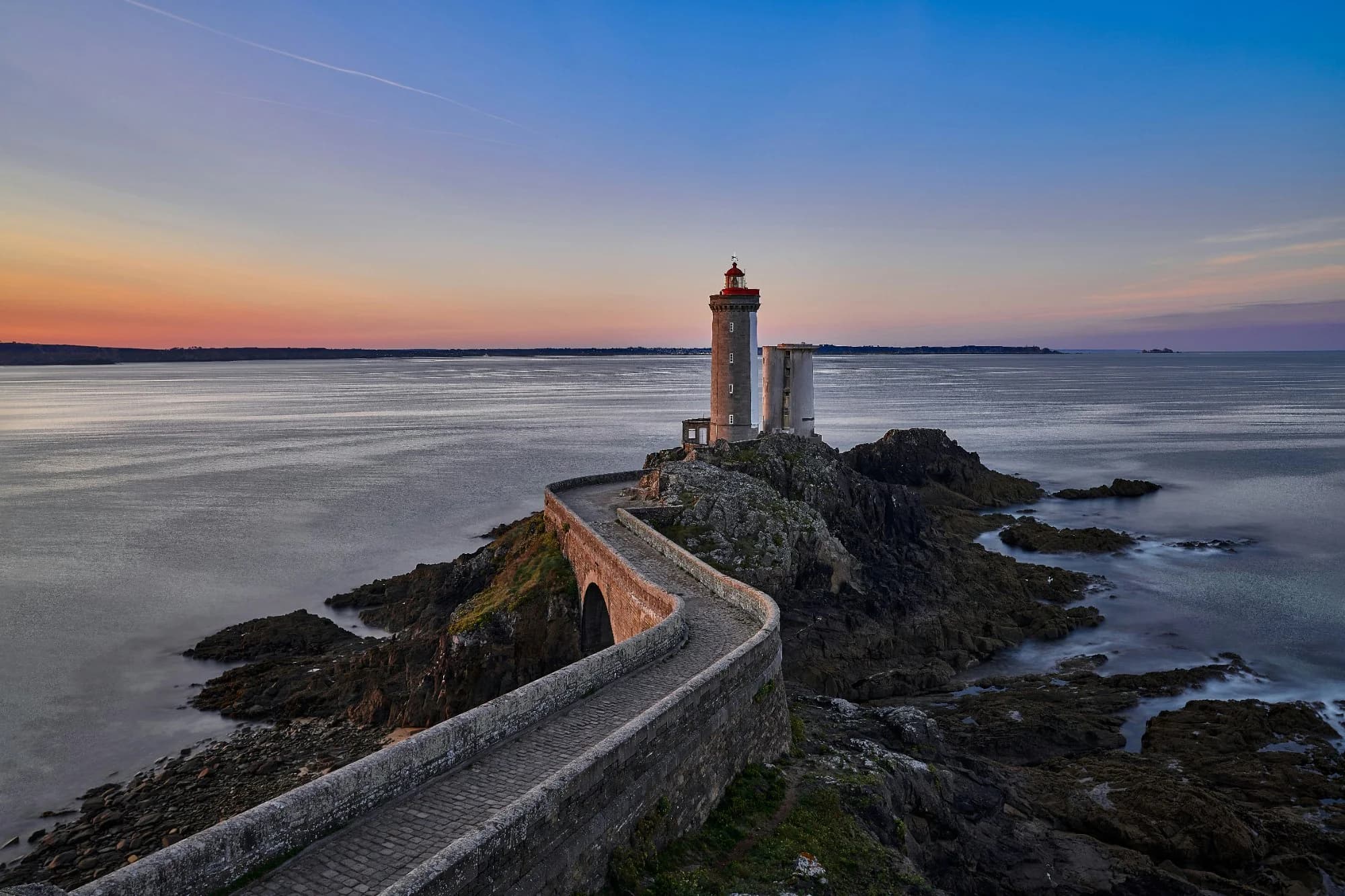
The primary decision axis in Saint-Malo is location relative to the ramparts and the sea. A suite with a direct view of the bay and the tidal islands of Grand Bé and Petit Bé occupies a fundamentally different experiential register from one oriented toward the city interior, even if the physical specifications of the rooms are comparable.
Tidal dynamics are a practical consideration unique to this coast. The tidal range at Saint-Malo is among the highest in Europe, regularly exceeding twelve metres during spring tides. This means that the visual and acoustic character of a sea-facing suite changes dramatically over the course of a single day. Experienced travelers factor this into their itinerary rather than treating it as a curiosity.
Architectural period matters in a city where the intra-muros district was largely reconstructed after 1944. Much of what appears to be historic construction is in fact a postwar reconstruction carried out with deliberate fidelity to the original granite aesthetic. This is not a deficiency. It is a form of civic commitment to material continuity. Suites within this reconstructed fabric can be entirely authentic in character, but travelers who prioritize genuine historical layering should consider properties that predate the reconstruction or that occupy the city's peripheral zones where original structures survived.
For families, the question of suite configuration is practical: connecting rooms, kitchen access, and proximity to the beach are variables that a well-chosen luxury hotel addresses with precision. For couples or solo travelers, the priority typically shifts toward intimacy of scale and the quality of the sea view.
Why curated selection matters in Saint-Malo
The supply of true luxury hotel suites in Saint-Malo is finite. The walled city imposes physical limits on development, heritage regulations constrain renovation, and the seasonal concentration of demand creates a market where the gap between an exceptional property and a merely adequate one is easily obscured by marketing language.
La Suite approaches Saint-Malo as it approaches every destination in its portfolio: with a focus on the properties that deliver a coherent and honest luxury experience, where the suite is the primary product rather than a premium add-on. The curation is not about volume. It is about removing the decisions that waste time and replacing them with a precise, accountable shortlist. For a city of Saint-Malo's scale and specificity, that discipline has measurable value.