Why Vannes occupies a singular position in Brittany's luxury landscape
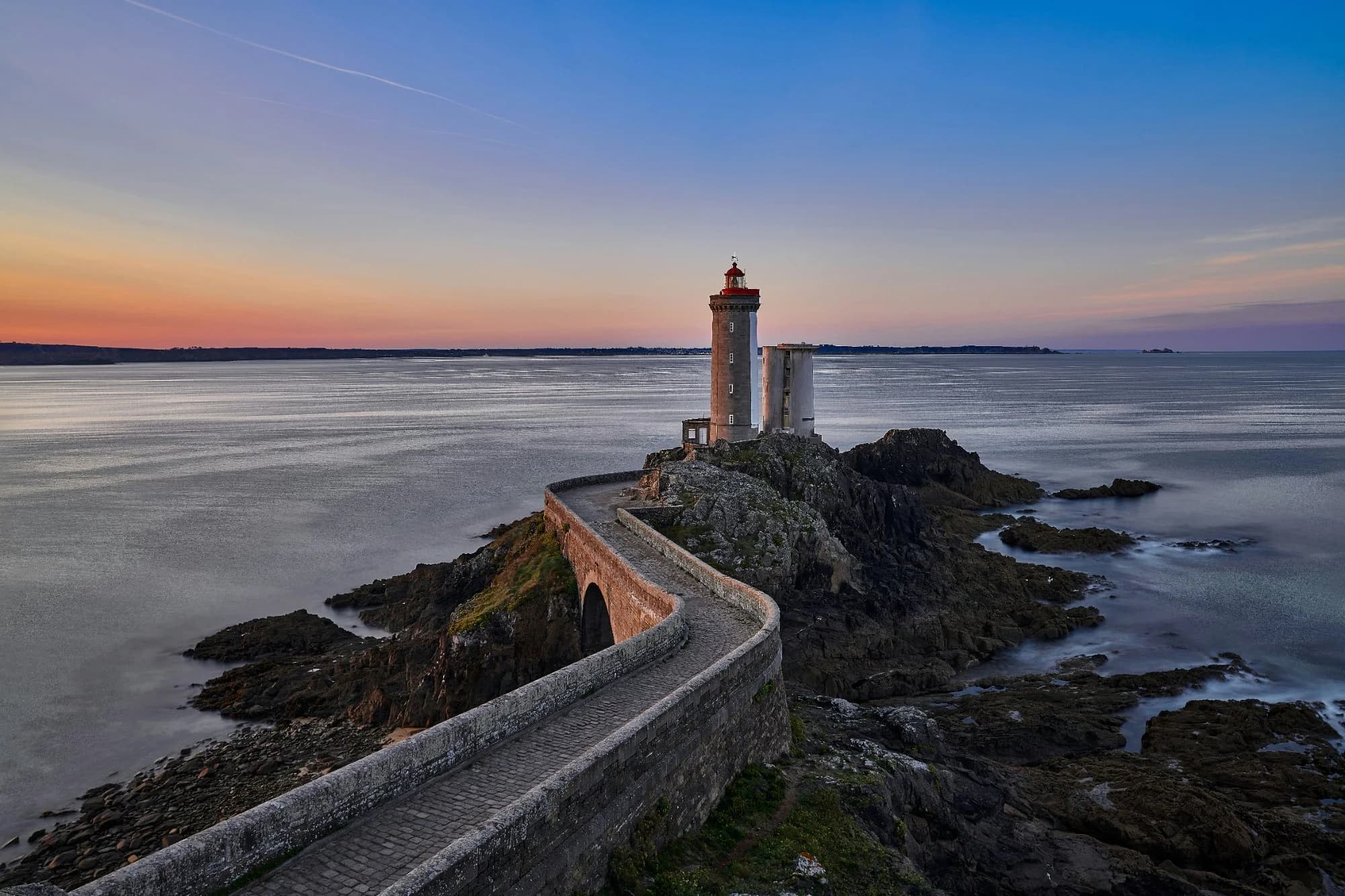
Beyond the walls, the Gulf of Morbihan defines the territory. This near-enclosed inland sea, dotted with more than forty islands, operates on its own tidal logic. The light shifts constantly across its surface, and the pace of movement on the water is slow by necessity. This geography rewards residents of suites with terraces or water-facing orientations, where the relationship between interior space and coastal landscape becomes the real amenity.
The distinct areas worth considering when choosing where to stay
The historic centre
Accommodation within or immediately adjacent to the medieval walls places guests at walking distance from the covered market, the cathedral quarter, and the network of lanes that constitute daily life in old Vannes. Properties here tend to occupy converted historic buildings, and the suite experience is often defined by stone walls, exposed timber, and the compression of centuries of urban layering. For travelers who read cities through their architecture, this is the correct address.
The port and waterfront
The port of Vannes connects the city to the Gulf and to the ferry services serving the islands of the Morbihan. Hotels positioned near this axis offer proximity to maritime movement, the fish market, and the embarkation points for day excursions. A luxury hotel suite with a view over the port basin provides a fundamentally different experience from the old town: more open, more atmospheric in changing weather, and more directly connected to the operational life of a working Breton harbour.
The Gulf of Morbihan periphery
Several communes immediately south and east of Vannes, including Arradon and Baden, sit directly on the Gulf shore and fall within comfortable reach of the city. Properties in this zone prioritise space, privacy, and waterfront orientation over urban density. For families or couples who prefer distance from city rhythms while maintaining access to Vannes for dining and culture, this peripheral geography can be the more considered choice.
When to visit Vannes for the best suite experience
The Gulf of Morbihan has a microclimate that sets it apart from much of Brittany. The enclosed body of water moderates temperatures, and the region records more sunshine hours than coastal Normandy or Finistère. The practical consequence is a longer usable season, running from late April through October, with July and August representing peak demand for accommodation and ferry services to the islands.
Late spring (May and June) offers the most balanced conditions: mild temperatures, accessible availability at better-positioned properties, and the flowering of the surrounding bocage landscape. September and early October are increasingly favoured by experienced travelers who value quieter streets and the particular quality of Atlantic light at the end of the season. The winter months are austere but not without interest, particularly for travelers drawn to the stripped-back quality of a Breton city outside its tourist season.
The Semaines Musicales de Vannes and the Jazz à Vannes festival bring cultural programming to the summer calendar. The Festival de la Bretagne in summer periods and various maritime events around the Gulf add texture to the seasonal offer without the density of a major metropolitan festival circuit.
Understanding the local luxury standard in Vannes and the Morbihan
Brittany does not operate within the same luxury grammar as Paris or the French Riviera. There are no Palace-designated hotels in Vannes (the Palace label, awarded by Atout France, is reserved for a small number of properties meeting exceptional criteria, concentrated in Paris and a few resort destinations). The local prestige markers are different: the quality of regional produce on the table, the authenticity of the built setting, the ratio of space to price, and the proximity to natural environments that cannot be replicated elsewhere.
A luxury hotel suite in Vannes is more likely to be defined by its location within a classified historic building, its access to a private garden or terrace, and the intelligence of its regional sourcing than by branded amenities alone. Travelers who approach the destination with these calibrations in mind will find the experience more rewarding than those applying metropolitan standards to a distinctly Breton context.
How to choose the right suite in Vannes
The first decision is geographic: historic centre versus waterfront versus Gulf periphery. Each zone offers a fundamentally different relationship to the city and its landscape. The second consideration is the nature of the building itself. Vannes has a significant stock of historic architecture, and suites occupying converted manor houses or medieval structures carry a different atmosphere from purpose-built contemporary properties. Neither is categorically superior, but the choice should be deliberate.
For travelers arriving by train (Vannes is on the Paris Montparnasse to Quimper TGV line, with journey times under three hours), proximity to the station and the historic centre is practical. For those driving, parking and spatial generosity become relevant variables, and properties in the Gulf periphery often offer both.
Consider also the duration of stay. Vannes rewards longer visits: two to three nights allow access to the islands of the Morbihan by ferry (Île-aux-Moines, Île d'Arz), the prehistoric alignments at Carnac (approximately thirty kilometres west), and the broader Morbihan coastline. A suite with cooking facilities or a private dining option extends the autonomy of a longer stay.
Why a curated selection by La Suite matters in this destination
Vannes is a city where the gap between a generically comfortable hotel and a genuinely considered luxury suite is significant. The market is not large, and the most architecturally or geographically interesting properties are not always the most visible in standard search results. La Suite applies the same editorial rigour to smaller cities as to established luxury capitals, identifying properties where space, setting, and service align with the expectations of a discerning traveler.
The curated selection by La Suite for Vannes is built around precision: the right building, the right position within the city or the Gulf, and the right suite configuration for the nature of the trip. For a destination where authenticity is the primary luxury, this kind of curation is not a convenience. It is the most direct route to an experience that matches the quality of the place itself.